Can Lube or Condoms Cause Reactions That Feel Like an STD?
Quick Answer: Lube and condoms can absolutely cause irritation, allergic reactions, or pH imbalances that mimic STD symptoms like burning, itching, redness, and even small bumps. They start with a sensation.
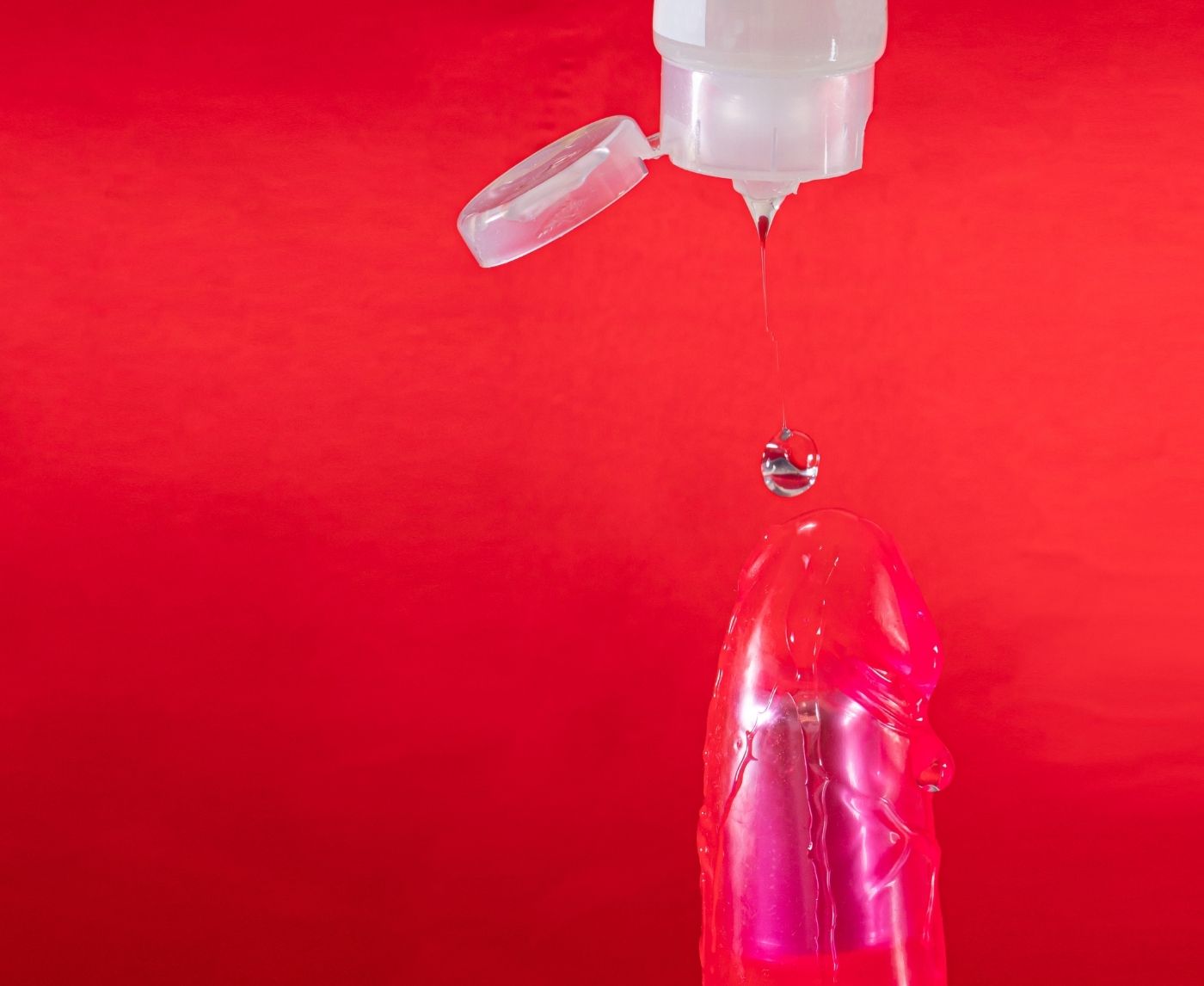
Quick Answer: Lube and condoms can absolutely cause irritation, allergic reactions, or pH imbalances that mimic STD symptoms like burning, itching, redness, and even small bumps. The key difference is timing, pattern, and persistence, testing is the fastest way to know for sure.
This Is Where Most STD Panic Starts
Most STD scares don’t start with a diagnosis. They start with a sensation. A slight burn. A weird itch. Something that feels different enough to trigger a late-night Google spiral. And the problem is, the internet tends to treat every symptom like it’s worst-case scenario.
But here’s the reality: your genitals are sensitive tissue. They react quickly to changes, new partners, new products, longer sessions, even dehydration. That means something as simple as switching to a new lubricant can create symptoms that feel alarmingly similar to infections like herpes or chlamydia.
One patient once put it bluntly: “I was convinced I had an STD because everything was burning. Turned out I had just used a flavored lube for the first time.” That kind of story is incredibly common, and it highlights how easily the body can be misunderstood.
What Reactions to Lube or Condoms Actually Feel Like
Reactions don’t come with a label. They show up as physical sensations, and those sensations can overlap heavily with STD symptoms. That’s why people often assume the worst.
With lube or condom reactions, symptoms usually appear quickly, often within minutes to hours after sex. You might notice burning during urination, itching, redness, or a raw, irritated feeling on the skin. In some cases, small bumps or rash-like patches can appear, which is exactly where confusion with herpes starts.
There’s also a pattern to how these reactions behave. They tend to stay localized to where the product made contact, and they often improve within 24 to 72 hours if the irritant is no longer present. That timeline is very different from most bacterial STDs, which typically take days to weeks to develop noticeable symptoms.
| Feature | Irritation or Reaction |
|---|---|
| Onset | Within minutes to hours after sex |
| Location | Where lube or condom touched |
| Duration | Often improves within 1–3 days |
| Sensation | Burning, itching, rawness |
| Systemic symptoms | Usually none |
Understanding this pattern doesn’t replace testing, but it does give you context. Not every symptom means infection. Sometimes it just means your body didn’t like what it came into contact with.
Latex, Lube Ingredients, and Why Your Body Reacts
Let’s talk about what’s actually causing these reactions, because it’s not random. Your body is responding to something specific, usually latex, preservatives, fragrances, or additives.
Latex condoms are one of the most common triggers. Some people have mild sensitivities, while others have true latex allergies. Even a mild sensitivity can cause itching, redness, or a burning sensation that feels intense enough to raise alarm.
Lubricants are even more unpredictable. Many contain glycerin, parabens, or artificial flavors. These ingredients can disrupt the natural balance of the vagina or irritate penile skin, especially with repeated friction. One person described it perfectly: “It felt like a UTI and a rash at the same time. I thought something was seriously wrong.”
| Substance | Possible Reaction |
|---|---|
| Latex | Itching, redness, swelling |
| Glycerin | Yeast imbalance, irritation |
| Fragrances/Flavors | Burning, rash-like symptoms |
| Preservatives | Skin sensitivity, dryness |
The key takeaway here is simple: your body isn’t malfunctioning. It’s reacting. And sometimes, that reaction looks a lot like something more serious.
Why It Can Feel Exactly Like an STD
This is where things get tricky. The overlap between irritation and STD symptoms is real, and it’s the reason so many people spiral into anxiety after sex, even when they used protection.
Burning? That could be irritation, or it could be chlamydia. Itching? Could be a reaction, or trichomoniasis. Small bumps? Could be friction, or herpes. The body doesn’t label symptoms for you, so you’re left interpreting signals without context.
And then there’s timing confusion. People assume that if symptoms show up immediately, it must be serious. In reality, most STDs don’t appear that fast. Immediate symptoms are far more likely to be irritation, while infections typically take time to develop.
This is why guessing doesn’t work. Even experienced clinicians don’t diagnose STDs based on symptoms alone. Testing is what separates assumption from reality.
When You Should Actually Consider Testing
Here’s the grounded, no-panic version of this: not every symptom requires immediate testing, but some situations absolutely do.
If symptoms persist beyond a few days, worsen over time, or are paired with discharge, unusual odor, or flu-like symptoms, that’s your signal to take things seriously. The same applies if you had a new partner, a condom broke, or you’re simply unsure about exposure risk.
There’s also the mental side of this. If your brain keeps looping on “what if,” testing becomes less about diagnosis and more about clarity. You can stop guessing and start knowing. That’s why many people turn to discreet options like STD Test Kits, because peace of mind matters just as much as physical symptoms.
If you want a broad answer quickly, something like a combo STD home test kit can check for multiple infections at once without the stress of a clinic visit. It’s a straightforward way to move out of uncertainty.
What Most People Get Wrong About Post-Sex Symptoms
The biggest misconception is that protection eliminates all risk and all symptoms should therefore be an STD. That’s not how bodies work. Protection reduces infection risk, but it doesn’t eliminate physical reactions.
Another common mistake is assuming that discomfort equals infection. In reality, friction alone can cause micro-irritations that feel intense. Add in a new product, longer duration, or multiple rounds of sex, and your skin can react in ways that feel alarming but are completely non-infectious.
And then there’s over-Googling. People compare their symptoms to worst-case images online, which rarely reflect real-life mild reactions. One person said, “I convinced myself it was herpes based on photos, but it was gone in two days.” That’s the gap between internet fear and actual biology.
How to Calm the Spiral and Read Your Body Clearly
If you’re in that post-sex anxiety moment right now, take a breath. The first step is to look at timing. Symptoms that show up immediately are far more likely to be irritation than infection.
Next, look at progression. Are things getting worse, spreading, or staying the same? Irritation tends to stabilize and improve once the trigger is gone. Infections usually follow a more defined progression pattern.
And finally, give yourself an exit strategy from overthinking. If symptoms don’t resolve or your anxiety isn’t settling, testing is the cleanest, fastest way to get answers. Not because something is definitely wrong, but because you deserve clarity.
As one clinician puts it: “Half the time, it’s not an STD. But the only way to know is to stop guessing.”
When It’s Not Just Irritation Anymore
There’s a point where the “it’s probably nothing” narrative stops being helpful. Not because you should panic, but because your body is giving you more consistent signals that something deeper might be going on.
If symptoms last longer than a few days, start to intensify, or shift in character, like developing discharge, sores, or pain that wasn’t there initially, that’s when irritation becomes less likely. Infections tend to evolve. They don’t just sit quietly and fade the way a mild reaction often does.
A common scenario goes like this: someone notices mild irritation after sex and assumes it’s the condom or lube. But a week later, symptoms are still there, or new ones appear. That’s when it’s time to stop guessing. Not because it’s definitely an STD, but because the pattern has changed.
One patient described it this way: “At first it felt like irritation. But then it didn’t go away. That’s when I knew I needed to check.” That shift, from temporary discomfort to persistent symptoms, is one of the clearest signals your body gives you.
The Emotional Side No One Talks About
Let’s be honest for a second. Half of this experience isn’t physical, it’s mental. It’s lying in bed replaying everything. It’s wondering if you missed something. It’s checking your body multiple times a day, hoping things look “normal.”
That anxiety loop is incredibly common, and it doesn’t mean you’re overreacting. It means you care about your health. But there’s a difference between being aware and being stuck.
This is where testing becomes more than just a medical step. It becomes a psychological reset. Instead of guessing, you get a clear answer. Instead of spiraling, you move forward with actual information.
As one person put it: “I didn’t even care what the result was anymore. I just needed to stop wondering.” That’s a powerful place to reach, and it’s exactly what testing is designed to give you.
How to Prevent This Confusion Next Time
Once you’ve experienced this kind of scare, you start to realize how much product choice actually matters. Not all condoms or lubes are created equal, and your body will absolutely let you know when something doesn’t work for you.
Switching to non-latex condoms can make a huge difference if sensitivity is the issue. Similarly, choosing fragrance-free, glycerin-free lubricants tends to reduce irritation significantly. It’s not about avoiding products, it’s about finding the ones your body tolerates well.
There’s also a practical layer to this. Pay attention to patterns. If symptoms show up every time you use a certain product, that’s not a coincidence. Your body is giving you consistent feedback.
Think of it this way: sexual health isn’t just about avoiding infections. It’s also about understanding how your body responds to different experiences. That awareness saves you from unnecessary panic later.
Why Testing Is Still the Smart Move (Even If It’s Probably Nothing)
Here’s the grounded truth: a lot of post-sex symptoms turn out to be irritation. But “a lot” isn’t the same as “all.” And when it comes to your health, certainty matters more than probability.
Testing isn’t an admission of risk, it’s a way to remove doubt. It’s what allows you to stop analyzing every sensation and start trusting the result instead.
If you’re even slightly unsure, this is where a simple, discreet option like a at-home combo STD test kit makes sense. It checks for multiple common infections at once, without the friction of scheduling appointments or sitting in waiting rooms.
And if everything comes back negative? Then you’ve confirmed what your body was likely telling you all along, it was a reaction, not an infection. That kind of clarity is worth it.
FAQs
- 1. Can lube really cause burning that feels like an STD?
- Yes, especially if lube contains glycerin, fragrances, or preservatives. These chemicals can irritate sensitive tissue, resulting in a burning sensation. The difference is that irritations tend to come on quickly and go away within a few days.
- 2. How do I know if it’s a latex allergy or an STD?
- A latex allergy will tend to come on immediately or within a few hours of exposure. It will be limited to that area. STDs tend to take longer to show up and will sometimes have other signs as well.
- 3. Can condoms cause itching days later?
- Yes, this is possible if there has been a secondary reaction to irritation. It is more likely that itching days later could be an infection or some other thing.
- 4. Do STD symptoms show up right after sex?
- No, most STDs have an incubation period. This means that they take days or weeks to show up. When they show up right away, they are usually due to irritation or some other physical reaction.
- 5. Can irritation cause bumps that look like herpes?
- Yes, this could be caused by friction or an allergic reaction, which could cause bumps that may resemble herpes.
- 6. Should I get tested even if I think it’s just irritation?
- If you are not sure, it’s best to get tested. This will help remove any guesswork and give you a definitive answer.
- 7. Can flavored lube increase the risk of irritation?
- Yes, it can. Flavored lube generally contains sugars that can cause an imbalance, which could lead to irritation.
- 8. How long should irritation last after sex?
- Mild irritation should clear up within 24 to 72 hours once the cause of the irritation has been removed.
- 9. Can I be allergic to one condom brand but not another?
- Yes, this is possible. Different brands of condoms have different ingredients, and changing brands may help alleviate irritation.
- 10. What’s the fastest way to stop worrying about symptoms?
- The fastest way to stop worrying about your symptoms is to get tested. This could be done at home or at a clinic.
You Don’t Have to Guess, You Can Know
That moment of uncertainty after noticing a symptom can feel overwhelming. Your brain fills in the blanks with worst-case scenarios, and suddenly a small irritation feels like something much bigger.
But most of the time, your body is reacting, not signaling something serious. And when it’s not? You have options, answers, and treatment pathways that are straightforward and effective.
If you’re stuck in that “what if” loop, don’t stay there. Get real answers with a discreet at-home STD test kit and give yourself the clarity you deserve. Because peace of mind shouldn’t require guesswork.
Our article was constructed based on current advice from the most prominent public health and medical organizations, and then molded into simple language based on the situations that people actually experience, such as treatment, reinfection by a partner, no-symptom exposure, and the uncomfortable question of whether it “came back.” In the background, our pool of research included more diverse public health advice, clinical advice, and medical references, but the following are the most pertinent and useful for readers who want to verify our claims for themselves.