How to Test for Herpes at Home (What Actually Works)
Quick Answer: Herpes testing at home usually works best as a mail-in blood test for past HSV exposure, not as a true instant “rapid” self-test for a current outbreak. They search it at 11:48 p.m.

Quick Answer: Herpes testing at home usually works best as a mail-in blood test for past HSV exposure, not as a true instant “rapid” self-test for a current outbreak. If you have an active sore, the most reliable way to diagnose current genital Herpes is usually a swab test such as PCR taken from the lesion, while blood testing can be more useful when no sore is available to swab and timing is appropriate.
The Question Behind the Google Search
Most people do not search “how to test for herpes at home” out of casual curiosity. They search it at 11:48 p.m. after a hookup, after a text from an ex, or after spotting something that could be an ingrown hair, friction burn, yeast irritation, or yes, possibly Herpes. The internet loves to flatten all of those into the same terrifying answer, but real life is messier than that, and that is exactly why the test you choose matters.
Here is the first truth that saves people a lot of confusion: there is not one single herpes test that answers every version of the question. A sore swab looks for the virus itself in a lesion, while a blood test looks for antibodies your immune system made after infection. The CDC’s herpes treatment guidance and the CDC page on herpes testing both make that distinction clear, and it matters more than most people realize.
That difference is why a lot of readers feel like they are getting mixed messages. One person says, “I ordered a home test and it told me I was negative,” while someone else says, “My doctor swabbed the sore and it was positive.” Those stories are not automatically contradictory. They are often just using two different kinds of testing for two different biological moments.

What “At-Home Herpes Testing” Actually Means
When people picture a herpes home test, they usually imagine a drugstore-style kit with a cassette, a timer, and a result in a few minutes. For Herpes, that is usually not the version that gives the clearest answer. What most at-home herpes testing really means in practice is a home collection kit, often a finger-prick blood sample that gets mailed to a lab and reviewed afterward rather than a true instant read at your kitchen table.
That does not mean home testing is fake or useless. It means you need to know what problem it is solving. A mail-in blood test can sometimes help identify whether your body has made HSV antibodies, which may suggest past infection, especially when you do not have a fresh sore available to swab. But the CDC also says herpes blood testing is not recommended for most people without symptoms because false results can happen, especially in people at lower risk, and the FDA has specifically warned that HSV-2 blood tests can produce false reactive results.
That is the part a lot of marketing leaves out. Some home tests are better framed as a starting point for answers, not the final word. If your brain is stuck in the “what if” loop and you want a discreet first step, browsing options through STD Rapid Test Kits can make the process feel less chaotic, but you still want the right test matched to the right situation instead of buying the first thing that sounds fast.
If You Have a Sore Right Now, the Best Test Is Usually Not the One People Expect
Someone wakes up with a cluster of painful blisters, or one raw ulcer that burns when urine touches it, and their instinct is to search for a herpes blood test. That instinct makes emotional sense, but medically it is often not the best move. If you have an active lesion, a swab from that sore, especially a PCR-based test, is generally the more useful path because it looks for viral material directly rather than waiting on your immune system to show its cards.
The Mayo Clinic notes that herpes may be diagnosed with a swab from a sore, and the CDC says providers can take a sample from the sore to test it. Research comparing HSV PCR with older culture methods has found PCR to be more sensitive for detecting the virus from lesions, especially as sores start healing, which is one reason modern guidance leans hard in that direction when a lesion is actually present.
This is where people often lose time. They wait for a home blood kit to arrive while the sore dries up, scabs over, or fades, and that can make diagnosis harder. Real talk: if you have a fresh suspicious lesion now, that is the window where getting it swabbed quickly can give you the cleanest answer. A home option may still be useful later, especially if the lesion is gone, but during an active outbreak, swab-first thinking is usually smarter than blood-first thinking.
| Situation | What Usually Works Best |
|---|---|
| You have a fresh sore, blister, or ulcer right now | A lesion swab, ideally PCR-based, is usually the most useful test for current infection |
| You do not have a sore, but you want to know about past exposure | A type-specific blood test may help, but results need careful interpretation |
| You had a possible exposure a few days ago and want instant certainty | No home herpes test can reliably erase the testing window; timing still matters |
| You are low risk and testing “just to be safe” with no symptoms | Routine herpes blood screening is often not recommended because false positives can happen |
The other uncomfortable truth is that a negative result does not always mean “definitely no herpes,” especially if the timing was off or the wrong kind of test was used. Biology is annoying like that. It does not care that you want closure before the weekend.
Blood Test vs Swab: The Home-Testing Decision Most People Get Wrong
A lot of people think a blood test is automatically more “official” than a swab because blood sounds more serious. That is not how herpes testing works. A blood test for HSV usually looks for antibodies, which means it is better at asking, “Has your immune system seen this before?” rather than, “Is this exact sore caused by herpes today?”
That distinction becomes huge when symptoms are new. Antibodies can take time to develop, so if you test too soon after exposure, a blood test may come back negative even if infection is present but still early. On the flip side, a blood test can also detect past exposure that is not related to the exact symptom you are worried about today, which is one reason interpretation can get messy fast. The CDC and FDA both emphasize limits and potential false-reactive issues with HSV-2 serology.
Picture someone named Jordan standing in the pharmacy aisle, phone in hand, comparing “herpes rapid test,” “herpes blood test vs swab,” and “how accurate are herpes home tests.” Jordan does not need more noise. Jordan needs a simple rule: if there is a current lesion, a swab usually answers the current-question better; if there is no lesion, a carefully chosen blood test may help answer the past-exposure question, but it is not perfect and may need confirmation. That one rule clears up a huge amount of panic-shopping.
If you want a discreet next step while sorting out whether you need broader STI screening too, a home option like the Genital & Oral Herpes At‑Home STD Test Kit can be a practical way to stop guessing about other common infections at the same time. Peace of mind is rarely about one dramatic symptom alone. Sometimes it is about finally replacing vague fear with an actual plan.
The Timing Problem No One Explains Clearly Enough
Here is where things get frustrating in a very real, human way. Someone has a risky encounter on Saturday, wakes up Sunday feeling hyper-aware of their body, and by Monday they are already searching for a herpes home test that can give them certainty. The problem is that herpes does not operate on that kind of emotional timeline. The virus, your immune system, and the tests themselves all have their own pace.
This is what people mean when they talk about a “window period.” It is the time between exposure and when a test can actually detect something. If you test too early, you can get a false sense of reassurance, not because the test is bad, but because your body has not produced enough detectable signal yet. That is one of the biggest reasons people think a home herpes test “failed,” when really the timing was just off.
For blood tests in particular, antibodies can take weeks to build up. That means someone could test negative shortly after exposure and still later test positive once their immune response catches up. This is why many guidelines suggest waiting several weeks for the most reliable blood test results. It is not about making you wait for no reason. It is about giving the test something real to detect.
| Time Since Exposure | What Testing Can Show |
|---|---|
| 0–5 days | Too early for blood tests; swab may detect virus if a sore appears |
| 1–2 weeks | Swab testing still useful if lesions are present; blood tests often still negative |
| 3–6 weeks | Some blood tests may begin detecting antibodies |
| 6–12 weeks | Blood test accuracy improves significantly for past exposure |
This timeline is the reason you will sometimes see advice that feels contradictory. One article says “test now,” another says “wait six weeks.” Both can be right depending on what you are testing for. If you are trying to confirm a current sore, sooner is better. If you are trying to rule out past exposure with a blood test, waiting improves accuracy.
Why “Rapid” Herpes Tests Are Not What People Think
The phrase “rapid herpes test” sounds incredibly appealing when you are anxious. It suggests a quick, clear answer in minutes. But for Herpes, rapid testing is not as straightforward as it is for some other infections. There are rapid-style tests in clinical settings, but true over-the-counter, instant-result herpes tests for home use are limited and often not the most reliable way to answer the question people actually have.
This is where marketing and reality start to drift apart. Some tests are labeled as fast or convenient, but they may still rely on lab processing behind the scenes or may not have the same level of sensitivity as PCR-based methods used in clinical environments. That does not make them useless, it just means they should not be treated as a definitive yes-or-no in every scenario.
A person named Alex once described it perfectly: “I wanted something that would just tell me right away so I could stop thinking about it.” That instinct is completely normal. The tricky part is that herpes testing is less about speed and more about matching the right method to the right moment. Sometimes the fastest answer is not the most accurate one.
Can You Test for Herpes Without Symptoms?
This is one of the most common and most misunderstood questions. Yes, you can test for herpes without symptoms, usually through a blood test. But whether you should is a more nuanced conversation. The reason is that herpes blood tests can detect antibodies from past exposure, including infections that never caused noticeable symptoms.
That can create a strange emotional situation. Someone takes a home blood test out of curiosity, gets a positive HSV-1 or HSV-2 result, and suddenly feels like something dramatic has happened, even though they may have had the virus for years without symptoms. The CDC emphasizes that many people with herpes do not know they have it, and that is not necessarily a crisis. It is just biology doing what it does.
There is also the issue of false positives, particularly with HSV-2 blood tests. That is why routine screening without symptoms is not always recommended for everyone. If you are testing without symptoms, it is worth going in with realistic expectations: you are gathering information, not always getting a clean, simple answer. In some cases, follow-up testing or confirmation may be needed to make sense of the result.
If your concern is broader, like a recent exposure where multiple infections are possible, it can sometimes make more sense to step back and test more comprehensively. Exploring options through STD Test Kits can help you look at the bigger picture instead of zeroing in on one infection and missing others that are easier to test and treat.
Common Mistakes People Make With Home Herpes Testing
Most testing mistakes are not about intelligence. They are about timing, assumptions, and the pressure to get answers quickly. One of the most common is testing too early and trusting the result completely. A negative result three days after exposure does not carry the same weight as a negative result six weeks later, but in the moment, it can feel equally reassuring.
Another mistake is using the wrong type of test for the situation. Someone with an obvious lesion orders a blood test instead of getting a swab, or someone without symptoms expects a rapid-style test to confirm everything instantly. These mismatches are where confusion, and unnecessary stress, really start to build.
There is also a tendency to over-interpret results. A faint line, an unclear report, or a borderline antibody level can send people into a spiral of online forums and worst-case scenarios. This is where having a plan matters more than having a perfect test. If a result is unclear, the next step is not panic, it is confirmation, retesting at the right time, or speaking with a provider who can interpret the result in context.
One reader put it bluntly: “I wish I had known that testing is a process, not a one-time event.” That is probably the most honest way to look at it. Testing is not just about a kit. It is about timing, method, and knowing what question you are actually trying to answer.
What At-Home Herpes Test Results Actually Mean
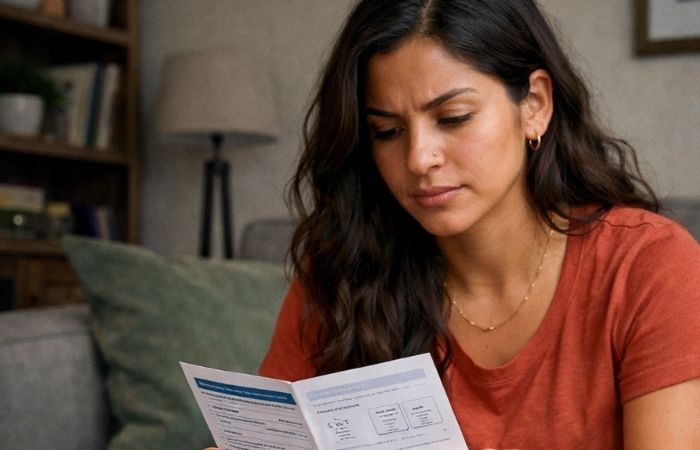
This is the moment people think will bring relief, the result screen, the email, the lab report. But in reality, this is where a lot of confusion begins. A herpes test result is not just “positive” or “negative.” It is a snapshot of your body at a specific moment, using a specific method, and it always needs context to make sense.
If you get a negative result, the first question is not just “am I clear?” but “when did I test?” If it was too early after exposure, that negative result might not mean much yet. If it was after the appropriate window period, then it becomes much more reassuring. Timing is what gives that result its weight.
If you get a positive blood test, especially for HSV-1, it does not automatically mean you have genital herpes or that something new just happened. HSV-1 is extremely common and often acquired in childhood through non-sexual contact. This is where people spiral unnecessarily, assuming the worst when the result might reflect something long-standing and unrelated to their current concern.
A positive HSV-2 result carries different implications, but even then, confirmatory testing is sometimes recommended, especially if the index value is low or borderline. The FDA warning on HSV-2 testing highlights that false positives can occur, which is why follow-up testing can be part of responsible interpretation.
What to Do Right After You Test (No Panic Required)
There is a very specific emotional moment after testing. You are either staring at a result or waiting for one, refreshing your email like it might change faster if you look often enough. This is where your next step matters more than the result itself.
If your result is negative but your exposure was recent, your next step might simply be time. Retesting after the appropriate window period can give you a more confident answer. If your result is positive, your next step is not panic, it is clarity. That may mean confirmatory testing, especially for blood tests, or connecting with a provider who can guide you through what the result actually means in your situation.
One person described sitting in their car after opening a result: “I thought everything was about to fall apart.” In reality, most herpes diagnoses lead to manageable outcomes. Treatments exist, outbreaks can be controlled, and many people live full, normal dating and sex lives with herpes. The hardest part is usually the uncertainty before the answer, not the answer itself.
If you are in that uncertain phase and want to move forward instead of staying stuck, testing again at the right time, or expanding your testing to include other common STDs, can help you get a clearer picture. That is where something like a Combo STD Home Test Kit can shift you out of guessing mode and into actual answers.
Privacy, Shipping, and Why People Choose At-Home Testing
However, not all individuals want to walk into a clinic and say out loud, “I think I might have herpes.” Even though medical professionals are constantly exposed to this kind of conversation, it does not make it any less uncomfortable. This is one of the largest reasons why individuals are opting for in-home testing. Not only does it alleviate the discomfort, but it also allows the individual to be in control of when and how they want to receive their answers.
When it comes to in-home testing, the package is usually discreet and does not indicate in any way what is inside. This alone is enough for a great number of individuals to be able to overcome their emotional barriers and actually receive the testing they need instead of avoiding it altogether.
Another reason why in-home testing is a great option is the timing. Not only can individuals receive their testing immediately, but it is a great option for individuals who want to explore their options without any added pressure. If you are in a situation such as this and want to explore your options without making it any more complicated or overwhelming, starting out with STD Test Kits is a great option.
What No One Tells You: Testing Is About Clarity, Not Perfection
There is an unspoken understanding that testing will provide a definitive answer. In the case of herpes testing, it may not always provide a definitive answer. It may provide an answer now, an answer later, and so forth.
This is especially the case when it comes to herpes testing due to the nature of the virus. It may not always present symptoms, may present symptoms intermittently, and may present symptoms similar to other conditions. This does not mean the testing process is flawed; it means understanding the purpose behind the testing process helps make sense out of what may otherwise feel chaotic.
There are many individuals who have come out the other side and realized the worst part was not the testing process. It was the waiting, the wondering, and the endless searching for worst-case scenario stories online. Once they had a plan and knew what they were going to do and when they were going to do it, the stress was greatly reduced.
If you are someone who is currently stuck in a cycle of wondering and trying to determine what you might have, the first step out of this cycle may not be as complicated as you think. It may not require you waiting any longer for the results you need. It may require you understanding the process better and working through the process step by step.
FAQs
- 1. Can you really test for herpes at home?
- Yes, but it is more likely to be a blood test that is sent away for testing, rather than a rapid test. The tests may be useful for detecting past exposure, but they may not always be the best for testing for a current outbreak. If you have a current sore, it is best to have a swab test.
- 2. What is the most accurate herpes test?
- The most accurate test for herpes is a PCR swab test directly from a fresh sore. This is considered to be the most accurate for testing for a current herpes outbreak.
- 3. How soon can you test for herpes after exposure?
- It will depend on what test is being used. The swab test will work within a few days if a sore appears, but it could take weeks for a blood test to become accurate. If testing is done too early, it will result in a false-negative test.
- 4. Can a herpes blood test be wrong?
- Yes, a herpes blood test can be wrong, especially for HSV-2. There is a chance for false positives and false negatives, especially if the test is taken too early after exposure. The index value is also important.
- 5. Can you test negative for herpes and still have it?
- Yes, especially if testing is done too early, before antibodies have time to develop, and if testing is not done using the most appropriate test.
- 6. Is there an instant herpes test like a pregnancy test?
- There are instant herpes tests available; however, they are not as accurate as laboratory tests. If you wish to take a herpes test at home, it's best to have your sample sent to a laboratory to obtain accurate results.
- 7. Do I need a herpes test if I have no symptoms?
- No, you don't necessarily need a herpes test if you are symptom-free. In fact, many health authorities do not advise herpes testing in people who are symptom-free because it can be difficult to interpret results. However, it depends on your level of risk and concern.
- 8. Can herpes be detected in urine?
- No, herpes cannot be detected in your urine. It can only be detected through a lesion swab or a blood test to determine if herpes antibodies are present in your system.
- 9. What if I test positive for herpes at home?
- The next thing to do after testing positive for herpes at home is to get a second opinion to determine what kind of herpes you are infected with. Fortunately, herpes treatment is very easy to obtain.
- 10. Should I retest if my result is unclear?
- Yes, it's a good idea to retest if your herpes result is unclear or if it's too early to obtain accurate results. Testing for herpes can sometimes be a process.
You Don’t Need to Guess, You Just Need a Plan
Most people come into this situation looking for certainty and leave frustrated because testing does not always give a one-step answer. But here is the shift that makes everything feel more manageable: herpes testing is not about instant perfection, it is about getting closer to the truth in a structured, reliable way.
If something looks or feels off, your next step is not panic, it is choosing the right test for the moment you are in. That might mean getting a sore swabbed quickly, waiting a bit longer for a more accurate blood test, or using a discreet home kit to start getting answers without added stress. The important part is that you move forward with intention instead of staying stuck in uncertainty.
Don’t wait and wonder. If your brain is looping through worst-case scenarios, taking action can bring immediate relief. A discreet option like the at-home combo STD test kit can help you check for multiple infections at once and finally replace guesswork with clarity.
Our article was constructed based on current advice from the most prominent public health and medical organizations, and then molded into simple language based on the situations that people actually experience, such as treatment, reinfection by a partner, no-symptom exposure, and the uncomfortable question of whether it “came back.” In the background, our pool of research included more diverse public health advice, clinical advice, and medical references, but the following are the most pertinent and useful for readers who want to verify our claims for themselves.