Suggesting STD Testing Without Sounding Accusatory
Quick Answer: Suggesting STD testing doesn’t have to feel like an accusation. Use inclusive language (“Let’s get tested together”) and frame it around care, not suspicion. Scripts and timing matter more than you think.

Quick Answer: Suggesting STD testing doesn’t have to feel like an accusation. Use inclusive language (“Let’s get tested together”) and frame it around care, not suspicion. Scripts and timing matter more than you think.
Why It Feels So Awkward (And Why That’s Normal)
You’re not imagining it, suggesting an STD test can feel loaded. That’s because many of us were raised to equate STDs with cheating, shame, or failure. So when you bring up testing, even casually, it can trigger a minefield of unspoken fears: “Do they think I’m dirty?” “Are they accusing me of something?” “Did they cheat?”
But here’s the truth: wanting to know your status is an act of care, not suspicion. It’s about protecting your body, your partners, and your peace of mind. And if you’re reading this, you’re already doing better than most. According to the CDC, nearly 1 in 2 sexually active people will get an STD by age 25, but many never get tested until something goes wrong.
This guide won’t just tell you to “communicate better.” It’ll give you specific, tested ways to bring up testing, respond to common freak-outs, and hold your own boundaries, without drama.

When’s the Right Time to Bring It Up?
There’s no perfect time, but there are better ones. Bringing up STD testing mid-hookup, post-orgasm, or during a fight? Probably not ideal. But there are moments that naturally open the door:
| Timing Moment | Why It Works |
|---|---|
| When you're talking about condoms or birth control | Links testing to safety, not blame. Easy pivot: “I try to get tested between partners too.” |
| When things start getting physical | Signals responsibility and care. Try: “Before we go further, I like to know my status. Want to test together?” |
| After a scare or STI scare in the news | Contextualizes concern. “Did you hear about that gonorrhea strain? I’ve been meaning to get tested anyway.” |
| Before ditching condoms | Necessary step. Frame it around trust: “I’d feel safer if we both tested before going without.” |
Figure 1. Situational cues that make testing talk feel natural, not confrontational.
Scripts That Don’t Sound Like Accusations
Sometimes, what you say matters less than how you say it. The tone. The timing. The delivery. That’s where scripts come in, not for memorization, but to help you stay grounded. Here are some real examples that remove the sting of suspicion and reframe testing as a mutual act of care.
- For someone new: “Hey, before we get more physical, I like to make sure we're both up to date on testing. Want to go together or grab a kit?”
- For someone steady: “I’ve been thinking about how we’ve both changed a lot since we first got together. I’d love to get tested, just for peace of mind. We could do it together?”
- If they’ve never tested: “No judgment at all, I didn’t test for a while either. It actually feels really good to just know where things stand.”
- If they get defensive: “This isn’t about trust, it’s about health. I care about us enough to make this part of the routine.”
Language that centers “we” instead of “you” lowers defenses. And offering to test together makes it a partnership move, not a threat.
Janelle, 27, had just started dating someone she really liked. After a few weeks of texting and late-night meetups, things were heading toward sex. She asked if he’d be down to get tested before they ditched condoms.
“He got really weird about it. Like I was calling him dirty or something. I had to explain, no, this is something I do with everyone. I just want to feel safe.”
Eventually, he agreed. They took a mail-in kit together, sent it off, and shared their results. Janelle said it ended up being “weirdly intimate,” and made her trust him more, not less.
Her story shows that the conversation can start rough but land well. And sometimes the discomfort is the door to deeper trust.
Why People Get Defensive, And How to Stay Calm When They Do
Let’s be real: not everyone reacts well to the suggestion of an STD test. You might hear, “Are you accusing me of something?” or “I thought you trusted me.” These reactions aren’t always about you, they’re often about internalized shame, fear, or lack of education around how common STDs really are.
According to a study in the journal Sexually Transmitted Infections, many people associate STD testing with betrayal, especially in monogamous relationships, even though routine testing is recommended regardless of status.
The key here? Stay grounded. Respond from a place of calm, not defense. You’re not in a courtroom, you’re in a relationship (or a potential one). If someone lashes out, try phrases like:
- “I’m not saying anything happened. This is just something I do for me.”
- “Testing isn’t about the past, it’s about keeping both of us safe going forward.”
- “I get it, it’s awkward. But I’d rather have this convo than risk a silent infection.”
And if someone flat-out refuses or mocks the idea of testing? That’s data, too. You deserve partners who value your health and boundaries.
Why Normalizing Testing Actually Builds Intimacy
Vulnerability can actually foster trust. To open up about STDs, your status, your history, your intentions, can actually promote intimacy in ways small talk never could. “I’m interested enough in this relationship to be vulnerable.” That’s what you’re saying. “I want us to feel safe.”
According to a Kinsey Institute study from 2022, more than 64% of people reported feeling “more emotionally connected” when partners openly talked about testing before sex. This is a big deal. Testing is more than just a physical act; it is emotional too.
Here’s what happens when you normalize it:
| Outcome | Why It Matters |
|---|---|
| Fewer assumptions | Instead of guessing someone’s status, you know. That changes everything. |
| Deeper communication | If you can talk about this, you can talk about anything. It sets the tone for honesty. |
| Less anxiety during sex | Peace of mind = more pleasure. You’re not silently spiraling with worry. |
| Emotional maturity | Partners who can handle this convo are usually better at handling other hard stuff too. |
Figure 2. Relationship gains from normalizing testing, not just medically, but emotionally.
Testing Together: How At-Home Kits Change the Game
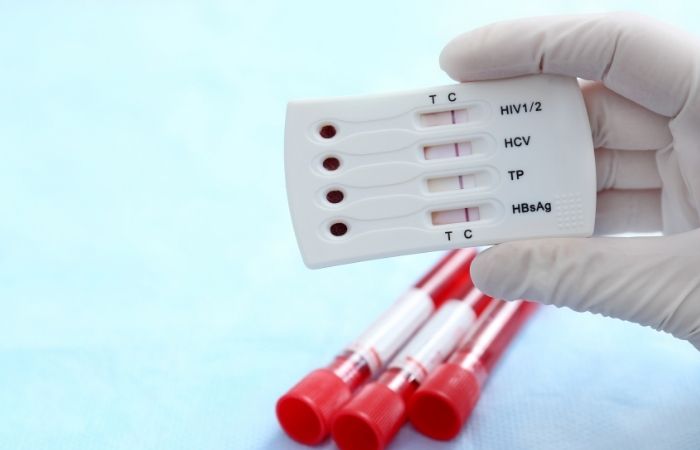
Here’s the good news: you don’t have to drag anyone to a clinic or schedule matching appointments to get tested together. At-home STD test kits make the process faster, easier, and way less intimidating.
You can order a discreet kit from STD Test Kits, test in the privacy of your home, and get results in minutes for many common infections. Whether you're living rural, traveling, or just prefer to avoid awkward waiting rooms, these kits make it possible to prioritize your health without sacrificing your comfort.
Want to make it feel less like a “test” and more like a shared step? Try this:
“I just ordered a kit, want me to get one for you too? We can do it together and celebrate afterward. Ice cream for clean results?”
Testing doesn’t have to be heavy. Sometimes, all it takes is the right tone and the right tools.
Let’s Talk About Trust, Not Accusations
Too often, we conflate testing with distrust. But in reality, the act of testing together can build trust, not destroy it. It’s saying, “I care about us enough to do this right.”
If you’re already in a relationship, it might help to acknowledge how the conversation could land. Acknowledge the discomfort, but stand in your values. Try:
“This isn’t about not trusting you. It’s about trusting our future together enough to make sure we’re both safe.”
And if someone bristles at the word “STD,” try switching to “sexual health screening” or “routine check-in.” Language matters. Many people still carry trauma or shame around the word “STD” itself. That doesn’t make them immature, it means the world has conditioned them to see testing as punishment, not protection.
Let’s change that. Together.
But What If They Say No?
Let’s face it, not everyone’s going to be on board. You could phrase it perfectly, center care, and still get hit with a flat-out “no.” When that happens, the next move is about you, not them. Because if someone refuses to prioritize sexual health, or mocks the idea, you have a right to pause.
Here’s what that moment might sound like:
“I get that this might feel weird. But for me, testing is part of being close to someone. If you're not ready, I respect that, but I might need to wait before we keep going.”
Setting boundaries doesn’t have to be dramatic. You're not threatening them, you’re protecting yourself. You’re saying: I’m allowed to ask for the things that make me feel safe. And that includes testing.
In a 2023 study published in Archives of Sexual Behavior, researchers found that individuals who clearly communicated STI boundaries were more likely to report satisfying sexual relationships and lower post-encounter anxiety.
Your boundaries aren’t accusations. They’re your safety net.
Scripts for Every Situation (Yes, Even the Awkward Ones)
Sometimes the fear isn’t about the test, it’s about the talk. So let’s get real. Here are a few more ready-to-use scripts for moments that commonly trip people up:
- If you're about to ditch condoms: “We’ve been talking about going without. I’m down, but only if we’ve both tested recently. Want to do it together?”
- If you had a scare or hookup recently: “I had a situation a while ago and it made me realize I need to get tested again. Want to test too, just to be safe?”
- If you’ve tested and they haven’t: “I just did my panel, it was super quick. Let me know if you want a link to the kit I used. We can both know where we stand.”
- If they feel hurt: “I get that this might sound intense. But it’s not about blaming you. It’s just how I take care of myself, and my partners.”
Scripts aren’t scripts because you’re fake, they’re guardrails for hard moments. Adjust the words. Add your voice. But don’t wait for the “perfect time.” That moment rarely shows up on its own.
Reclaiming the Conversation: Testing Is Self-Respect
Let’s shift the lens. Testing isn’t just about relationships, it’s about your own self-respect. Knowing your status is power. It’s peace. And it’s protective, not just for you, but for everyone you touch.
Far too many people wait until symptoms show up, or until a partner tests positive, or until they get that dreaded “we need to talk” text. Don’t wait for a scare to start the conversation. Bring it in before the panic, so you never have to panic at all.
And if you’re not sure where to start? Start here:
This at-home combo test kit checks for the most common STDs discreetly and quickly. Whether you’re testing solo or with a partner, it takes the awkwardness out of logistics, so you can focus on the actual conversation.
You deserve clarity. You deserve comfort. And you definitely deserve partners who respect both.
Let’s Talk Timing: When Should You Test?
One reason people hesitate around STD testing is confusion about when it actually works. If you just had sex yesterday, can you test today? Not really. That’s where the concept of the “window period” comes in, your body needs time to produce enough markers for the test to detect.
Here’s a quick breakdown:
| STD | Minimum Time to Test | When Accuracy Peaks |
|---|---|---|
| Chlamydia | 7 days | 14+ days |
| Gonorrhea | 7 days | 14+ days |
| HIV (Ag/Ab test) | 18–45 days | 3 months |
| Syphilis | 3 weeks | 6–12 weeks |
| Trichomoniasis | 5 days | 2–4 weeks |
Figure 3. Window period estimates for common STDs.
FAQs
- 1. Isn’t it kind of awkward to ask someone to get tested?
- Totally. But awkward doesn’t mean wrong. Think of it like talking about birth control or asking about boundaries, it might feel clumsy the first time, but it gets easier. And honestly? Most people are relieved when someone else brings it up first. You’re setting the tone for safety, not suspicion.
- 2. What if they get defensive or offended?
- That happens. And it usually says more about their relationship with shame than anything about you. Try keeping your tone calm, grounded, and inclusive. Say something like, “This isn’t about trust, it’s something I do every time I start something new. I’d love to do it together.” If they still lash out? That’s not your fault. That’s their work to do.
- 3. Can I really suggest testing before the first time we have sex?
- Yes, and you should. You don’t need to wait until things get serious, or risky. A simple, “Hey, before we take this any further, I’d feel better if we both got tested,” is clear and mature. It’s not a mood killer, it’s a vibe protector.
- 4. What if I’ve already tested, do they still need to?
- Yep. Your negative results only tell you about you. Testing isn’t a shared grade, it’s a personal receipt. You can say, “I just did mine, if you’re cool doing yours, we’ll both know we’re good to go.”
- 5. Do people really lie about getting tested?
- Unfortunately, some do. Maybe out of fear, maybe because they misunderstood what was tested, or maybe because they didn’t want to “ruin the moment.” That’s why it’s okay to ask when they last tested, what they were tested for, and if they’re open to doing it together now. If they’re dodgy, believe the hesitation more than the words.
- 6. Can I get an STD from someone who doesn’t have symptoms?
- Absolutely. In fact, most STDs are spread by people who feel totally fine. Herpes, chlamydia, and HPV are often silent carriers. That’s why “they seemed clean” isn’t a testing strategy. Testing is.
- 7. How often should I test if I’m dating or hooking up?
- The CDC says at least once a year, but let’s be real, if you’ve had new partners, unprotected sex, or even just a “what if?” moment, go ahead and test. Many people test after every new partner or when switching relationship dynamics (like ditching condoms). Normalize it like a dental cleaning, just way less painful.
- 8. Are at-home STD tests legit?
- Yes, especially when you get them from a trusted source. Rapid kits can give results in minutes, and mail-in lab kits use the same tech as many clinics. Just follow the instructions, test at the right time post-exposure, and use a reliable provider like STD Test Kits. You’ll know you’re getting real answers, not guesses.
- 9. How do I make the conversation less weird?
- Inject a little humor. Suggest a “testing and tacos” date. Say, “Let’s get tested and then never think about it again.” Or keep it direct: “I like to get tested before getting naked with someone, it’s not personal, it’s practical.” Normalizing testing starts with someone being brave enough to speak first. That can be you.
- 10. What if I already had unprotected sex, did I miss my chance?
- Not at all. But you might need to wait a few days or weeks depending on the STD. Every infection has a different “window period” before it shows up on a test. Use our Window Period Calculator to figure out the best timing. And yes, you can absolutely still talk to your partner after the fact. Retroactive honesty is better than silence.
You Deserve Answers, Not Assumptions
It's brave to talk about testing. Asking for clarity is brave. And it's brave to draw the line when things get tough. But being brave doesn't have to mean being aggressive. You can talk about STD testing in a way that brings people together instead of starting a fight if you get the timing, tone, and tools right.
Don’t wait until something feels off. Don’t wait for a scare. Start the conversation now, and start it with confidence. You’re not accusing anyone. You’re advocating for yourself.
How We Sourced This Article: We combined current guidance from leading medical organizations with peer-reviewed research and lived-experience reporting to make this guide practical, compassionate, and accurate. In total, around fifteen references informed the writing; below, we’ve highlighted some of the most relevant and reader-friendly sources.