How Many Women in Delaware Get Misdiagnosed With UTIs?
Quick Answer: Up to 1 in 3 UTI diagnoses in U.S. emergency settings may be incorrect, and Delaware likely reflects similar trends. UTI symptoms, burning, frequency, urgency, overlap with dozens of other conditions.

Quick Answer: Up to 1 in 3 UTI diagnoses in U.S. emergency settings may be incorrect, and Delaware likely reflects similar trends. Many women are misdiagnosed with UTIs when the real issue is an untreated STI, inflammation, or even no infection at all.
Why This Story Hits Hard in Delaware
Delaware may be small, but the misdiagnosis problem here looms large. Women in this state are just as vulnerable to the nationwide patterns playing out in ERs, urgent care centers, and even OB/GYN offices. UTI symptoms, burning, frequency, urgency, overlap with dozens of other conditions. And yet, too often, those symptoms trigger antibiotics without real confirmation.
While there’s no official public dataset tracking UTI misdiagnosis rates by state, Delaware women navigate the same system pressures: rushed visits, limited testing access, and outdated diagnostic habits. That means the same outcomes, false assumptions, delayed STI treatment, worsening symptoms, play out across Wilmington, Dover, Newark, and beyond.
National studies tell us a lot. One large ED-based analysis found that nearly half of UTI diagnoses in young women lacked lab confirmation, and many were actually sexually transmitted infections. That’s not just a paperwork error. That’s someone taking the wrong pills while an actual infection festers, spreads, and maybe scars them for life.
If you’ve ever left a clinic with a UTI label and a weird feeling that something was off, you’re not alone. And you’re not wrong to question it.

UTIs, STIs, or Something Else? When the System Gets It Wrong
Let’s get real about why this happens. UTI symptoms aren’t unique. Pain while peeing? Happens with gonorrhea. Frequent urination? Could be trichomoniasis or even herpes. Lower belly pain? That might be inflammation from an untreated chlamydia infection climbing up the reproductive tract. And yet, in countless Delaware clinics, the default move is a dipstick, a guess, and a script.
Misdiagnosis thrives on speed. Clinicians feel pressure to move quickly. Patients want fast relief. Insurance doesn’t always cover full panels. Lab results take time. So they cut corners. But the cost? Women walk out misdiagnosed, overmedicated, and still in pain.
According to the CDC's STI treatment guidelines, overlapping symptoms should always trigger STI screening when possible. But in real life? A quick "UTI" diagnosis is often the path of least resistance. That leaves thousands of Delaware women vulnerable to untreated STIs, incorrect treatments, and real consequences like pelvic inflammatory disease, chronic bladder pain, or antibiotic resistance.
If you're not sure your diagnosis was right, or if your symptoms came back, it’s not just “bad luck.” It might’ve been a misdiagnosis from the start.
When It Looks Like a UTI , But Isn’t
Let’s say you’re a college student at the University of Delaware. You’ve had a new partner recently, but now you feel a constant urge to pee, plus a burning sensation that came out of nowhere. The campus clinic hands you antibiotics within 10 minutes, no STI screen, no culture, no questions about exposure. Sounds like care. Feels like abandonment.
Because here’s the uncomfortable truth: lots of things mimic a UTI. And not testing for them can leave you misdiagnosed, mistreated, and at risk for complications.
| Condition | Key Overlapping Symptoms | Why It Gets Misdiagnosed |
|---|---|---|
| Chlamydia | Burning, pelvic pain, discharge | Often silent or mild; urine tests not always ordered |
| Gonorrhea | Burning urination, urgency, bleeding | Assumed to be UTI in absence of vaginal swab or NAAT |
| Trichomoniasis | Frequent urination, itch, odor | Symptoms dismissed or misread; test not routine |
| Herpes (initial outbreak) | Severe pain, frequency, flu-like symptoms | No external sores = overlooked; swabs rarely done |
| Interstitial Cystitis | Bladder pressure, frequency, pain without infection | No bacteria = “it’s in your head” mislabeling |
Figure 1. Several infections and non-infectious conditions can present with UTI-like symptoms but require different testing and treatment. Without proper screening, they’re easy to miss.
Why the Tests Don’t Always Help
Even when a urine test is performed, it doesn’t always provide clarity. A standard urinalysis, the kind that tests for white blood cells, nitrites, and blood, isn’t diagnostic on its own. These markers are influenced by contamination (especially in women), hydration levels, and even timing of the sample.
Worse, false positives are common. For instance, a woman may have asymptomatic bacteriuria, bacteria in the urine without any actual infection, and be wrongly treated for a UTI. This is especially prevalent in older adults and those with diabetes, but it can affect any age group.
And if no culture is sent out? The diagnosis is based entirely on a dipstick test that misses up to 30% of true infections, or falsely confirms infections that aren’t there. Delaware’s clinics and urgent cares often don’t have same-day culture results, so guesswork becomes standard.
“They Just Assumed It Was a UTI”: Real Delaware Cases
Carla, 41, from Sussex County, was treated for three back-to-back UTIs over six months. But her symptoms, intense urgency, stabbing pelvic pain, and zero discharge, didn’t match the typical bacterial pattern. On her fourth visit, a new nurse practitioner finally ran a full STI panel and pelvic ultrasound. Carla had undiagnosed trichomoniasis and bladder inflammation from untreated herpes shedding, not a single UTI.
“I thought I was losing my mind,” she told us. “The antibiotics made everything worse. And no one listened until I insisted something else was going on.”
She’s not alone. Misdiagnosis often happens repeatedly, because once “UTI” is written in the chart, clinicians double down rather than reassess. Especially in small or rural Delaware clinics, second opinions are hard to access. Many women suffer silently, blamed for “poor hygiene” or “recurrent infections” that aren’t real.
What You Can Do (And Why It Matters)
If you're in Delaware and you're not sure that “UTI” diagnosis tells the whole story, take back the narrative. Ask for STI testing. Ask for a culture. Ask whether your symptoms match the diagnosis. You deserve more than guesswork.
If you’d rather not go back to a clinic that brushed you off, there’s another way.
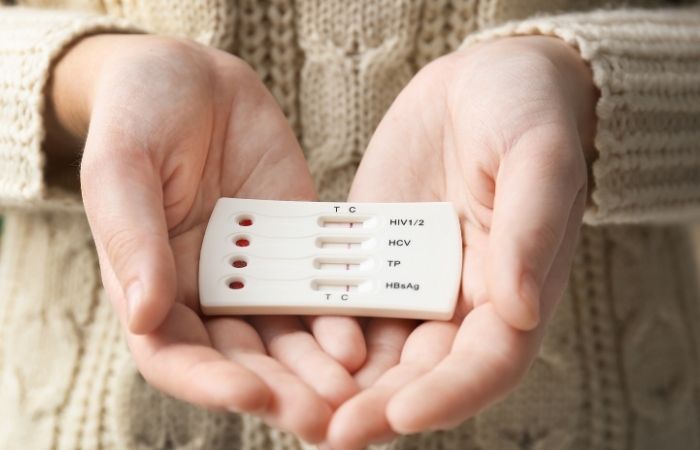
Don’t wait and wonder. This at-home combo STD test can help you rule out common infections discreetly, and accurately.
You don’t need to prove your pain. You just need the right test.
How Many Women in Delaware Are Affected? Estimating the Scope
So, how many Delaware women actually get misdiagnosed with UTIs each year? The state doesn’t release public-facing misdiagnosis data, but that doesn’t mean we can’t make informed estimates.
Let’s start with what we do know. Delaware has just under 500,000 women residents. National data suggests that UTIs account for over 8 million clinic visits annually in the U.S., and that more than 60% of all women will experience a UTI at some point. In many studies, up to 30–40% of UTI diagnoses, particularly in ER and urgent care settings, turn out to be inaccurate or unconfirmed by lab results.
If we conservatively estimate that just 5% of adult women in Delaware seek treatment for a suspected UTI annually, that’s 25,000+ encounters. If even one in three is misdiagnosed, that’s over 8,000 women per year, likely undercounted, being treated for something they don’t have.
That’s thousands of women swallowing antibiotics they didn’t need, walking around with STIs they didn’t know they had, and blaming themselves for symptoms that had nothing to do with “hygiene” or “sex habits.”
Test Accuracy Matters , But So Does Timing and Access
Even with the best intentions, testing tools aren’t equal. Many urgent cares rely on dipsticks. Some OB/GYN offices offer mail-out cultures that take 2–3 days. And patients often don’t realize that STI testing and UTI testing are separate, not automatic. Here’s how it breaks down:
| Testing Method | Speed | UTI Accuracy | STI Detection | Used Commonly In |
|---|---|---|---|---|
| Dipstick Urinalysis | 5 minutes | Low–Moderate | None | Urgent care, ER |
| Urine Culture | 2–3 days | High (for UTIs) | None | Clinics, labs |
| NAAT (Nucleic Acid Amplification Test) | 1–3 days | Varies | Very High (for STIs) | Labs, mail-in, some clinics |
| Rapid Combo STD Test | 15–30 minutes | Not for UTIs | Moderate–High (specific STDs) | At-home kits, outreach programs |
Figure 2. Common testing methods used in Delaware clinics and at home. Only some detect STIs, and many are misused when symptom overlap confuses the diagnosis.
The Cost of Getting It Wrong
Misdiagnosing a UTI isn’t just an inconvenience, it’s a risk multiplier. One wrong label can snowball into more health problems, more emotional distress, and more complications down the line.
Unnecessary Antibiotics = Resistance
The more antibiotics are prescribed without need, the faster they lose their effectiveness. The CDC warns that resistance is a growing public threat, and UTI misdiagnosis plays a major role. Women given antibiotics for conditions they don’t have build resistance they may later need when a real infection hits.
Untreated STIs = Reproductive Harm
Misdiagnosis often delays detection of infections like gonorrhea or chlamydia. Both can cause pelvic inflammatory disease, fertility loss, or chronic pelvic pain when left untreated. A few weeks’ delay can mean permanent damage.
Repeat Visits = More Missed Diagnoses
Women misdiagnosed once are more likely to be misdiagnosed again. Once your chart says “recurrent UTI,” future clinicians often stop looking further. You’re treated as noncompliant instead of misdiagnosed.
Mental Load = Gaslighting and Shame
Too many women leave medical visits feeling dismissed, confused, or blamed. Being told “you’re fine” when you’re clearly not isn’t just bad medicine, it’s a betrayal of trust. Delaware women, like women everywhere, deserve better.
You Can Still Get It Right
This isn’t about fear, it’s about facts. You don’t have to settle for a maybe-diagnosis or guesswork prescription. Whether you’re navigating college clinics, postpartum pain, menopause symptoms, or just an unexpected burn that won’t quit, you deserve clear answers.
STD Test Kits offers discreet, medically backed at-home test options that check for multiple STIs. They’re fast, private, and FDA-approved, giving you power, not panic.
You don’t need permission to investigate your own health. You just need a better toolkit.
FAQs
- 1. Can you actually be misdiagnosed with a UTI?
- Yes, way more often than you’d think. If you’ve ever felt brushed off at urgent care with a UTI diagnosis and antibiotics, but the burning didn’t stop? That might’ve been a misdiagnosis. UTIs share symptoms with STIs, yeast infections, and even bladder inflammation. So yeah, it happens, and it’s not in your head.
- 2. How do I know if it’s really a UTI or something else?
- If it burns when you pee, but there’s no smell, discharge, or fever, and especially if the antibiotics don’t help after 2–3 days, it might be something else. A real UTI usually gets better quickly with treatment. If yours doesn’t? Time to ask for a culture or an STI screen.
- 3. Is peeing a lot always a sign of a UTI?
- Nope. It could be hormones, anxiety, caffeine overload, or even early signs of a chlamydia infection. We know, helpful, right? That’s why testing (not guessing) is so important. Don’t let anyone write you off with “it’s probably a UTI” just because you’re peeing often.
- 4. Can STDs actually cause UTI-like symptoms?
- Absolutely. Gonorrhea, chlamydia, trich, all of them can cause burning, urgency, even pelvic pain. You don’t have to have “classic” STD symptoms for it to be an STD. That’s why people miss it. That’s why providers mislabel it. It happens all the time, especially when STI testing isn't routine.
- 5. Does it matter if they don’t send my urine to a lab?
- Yes. Dipsticks and “quick tests” can lie to your face. A culture is what confirms whether bacteria are really there and which antibiotic works. No culture = guesswork. It’s like diagnosing strep throat by asking if your voice sounds raspy. Not good enough.
- 6. My symptoms keep coming back, what’s going on?
- You might not be dealing with a UTI at all. Maybe it’s a resistant strain. Maybe it was never bacterial. Maybe it’s an STI that didn’t get caught. Or maybe your partner was never treated and you’re stuck in a ping-pong cycle. That’s why repeat symptoms deserve better answers, not just another antibiotic.
- 7. What happens if I take antibiotics for a UTI I don’t have?
- In the short term? You might get some side effects like nausea, yeast infections, or an upset gut. In the long term? It builds antibiotic resistance, which is a real issue. Plus, it doesn’t fix the real problem if it’s not a UTI. So you stay sick, and confused.
- 8. Is this more likely to happen to women?
- Yes. Women’s symptoms are often dismissed or oversimplified. “UTI” becomes a catch-all label. Add in rushed appointments, limited testing, and gender bias, and misdiagnosis becomes the norm, not the exception. Delaware’s not immune to that.
- 9. Can I test myself at home for the real cause?
- You sure can. At-home STI kits like the combo test check for several infections that get confused with UTIs. They’re discreet, fast, and way less judgmental than some clinics. Bonus: no small talk with a receptionist about your pee habits.
- 10. Should I be embarrassed for questioning my diagnosis?
- Hell no. Advocating for your body isn’t rude, it’s responsible. If something doesn’t feel right, speak up. Ask questions. Push for real answers. You’re not being dramatic. You’re being smart.
You Deserve Answers, Not Assumptions
If you're a woman in Delaware who's ever been handed a UTI diagnosis and felt a flicker of doubt, you weren't overthinking. You were asking the right question. How many other women are walking out with the wrong label, the wrong pills, the wrong sense of relief?
Misdiagnosis doesn’t have to be your story. It doesn’t have to be your partner’s story either. With better testing, clearer symptom mapping, and a system that finally listens, fewer women would face the fallout of a wrong call made in five rushed minutes.
You can reclaim that control. Order a combo test kit that checks for the most common sexually transmitted infections discreetly and accurately, no waiting rooms, no assumptions, no judgment.
When in doubt, test smarter, not harder.
How We Sourced This Article: We combined current guidance from leading medical organizations with peer-reviewed research and lived-experience reporting to make this guide practical, compassionate, and accurate. In total, around fifteen references informed the writing; below, we’ve highlighted some of the most relevant and reader-friendly sources.
- UTI or STI? Study Shows High Misdiagnosis Rate in Emergency Settings
- CDC STI Treatment Guidelines (2021 Update)
- Personal Essay: How I Was Misdiagnosed With a UTI
- Uncomplicated Urinary Tract Infections – StatPearls (Diagnosis and Misdiagnosis Challenges)
- Study: Many Women in the US Receive Inappropriate Treatment for UTIs | ScienceAlert (misdiagnosis and mismanagement)