Men Get Trich Too: What Symptoms (If Any) to Watch For
Quick Answer: Men can absolutely get trichomoniasis. While most experience no symptoms, some may notice burning during urination, irritation, or discharge. “No one ever told me guys could even get trich.”

Quick Answer: Men can absolutely get trichomoniasis. While most experience no symptoms, some may notice burning during urination, irritation, or discharge. Untreated, trich can persist and be passed to partners, so testing matters, even if you feel fine.
No, It’s Not Just a “Women’s Infection”
“I thought only women got this,” said Chris, 29, when he finally saw his test results. “No one ever told me guys could even get trich.” His only symptoms? A slight burn while peeing and an off-smelling discharge he figured was dehydration. He brushed it off for months.
“If I hadn’t been in a new relationship and testing anyway, I probably still wouldn’t know.”
Trichomoniasis isn’t just a “women’s issue.” It’s one of the most common, but least diagnosed, STDs in men. And because the symptoms are usually subtle (or completely invisible), it flies under the radar. Here's what to look out for, why ignoring it can backfire hard, and how men can test at home without shame, clinics, or awkward convos.
Let’s kill this myth right away: men can get trichomoniasis. The reason you don’t hear about it is because it’s underdiagnosed, underdiscussed, and often asymptomatic in men. That doesn’t mean it’s harmless.
The CDC estimates that trich affects over 2 million people in the U.S. at any time, but men are rarely the ones tested for it. Most testing guidelines prioritize people with vaginas, despite the fact that infected men are often silent carriers, unknowingly passing it to partners again and again.

So… What Does Trich Look Like in Men?
If you’re expecting some big, dramatic warning sign, think again. Trich symptoms in men are often mild, misread, or totally absent. But when they do appear, here’s what to watch for:
- Burning when you pee: Not full-on UTI pain, but a subtle sting or irritation that lingers
- Unusual discharge: Thin, whitish or clear discharge from the tip of the penis, often worse in the morning
- Itching or tingling: Inside the urethra (yup, that weird internal feeling)
- Testicular discomfort: Rare, but reported in cases with longer infection timelines
- Nothing at all: Up to 75% of men with trich show zero signs, just passing it silently to their partners
If you’ve had unprotected sex with a new partner, or multiple partners, it’s worth getting tested even if nothing feels off. Trich can hang out in your system for months without making noise.
“She Got Tested. I Had No Clue I Gave It to Her.”
Jason, 34, only found out he had trich when his girlfriend tested positive and confronted him. “She was crying, asking if I cheated,” he said. “I hadn’t. But I didn’t even know I had it. I felt totally fine.”
“That was a brutal conversation. I had no symptoms. None. But I still hurt her, and I didn’t mean to.”
After testing himself, Jason came back positive. Turns out, the burning he’d felt after peeing now and then? It wasn’t dehydration. It was trich.
He got treated. So did she. But the damage to trust took longer to repair. “I test regularly now,” he says. “Even if I feel totally fine.” Trich isn't about symptoms. It's about responsibility.
Even without symptoms, men with trichomoniasis can still pass it to their partners. And since many women do develop symptoms, you could unintentionally expose someone else while walking around thinking you're "all clear."
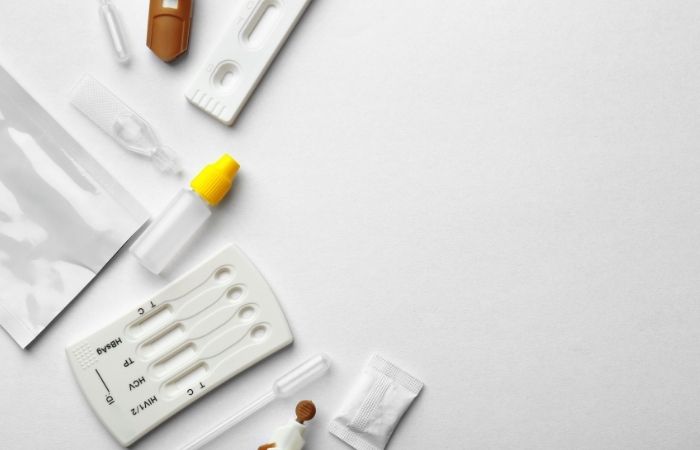
Trich testing in men typically involves a urine sample. That’s it. No swabs. No clinic drama. At-home STD test kits now include trich as part of a full panel, so you don’t even have to ask for it specifically.
- Convenient: Test at home. No appointments. No awkward convos.
- Accurate: Lab-certified. Most are over 95% accurate.
- Fast: Just send your sample in and get results in a few days.
What Happens If You Don’t Treat It?
Ignoring trichomoniasis doesn’t just risk passing it to your partner, it can mess with your health, too. Studies from PubMed and Sexually Transmitted Diseases journal show untreated trich in men can lead to:
- Urethritis: Inflammation of the urethra, which can lead to chronic discomfort
- Prostatitis: Prostate irritation or infection in longer-term cases
- Infertility risks: Emerging research connects trich to possible fertility complications
- Reinfection cycles: You treat your partner, but if you’re still carrying it, boom, it comes right back
Even if you're symptom-free, the parasite can do damage quietly over time. And you’ll be stuck in a cycle of “maybe I’m fine” that leads nowhere helpful.
“But I’m Not Sleeping Around…”
Let’s clear up one more toxic myth: you don’t need to be sleeping with multiple people to get trich. You can get it from a single encounter. From someone who didn’t know they had it. From a partner you trust. It’s not about promiscuity, it’s about biology.
And if you’ve ever had sex without a condom, even once? You’ve been at risk. That doesn’t make you reckless. That makes you human.
Testing doesn’t mean you did something wrong. It means you’re smart enough to check.
The Silent STD: How Shame Keeps Men from Getting Help
If you’re a guy reading this, chances are no one ever told you you could get trichomoniasis. It’s not in most sex ed curriculums. It’s not routinely tested for. And it sure as hell isn’t part of the locker room talk. Instead, men are told to “suck it up,” ignore mild symptoms, and only worry if something hurts a lot or “looks infected.” That silence? It’s not just outdated, it’s dangerous.
Trich is tailor-made to thrive in that kind of shame vacuum. It’s quiet, often symptomless, and not talked about. That means most men don’t learn about it until a partner tests positive, or until they’ve passed it along more than once without realizing.
“I’d never even heard of it,” said Jordan, 31. “I got tested ‘just to be safe’ after a breakup and came back positive. I literally thought they were joking. I was like, ‘What even is trich?’”
That reaction is common, and it’s not men’s fault. We don’t give guys the tools to talk about sexual health without embarrassment. We tell them to be confident, dominant, and chill about sex, but then offer zero space for vulnerability when something’s off. That leaves a lot of men stuck between denial and silence.
Here’s how it often goes: a man feels a weird sting while peeing. Or sees a slight discharge in the morning. Or notices his partner says something “smells off” after sex. Instead of thinking “maybe I should get tested,” his first thought is often, “I’m probably fine. It’ll pass.”
Why? Because we’ve wired men to associate STD symptoms with failure. With dirtiness. With weakness. If sex is supposed to be effortless, pleasure-driven, and ego-affirming, where do you file away “I might have a parasite in my urethra”?
The result? Delay. Avoidance. More transmission. And a growing disconnect between sexual confidence and actual sexual responsibility.
According to CDC data, men are far less likely than women to seek STD testing unless prompted by a partner or a full-blown symptom. That gap isn’t about recklessness, it’s about social conditioning. When the only acceptable feeling around sex is pride, anything that brings in fear or uncertainty becomes taboo.
Kevin, 28, noticed a slight irritation when he peed. He Googled it, saw “trichomoniasis” on a list, and immediately clicked away.
“I didn’t even know how to pronounce it,” he said. “And honestly, I was embarrassed to bring it up. Like, who gets trich?”
Instead of testing, Kevin waited. Weeks passed. His symptoms faded. Problem solved, right? Not exactly. A month later, his new partner tested positive. “I had to sit there and explain that I probably gave it to her, and that I ignored it. That was one of the most uncomfortable conversations I’ve ever had.”
This isn’t about blame, it’s about better tools. Men deserve access to judgment-free, easy testing and the language to talk about STDs without feeling broken. That starts with honest education and resources that don’t assume you already know everything about your own body.
FAQs
1. Can men really get trich?
Yes, and it’s way more common than you think. Just because no one taught you that in health class doesn’t mean you’re immune. Trich doesn’t care about your gender, it cares about unprotected sex. If you’ve got a penis and you’ve had sex, you’re in the club.
2. What does trich even feel like in men?
Honestly? Most of the time, it feels like nothing. But if symptoms show up, it might be a mild burning when you pee, a weird tingle inside your urethra, or some watery discharge that shows up first thing in the morning. Easy to ignore. Even easier to spread.
3. Could I have trich and not know it?
Absolutely. That’s kind of trich’s whole deal. It’s a stealthy little parasite, doesn’t always announce itself with big symptoms. That’s why it flies under the radar in men and ends up passed back and forth like a bad secret.
4. Will trich go away without meds?
Not likely. Your immune system might keep it quiet for a while, but trich is stubborn. Without treatment, it usually just hangs out in your system, causing low-grade inflammation, or reinfecting your partner. Not exactly a good long-term strategy.
5. Can I give it to someone even if I feel fine?
Yep. Feeling fine doesn’t mean you’re not contagious. That’s one of the trickiest things about trich, it spreads best when no one suspects anything’s wrong. It’s not about symptoms, it’s about whether you’re carrying the parasite.
6. Where did I even get this?
You could’ve picked it up from any unprotected vaginal sex, even if it was months ago. Trich can hang out without symptoms, so someone might have passed it to you without knowing. It doesn’t always mean cheating. It usually means no one got tested.
7. What if I already got treated but my partner didn’t?
Then you might get it right back. Trich is notorious for the ping-pong effect, one person clears it, the other doesn’t, and it just keeps bouncing between you. Both of you need to test and treat at the same time to fully shut it down.
8. How do I even test for trich at home?
Easy. You pee in a cup, send it to a lab, and get results online. That’s it. No waiting room, no awkward questions. This combo STD kit checks for trich (plus other common infections) in one go.
9. Is it weird to test if I don’t have symptoms?
Not at all. That’s actually the smartest time to do it, before there’s a problem. Consider it sexual health maintenance. Like brushing your teeth before a cavity. Testing is how you show up for yourself and your partners.
10. What if I’m scared to tell someone I tested positive?
First: you’re not alone. Second: you’re not dirty. STD stigma sucks, but honesty is powerful. Say it calmly, offer to help them get tested too, and remember, you didn’t do anything wrong by getting informed and taking care of your health.
Real Men Get Tested
Being proactive about your health doesn’t make you paranoid. It makes you powerful. There’s nothing weak about wanting clarity. There’s nothing embarrassing about treating an infection. You don’t need to tell your whole friend group. You don’t need to announce it on your Instagram story. You just need to know your status, and take action if needed.
This test kit lets you test for trich (and more) from home, no awkward conversations required. No one has to know, but you will. That’s the shift. That’s what makes you better, not just for yourself, but for the people you sleep with. Testing isn’t shameful. Silence is.
- PMC – Study: Up to 69% spontaneous resolution of trichomoniasis in men within 35–45 days
- PubMed – Recent analysis: most men do not clear T. vaginalis spontaneously in the short term
- Cleveland Clinic – Without treatment, trichomoniasis can last months or years and won’t resolve on its own
- ASHM – Men may clear infection within ~4 months; women, however, may carry it for 3–5 years
- DermNet NZ – Spontaneous resolution can occur: infections often short-lived (up to ~10 days) but can persist for months
- Nature (Scientific Reports) – ~50% of women cleared infection within 6 months; persistence influenced by factors like age and partner count