Should You Get Tested for Chlamydia Before Trying to Conceive?
Trying for a baby comes with a quiet checklist most people don’t talk about out loud. You think about timing, nutrition, maybe cutting back on alcohol, but STD testing rarely makes that list, even though it should.

Last updated: March 2026
Trying for a baby comes with a quiet checklist most people don’t talk about out loud. You think about timing, nutrition, maybe cutting back on alcohol, but STD testing rarely makes that list, even though it should. Chlamydia is one of the most common infections worldwide, and because it often shows no symptoms, it can affect fertility without you realizing anything is wrong. This article walks you through whether testing matters, what’s actually happening in your body, and how to move forward without second-guessing yourself.

Why Chlamydia Testing Matters Before Trying to Conceive
You can be doing everything “right” and still miss this piece. Eating well, tracking ovulation, planning timing down to the day, and meanwhile, an undetected infection is sitting quietly in the background. That’s not a failure on your part. It’s how chlamydia works.
Chlamydia is caused by the bacterium Chlamydia trachomatis, which specifically targets the mucosal lining of the reproductive tract. Once it enters the body, it attaches to cells in the cervix or urethra and begins replicating inside them. The immune system responds, but not always in a way you can feel. There’s no alarm bell, no obvious symptom in many cases, just a low-level inflammatory response happening out of sight.
That inflammation is the key detail most people don’t hear about. Over time, even mild inflammation can start to affect nearby structures. In the reproductive system, that means the fallopian tubes, thin, delicate pathways where fertilization actually happens. When those structures are irritated repeatedly or for long periods, the tissue can begin to scar.
This is where the conversation shifts from “infection” to “fertility.” It’s not the presence of chlamydia alone that creates risk; it’s the duration of untreated infection. The longer it’s there, the more opportunity it has to interfere with normal reproductive function.
That’s why testing before trying to conceive isn’t about assuming something is wrong. It’s about removing a hidden variable. You’re essentially saying: “Before we start this process, let’s make sure nothing silent is working against us.”
And honestly, that mindset tends to make the entire process feel more controlled. Instead of wondering later why things aren’t happening as expected, you’ve already ruled out one of the most common and overlooked factors.
Can You Have Chlamydia Without Knowing It? (And Why That Matters)
This is the part that catches people off guard. A lot of infections come with warning signs, pain, irritation, or something that pushes you to act. Chlamydia often doesn’t. You can feel completely normal and still have an active infection.
It usually plays out like this: you’re lying in bed one night, scrolling through articles about fertility or pregnancy prep, and you come across a line that says something like, “many STDs have no symptoms.” Suddenly, you’re thinking back, when was the last time you actually got tested? Not a general check-up, but a real STD panel?
That moment of uncertainty is incredibly common. And it’s valid, because according to the CDC, the majority of women and a significant number of men with chlamydia do not experience noticeable symptoms. The bacteria continue to live and replicate in the reproductive tract without triggering a strong sensory response.
From a biological standpoint, this happens because the infection is localized to mucosal surfaces and doesn’t always trigger acute inflammation. Instead of a sharp, painful reaction, the body produces a slower, more subtle immune response. That’s why it can go unnoticed for weeks, months, or even longer.
The problem is that “no symptoms” does not mean “no impact.” The infection can still move upward through the reproductive tract, affecting the uterus and fallopian tubes over time. By the time symptoms do appear, if they appear at all, the infection may have already caused changes that are harder to reverse.
Here’s a clear way to think about it: symptoms are not a reliable screening tool. They’re inconsistent, and in the case of chlamydia, often absent entirely. Testing is the only way to know what’s actually happening.
| Factor | What’s Happening |
|---|---|
| No noticeable symptoms | Infection stays localized without triggering strong pain signals |
| Mild or vague symptoms | Often mistaken for UTIs, irritation, or hormonal changes |
| Slow progression | Inflammation builds gradually over time rather than suddenly |
| Irregular testing habits | People assume they’re fine without recent screening |
This is exactly why people who feel perfectly healthy still benefit from testing before trying to conceive. It removes the guesswork. It replaces “I think I’m fine” with “I know where I stand.”
And that shift, from assumption to certainty, is a big deal when you’re about to start something as important as trying for a baby.
How Chlamydia Can Affect Fertility Over Time
This is where things start to get a little more tangible. Chlamydia does not literally “turn off” fertility, but it does disrupt some of the physical mechanisms which allow for fertility in the first place. And it does this in a very precise biological chain reaction.
Once the bacteria have infected the cervix, it can start to move upwards into the uterus and fallopian tubes. White blood cells are sent to fight off the infection in response to this. This is good in small doses, but it can cause problems in larger doses.
The fallopian tubes are particularly susceptible to this. They are small, thin tubes with small “hair-like” structures inside which help move the egg from the ovary towards the uterus. If this process is disrupted through repeated inflammation, it can cause scarring inside these tubes.
This is the key moment. It can cause scarring which can impede these tubes, making it harder for sperm to get to the egg in the first place, or it can cause scarring which can impede the movement of the fertilized egg towards the uterus. In extreme cases, it can cause these tubes to be completely blocked off, which prevents conception altogether.
This is often associated with something called pelvic inflammatory disease (PID). According to the CDC, PID is an infection of the upper reproductive organs that happens when sexually transmitted infections, including chlamydia, spread beyond the cervix. The more time that passes without treatment, the greater the risk of this happening.
The key here is that timing is everything. When chlamydia is in its early stages, there is little chance of long-term damage. However, if it is left undetected for months or even years, the cumulative damage from inflammation makes complications more likely. That’s why testing before conception is not so much about urgency but prevention. You’re catching something early, before it even has time to interfere.
If you have ever wondered what could be causing fertility issues for some couples, this is something that is often explored. Not because it is likely, but because it is common enough that it makes a difference, and it is preventable with something as simple as a test.
At-Home Chlamydia Testing Before Pregnancy (When and How)
And then we get to what actually impacts your next step: testing.
If you want to conceive, your next step is not just to get tested. Your next step is to get tested at the right time and understand what your results actually mean. This is where confusion usually ensues, especially if you get tested too early and get results that do not reflect your true situation.
Chlamydia also has its own window of detection. You have to get tested 14 days after exposure. This is because there is a lag time in which bacteria have to replicate in order for them to be detectable. If you get tested too early, your infection could still be present, but your test results will not reflect that.
This is probably one of the most frustrating aspects of STD testing. Your timeline is not always in line with biology’s timeline. You might want immediate results, especially if you are about to embark on your next project: having a baby. However, if you get tested too early, you might get false results.
Getting tested at home makes all of this much more manageable. You do not have to schedule appointments or put off your plans. You get tested on your own timeline. This is probably the largest hurdle for most people: actually getting tested.
You can use options like combo STD home test kits, which check for chlamydia along with other common infections. This is especially useful if you haven’t been tested in a while, because it gives you a broader view of your sexual health in one step. You can also explore all available testing options directly on the STD Test Kits homepage.
Now let’s break down what your result actually tells you, because this is where clarity really matters.
| Result | What It Means |
|---|---|
| Negative (after 14 days) | No detectable infection at the time of testing |
| Positive | Chlamydia bacteria are present and should be addressed before conception |
| Tested too early | Result may not reflect true infection status |
| Post-treatment retest | Confirms the infection has cleared before trying |
A negative result after the proper window period means you can move forward without worrying about chlamydia affecting your fertility or pregnancy. A positive result means you’ve caught something early, before it becomes a bigger issue, and can handle it before trying to conceive.
This is why testing is framed as empowerment, not alarm. You’re not looking for problems; you’re removing unknowns. And when you’re planning something as important as a pregnancy, that clarity is everything.
What Happens If You Get Pregnant With Chlamydia?
This is one of those questions that people may think but don’t necessarily ask aloud, but it is an important one: what if you don’t get tested, you start to try to conceive, and then discover you have chlamydia?
From a purely biological standpoint, chlamydia does not magically disappear because pregnancy is about to happen. It can still affect the cervix, the reproductive organs, and in some cases, can be transmitted to the baby at birth.
The presence of chlamydia in the body can also cause inflammation in the cervix, which could, in turn, affect the way the body supports the pregnancy in the early stages. According to the NHS, chlamydia infections in pregnancy can increase the risk, which can be avoided if the infections are detected early.
The key word in the above sentence is “avoided.” It is not meant to frighten people into getting checked, but to make them realize that timing can affect the way things turn out. Chlamydia can be dealt with in a perfectly controlled environment if it is detected before pregnancy, but if it is detected in the middle of pregnancy, things get a lot more complicated.
There is also a psychological factor to consider in this debate. Being told you have chlamydia in the middle of pregnancy can cause unnecessary stress, which is an already stressful period in any woman’s life. Getting checked beforehand negates this from the start.
The real question, then, is not “what if I have chlamydia?” but “what if I don’t get checked beforehand?” The answer to this, of course, is that you would have no idea, which is why it is better to get checked beforehand.
It gives you a clean slate to start from, which, in something as important as trying to conceive, is essential.
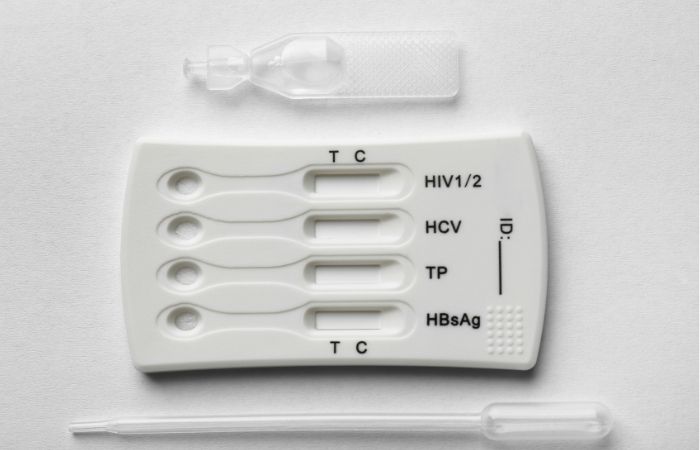
STD Testing Timeline Before Pregnancy (What Else Should You Check?)
While it’s true that if chlamydia is your biggest concern, it’s unlikely that it’s your only concern. This is also true in terms of the fact that many STIs have different detection time lines. This means that if you get tested for everything at once, it’s unlikely that you will get a comprehensive picture unless it’s at the right time.
This is also where many people get caught up. This means that you get tested for everything and get back clean results. However, if it’s too early for detection for other infections, it’s likely that these results will not reflect what’s really going on.
Every STI has its own biological time line, and it’s influenced by things like how quickly it reproduces in the body and how quickly it’s likely to be detected.
| Infection | When to Test After Exposure |
|---|---|
| Chlamydia | 14 days after exposure |
| Gonorrhea | 3 weeks after exposure |
| Syphilis | 6 weeks after exposure |
| HIV | 6 weeks (first indicator); retest at 12 weeks for certainty |
| Herpes (HSV-1 & HSV-2) | 6 weeks after exposure |
| Hepatitis B | 6 weeks after exposure |
| Hepatitis C | 8–11 weeks after exposure |
What this means in practice is that your testing strategy should match your timeline. If your last potential exposure was recent, you may need to wait until the longest window period has passed to get a fully reliable panel result. Otherwise, you risk missing infections that haven’t reached detectable levels yet.
If your exposure timeline is unclear, which is common, using a combo STD home test kit can simplify things. You can test once at the appropriate time window and get a broad, accurate snapshot instead of trying to piece together multiple tests at different times.
The goal here isn’t to overcomplicate things, it’s to align your testing with how these infections actually behave in the body. When you do that, your results become something you can trust, not something you have to second-guess.
Do Both Partners Need Testing Before Trying for a Baby?
This is where a lot of people unintentionally trip up. One person tests, gets a negative result, and assumes everything is clear. But chlamydia doesn’t work as a solo condition; it moves between partners, often without either person realizing it.
Imagine this: you take a test, it comes back negative, and you feel confident moving forward. But your partner hasn’t been tested recently. If they’re carrying an undetected infection, it can be passed during sex, effectively resetting the situation without any obvious sign that something changed.
This is what’s known as reinfection, and it’s one of the most common reasons infections persist even when someone has already taken action. The bacteria don’t “stay gone” if exposure continues; they re-enter the body, and the cycle starts again.
Biologically, this happens because chlamydia spreads through direct mucosal contact. There’s no immunity built up after an infection, which means previous exposure doesn’t protect you from getting it again. Each new exposure is a new opportunity for infection.
That’s why testing as a couple matters. It’s not about distrust, it’s about alignment. Both people knowing their status at the same time creates a clean starting point, which is exactly what you want before trying to conceive.
It also changes the conversation. Instead of guessing or assuming, you’re making a shared decision based on actual information. And when you’re planning something as important as pregnancy, that level of clarity tends to make everything feel more grounded.
Building a Smart Pre-Pregnancy Testing Plan
At this point, the objective is no longer to test but to develop a simple and realistic plan that removes all uncertainty before you even begin. And the best part is, it doesn’t have to be complicated.
A good pre-pregnancy plan begins with STD testing first, especially when it comes to diseases such as chlamydia, which can be present without symptoms. This is quick, easy, and provides instant clarity and understanding of whether you should be worried or not before proceeding further.
You can also include other factors such as ovulation and fertility testing if you wish, but the fact remains that starting with STD testing ensures you’re not creating a plan based on unknowns.
There’s also the added advantage of timing when it comes to chlamydia, which can be tested and diagnosed 14 days after exposure. This means you don’t have to wait forever to know the results and can test and know the results in a set timeframe.
At-home testing is also helpful in this case, as it removes the hassle of scheduling and waiting and allows you to do as you please and when you please. Sometimes, that’s all it takes – moving from ‘I should probably do that someday’ to ‘I should probably do that today.’
If you’re in the place in your life where you’re seriously thinking of having kids, one of the easiest steps you can take is to do an STD test and know the results. It’s not because there’s likely something wrong but because having clarity and knowing for sure is often the best way to proceed with confidence.
It’s as simple as that – replacing uncertainty with clarity and understanding before you even begin.
And once you do know, the rest of the process, timing, and scheduling is far easier to navigate and understand.
FAQs
Should I get tested for chlamydia before trying to conceive?
Yes. This is because it is possible for you to be infected without symptoms and it is also possible for it to affect your fertility in due course.
How long before trying for a baby should I get tested for chlamydia?
You should get tested at least 14 days after any possible exposure to chlamydia to make sure that it is detectable.
Can chlamydia cause infertility even without symptoms?
Yes. This is because it will cause inflammation and scarring in the fallopian tubes over time, even if you don’t display symptoms.
Do I need to get both me and my partner tested for chlamydia?
Yes. This is because if only one partner is tested and diagnosed, it is possible for reinfection to occur if the other partner is infected with chlamydia.
What does it mean if I get a negative result for chlamydia?
If you get a negative result, it means that you don’t have any chlamydia infection at that time.
What if I get a positive result for chlamydia before trying for a baby?
If you get a positive result for chlamydia, it means that you have it and need to get it cleared up before you start trying for a baby.
Can I start trying for a baby as soon as I get a negative result for chlamydia?
Yes. This is because once you get a negative result within the 14-day window period, you don’t need to wait.
Is chlamydia part of normal fertility tests?
Not always. This is because STD tests are often carried out separately.
Should I get tested for chlamydia without relying on symptoms?
Yes. This is because it is possible for you to be infected without symptoms.
Do I need to get retested for chlamydia once I am cured?
Retesting may be recommended to confirm the infection has cleared before trying to conceive.
Take Control Before You Try
Trying for a baby is definitely one of those situations where you want everything to be on your side. Testing for chlamydia is an easy step that eliminates a big unknown factor. It’s not that you think something is going to go wrong, it’s that you want nothing lurking in the background that could be causing you problems.