Mouth Sore or STD? What That Painful Spot Really Means
Quick Answer: Mouth sores are usually canker sores or irritation, not STDs, but certain infections like herpes or syphilis can cause oral lesions. A white spot? A red ring? A crater?
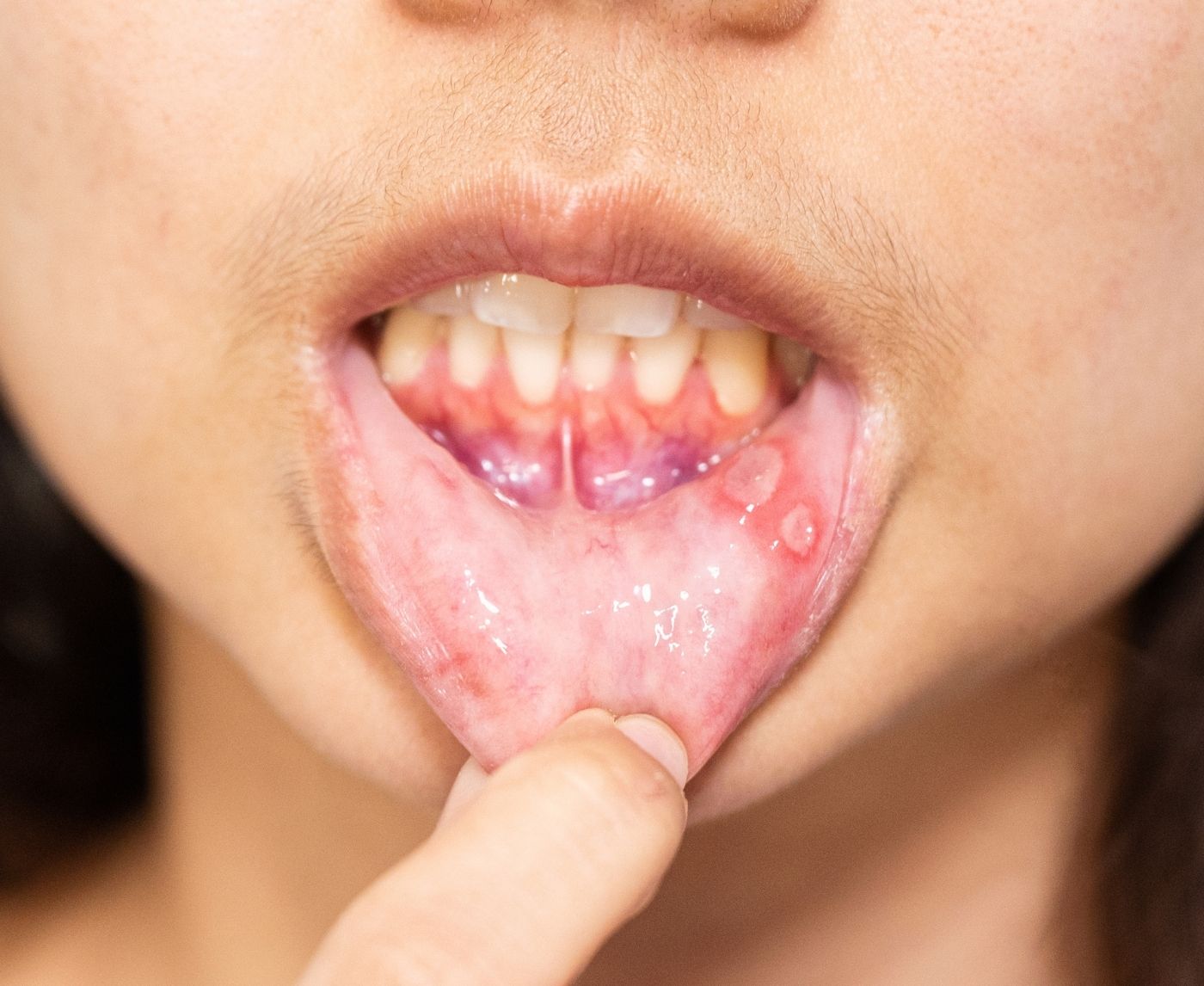
Quick Answer: Mouth sores are usually canker sores or irritation, not STDs, but certain infections like herpes or syphilis can cause oral lesions. Location, pain level, timing, and exposure history all help determine the difference.
First, Let’s Talk About What You’re Actually Seeing
Not all mouth sores are created equal. That sounds obvious, but when you’re staring at one in the mirror, everything starts to look suspicious. A white spot? A red ring? A crater? It all blends together when anxiety kicks in.
Most mouth sores fall into a few broad categories: canker sores, cold sores (herpes), trauma-related irritation, or something less common like a bacterial infection. The tricky part is that they can look similar at a glance but behave very differently.
Here’s where we ground this in reality: the majority of painful sores inside the mouth, especially on the inner lip, cheek, or tongue, are not sexually transmitted. They’re usually canker sores, which are linked to stress, minor injury, or even acidic foods. But that doesn’t mean you should ignore everything.
What a “Normal” Canker Sore Feels Like (Even If It Doesn’t Feel Normal)
A canker sore is one of those things that feels dramatic but is medically boring. It shows up suddenly, hurts more than it looks like it should, and then disappears without asking permission. Most people get them at some point, especially during stress, illness, or after biting their cheek.
They tend to appear inside the mouth, on the soft tissues. Think inner lips, cheeks, under the tongue. Not the outer lip. Not the skin around your mouth. That distinction matters more than people realize.
And the pain? Sharp, stingy, and disproportionate. Eating citrus or spicy food feels like a personal attack. Talking can irritate it. But despite how aggressive it feels, it doesn’t spread and it isn’t contagious.
| Feature | What It Looks/Feels Like |
|---|---|
| Location | Inside the mouth (cheeks, tongue, gums) |
| Appearance | White or yellow center with red border |
| Pain Level | High, especially with food or touch |
| Contagious? | No |
| Healing Time | 7–14 days |
One of the biggest myths online is that canker sores are a form of herpes. They’re not. Completely different mechanism, completely different cause. And importantly, they don’t come from kissing or oral sex.
When It’s Actually Herpes (And Why People Miss It)
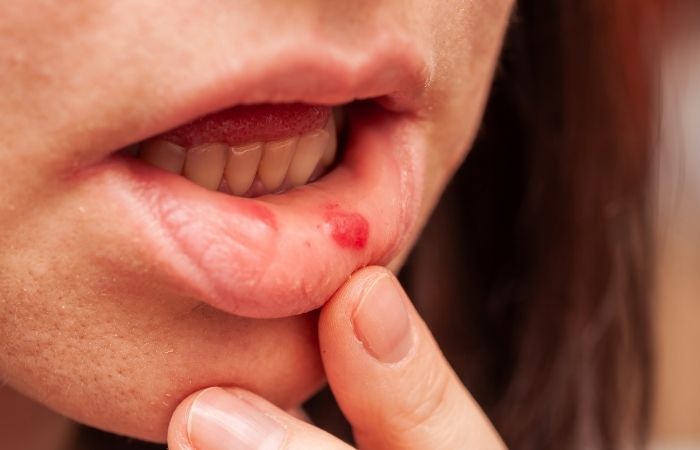
Here’s where things get more nuanced. Oral herpes, usually caused by HSV-1, can absolutely cause sores in or around the mouth. But it doesn’t behave like a canker sore, even if the early stages can confuse people.
Herpes tends to start with a sensation before anything is visible. Tingling, itching, or a subtle burning feeling. Then small fluid-filled blisters appear, often clustered together. These eventually break open and crust over if they’re on the outside of the mouth.
Location is one of the biggest clues. Herpes usually shows up on the outer lip or border of the mouth. It can appear inside, especially with oral exposure, but that’s less common and often comes with multiple lesions rather than a single sore.
“I thought it was just a cut,” Jordan, 26, said. “Then it started tingling, and the next morning there were like three tiny blisters. That’s when I knew it wasn’t random.”
Another difference: herpes is contagious. That matters not just for partners, but for yourself too. Touching a sore and then another area of your body can spread the virus during an active outbreak.
| Feature | Canker Sore | Oral Herpes |
|---|---|---|
| Location | Inside mouth | Usually outer lip or lip border |
| Start | Sudden sore | Tingling → blisters |
| Number | Usually one | Often clustered |
| Contagious | No | Yes |
If you’ve had recent oral contact, kissing, oral sex, even sharing drinks, and something shows up a few days later, herpes moves higher on the list. Not guaranteed. Just more relevant.
Other Causes That Have Nothing to Do With STDs (But Feel Just as Scary)
Not everything fits neatly into “canker sore” or “herpes.” And honestly, this is where a lot of unnecessary panic comes from. The mouth is sensitive. It reacts to small things in big ways.
A sharp chip, a rough toothbrush, biting your cheek mid-conversation, these can all create lesions that look intense but are purely mechanical. Even stress alone can trigger immune responses that lead to ulcers.
Then there are things like allergic reactions, vitamin deficiencies, or even viral infections unrelated to STDs. These can create white patches, red sores, or inflamed areas that don’t follow a neat pattern.
“I was convinced it was something serious,” Elena, 31, said. “Turns out I’d just burned the roof of my mouth on pizza and kept irritating it without realizing.”
The takeaway here isn’t “ignore it.” It’s “context matters.” What you ate, how you slept, whether you’re run down, whether there was recent contact, all of that shapes what’s most likely.
So… When Should You Actually Worry?
This is the question behind all the others. Not “what is it,” but “do I need to do something about it right now?”
A single sore inside your mouth that hurts and heals within two weeks? Usually not urgent. Multiple sores, unusual locations, or anything that doesn’t heal? That’s when you start paying closer attention.
If there’s a clear exposure, like oral sex with a new partner, and symptoms follow within days to weeks, it’s reasonable to take that seriously. Not panic. Just act.
And here’s the part most people skip: you don’t have to guess. You can test.
Instead of sitting in that uncertainty loop, you can get clarity with a discreet at-home STD test. It’s private, straightforward, and removes that “what if” spiral that keeps people up at night.
If you want broader coverage, especially after oral exposure, a combo STD home test kit can check for multiple infections at once, including the ones that don’t always show obvious symptoms.
Because here’s the truth: guessing delays answers. Testing gives them.
What About STDs That Show Up in the Mouth (Besides Herpes)?
Herpes gets all the attention when it comes to oral symptoms, but it’s not the only infection that can show up in the mouth. The difference is that these tend to be less common, less obvious, and often less painful, which is exactly why they get overlooked.
Syphilis, for example, can cause a sore in the mouth during its early stage. But here’s the twist: it’s often painless. That alone throws people off, because most assume “if it doesn’t hurt, it’s not serious.” That’s not always true.
The sore, called a chancre, can appear on the lips, tongue, or inside the mouth. It may look like a clean ulcer, sometimes firm to the touch. And because it doesn’t always cause discomfort, people can miss it entirely until it heals on its own.
Gonorrhea in the throat is another possibility after oral sex, but it rarely shows up as a visible sore. Instead, it might feel like a persistent sore throat, mild irritation, or nothing at all. That’s the frustrating part, some infections don’t announce themselves clearly.
HPV can also affect the mouth, but it usually presents as growths or warts rather than ulcers. These don’t behave like canker sores and don’t come and go quickly.
| Condition | Typical Symptom | Pain Level | Common Clue |
|---|---|---|---|
| Canker Sore | Single ulcer inside mouth | High | Triggered by stress or injury |
| Herpes (HSV-1) | Blisters → open sores | Moderate | Tingling before outbreak |
| Syphilis | Painless ulcer | Low/None | Heals without treatment |
| Gonorrhea (oral) | Sore throat | Mild | Often no visible sores |
This is why context matters so much. A painful ulcer inside your cheek with no other symptoms? Likely not an STD. A painless sore after a new sexual encounter? That’s when testing becomes more important.
Timing Tells a Story Most People Ignore
One of the most underrated clues is timing. When did the sore show up? What happened before it appeared? These details can quietly point you in the right direction.
Canker sores can show up quickly, even overnight, especially after stress or irritation. After being exposed to herpes, symptoms usually don't show up for a few days. They often start with a slight tingling feeling before anything else shows up.
Syphilis has a longer incubation window. That painless sore might not show up until weeks after exposure, which makes it harder to connect the dots unless you’re paying attention.
And then there’s the mental timeline people build, the one fueled by anxiety. You notice a sore and immediately trace it back to the most recent intimate moment. But biology doesn’t always follow that script. Not every symptom is tied to your last encounter.
“I kept replaying the same night over and over,” Luis, 29, said. “But the doctor told me the timing didn’t even match. That changed everything.”
Understanding timing doesn’t eliminate uncertainty, but it gives you a more grounded way to interpret what’s happening instead of assuming the worst.
The “Inside vs Outside” Rule That Quietly Solves Half the Confusion
If there’s one shortcut that helps people calm down faster, it’s this: where is the sore located?
Lesions inside the mouth, on soft tissue, are far more likely to be canker sores or irritation. Lesions outside the mouth, especially on the lip border, lean more toward herpes.
It’s not a perfect rule, but it’s a strong starting point. Most people don’t realize how consistent this pattern is, and once you know it, a lot of the guesswork fades.
That said, exceptions exist. Oral herpes can appear inside the mouth, especially after oral exposure. And trauma can happen anywhere. So this isn’t about diagnosing yourself, it’s about narrowing possibilities.
Think of it as triage, not a verdict.
What Google Won’t Tell You: Anxiety Changes What You See
There’s a moment that happens to almost everyone: you notice something small, and suddenly it feels bigger, angrier, more suspicious than it probably is. You check it again. And again. You take photos. You zoom in. You compare it to images online that look nothing like your actual situation.
This is where things spiral. Not because your symptoms changed, but because your perception did.
Anxiety has a way of turning normal variation into red flags. A slightly raised area becomes a “bump.” A healing ulcer becomes something “not going away.” A shadow becomes discoloration.
And the internet? It doesn’t help. Search results are designed to capture attention, not calm it. They show worst-case scenarios because those are the most clickable.
The reality is quieter than that. Most mouth sores are temporary. Most don’t indicate infection. But when there’s uncertainty, the goal isn’t to convince yourself it’s nothing, it’s to get clarity without panic.
Testing Isn’t Overreacting, It’s How You Stop Guessing
There’s a common hesitation people have: “What if I’m overthinking this?” But testing isn’t about proving something is wrong. It’s about confirming what’s right, or catching something early if it’s not.
If you’ve had oral exposure and something feels off, even slightly, getting tested is a grounded next step. It removes the mental loop of checking, rechecking, and second-guessing every sensation.
You don’t need dramatic symptoms to justify clarity. In fact, many oral infections are subtle or asymptomatic, which is exactly why they get missed.
Using a trusted at-home STD testing option gives you privacy and control. No waiting rooms, no awkward conversations, just answers.
And if you’re unsure what to test for, a broader option like a combo STD test kit covers multiple infections at once, which is often the smartest move when symptoms aren’t clear-cut.
Because the real goal isn’t to label the sore. It’s to understand your health without guessing.
When It’s Not Going Away: The Red Flags You Shouldn’t Ignore
Most mouth sores follow a predictable pattern. They show up, they hurt, they fade. It’s annoying, but it’s temporary. So when something breaks that pattern, when it lingers, spreads, or feels different, that’s your signal to stop watching and start acting.
A sore that lasts longer than two weeks deserves attention. Not panic, but attention. Especially if it’s not getting smaller, not getting less painful, or seems to be changing in shape or color.
Multiple sores appearing at once can also shift the conversation. While canker sores can occasionally cluster, widespread lesions or recurring outbreaks point more toward viral causes like herpes or systemic triggers that need evaluation.
And then there’s the painless category, the one people tend to dismiss. A sore that doesn’t hurt but doesn’t heal? That’s not something to ignore. It doesn’t mean something serious is happening, but it does mean your body is asking for a closer look.
| Sign | What It Could Mean |
|---|---|
| Lasts longer than 2 weeks | Not a typical canker sore |
| Multiple or spreading sores | Possible viral cause |
| Painless ulcer | Needs evaluation (possible infection) |
| Recurring in same spot | Chronic irritation or underlying trigger |
These aren’t meant to scare you. They’re meant to give you a filter. Not every sore needs action, but some absolutely do.
Real Talk: What People Usually Get Wrong About Mouth Sores
There’s a gap between what people assume and what’s actually true when it comes to mouth lesions. And that gap is where most of the anxiety, and misinformation, lives.
The biggest misconception? That anything unusual must be an STD. It’s understandable, especially if there’s been recent intimacy. But statistically, the majority of mouth sores are not sexually transmitted.
Another common belief is that herpes always looks dramatic, large, obvious, impossible to miss. In reality, early herpes can be subtle. A small cluster, mild irritation, even something that looks like a minor skin issue at first.
And then there’s the idea that if something hurts, it’s worse. Ironically, that’s often flipped. Canker sores hurt a lot but are harmless. Some infections hurt less but matter more in terms of treatment.
“I assumed pain meant danger,” Amir, 34, said. “But my doctor told me the opposite, some of the things you barely feel are the ones you actually need to check.”
Understanding these patterns doesn’t make you paranoid, it makes you informed. And that’s a very different place to operate from.
If You’re Staring in the Mirror Right Now, Here’s a Grounded Way to Think About It
Let’s bring this back to you, right now. You’ve noticed something. You’re trying to decide what it means. Instead of jumping to conclusions, walk through a few simple checkpoints.
Where is it located? Inside the mouth or on the lip border? Does it hurt sharply or barely at all? Did it appear suddenly, or did you feel something building before it showed up?
Then ask about context. Have you been stressed, sick, or run down? Did you bite your cheek recently? Was there any recent kissing or oral sex that could introduce exposure?
This isn’t about self-diagnosing. It’s about orienting yourself before deciding what to do next. Most of the time, the answers point toward something common and temporary. But when they don’t, that’s your cue to move forward, not freeze.
You Don’t Have to Sit With Uncertainty
Uncertainty is the part that sticks. Not the sore itself, but the not knowing. The checking, the Googling, the comparing, the waiting. That’s the real weight people carry.
And here’s the shift: you don’t have to stay there.
Testing isn’t about assuming the worst, it’s about removing doubt. If there’s any chance your symptoms are connected to exposure, even a small one, getting clarity is the most direct way forward.
You can start with a confidential at-home STD test and get answers without disrupting your life. No appointments, no awkward explanations, just information you can actually use.
If you want a broader safety net, especially when symptoms are unclear, a comprehensive combo test kit checks for multiple infections at once, including the ones that don’t always show visible signs.
Because at the end of the day, peace of mind doesn’t come from guessing correctly. It comes from knowing.
FAQs
1. Is this mouth sore probably an STD, or am I just freaking out?
Most of the time? You’re just freaking out, and that’s completely human. The majority of mouth sores are canker sores or irritation from everyday stuff like stress, food, or accidentally biting your cheek. STDs can show up in the mouth, but they’re way less common than your brain is telling you at 1AM.
2. Okay but seriously, how do I tell if it’s herpes or just a canker sore? Think of it like behavior, not just looks. Canker sores pop up inside your mouth and just hurt immediately, like “wow this is rude” pain. Herpes usually gives you a heads-up first, tingling, itching, then shows up as little blisters, often on the lip line, not deep inside your cheek.
3. I got this after oral sex… should I be worried? “Worried” might be too strong, but “pay attention” is fair. Timing matters here, if something shows up a few days after oral contact, it’s worth considering exposure. That doesn’t mean it is an STD, just that testing might give you peace of mind instead of guesswork.
4. Do STD sores in the mouth always hurt? No, and that’s what throws people off. Herpes can hurt, sometimes a lot, but something like a syphilis sore can be completely painless and still matter. So pain isn’t a reliable “danger meter,” even though we all wish it was.
5. This thing doesn’t hurt at all… is that better or worse? It depends, and yeah, that’s annoying. A painless sore isn’t automatically bad, but it’s also not something to ignore if it sticks around. If it’s just chilling there past two weeks like it pays rent, that’s your sign to get it checked.
6. Can I spread this to someone just by kissing? If it’s a canker sore, no, you’re fine. If it’s herpes, then yes, especially if there’s an active blister or open sore. When in doubt, skip kissing until you know what you’re dealing with. It’s not forever, just smart timing.
7. Why does it hurt so much if it’s “just” a canker sore? Because your mouth is dramatic. Canker sores hit nerve-rich areas, so even a tiny one can feel like a full-blown crisis every time you eat or talk. Pain doesn’t equal danger here, it just means your nerves are very awake.
8. I keep checking it in the mirror… am I making it worse? You’re not making the sore worse, but you are making your anxiety louder. The more you stare at it, the more your brain starts rewriting the story. Try to check it once or twice a day, not every hour, it helps keep things grounded.
9. Should I test even if I’m not sure? If the thought keeps coming back, “what if?”, that’s usually your answer. Testing isn’t overreacting, it’s just closing the loop. Especially if there’s been any recent oral contact, it’s a simple way to stop guessing.
10. What’s the fastest way to stop stressing about this? Two things: give it a few days to see if it behaves like a normal sore, and if your brain won’t let it go, test. Waiting and spiraling feels longer than it actually is. Getting a clear answer? That’s what actually lets you exhale.
You Deserve Clarity, Not Guesswork
A mouth sore can feel small, but the uncertainty around it rarely is. It sits in the background while you eat, talk, scroll, and think, quietly turning into a bigger question than it needs to be. The goal isn’t to label every spot as something serious. The goal is to understand what actually matters and what doesn’t.
If it behaves like a typical canker sore, give it time. If the timing lines up with exposure, test. If it lingers or doesn’t follow the usual pattern, don’t ignore it. Each step isn’t about fear, it’s about removing noise so you can see clearly what’s going on.
Don’t stay stuck in that loop of checking and second-guessing. If there’s even a small chance of exposure, start with something simple and private like the Combo STD Home Test Kit. You get real answers, on your terms, without the wait or the guesswork.
How We Sourced This Article: This article combines clinical advice from public health officials with research that has been peer-reviewed on oral lesions and STIs. We examined published medical literature regarding HSV, syphilis, and oral symptomatology, in addition to resources from the CDC, NHS, and Mayo Clinic. We used real symptom patterns and patient fears to make sure that the advice is based on real feelings and thoughts about mouth sores.
- Centers for Disease Control and Prevention – Genital Herpes Fact Sheet
- Centers for Disease Control and Prevention – Syphilis Fact Sheet
- NHS – Cold Sores
- Planned Parenthood – Herpes
- National Library of Medicine – Oral STI Research
- Centers for Disease Control and Prevention – Gonorrhea Fact Sheet
- World Health Organization – Sexually Transmitted Infections (STIs)