STD Rash or Allergic Reaction? How to Tell the Difference
Quick Answer: An STD rash, especially from syphilis, can look like an allergic reaction, but it’s usually non-itchy, appears on the palms or soles, and doesn’t fade quickly. People imagine dramatic, painful sores.
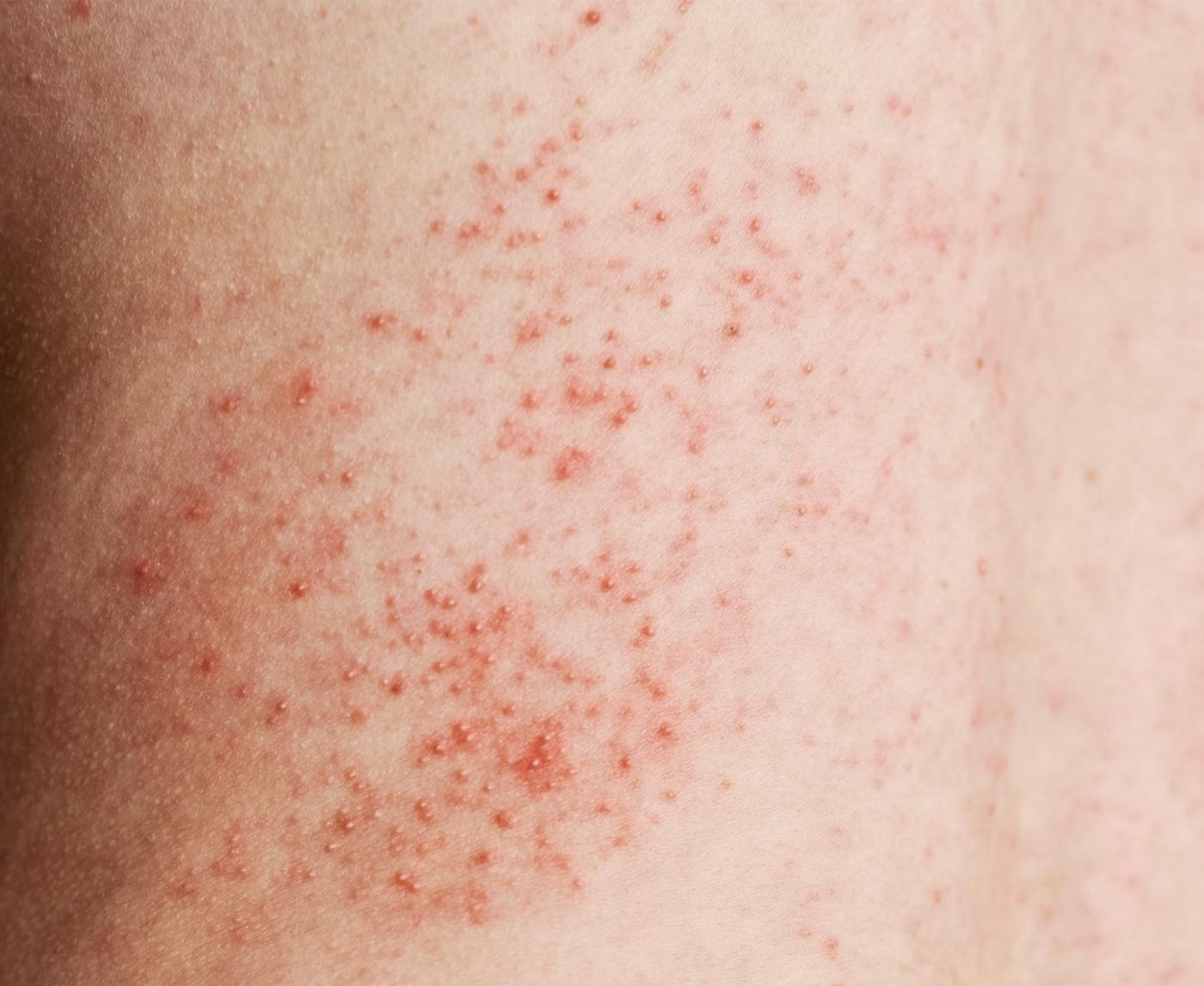
Quick Answer: An STD rash, especially from syphilis, can look like an allergic reaction, but it’s usually non-itchy, appears on the palms or soles, and doesn’t fade quickly. Allergic rashes tend to itch, change rapidly, and are linked to a clear trigger.
This Is Why So Many People Get It Wrong
Here’s the honest truth: most people don’t recognize an STD rash when they see one. Not because they’re careless, but because the symptoms don’t match what they expect. People imagine dramatic, painful sores. In reality, something like a syphilis rash can be subtle, flat, and easy to ignore.
I’ve had patients describe it as “just a weird skin thing” or “maybe a reaction to something.” One guy, Daniel, told me, “I thought it was laundry detergent. I even switched brands before I realized something else was going on.” That delay is incredibly common.
The confusion comes from overlap. Skin is reactive. It responds to friction, heat, new products, stress, and yes, sometimes infections. So when a rash shows up, your brain tries to match it to the least alarming explanation first. That’s human nature.

What a Syphilis Rash Actually Looks Like
Let’s cut through the noise and talk about what matters. A syphilis rash usually shows up during the secondary stage of infection, often weeks after the initial exposure. By that point, many people don’t even connect it to sex anymore.
The rash itself is often described as reddish-brown spots. It can appear on the chest, back, arms, and, this is the big clue, on the palms of the hands and soles of the feet. That location is unusual for most allergic reactions and should always raise a flag.
Another key detail? It usually doesn’t itch. That’s what throws people off. You expect a rash to be irritating, but with syphilis, many people barely feel it at all. As one patient put it, “If I hadn’t seen it in the mirror, I wouldn’t have known it was there.”
| Feature | Description |
|---|---|
| Itching | Usually absent or very mild |
| Location | Often includes palms and soles |
| Appearance | Flat reddish or brownish spots |
| Timing | Weeks after exposure |
| Duration | Can last for weeks without treatment |
What an Allergic Reaction Rash Looks Like Instead
Now compare that to a typical allergic reaction. These are usually triggered by something specific, like a new soap, latex condoms, lube, or even laundry detergent. And your body tends to respond fast.
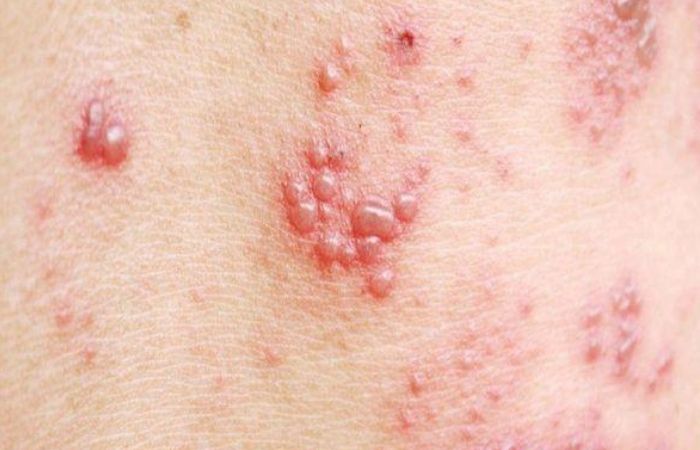
Allergic rashes are often itchy. Sometimes intensely so. They may appear as raised bumps, hives, or patches of inflamed skin that seem to move or change shape over time. You might notice it getting worse after scratching or improving once the trigger is removed.
There’s usually a timeline you can trace. Someone named Luis once told me, “It showed up the same day I tried a new body wash. Once I stopped using it, the rash faded in two days.” That kind of clear cause-and-effect is a big clue you’re dealing with irritation, not infection.
STD Rash vs Allergic Reaction: Side-by-Side Differences That Matter
When you’re staring at your skin in the mirror, trying to play detective, the details matter more than anything. This is where people usually get stuck, because both STD rashes and allergic reactions can look similar at first glance. But once you know what to look for, the differences become clearer.
Think of it like this: allergic reactions are your body reacting to something external and immediate, while an STD rash is your immune system responding to an infection that’s been quietly developing. That difference shows up in timing, sensation, and behavior.
One patient described it perfectly: “The allergy felt loud, itchy, angry, impossible to ignore. The STD rash felt… quiet. Almost like it didn’t want attention.” That contrast is something I see over and over again.
| Feature | STD Rash (Syphilis Example) | Allergic Reaction |
|---|---|---|
| Itching | Usually none or mild | Often intense itching |
| Onset Timing | Weeks after exposure | Hours to days after trigger |
| Location | Includes palms and soles | Anywhere, often contact areas |
| Appearance | Flat spots, subtle coloring | Raised hives or inflamed patches |
| Change Over Time | Persistent, slow to fade | Fluctuates or resolves quickly |
| Trigger | Infection (not obvious) | Clear external trigger |
When the Rash Shows Up After Sex (And Why That’s Confusing)
This is where things get messy, because timing can trick you. If a rash appears after sex, your brain immediately connects the two. But the cause isn’t always what you think.
An allergic reaction can show up within hours. Latex condoms, flavored lubricants, body fluids, even friction from longer sessions can irritate the skin. So if you wake up the next morning with redness or itching, irritation is actually more likely.
But here’s the twist: syphilis doesn’t follow that timeline. The rash can show up weeks later, long after the moment you’re thinking about. I’ve had people say, “There’s no way this is from that, I would’ve noticed sooner.” That assumption is exactly why syphilis has earned the nickname “the great imitator.”
The key takeaway is this: just because a rash appears after sex doesn’t mean it came from that specific encounter, or that it’s not related to something earlier.
Other STDs That Can Look Like Skin Reactions
While it’s a classic example, it’s not the only disease that can create a gray area between infection and skin irritation. This is where people get misled by Google images and worst-case scenarios.
Herpes, which causes painful blisters in most cases, can sometimes be misinterpreted in its initial stages of infection as a skin irritation caused by shaving. Similarly, HIV infection can sometimes trigger a rash in its primary stages of infection, which people might interpret as a viral infection or stress-related skin irritation.
Even in cases of scabies, which are not considered to be a sexually transmitted disease but can be contracted through intimate contact, people might get misled into thinking that it’s an allergy. One of my patients said to me in confidence, “I have been treating it as eczema for a while before I realized it wasn’t going away.”
Skin symptoms are one of the least reliable indicators of self-diagnosis of a person’s STD infection.
When You Should Actually Start Thinking About Testing
This is the moment where most people hesitate. They watch the rash. They wait. They hope it fades. And sometimes it does, but that doesn’t always mean everything is fine.
If a rash sticks around for more than a few days without a clear cause, or if it doesn’t behave like a typical allergic reaction, that’s your cue to stop guessing. Especially if it’s non-itchy, widespread, or showing up in unusual places like your hands or feet.
I always tell people this: “If your brain keeps coming back to the same question, ‘what if this is an STD?’, that’s already enough reason to test.” You don’t need perfect evidence. You just need a reason to want clarity.
That’s where something like a discreet at-home option can make this easier. Instead of waiting weeks for appointments or sitting in a clinic overthinking everything, you can check from home using a trusted STD testing kit and get real answers without the spiral.
What Happens If You Ignore It (And Why People Often Do)
Let’s be real for a second, most people don’t rush to get tested the moment they see a rash. They wait. They Google. They convince themselves it’s probably nothing. And honestly, that instinct makes sense. Nobody wants to jump straight to “this could be an STD.”
I’ve had patients say things like, “It didn’t hurt, so I figured it couldn’t be serious,” or “It started fading, so I thought my body handled it.” And here’s the tricky part: with syphilis, the rash actually can fade on its own. But that doesn’t mean the infection is gone, it just moves quietly into the next stage.
This is why syphilis has such a reputation for slipping under the radar. The symptoms come and go, and people interpret that as healing. In reality, the bacteria is still there, still active, and still something that needs treatment.
“I Thought It Was Just My Skin Acting Up”
Javier, 29, noticed a faint rash across his torso a few weeks after a trip. No itching, no pain, just spots that didn’t quite make sense. “I figured it was stress,” he told me. “I’d been traveling, eating differently, not sleeping well. My skin does weird things sometimes.”
He waited it out. The rash faded. Life moved on. It wasn’t until months later, during a routine check, that he tested positive for syphilis. That moment of confusion, when it looked harmless, was actually the window where testing would have given him clarity much sooner.
This isn’t about blame. It’s about how easy it is to misread symptoms when they don’t match what we expect. Most people aren’t ignoring their health, they’re just interpreting it through the lens of what feels most likely.
What to Do Next (Without Spiraling)
If you’re here, you’re already doing the right thing, you’re paying attention. The goal now isn’t to panic, it’s to get clarity. Because once you know what you’re dealing with, everything becomes more manageable.
If the rash is clearly linked to a new product and fades quickly, that points toward an allergic reaction. But if there’s any uncertainty, especially if it’s non-itchy, persistent, or showing up in unusual areas, testing is the simplest way to remove doubt.
You don’t need to wait for symptoms to get worse. In fact, acting early is what makes everything easier. A discreet option like the at-home combo STD test kit lets you check for common infections privately, without turning this into a drawn-out guessing game.
As I often tell people: “Clarity feels a lot better than uncertainty, even if the answer isn’t what you were hoping for.”
Still Not Sure? Here’s How to Read Your Rash Like a Pro
This is the point where most people are stuck, not because the information isn’t out there, but because their situation doesn’t feel “clear enough” to make a call. The rash isn’t textbook. It’s not dramatic. It’s just… ambiguous. And ambiguity is where anxiety lives.
So instead of trying to force a diagnosis, let’s walk through this the way a clinician actually thinks about it. Not guessing. Not Googling worst-case scenarios. Just pattern recognition based on how your body behaves over time.
Imagine this: you notice a rash, and your brain immediately wants a label. But the better question is, “What is this rash doing?” Because behavior tells you more than appearance ever will.
If it itches intensely, changes shape, and seems to react when you scratch it, your body is likely responding to something external. That’s how allergic reactions behave, they’re reactive, loud, and often short-lived once the trigger is removed.
But if the rash is quiet, flat, and persistent, especially if it doesn’t itch, that’s when we start thinking differently. Infections like syphilis don’t need to scream to be important. They sit in the background, often unnoticed, while your immune system does its thing.
Another layer people miss is distribution. Allergic reactions tend to stay where contact happened, waistband, thighs, chest, or wherever a product touched your skin. But when a rash spreads to areas like your palms or soles, that’s not random. That’s systemic, and it matters.
I once had a patient say, “It wasn’t bothering me, so I assumed it wasn’t serious.” That’s one of the most common misreads I see. Pain and itching are not reliable indicators of whether something is important. Some of the most medically relevant symptoms are the least dramatic.
This is also where timing becomes your best clue. If something shows up within hours of exposure to a product or friction, your body is reacting quickly. But if a rash appears weeks later, especially without a clear trigger, that’s not how allergies behave. That’s your body responding to something that’s been developing quietly.
And here’s the part no one tells you clearly: you don’t need to be 100% sure to justify testing. You just need enough uncertainty that guessing feels uncomfortable. That’s the threshold where testing becomes the smartest move, not the last resort.
If you’re stuck in that loop of “it’s probably nothing… but what if it’s not,” that’s exactly the moment testing is designed for. Not because something is definitely wrong, but because clarity is better than speculation.
| What You Notice | More Likely Allergy | More Likely STD (Syphilis Example) |
|---|---|---|
| Rash appeared within hours of exposure | Yes – typical allergic timing | No – STDs develop more slowly |
| Rash is very itchy or irritating | Yes – strong indicator | Unlikely – usually minimal itching |
| Rash appeared weeks after sex | Unlikely | Yes – matches STD timeline |
| Rash includes palms or soles | Rare | Common in syphilis |
| Rash fades quickly after removing trigger | Yes | No – tends to persist |
| No clear trigger (no new products, etc.) | Less likely | More likely |
| Rash is flat and not very noticeable | Sometimes | Often |
| Rash comes and goes without treatment | Possible | Yes – but infection may still be active |
The goal here isn’t to turn you into your own doctor. It’s to give you enough clarity to recognize when something doesn’t fit the “normal skin reaction” pattern. Because that’s the moment where guessing stops being helpful.
And if you’re still unsure after going through this? That’s your answer. Not a diagnosis, but a decision point. When symptoms don’t clearly behave like an allergy, testing isn’t overreacting. It’s just being smart.
How to Protect Yourself Going Forward
Once you’ve gone through a situation like this, even just the anxiety of not knowing, it changes how you think about your health. And that’s not a bad thing. It means you’re more aware, more proactive, and more in control.
Protection isn’t just about condoms, although they absolutely help. It’s also about awareness of your body, understanding testing windows, and recognizing that not all symptoms are obvious. Some of the most important infections are the quiet ones.
One person put it perfectly: “I used to think testing was something you only did if something was wrong. Now I see it as just part of taking care of myself.” That shift, from fear to routine, is where real peace of mind comes from.
FAQs
- 1. Can a syphilis rash look exactly like an allergic reaction?
- Yes, it can look very similar. In fact, syphilis is sometimes referred to as “the great imitator” because it can look so similar to an allergic reaction. However, it does not itch, and it is not in the same area.
- 2. Does a syphilis rash itch?
- No, it does not itch. This is one of the main differences between a syphilis rash and an allergic reaction.
- 3. How long does an allergic rash last compared to an STD rash?
- An allergic reaction rash usually goes away in a few days. A syphilis rash does not.
- 4. Can condoms cause a rash that looks like an STD?
- Yes, it is possible for a latex allergy to cause a rash that looks like an STD. This kind of rash usually occurs right away and itches.
- 5. What makes a rash more likely to be syphilis?
- A non-itchy rash, particularly if it is on the palms of the hands and/or on the soles of the feet and develops weeks after contact, is more likely to be associated with syphilis.
- 6. Should I still get tested even if the rash has gone away?
- Yes. With syphilis, it is possible for a person to still have an active infection even though the symptoms have disappeared.
- 7. Can stress cause a rash that looks like an STD?
- While it is possible for stress to cause a skin rash, it is likely that it will follow a pattern and will eventually disappear. If in doubt, it is still a good idea to get tested for STDs.
- 8. Is it safe to wait and see if the rash goes away on its own?
- While it is technically safe to wait and see if the symptoms of an STD disappear on their own, it is still a good idea to get tested for STDs if the symptoms persist and/or if they seem unusual.
- 9. What is the fastest way to determine if it is an STD?
- The fastest way is by getting tested for STDs. It is not possible to determine if it is an STD by looking at the symptoms of an STD.
- 10. Can I have an STD rash and no other symptoms?
- Yes, it is possible for a person to have an STD and not have any other symptoms, particularly if it is caused by syphilis.
You Deserve Answers, Not Guesswork
That moment of standing in front of the mirror, wondering what your body is trying to tell you, that’s where most people get stuck. Not because the answer is impossible, but because uncertainty is uncomfortable.
The truth is, rashes can be misleading. Sometimes they’re harmless. Sometimes they’re not. But you don’t have to figure it out alone or rely on guesswork. The fastest way to move forward is to get a clear answer.
If your mind keeps circling back to the same question, trust that instinct. Take the next step and get clarity with a discreet at-home STD test. It’s private, simple, and gives you the one thing Google never can, certainty.
Our article was constructed based on current advice from the most prominent public health and medical organizations, and then molded into simple language based on the situations that people actually experience, such as treatment, reinfection by a partner, no-symptom exposure, and the uncomfortable question of whether it “came back.” In the background, our pool of research included more diverse public health advice, clinical advice, and medical references, but the following are the most pertinent and useful for readers who want to verify our claims for themselves.
- Centers for Disease Control and Prevention – Sexually Transmitted Diseases Overview
- Centers for Disease Control and Prevention – Condom Effectiveness and STD Prevention
- PubMed – Clinical Research Database
- World Health Organization – Sexually Transmitted Infections Fact Sheet
- Cleveland Clinic – Latex Allergy
- DermNet NZ – Latex Allergy and Contact Reactions
- Planned Parenthood – STDs and Safer Sex Guide
- CDC – About Sexually Transmitted Infections (STIs)