STD Symptoms in Women vs Men What Gets Overlooked and Why
Quick Answer: STD symptoms show up faster and more visibly in people with penises. Why This Topic Matters: Missed Infections and Silent Damage If you have a vulva and feel fine, that doesn’t mean you're clear.

Quick Answer: STD symptoms show up faster and more visibly in people with penises. People with vulvas often have silent or internal infections that go undetected longer, especially chlamydia, gonorrhea, and trichomoniasis.
Why This Topic Matters: Missed Infections and Silent Damage
If you have a vulva and feel fine, that doesn’t mean you're clear. Many STDs quietly inflame the cervix, uterus, or fallopian tubes without causing visible discharge, odor, or pain until complications set in. And if you have a penis, the appearance of a sore, drip, or stinging urination often pushes you to test faster. This creates a gendered urgency gap: men get diagnosed quicker, while women risk long-term consequences like PID (Pelvic Inflammatory Disease) or infertility from undetected infections.
People are often taught that pain, itching, or “something weird” means it’s time to test. But if your anatomy keeps the symptoms hidden, or if your culture teaches you not to complain, STDs can simmer in silence. That’s not just a medical problem. It’s a systemic one.

How Symptoms Actually Work: External vs Internal Genitals
To understand why this happens, we have to talk about structure. The urethra in a penis is short and exposed. If chlamydia infects it, burning, discharge, or itching starts fast. But the vaginal canal connects to deeper structures: the cervix, uterus, and beyond. STDs in these areas don’t always irritate surface nerves, so they often don’t trigger pain or discharge right away. You can be infected, and contagious, without feeling a thing.
Here’s how common STDs differ by genital type:
| STD | Common Symptoms in People with Penises | Common Symptoms in People with Vulvas |
|---|---|---|
| Chlamydia | Burning urination, discharge, testicle pain | Often silent; may include light bleeding, pelvic pain, odor |
| Gonorrhea | White/yellow discharge, stinging urination, swelling | Often asymptomatic; may cause discharge or pelvic pressure |
| Trichomoniasis | Mild irritation or no symptoms | Frothy discharge, odor, itching, but 70% show no signs |
| Herpes (HSV-2) | Painful blisters, flu-like symptoms | Sores on vulva, cervix, or anus; can be mistaken for yeast |
| HPV | Visible warts or none | Often no symptoms until abnormal Pap smear |
Table 1. Same STD, different symptoms. The same infection may look, and feel, very different depending on genital anatomy.
What Happens When Doctors Miss It?
Too often, people with vulvas are told their symptoms are “just a yeast infection” or “probably BV.” They may get antibiotics without a full panel test. Even when they ask for STD testing, some providers only screen for chlamydia and gonorrhea, not trichomoniasis or herpes. Pap smears don’t catch STDs unless HPV is present. And unless patients insist or know what to request, comprehensive testing gets skipped.
“I had three partners last year and a negative Pap,” said Aleya, 29.
“I thought I was good. Then my boyfriend tested positive for chlamydia, and I realized I’d never actually been tested for it, no one told me Pap smears aren’t STD tests.”
This misunderstanding is rampant. In many clinics, unless you say you’ve had unprotected sex, or have obvious symptoms, you won’t get full STD screening. This oversight disproportionately affects people with vulvas, especially in queer, trans, and BIPOC communities where medical trust is already fragile.
“We Both Tested Negative”, Until One Didn’t
Ryan and Lila thought they were in the clear. They’d both taken at-home STD tests before ditching condoms. Ryan’s came back clean. So did Lila’s. But four months later, Ryan had a telltale sore and stinging urine. His urgent care test confirmed gonorrhea. Lila? Still no symptoms. But a cervical swab revealed she’d been positive all along.
So what happened? Timing, and anatomy. Lila had tested too early, before the bacteria had enough presence to trigger a result. And because her infection was internal, she never saw or felt a thing. Ryan’s test was accurate, but Lila’s window hadn’t closed yet. By the time they both felt safe, it was already too late.
That’s why one negative test, especially early, doesn’t always mean you’re in the clear. And it’s why people with vulvas need more targeted information on testing windows and infection sites.
| Genital Anatomy | Symptom Visibility | Common Misses | When to Retest |
|---|---|---|---|
| Penis | High (external urethra, visible sores, quick discharge) | HPV, mild herpes, early HIV | 14–21 days after exposure if asymptomatic |
| Vulva | Low to medium (many symptoms internal or subtle) | Chlamydia, gonorrhea, trichomoniasis, HPV | 21–30 days if no symptoms or early negative |
Table 2. Detection timelines by anatomy. Many people with vulvas need longer windows before accurate testing.
The Language of STDs Is Built Around Penises
Here’s something most people don’t realize: the research behind symptom lists is based heavily on cis men. Classic descriptions like “drip from the penis,” “painful urination,” or “genital ulcer” come from studies done on men in clinics, often in military or college settings. That research has shaped how doctors and patients understand what STDs “look like.”
But in vulva-having bodies, symptoms don’t follow the same script. A “drip” might be mistaken for normal discharge. A sore might be tucked inside the vaginal wall or cervix, out of view. Mild cramps might get chalked up to a period. The result? Too many people don’t test because they don’t recognize the symptoms, or because no one ever told them what to look for.
Even testing itself is biased. Urethral swabs and urine tests are common for people with penises. For people with vulvas, a vaginal or cervical swab is needed for accuracy, but not every provider offers or explains that. Some home kits rely only on urine, which may miss vaginal infections entirely.
If this sounds frustrating, it is. But it’s also fixable.
What to Do If You Have No Symptoms (But Still Want to Know)
Let’s get real: you shouldn’t have to wait for burning or discharge to protect your health. In fact, about 70–80% of people with chlamydia report no symptoms at all, especially those with vaginas. Gonorrhea follows a similar pattern. Even herpes can be asymptomatic, or misread as a pimple or rash.
If you’ve had any type of sexual contact, oral, anal, vaginal, or skin-to-skin exposure, testing is smart. Especially if:
- You’ve had a new partner in the last 30 days
- Your partner tested positive or had symptoms
- You’re experiencing any genital discomfort, even if mild
- You want peace of mind before going condom-free
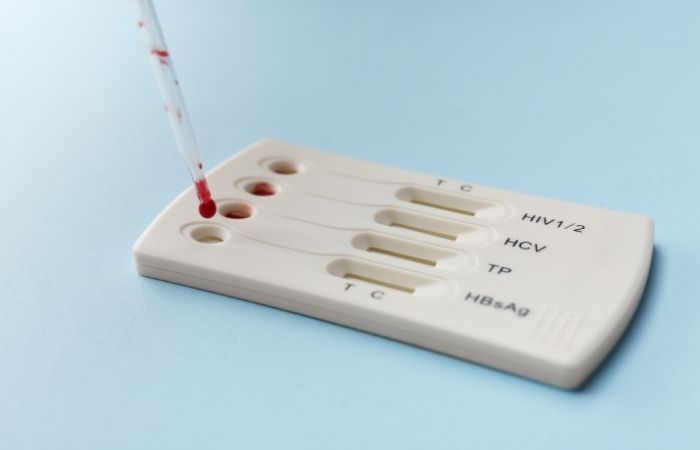
Not sure which test to get? A Combo STD Home Test Kit is designed to cover the most common infections with one swab or sample. It’s discreet, fast, and designed for all genital types. Your genitals may not always speak up, but that doesn’t mean they’re silent for no reason. Test to be sure.
When No Symptoms Become a False Sense of Security
“But I feel fine.” That’s the most common reason people skip STD testing. For people with vulvas, that logic can be dangerous. The cervix, where infections like chlamydia or gonorrhea often begin, doesn’t have the kind of nerve endings that scream when something’s wrong. You can have a full-blown infection without a single red flag.
Compare that to someone with a penis, where urethral inflammation leads to painful urination or visible discharge quickly. That difference isn’t about “luck” or “cleanliness.” It’s anatomical. But the silence doesn’t equal safety, it means many vulva-having people go months or years without knowing they’re infected.
This is how serious complications, PID, ectopic pregnancy, infertility, can sneak up. Not because someone was irresponsible. But because no one taught them that no symptoms doesn’t mean no infection.
The Shame Double Standard: Who Gets Blamed, Who Gets Missed
There’s a hidden emotional cost to these asymmetries. People with penises often get labeled as “the one who gave it to her,” simply because their symptoms showed first. People with vulvas may feel shame for “bringing something into the relationship,” even though the infection could’ve been incubating for weeks or months without their knowledge.
This imbalance fuels fights, ghosting, and blame cycles that have nothing to do with truth, and everything to do with who shows symptoms faster. It also makes some folks afraid to test, worried they’ll be labeled as the problem if they come up positive first.
Let’s rewrite that script. Testing isn’t about fault. It’s about information. Whether you have a vulva, a penis, both, or neither, your body deserves clarity, not condemnation.
If you've ever avoided testing because you felt "fine" or were scared of judgment, you're not alone. But you also don't have to wait for something to go wrong to make it right. You can start now, on your terms.
Take back your timeline. With an at-home test, you control when, where, and how you find out. You can explore private testing options here, no waiting rooms, no raised eyebrows.
Why Re-Testing Matters, Especially for People With Vulvas
Let’s say you tested negative last month. Great. But if you were exposed recently, or if your test was urine-only, you might still want to retest. For people with vulvas, especially, infections like chlamydia can evade early detection and hide in the cervix. A urine sample might miss what a vaginal swab would catch.
According to CDC guidelines, retesting is recommended three months after treatment for chlamydia or gonorrhea, and even sooner if you’re at ongoing risk. But even without symptoms, retesting once or twice a year is smart, especially if you’re dating, poly, have multiple partners, or just want peace of mind.
Think of it like dental care: you wouldn’t wait until your teeth hurt to get a cleaning. Don’t wait for your genitals to scream, either.
Even if your first test came back negative, but your partner later tested positive, or if you had a new partner within the last few weeks, consider retesting at the 3-week or 6-week mark. That’s when accuracy is highest, especially for swab-based results.
FAQs
- 1. Why do men seem to get symptoms faster than women?
- It’s not about being “more infected”, it’s anatomy. A penis has a short urethra and exposed skin, so burning, itching, or discharge shows up fast when something’s off. But if you have a vulva, infections often start in deeper, quieter places like the cervix, no nerve endings there, no warning signs. That’s why people with vulvas can have full-blown chlamydia or gonorrhea without feeling a single thing.
- 2. Can I have an STD even if I feel totally normal?
- Totally. In fact, that’s the norm. Around 70% of people with chlamydia never notice symptoms. Same with trichomoniasis. Silence doesn’t mean safety, it just means your body isn’t sending loud signals. That’s why testing is less about “do I feel sick?” and more about “have I been exposed?”
- 3. My partner has symptoms, but I don’t, how is that possible?
- STD symptoms aren’t synchronized. One person can have visible signs while the other carries the same infection completely quietly. It’s especially common in couples where one has a penis and the other has a vulva. Think of it like a fire alarm in one room and a smolder in another, you won’t hear both at the same time.
- 4. I had a Pap smear last year, wasn’t that an STD test?
- Nope. That test checks for abnormal cervical cells, usually tied to HPV. It’s important, but it doesn’t screen for chlamydia, gonorrhea, herpes, or HIV. Many people assume a Pap means “all clear,” but it’s like checking your smoke detector and thinking you also inspected the plumbing.
- 5. Do urine tests work the same for everyone?
- That's not true. Urine tests are really good at detecting infections in the urethra, so they are perfect for men. However, because a woman's urinary tract is inside a vagina, a urine test may fail to detect an infection in her uterus, cervix, or other areas because a swab is a better option, so we offer a vaginal swab with a combo STD home test kit.
- 6. I tested negative, but now I’m freaking out again. Should I retest?
- If your exposure was recent, yes, it might’ve been too early. Some STDs take a couple of weeks to show up on tests. A good rule? If you tested within 10 days of a hookup and didn’t use a swab (or had no symptoms), give it a couple more weeks and test again. Peace of mind isn’t one-and-done, it’s ongoing care.
- 7. How soon after sex should I get tested?
- Ideally, wait 2–3 weeks for the most common STDs to show up clearly on tests. But if something feels off sooner, pain, sores, weird discharge, test ASAP. And if you're feeling anxious right now, early testing is okay too, just plan to retest at the 3–4 week mark to confirm.
- 8. Will an STD go away if I just wait it out?
- Nope. Unlike a cold, STDs don’t clear on their own. They might quiet down symptom-wise, but the infection is still there, potentially damaging reproductive organs or spreading to others. If money or access is an issue, consider an at-home kit or free clinic, but don’t skip care altogether.
- 9. Are at-home STD tests accurate for women and men?
- Yes, as long as you get the right sample type. Swabs are better for people with vulvas; urine works well for penises. Our kits are designed with anatomy in mind, so whether you're peeing in a cup or swabbing your inner wall, you’ll get results you can trust.
- 10. Why does it feel like women get blamed more?
- Because symptoms show later, or not at all, for many vulva-owners, they often test positive after their partner shows signs. That timing makes it look like they “caused” the issue, when really, the infection was probably there all along. It’s not about fault. It’s about biology, silence, and the timing of when the body speaks up.
You Deserve Answers, Not Assumptions
If you’ve ever left a clinic feeling dismissed, or stayed silent because you felt fine, you’re not alone. STDs don’t follow one script. They don’t care about your gender, orientation, or relationship status. But what they do care about is timing, and so should we.
Symptoms don’t always show. Especially not in people with vulvas. That’s why testing isn’t just about reacting to something wrong. It’s about checking in, being proactive, and knowing your body better than any list of warning signs ever could.
Don’t wait and wonder, get the clarity you deserve. This at-home combo test kit checks for the most common STDs discreetly and quickly.
How We Sourced This Article
How We Sourced This Article: We combined current guidance from leading medical organizations with peer-reviewed research and lived-experience reporting to make this guide practical, compassionate, and accurate. In total, around fifteen references informed the writing; below, we’ve highlighted some of the most relevant and reader-friendly sources.