The Most Dangerous STDs for Men (And the Symptoms You Might Miss)
Quick Answer: Men are most at risk for STDs like HIV, syphilis, and untreated chlamydia or gonorrhea. These STDs often start with mild or no symptoms. It’s more like, well, something that might just resolve itself.

Quick Answer: Men are most at risk for STDs like HIV, syphilis, and untreated chlamydia or gonorrhea. These STDs often start with mild or no symptoms. People often ignore small signs like a little burning, tiredness, or a sore that doesn't hurt, which makes it harder to find out what's wrong and raises the risk.
This Is How Guys Miss It (And Why It Happens So Often)
A great many men aren’t ignoring symptoms because they don’t care, they’re ignoring symptoms because they don’t seem all that serious. A small itch, a weird bump, or a small discomfort when urinating isn’t exactly the stuff of nightmares. It’s more like, well, something that might just resolve itself. And, you know, it might. At least, at least temporarily.
There’s also the cultural aspect, of course. Men are socialized to be men, after all. To be men, you have to be able to push through the discomfort, brush it off, or simply believe your body will magically take care of itself. Well, your body might magically take care of itself when you have a sore muscle or a cold. It won’t magically take care of itself when you have a sexually transmitted disease. STDs don’t magically cure themselves when you ignore the symptoms, they continue to develop.
A man told us, “I noticed a little burning when I pee, but it wasn’t that bad. I thought maybe I’m dehydrated or something. I didn’t even think STD. Three weeks later, I find out it’s gonorrhea.”
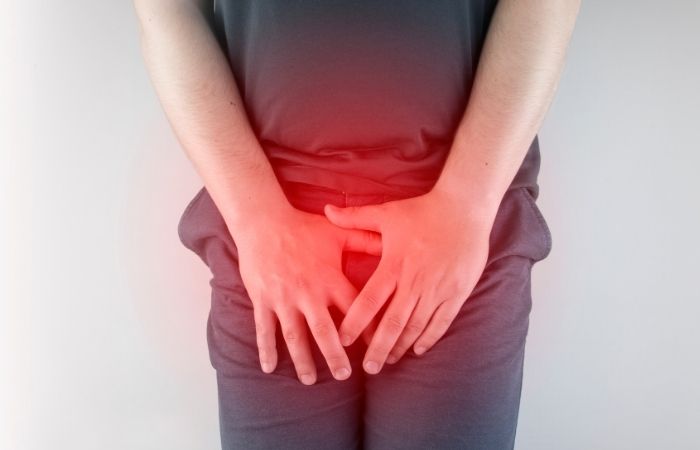
The Most Dangerous STDs for Men (And Why They Matter)
Not all STDs are equally dangerous. Some are easy to treat if you catch them early. If you don't pay attention to them, some can cause long-term health problems or even change your life. The infection itself isn't always the most dangerous thing; it's how long it goes unnoticed.
Here are some of the most dangerous STDs for men and why they are so scary:
| STD | Why It’s Dangerous |
|---|---|
| HIV | Attacks the immune system; can progress silently for years without treatment |
| Syphilis | Starts mild but can damage brain, nerves, and organs if untreated |
| Chlamydia | Often asymptomatic but can cause infertility and chronic pain |
| Gonorrhea | Can spread to bloodstream and joints; increasing antibiotic resistance |
| HPV | Linked to cancers (throat, penile, anal) and often has no early symptoms |
It's not just how bad these infections can get; it's also how slowly they can grow. At first, HIV can feel like a mild flu. You might get a painless sore that goes away, which could be a sign of syphilis. Most of the time, HPV doesn't show any signs until problems start to happen. Their lack of noise is what makes them dangerous.
One guy said it straight out: "I probably would have gone sooner if it hurt more." I thought it wasn't a big deal because it didn't. The paradox is that less pain doesn't mean less risk.
The Symptoms Men Commonly Ignore (But Shouldn’t)
Most people think that STDs will show up with clear signs, like severe pain, a lot of discharge, or something else that is very clear. In reality, the early signs are often subtle, inconsistent, or easy to mistake for something else.
Here are some of the symptoms that men often overlook:
| Symptom | What It Might Mean |
|---|---|
| Mild burning when urinating | Chlamydia or gonorrhea |
| Slight discharge (barely noticeable) | Early-stage infection |
| Painless sore or bump | Syphilis or herpes |
| Sore throat after oral sex | Oral gonorrhea or chlamydia |
| Fatigue or flu-like symptoms | Early HIV or systemic infection |
The problem with these symptoms is that they can easily pass for other things. A sore throat could be a cold. Fatigue could be stress. A bump could be an ingrown hair. None of them will readily translate to “oh, I need to get an STD test.”
And what if the symptoms come and go? This is another trick. You may notice a symptom for a day or two, and then it goes away. It’s very tempting to think to yourself, “Oh, my body must be fixing it.” But the truth is, the STD could very well be there. It could just be on a break.
And if your mind is stuck on the cycle of “it’s probably nothing, but what if it isn’t,” then here is where the testing process really shifts from the panic mode to the reality mode. You can check discreetly at any time of the day with the help of STD Test Kits.
When “Nothing Happens” Is Actually a Symptom
Perhaps one of the biggest misconceptions that people have regarding STDs in men is that you will always know if something is wrong. The truth, however, is that some of the most dangerous STDs are the ones that are silent, causing no pain, no visible symptoms, and no reason to get tested until something else comes along later.
This is particularly true for STDs such as chlamydia, HPV, and even HIV, as a large number of men are walking around with these STDs and do not even realize it, as they feel perfectly fine, look perfectly fine, and thus have no reason to get tested until something else comes along later.
A common story for men is: “I felt perfectly normal, no symptoms whatsoever, just got tested because my partner told me to.” This is how a huge percentage of men discover that they have an STD, not because they were showing symptoms, but because they were exposed to someone else.
The fact that men are showing no symptoms does not mean that they are showing no signs, as these STDs can still have an effect on fertility, immunity, and health in general, even while men are showing no symptoms whatsoever, which is exactly what makes these STDs so dangerous, as they give men no reason to get tested.
How These Infections Actually Progress Over Time
Most STDs don't just suddenly appear out of nowhere and become serious right away. They progress in stages, and the initial stages are often when things are most likely to be overlooked. This is where timing can really help you shift how you understand what your body is, or isn't, doing.
For instance, with syphilis, it can begin with one small, painless sore that people often don't even notice, or write off as no big deal if they do notice it. This then disappears on its own, which can be misleading because, while the initial infection disappears, it is actually working its way further into the body, eventually reaching organs and even the brain if left untreated.
HIV is another example, as initial symptoms can be similar to a minor flu, fatigue, fever, and maybe even a sore throat. This can be easily written off as just catching a cold or seasonal flu, and then the infection can remain dormant for years, working to weaken the immune system, and then return with serious consequences once it has already done significant damage.
Timing is, as we've discussed, crucial with STDs, as what can be written off as "nothing serious" can be the initial stages of something that can become much harder to manage later on.
| STD | Early Stage | Later Risks if Ignored |
|---|---|---|
| HIV | Flu-like symptoms or none | Immune system damage, AIDS |
| Syphilis | Painless sore | Neurological and organ damage |
| Chlamydia | Mild or no symptoms | Infertility, chronic pelvic/testicular pain |
| Gonorrhea | Burning, discharge, or none | Joint infection, bloodstream spread |
| HPV | Often no symptoms | Cancer risk (throat, anal, penile) |
The main point to remember is that these infections are dangerous, but they don't feel dangerous at first. People wait longer than they should because of that mismatch.
The “It’ll Go Away” Myth (And Why It Backfires)
A lot of guys use a simple rule: if things don't get worse, they can't be that bad. If it goes away, it must be gone. That works for things like being a little irritated or dehydrated. It doesn't apply to STDs.
Some symptoms do go away. A sore could go away. The burning could stop. Discharge may come and go. But that doesn't mean the infection is gone; it usually means it's moving into a new phase or getting deeper into the body.
One patient said, "The symptoms went away, so I thought I was fine." Then, months later, I had completely different problems, and that's when I realized they were connected. That delay could make treatment harder and raise the risk of spreading the infection to someone else.
This is the point at which testing stops being about responding to symptoms and starts being about staying ahead of them. If something didn't feel right, even for a moment, it's better to find out for sure than to guess.
If you don't want to deal with the uncertainty, at-home STD test kits make it easy to check without having to think too much about it. It's fast, private, and gets rid of the "I'll deal with it later" delay that many people fall into.
When Mild Symptoms Turn Into Bigger Problems
It’s not usually something you worry about right away. A little annoyance, possibly some tiredness, something you can probably put off until last on your list of things to do. Life gets busy, and you don’t worry about it anymore. That’s when many STDs go from simple to complex.
Chlamydia and Gonorrhea, for instance, are commonly described as “easy to treat,” and this is true, if you catch them soon enough. However, if you don’t, you’re looking at long-term pain and possibly issues with fertility. It’s not immediate, so you don’t worry about it right away. That’s why it’s so easy to put off.
As one patient described it, “I didn’t think it was a big deal, you know, because it really didn’t hurt all that much. I didn’t realize the damage was happening in the background.” That’s the part you don’t see, the part going on inside you.
HPV is another STD that’s not so obvious. Many men will never even show signs of it, but some strains can lead to cancer. You don’t feel this, so you don’t worry about it, until you do.
Symptoms After Oral Sex: The Ones Almost No One Connects
The reason for this is that oral sex just feels like a “lower risk” for most people, and as a result, when symptoms appear later, they are rarely attributed to an STD right away. The fact is, gonorrhea and chlamydia can, in fact, infect the throat, and the symptoms are quite minor.
A long-lasting sore throat, minor pain while swallowing, and maybe even some coloration that looks like just another minor irritation, nothing that really points to STDs as a possible cause. Most people will just assume it’s a cold, allergies, or dryness.
One guy’s experience was this: “I had a sore throat for a week after hooking up, and until then, I didn't even think to suspect it could be an STD until one day, out of nowhere, I stumbled across something online.”
Again, we see this pattern: minor symptom, easy solution, and delayed action, and in this time, the STD can be active and transmissible.
If something just doesn't feel right after a new sexual experience, no matter how minor, it’s always worth making the connection, even though, as has been stated, not all symptoms are STDs, and this can be the quickest way to stop the mental cycle.
The Mental Loop: “It’s Probably Nothing… Right?”
So if you’ve ever found yourself going back and forth on a thought like this, know that you’re definitely not alone. It sounds something like this: it’s probably nothing, but what if it is something? Then you Google it and realize you have no idea what to think, and you end up deciding to just wait it out instead of doing something.
There was one guy who said he was lying in bed one night, scrolling through symptoms on the internet until 2 AM. “Every answer led to more questions. Some said it was nothing, some said it could be serious. But I had no idea what to think.” This is what ends up happening to a lot of people who don’t end up getting tested.
The truth of the matter is that guessing will never really give you peace of mind. Testing will. Testing will give you a clear answer to what you want to know, which is what most people really want to know in the first place.
So if your mind keeps going back to the same question over and over again, that’s probably a pretty clear sign that it’s time to take some action. You can discreetly do this with a home STD test kit.
When to Stop Waiting and Actually Get Tested
There’s a point at which, beyond a certain time, waiting is no longer helpful, it becomes detrimental. The problem is knowing exactly when this is, especially if there aren’t strong, obvious signs. The thing is, men don’t wait because they’re irresponsible; they wait because nothing feels bad enough to do something about.
Another way of looking at this, which is probably a little more realistic, is this: if something feels different after a sexual encounter, no matter how small, this is enough to go and get tested. You don’t need to have bad enough signs. You don’t need to be completely sure. You just need something.
When should you go and get tested? The thing is, if you go too soon after having sex, you might not catch the infection, and this is the reason there’s a window period between some STDs and you being able to test for them. The thing is, this does not mean you should not go and get tested; it just means you should go and get tested twice.
The most practical advice, which most experts seem to agree with, is this: go and get tested once, and then go and get tested again if you need to, based on time. This way, you’re not relying on guesswork or anything else.
Finally, there’s something else you should consider, something most people don’t consider enough: the relief of going and getting tested.
What to Do If You’re Not Sure (But Can’t Stop Thinking About It)
There’s a certain anxiety that goes along with this situation. It’s not quite panic, but more that nagging thought in the back of your mind. Something just doesn’t feel right. Maybe it’s been resolved, maybe it’s still going on, but you just keep coming back to it. Well, that’s your sign.
You don’t need to wait for things to get worse. You don’t need to check off boxes on a list to know you should get tested. If you feel different in your body after having sex, well, that’s reason enough to get tested. Getting tested isn’t about confirming your worst fears, it’s about getting answers and moving forward.
One man said it this way: “The anxiety was worse than anything else. Once I got tested, even before I got my results, I felt better just knowing I was doing something about it.” Well, that’s where most of your relief is going to come from: getting past that nagging doubt and into some real answers.
So you’re stuck in this cycle: should you get tested, or should you wait? Well, let me give you your answer: just get tested. You can do this easily and anonymously through STD Test Kits.
FAQs
1. Can men have serious STDs without symptoms?
Yes, men can have serious STDs like HIV, HPV, and chlamydia, which can be completely symptomless. That’s what makes these STDs serious, as they can be present without any symptoms.
2. What STD does a man face if he has the most serious STD?
Men face the most serious STD if they have HIV, as it affects the immune system. However, if left untreated, STDs like syphilis and cancers from the presence of the HPV virus can have serious health consequences.
3. Do men with STD symptoms experience these symptoms immediately?
No, men with STD symptoms may experience these symptoms immediately, or the symptoms may take weeks or even months to develop. In other cases, men may experience no symptoms at all.
4. Can mild symptoms of STDs mean serious STD infections?
Yes, mild symptoms of STDs, such as slight burning, tiredness, or the presence of a small sore, can mean serious STD infections. The severity of the symptoms does not determine the seriousness of the STD.
5. Can STD infections resolve themselves without treatment?
No, STD infections cannot resolve themselves without treatment. Men may experience relief from symptoms, but the infection remains present, causing damage.
6. Is a sore throat after oral sex something to worry about?
It can be, as STDs like gonorrhea and chlamydia can cause a sore throat, which is often ignored as it can be attributed to a common cold.
7. When should a man get tested for an STD?
You should get tested for an STD after any possible exposure to one, as well as in cases where you experience abnormal symptoms, even if they are minor.
8. Are at-home STD tests reliable?
Yes, as long as they are used correctly and during the right time, these tests are reliable, offering you a convenient and private solution to determine whether you have an STD or not.
9. What happens if you ignore an STD?
If you choose to ignore an STD, you may be exposing yourself to problems like infertility, chronic pain, organ damage, as well as the risk of passing it to someone else.
10. What’s the fastest way to stop worrying about symptoms?
The fastest way to stop worrying about symptoms is to get tested, as this will give you a clear answer, replacing doubts with certainty, and allowing you to take the next step with confidence.
You Don’t Need to Guess, You Can Know
A great deal of this is just a matter of moving from a state of guesswork and moving toward a state of knowledge. The bulk of the worry and concern surrounding STDs is not the illness itself, but the lack of knowledge and the uncertainty surrounding the illness.
The truth is, the vast majority of STDs are easily treatable, as long as you catch the problem in time. The problem is not the illness itself, but the time it takes before you know what’s going on and how to deal with it.
If you have even a small part of you wondering whether or not something might be off, then you need to know that you have a reason, and you have a reason already. Don’t wait and wonder, get the real answers you need with a discreet at-home STD test kit today!
We wrote our article using the most up-to-date advice from the best public health and medical groups. Then, we changed it into simple language based on real-life situations, like treatment, getting reinfected by a partner, being exposed to someone with no symptoms, and the awkward question of whether it "came back." We had a lot of different public health advice, clinical advice, and medical references in the background of our research, but the following are the most relevant and helpful for readers who want to check our claims for themselves.