Allergic Reaction or STD? How to Tell the Difference
This Is Why Everything Starts to Feel Like an STD There’s a reason your brain goes straight to “STD” the moment something feels different.
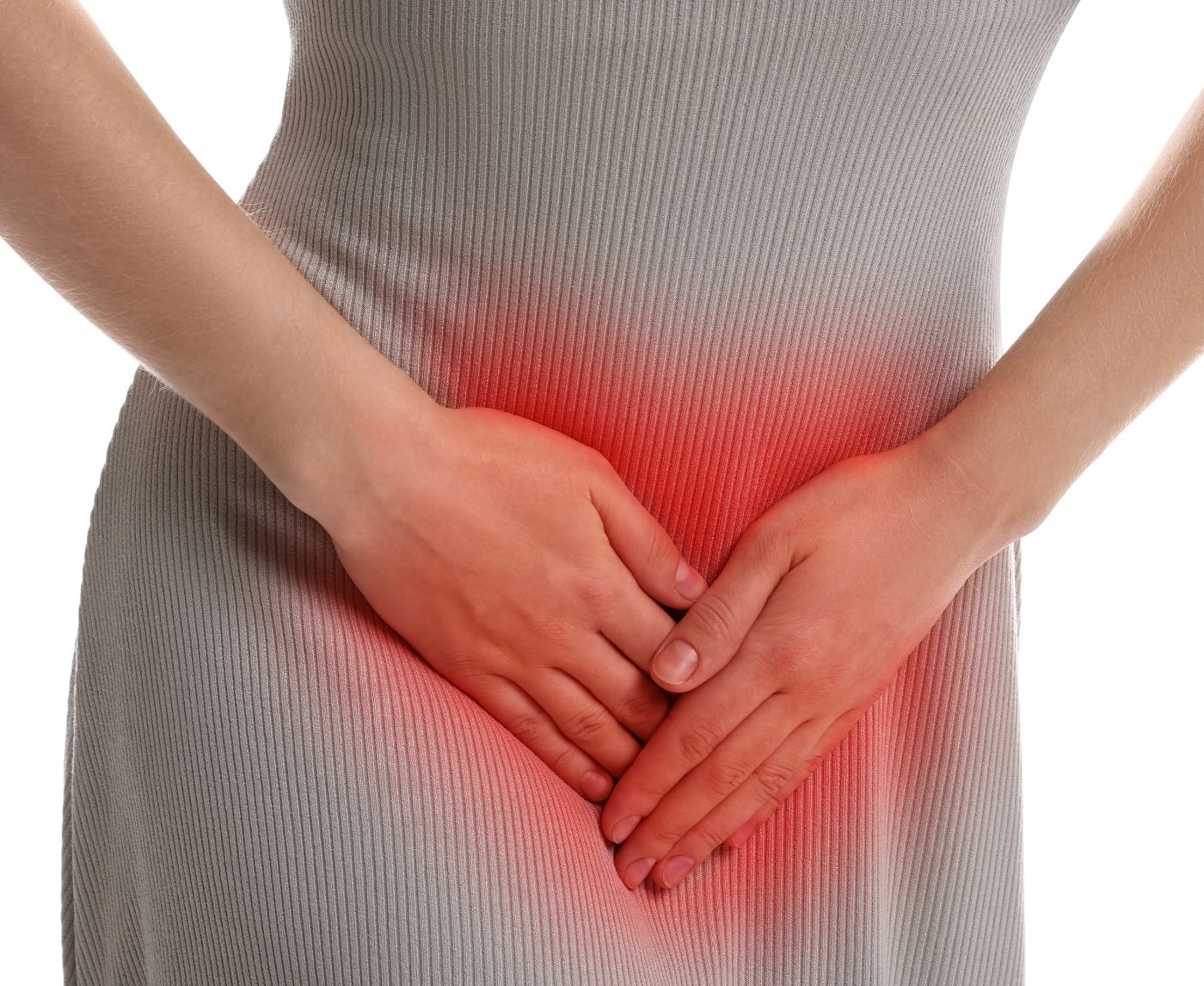
Quick Answer: Allergic reactions and STDs can look similar, but allergic reactions usually appear quickly after exposure to a trigger and improve within days, while STD symptoms often develop more gradually and may persist or worsen without treatment.
This Is Why Everything Starts to Feel Like an STD
There’s a reason your brain goes straight to “STD” the moment something feels different. Sexual health carries a lot of stigma, and the internet doesn’t help, it tends to highlight worst-case scenarios instead of common ones. So when you notice itching, redness, or a bump, your mind fills in the blanks fast.
But here’s what people don’t realize: the skin in the genital area is thinner, more sensitive, and more reactive than almost anywhere else on your body. That means it’s incredibly easy for everyday things, like a new soap, tight clothing, or even a longer-than-usual sex session, to cause irritation that looks alarming.
One patient once put it perfectly: “I was convinced I had something serious. It turned out to be a reaction to a new body wash I used once.” That’s not rare. In fact, many non-STD conditions mimic STD symptoms so closely that even experienced clinicians rely on testing, not guesswork.

What an Allergic Reaction Actually Feels Like
Allergic reactions in your genital area usually mean, "Hey, I don’t like that." And these reactions tend to come quickly, such as within minutes or hours of exposure. That’s one of the big clues.
Here’s how you might see this happen: Let’s say you use a new kind of lubricant or condoms, and everything is fine, you know, during sex. But then, hours later, you start to itch, you start to have redness, or you have a burning sensation. That’s one of those big clues that it’s probably just a reaction, especially if you can pinpoint something that you think might have done it.
Common causes of allergic reactions include latex condoms, scented condoms, spermicides, lubricants, laundry detergents, or even certain fabrics. The reaction tends to look quite dramatic, such as redness, swelling, or a rash, but it’s not usually anything worse than that, and it tends to stay on the surface of your skin.
| Trigger | Typical Reaction |
|---|---|
| Latex condoms | Itching, redness, swelling shortly after use |
| Lubricants or spermicides | Burning sensation, irritation, rash |
| Scented soaps or washes | Dryness, itching, redness |
| Laundry detergent residue | Persistent irritation, especially after wearing clothes |
| Friction (long or intense sex) | Rawness, redness, sensitivity |
The most important thing to remember is that allergic reactions usually stop when the cause is removed. The skin starts to look normal again in a few days, or even sooner. The pattern is more important than how bad the symptoms look.
What STD Symptoms Tend to Look Like Instead
Now, let’s discuss the other side of the equation. STDs don’t always show up right away. That’s one of the big differences people don’t think about. There’s a waiting period, sometimes days, sometimes weeks, while the infection develops.
Take, for example, someone who engages in sexual activity on Friday, is feeling fine all weekend, and then develops symptoms later in the week. That’s a big difference, indicating you’re not dealing with a simple surface reaction.
Another big difference is that STDs don’t simply go away on their own, such as within a day or two, while you take care of yourself. No, these symptoms persist, change, or worsen. That could mean ongoing discharge, recurring sores, or pain that doesn’t go away with basic self-care.
| Feature | Allergic Reaction | STD |
|---|---|---|
| Onset timing | Minutes to hours after exposure | Days to weeks after exposure |
| Duration | Improves within days | Persists or worsens |
| Trigger link | Usually clear (product, friction) | Often unclear or delayed |
| Systemic symptoms | Rare | Possible (fever, fatigue) |
Someone said, "I knew something else was going on when it didn't go away after a week." That instinct, which is to watch how symptoms change over time, is often more reliable than trying to see them.
The Overlap That Confuses Everyone
Now, that’s where things get a little fuzzy, because both allergic reactions and some STDs produce symptoms such as itching, redness, and irritation. That’s why most people end up in a state of confusion and ambiguity. You have to figure it out yourself.
For instance, itching may be a symptom of an allergic reaction, a yeast infection, friction, or some STDs. Similarly, redness may be a symptom of a yeast infection, friction, or some STDs. Even bumps may be caused by irritation, ingrown hairs, or some STDs. There’s just no single symptom that will say, “This is an STD.”
That’s why relying solely on symptoms and appearance is not really a reliable way to diagnose whether or not you have an STD. Even doctors cannot diagnose STDs based solely on symptoms and appearance. They look at other symptoms and test results.
One doctor candidly said:
“If Google Images could diagnose STDs, we wouldn’t need labs.” Well, that’s funny, but it’s true.
Timing Is the Clue Most People Miss
If there’s anything that sets an allergic reaction off from an STD better than anything else, it’s time. Not how it looks, not how it feels – when it started. This is a much clearer indicator than most people realize.
Here’s an example: you have sex at night, everything seems normal, but by the next morning you have itching or irritation. This is a quick turnaround – in this case, you know that what you experienced is a reaction. Your body is simply reacting quickly because it’s irritated by what’s happening on the surface.
Then there’s the person who feels perfectly normal for a couple of days before they start to notice discomfort or symptoms building up. This is what happens when you have an STD – it’s not immediate because the virus or bacteria isn’t ready to multiply yet.
And this is where people get scared – they think that anything that happens after sex must be related to that event, even if it’s not. The thing is, biology doesn’t happen in an emotional calendar – it happens in its own time.
When It’s Probably NOT an STD (Even If It Feels Scary)
Let’s take a deep breath and talk about the scenarios that cause the most unnecessary panic. After all, a great deal of what people worry about as an STD turns out to be nothing more than irritation.
If the symptoms appeared within a few hours, feel more like a surface irritant than deep pain, and are already clearing up after a day or two, this is a big sign that it’s an allergic reaction or friction. The human body has an incredible capacity for healing once the cause is eliminated.
There’s also the context factor. Was this your first time with this person? Was this your first time with this type of condom? Was this your first time with this type of lubricant? Wearing tight clothing after the deed? This is more important than people think. It’s often the missing link that solves the entire mystery.
One person wrote in with the following: “I had the symptoms the next day and thought for sure I had an STD. Turns out I used a new lube and my body doesn’t like it.” This is the kind of situation that happens all the time; it’s just not talked about as much as the worst-case scenarios. The internet likes to gloss over the common causes and jump straight to the worst possible conclusion.
When You Should Start Taking STD Symptoms Seriously
Now let’s reverse that, because it’s not about throwing everything away. There are definitely times when symptoms need more attention and possibly testing.
If something’s not getting better in a few days or it’s getting worse instead of better, that’s your cue to stop guessing. If it’s not just a skin-level problem, such as unusual discharge, pain while urinating, or a non-healing sore, that’s a cue to get tested.
One other significant clue is when it comes back repeatedly. When you have an allergic reaction, it will go away when you get away from what’s causing it. If your symptoms come back repeatedly, especially in a pattern, that’s a significant clue that it’s worth investigating more.
One patient said this about it: “I just thought it would go away like a rash or something, but it just didn’t. So that’s when I got tested.” That’s that moment when something just doesn’t follow that pattern and that’s when things become clear.
This is also when testing becomes less about fear and more about control. It’s no longer a guessing game; it’s a real answer.
Why Visual Symptoms Alone Can’t Give You the Answer
This might be the most important truth in this entire conversation: you simply can’t tell the difference between an allergic reaction and an STD just based on the appearance of the symptoms alone. Not you, not Google, not even most doctors without testing.
The human body only really has so many ways of expressing distress through the skin, like the old saying goes: “Redness, bumps, itching, those are the only ways the skin really knows how to say, ‘Something’s wrong.’”
Which is, of course, why people fall into the trap of comparison in the first place. They’re browsing through images, thinking they can compare the symptoms, but the truth is, the overlap is massive.
A friction rash could be mistaken for herpes symptoms, just as an allergic reaction could be mistaken for early infection symptoms. It’s just not a reliable means of comparison.
And even in clinical situations, doctors are saying something like, “We won’t know for sure until we test.” Well, that’s not uncertainty, that’s good medicine, because the truth is, guessing based on the appearance of the symptoms alone leads you down the wrong path more often than not.
It’s really about moving from asking “What does this look like?” to “What does this suggest?”
Testing: The Moment You Stop Guessing
At some point, most people hit a mental wall. You’ve analyzed the timing, replayed the situation, compared symptoms, and you’re still unsure. That’s usually when testing moves from “maybe” to “I just want to know.”
And honestly, that’s the healthiest shift you can make. Testing isn’t an admission of anything, it’s just information. It turns uncertainty into something concrete you can act on.
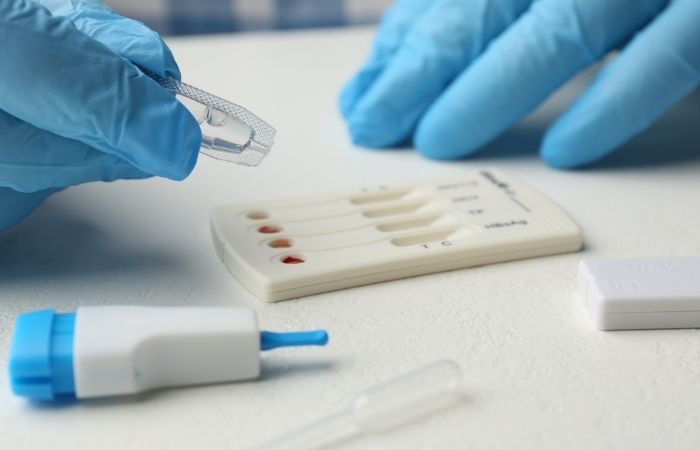
If your symptoms don’t clearly resolve, or if there’s any doubt lingering in your mind, using a reliable at-home option like a discreet STD test kit can give you clarity without the stress of a clinic visit. It’s fast, private, and puts you back in control of the situation.
There’s something powerful about that moment. Instead of lying in bed at 2AM wondering, you’re taking a step that actually answers the question.
Because at the end of the day, peace of mind isn’t something you guess your way into. It’s something you get by knowing.
Common Situations That Trigger This Confusion
However, there are some instances in which this question recurs: “Is this an allergic reaction or an STD?” It’s almost as if it’s predictable after having seen a number of real-life cases. It’s often a particular situation that presents itself and makes everything seem suspect.
One such case is when you try something new. It may be a new partner, a new condom, a new lube, or even a new body wash that you use just before having sex. When something foreign is introduced into your system, your skin may react to it, and because it’s around sex, your mind will immediately relate it to STDs.
Friction is another such case. When you have longer or more intense sex than usual, your skin may get irritated or inflamed. It may appear as a burning sensation or a red color the next day.
One such case that was explained to me went like this: “Nothing felt wrong during sex, but the next day everything felt irritated. I immediately thought infection, but it was just friction.”
The Role of Anxiety (And Why It Makes Everything Feel Worse)
Let’s talk about something that doesn’t really get discussed enough: anxiety makes your body feel certain ways. When you are worried about something that might be wrong, you become extremely aware of your body’s feelings.
You might be feeling a little itch, and you think that something is wrong with you. Or you might be feeling a little redness, and that’s all you can think about. It’s like your mind is scanning your body, looking for signs of something wrong, and everything is amplified.
It’s not like the itch isn’t real, or the redness isn’t real, it’s just that your mind is extremely aware of these feelings. It’s like a cycle: you notice something, you worry about something, you check on something, you notice that something is getting worse, you worry about something, and so on, until you can’t really tell what’s real anymore.
One patient told me, “I was checking on something every hour, and I could tell that it was getting worse. But when I stopped checking on it, I didn’t really notice anything as much.” It’s not in your head, it’s just your brain’s response to the situation.
It’s also important to remember that knowing about your symptoms can really help you, because you are less likely to freak out, and you are more likely to be rational about the situation.
What to Do in the First 48 Hours
The first two days after recognizing symptoms is when most confusion and panic occur. So let’s get our feet back on the ground and talk about what really works within that timeframe.
First off, let’s talk about timing. Were symptoms immediate after having sex or using a product? That’s a pretty clear sign that it’s just a simple case of irritation or an allergic reaction. In this case, changing what you’re using and giving your body a break from whatever’s irritating it will generally help symptoms clear up.
Secondly, let’s talk about giving your body some space. The genital area heals incredibly quickly when it’s not being irritated further. So that means giving your body a break from whatever’s irritating it and just letting it be for a day or two. Generally within 24-72 hours, you will be able to tell whether things are getting better or worse.
This is when most people start to feel a sense of relief. When symptoms start to clear up, it becomes evident that things aren’t getting worse like they would in a true infection case.
When Testing Becomes the Smart Next Step
Sometimes, after a few days, things just aren’t clear. Maybe the symptoms haven’t gone away completely. Maybe the situation just isn’t clear enough for your mind to stop wondering. That’s when testing becomes less optional and more beneficial.
The idea behind testing isn’t to assume the worst; it’s to eliminate all doubt. And when your symptoms are similar enough, this is invaluable. It allows you to move forward with your life instead of dwelling on “what if.”
If you want something easy and private to help give you the answers you’re looking for, something like a at-home STD test kit can help make the situation much less overwhelming. You don’t have to worry about scheduling and discussing; you simply get the answers you need.
And that’s really what this is all about. Not fear. Not assumptions. Simply knowing. Once you know what’s going on with your health, everything else becomes much easier to deal with.
One person’s quote was: “The waiting and guessing was worse than the result.” This is something that happens all the time. Something that doesn’t have to happen to you.
When It’s Both Possible: Overlapping Conditions
Here’s something most people don’t expect: sometimes, you can have irritation *and* an STD, or irritation that makes you aware of an infection you would have otherwise not have caught early.
Take, for example, a person with mild symptoms of an STD, unaware of their condition. But then, something new is introduced, such as a new product or rough sex, which causes irritation. Now, everything is suddenly heightened, making it difficult to pinpoint what’s causing what.
This is not common, mind you, but it is possible. So, one more thing to add to the list of how relying on looks and feelings alone is not always the best idea: sometimes, multiple things could be happening all at once, not always neatly defined.
What you take away from all this is not to make things more complicated, but to keep your feet firmly planted on the ground: if your symptoms go away quickly, then chances are, you had irritation. If your symptoms linger, then testing is your backup.
FAQs
- 1. Is an allergic reaction really like getting an STD?
- It can be, which is why so many people are confused about the symptoms they are experiencing. While there are differences, the main ones are the time frame in which the symptoms appear and the time frame in which the symptoms go away.
- 2. How quickly does an allergic reaction appear after having sex?
- An allergic reaction appears anywhere from minutes to hours after exposure. If the symptoms appear the following day, it is less likely an allergic reaction.
- 3. Do the symptoms of getting an STD appear right after having sex?
- No, the symptoms of getting an STD don’t appear right after having sex. In fact, they don’t appear for several days, sometimes weeks, as the infection grows in the body.
- 4. If the symptoms go away quickly, doesn’t that mean that it was not an STD?
- In most cases, yes, the symptoms going away quickly mean that the symptoms were probably just an allergic reaction, not an infection.
- 5. Can condoms cause allergic reactions that mimic the symptoms of getting an STD?
- Absolutely. Latex condoms, for example, can cause itching, redness, and irritation.
- 6. What if I’m still unsure after a few days?
- If you're still unsure, then testing is your best option. This is because, by testing, you'll eliminate any doubts you may have.
- 7. Is itching alone a sign of an STD?
- Not really, because itching can result from many factors, including allergies, infections, and irritations. Therefore, itching is not a sign of any disease, whether it is an STD or not.
- 8. Can friction from sex cause STD-like symptoms?
- Yes, friction can result in redness, soreness, and even minor scratches, which may be mistaken for symptoms of STDs.
- 9. Should I test even if I think it’s just an allergic reaction?
- Yes, you should test even if you think you have an allergic reaction, simply because you'll eliminate any doubts you may have.
- 10. What’s the safest way to stop worrying about symptoms?
- The best way to stop worrying is to obtain accurate information, which can be done by observing changes in your symptoms or by taking a test.
How to Protect Yourself Going Forward
But once you have been through something like this, you begin to understand the patterns. You begin to understand just how sensitive your own body is and how easily your own mind will jump to conclusions based on what your body is experiencing.
Perhaps the easiest way to avoid this confusion in the future is by being more consistent. For instance, by using the same reliable products, such as condoms and lubricants, and soaps, it’s much less likely that your own body will react in an unexpected way. Your own body likes consistency and predictability, especially in such sensitive areas.
You might also want to pay attention to your own skin. For instance, if you find that there are certain products or situations that cause your own skin to irritate more easily, this could also be useful information. You are essentially getting to know your own patterns and this will make your own future much easier.
And then there’s testing. Not as a form of panic, but as a form of normalcy. Once testing becomes normal for your own life, much of the fear associated with your own symptoms goes away. You are no longer guessing; you are essentially informing yourself.
We wrote our article using the most up-to-date advice from the best public health and medical groups. Then, we changed it into simple language based on real-life situations, like treatment, getting reinfected by a partner, being exposed to someone with no symptoms, and the awkward question of whether it "came back." We had a lot of different public health advice, clinical advice, and medical references in the background of our research, but the following are the most relevant and helpful for readers who want to check our claims for themselves.