Why Do I Only Get Symptoms After My Period? STD or Hormones?
Quick Answer: Changes that happen during your cycle can cause symptoms that show up after your period, but they can also be signs of bacterial vaginosis, a yeast infection, irritation from products, or a STI.
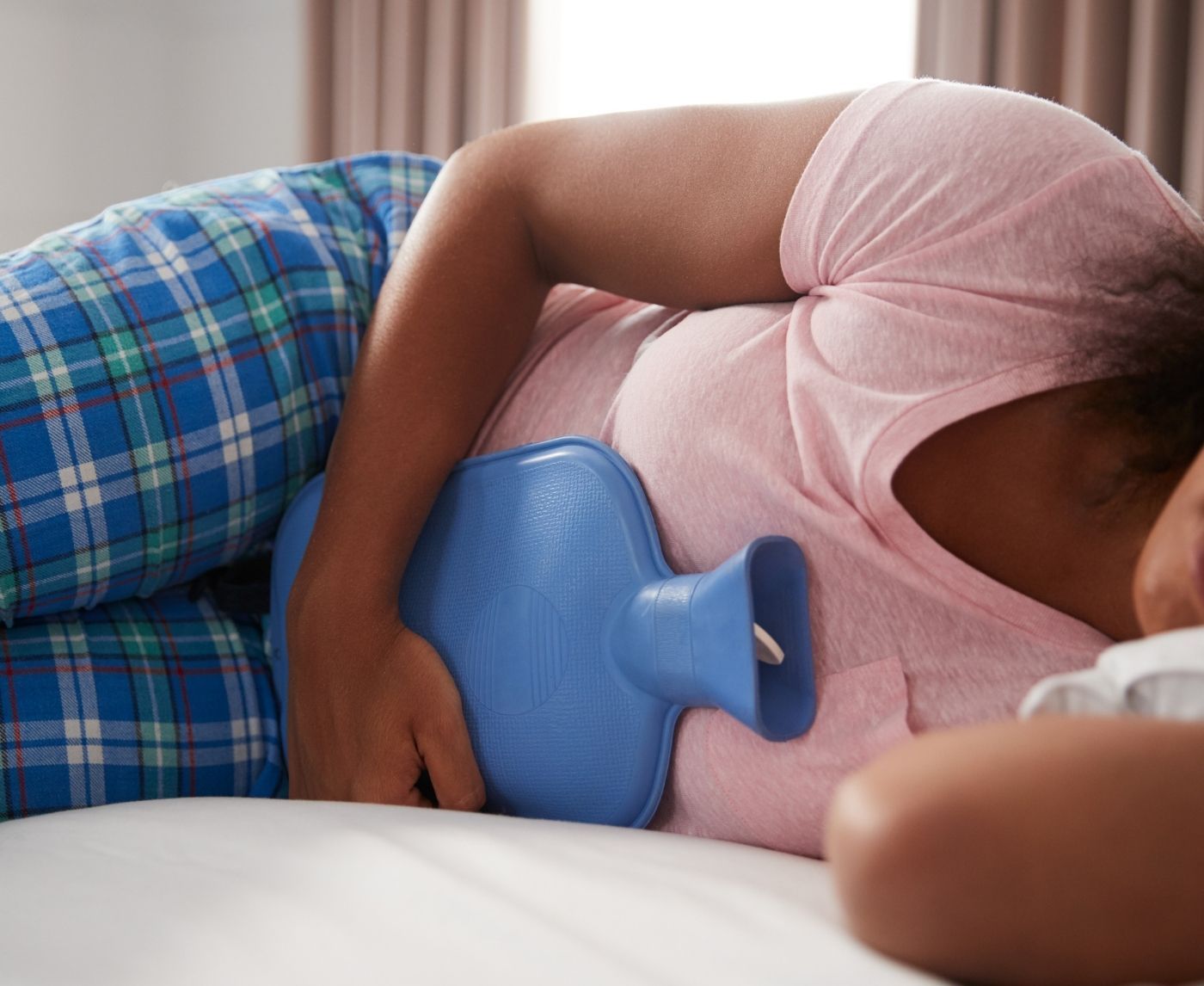
Quick Answer: Changes that happen during your cycle can cause symptoms that show up after your period, but they can also be signs of bacterial vaginosis, a yeast infection, irritation from products, or a STI. The pattern is important: hormones and pH changes can cause temporary irritation or odor changes, but if you have burning, unusual discharge, sores, pain when you urinate, bleeding between periods, or symptoms after having sex, you should get tested.
When Your Period Ends but the Weirdness Starts
A lot of people assume symptoms should show up in a neat, obvious way. Real life is messier than that. The days right after a period are when many people suddenly notice irritation, odor, discharge, or burning, partly because menstrual blood can temporarily make the vaginal environment less acidic and that can change what feels normal.
This is why someone can feel completely fine during most of the month, then every single time their period ends, they notice the same post-period drama. It does not automatically mean an STD. It also does not automatically mean everything is harmless. It means your cycle may be unmasking something, whether that is pH-related irritation, recurring BV, yeast, friction from pads or tampons, or symptoms from an infection that happen to become easier to notice after bleeding stops.
Think of the post-period window as a spotlight. During bleeding, smell and discharge can be harder to interpret. Once the bleeding is gone, anything unusual becomes a lot more obvious. That is why so many people end up thinking, “Why does this only happen now?” when the better question is often, “What is my period making easier to notice?”
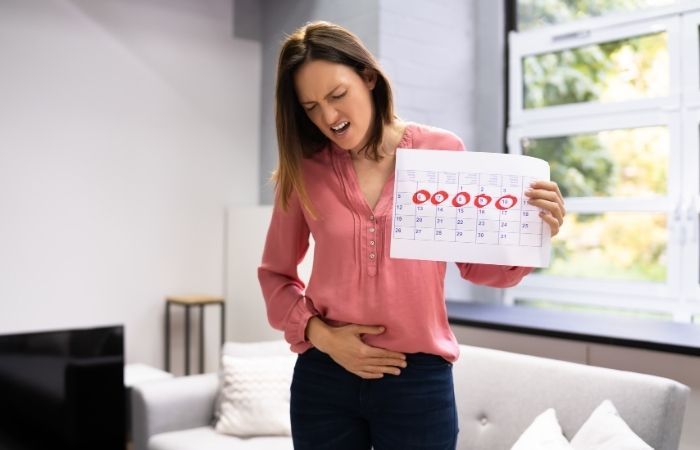
Your Cycle Can Absolutely Change the Vibe Down There
The timing of your symptoms is important because your period changes the environment in your vagina in real ways. Blood has a higher pH than the vagina normally does. This means that the days during and right after a period can temporarily change the balance that keeps protective bacteria in charge. If that balance gets off, you might notice an odor, discharge, or irritation even if nothing major is going on.
This is one reason why BV often shows up right after a period. Someone will say, "I feel fine, but when my period ends, the smell comes back." That story is common because BV is caused by an imbalance in the bacteria in the vagina, not just a bad luck moment. If the fishy smell is strongest during or after your period, it's more likely that you have BV than that your hormones are to blame.
Hormones can also change how sensitive the vulvar skin is, how much lubrication it has, and how it reacts to friction. The irritation after your period may not be an infection but rather the skin being irritated if you use pads, tampons, period underwear, scented washes, wipes, or a new detergent. Bodies aren't always sending out a huge emergency signal, but they're not always being dramatic for no reason.
| Possible cause | Why timing fits after a period |
|---|---|
| Hormone and pH shift | Menstrual blood can temporarily change vaginal pH, making odor, discharge, or irritation more noticeable. |
| Bacterial vaginosis | BV symptoms often flare or become easier to notice during or after menstruation. |
| Yeast infection | Moisture, irritation, antibiotics, or cycle-related changes can make itching and thick discharge show up after bleeding stops. |
| Product irritation | Pads, tampons, liners, scented products, or detergent can irritate vulvar skin during the days around a period. |
| STI symptoms | Some STI symptoms overlap with BV or yeast and may become more obvious after a period, especially if discharge, burning, or sores persist. |
Changes that happen during your cycle can cause symptoms that show up after your period, but they can also be signs of bacterial vaginosis, a yeast infection, irritation from products, or a STI. The pattern is important: hormones and pH changes can cause temporary irritation or odor changes, but if you have burning, unusual discharge, sores, pain when you urinate, bleeding between periods, or symptoms after having sex, you should get tested.
What Feels More Like BV, Yeast, or Simple Irritation
If your main symptoms are odor, discharge, or a “something’s off” feeling after your period, BV is definitely one of the first things to think about. BV is not technically an STI, but sex does play a role and it’s often mistaken for one because the symptoms feel sudden and unpleasant. The first sign is usually a strong fishy smell, especially during or after your period.
If your main symptoms are itching, burning, and thick white discharge, yeast infections move up the list. This is the person who fidgets in her seat at work because something’s itching her, who’s raw and irritated in the shower, or who suddenly finds sex irritating instead of pleasant. Yeast infections are common. The important thing is that they are not automatically a sign that something went wrong with your partner.
Then there’s the “I’m just irritated” category. This is less glamorous and more common than the internet lets on. Pads rubbing against your vulva for days, changing your pads and tampons, using perfumed products, wearing wet underwear, and/or having sex when your tissues are already irritated and raw all qualify as possible culprits. The problem is that this category sometimes looks and feels enough like an STI that you might go into full-blown STI panic.
The thing your body does worst is read your mind. If your symptoms return with your period month after month, or if your OTC meds “kind of” help but never quite solve the problem, it’s time to stop guessing and find out what’s really going on. Recurring post-period symptoms deserve more respect than another round of crossing your fingers.
When It Starts Looking Less Like Hormones and More Like an STI
Okay, this is the part people usually want me to just tell them outright, so I’ll do that: Yes, some STI symptoms may appear or become more noticeable after your period. Chlamydia, gonorrhea, trichomoniasis, and herpes all have similar symptoms that people may associate with hormones, BV, or yeast infections. That’s why the timing alone isn’t enough for this situation.
Chlamydia and gonorrhea may cause discharge, burning while peeing, pelvic pain, and bleeding between periods. Trichomoniasis may cause itching, burning, discomfort while peeing, and a fishy-smelling discharge with a white, yellow, or green color. Herpes is a bit different because it causes sores, blisters, or burning and tingling. Some people may also notice herpes symptoms around the time of their period but not during the other weeks of the month.
The important thing here is the consistency and exposure. Have you had a new partner? Have you had unprotected sex? Have you had a partner who has an STI? Have your symptoms been recurring? If your period products and your personal hygiene habits haven’t changed but your symptoms have been persistent, then it’s time for you to think beyond hormones. Your period may make your symptoms more noticeable, but your period does not cause chlamydia out of nowhere.
| Pattern | More suggestive of cycle change or irritation | More suggestive of infection or STI |
|---|---|---|
| Timing | Only mild symptoms for a day or two after period, then resolves | Symptoms last, worsen, or return after sex or after each cycle |
| Discharge | Slight temporary change without strong smell or pain | Strong odor, unusual color, frothy discharge, or persistent discharge |
| Itching or burning | Mild external irritation linked to pads, shaving, or friction | Ongoing burning, internal irritation, pain when peeing, or worsening soreness |
| Bleeding | Light spotting can happen for non-STI reasons | Bleeding between periods with discharge or pain should be evaluated |
| Sores or lesions | Not typical for simple hormone shifts | Sores, blisters, or painful cuts need prompt medical evaluation |
You don't have to be 100% sure of your diagnosis before you do anything. You just need to be able to tell when the pattern stops looking like a short cycle blip and starts looking like a problem that needs to be tested.
The Herpes Question, Because People Quietly Worry About It
A great deal of people do not verbalize this part out loud; however, they are definitely thinking it. “What if it is herpes and my period is triggering it?” This is not an unreasonable thing to think. Recurring genital herpes has the potential for flaring during the menstrual cycle. If the symptoms are more along the lines of tingling, burning, sensitivity, and/or recurring sores in roughly the same area, then herpes needs to be included as a possible cause.
Herpes does not tend to manifest as a vague fishy smell and/or a change in discharge with no other symptoms. Herpes does not tend to manifest with no skin symptoms and/or no recurrence. Herpes does tend to manifest with more skin-type symptoms. There is a very specific sensation. There is the sensation that the area is raw, prickly, tingly, and/or like there is a paper cut that should not be there. And then there are the sores. And sometimes they are subtle enough that they could easily be mistaken for a shaving rash.
At this point, context is everything. If the same burning and/or sores are recurring around the time of the period and after exposure and/or the partner has oral or genital herpes, then an examination and/or testing are much more useful than spending the night scrolling through Google Images. Google Images has already ruined enough evenings.
What to Do If You’re Stuck in the “Maybe It’s Nothing, Maybe It’s an STD” Loop
First, step back and look at the whole pattern instead of one symptom by itself. Consider what’s really happening after your period, how long it lasts, whether it has any odor, whether it’s more internal or external, whether it’s worse when you have sex, and whether you have a history of any recent sex exposures. That’s a lot more helpful than trying to figure out whether this one itch means this one diagnosis.
Second, stop treating symptoms you’re not sure about! Antifungals will not treat BV. Treating “yeast” when it’s really something else like trichomoniasis, chlamydia, irritation, or herpes just prolongs a guessing game that you may already know is frustrating. If it’s happened more than once, then it’s probably best to just get tested and get some peace of mind already.
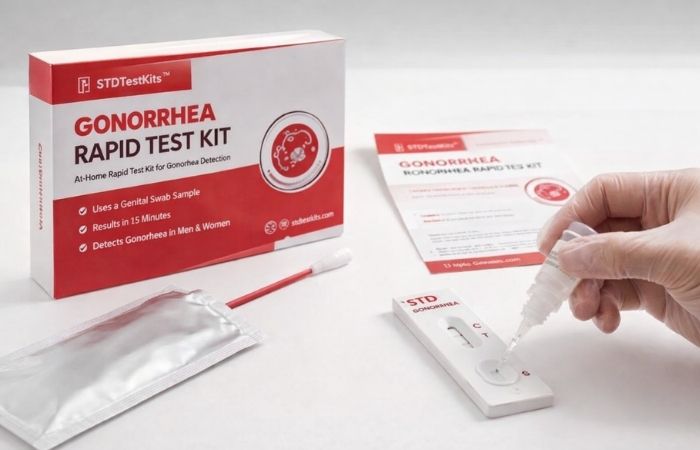
This is also a point in which a home testing solution may be really helpful to you. If your brain is still stuck in a loop each month, then getting answers is better than playing a game of symptom roulette! You may start by visiting the STD Test Kits home page to compare your options, or you may go straight to the6‑in‑1 At‑Home STD Test Kit if you want a broader testing solution that doesn’t require you to guess what to treat first.
When to Get Tested, and When Not to Keep Waiting
You do not need to test for each and every time that your body is being a real pain in the butt. However, it is wise to go from watching and waiting to getting a test if what you are experiencing is persistent, severe, recurring, or is associated with a sexual encounter. Burning when you pee, bleeding during periods, unusual discharge that doesn’t go away, pelvic pain, genital herpes, or a partner with symptoms are all good reasons to stop watching and waiting and get a test.
Another timing factor is that if what you are experiencing began after a recent sexual encounter, then you must know that there is a window of opportunity for STIs. This means that if you get a test as soon as you begin experiencing symptoms, it may be negative, but you will need a follow-up test later. Biology is a cruel mistress.
If what you are experiencing looks more like a case of BV or yeast, then you may want a vaginitis test. If what you are experiencing looks more like an overlap of STIs, then a combination test is what is needed. If you are pregnant, in a great deal of pain, running a fever, or if you see lesions, then do not wait. That is not the time for another month of “let’s just see what happens.”
What Happens Next If the Pattern Keeps Repeating
The repetition of your symptoms after your period is not something that you simply have to accept as your body’s weird little personality quirk. Repetition is information. And if this keeps happening, well, there may be an underlying pattern here that has something to do with the recurrence of BV, the recurrence of yeast irritation, the recurrence of product sensitivity, the recurrence of herpes flare-ups, or the recurrence of an untreated STI that never fully got ruled out.
The first thing that might help is to track your symptoms for three cycles in a row. That means writing down when the symptoms begin, what they feel like, whether or not you used a pad or a tampon, whether or not you had sex, and whether or not anything helps. And more often than not, this will help clarify the situation more than simply remembering “oh yeah, this always happens around this time.”
And if what you need is a way out of this situation and not more questions, well, then just test. Testing is not an admission of guilt. Testing is not an admission that something has gone terribly wrong. Testing is simply the quickest way out of the what-if game. And for a lot of people, that’s just more important than another month of what-if.
FAQs
- 1. Can my period really make BV symptoms worse?
- Yes, it can. BV symptoms, particularly those involving a strong smell, can become more noticeable during or after a period due to a potential change in pH levels as a result of menstrual blood.
- 2. Do yeast infection symptoms often appear after a period?
- Yes, it can. One of the most common yeast infection symptoms is itching, irritation, discomfort, and thick discharge, which can become more noticeable after a period.
- 3. Can hormones alone make itching occur after a period?
- Hormones can make a person feel a certain way, but itching can occur due to a yeast infection, which can make a person feel uncomfortable. Hormones can make a person feel a certain way, but itching can occur due to a yeast infection, which can make a person feel uncomfortable.
- 4. Does chlamydia get worse after a period?
- A person’s period does not make chlamydia occur, but it can make a person notice it more after a period has ended. Chlamydia can also make a person experience bleeding between two periods, unusual discharge, and a burning sensation while urinating.
- 5. Can gonorrhea/trichomoniasis make a person experience BV?
- Yes, it can. Gonorrhea/trichomoniasis can make a person experience BV due to a strong smell, unusual discharge, irritation, etc. This is exactly why a person should not just assume that their BV is due to a yeast infection, chlamydia, etc.
- 6. Can herpes flare up around my period?
- Yes, if you're one of those people, recurrent herpes flare-ups can occur during your menstrual cycle, so you might experience tingling, burning, or recurring sores that always seem to flare up in the same place, which could mean your herpes is related to your period.
- 7. How do I determine if it is pad or tampon irritation?
- Irritation, such as that which is caused by pads or tampons, is usually external, so you would feel a rubbing, raw, stinging sensation, rather than something that is internal. If you're feeling something that is recurring, despite changes in pads or tampons, then you're probably not dealing with something that is simply irritation.
- 8. Should I use an over-the-counter yeast infection medication just to see if it works?
- This is always tempting, especially if you're not really sure what you're dealing with, but if you're not really dealing with yeast, then you're just making yourself wait longer to find out what you're really dealing with. If you're feeling something that is strong, then testing is probably a better idea.
- 9. When should I get tested if I'm feeling these symptoms?
- If you're feeling burning while you pee, unusual discharge, sores, pelvic pain, or if you're feeling a flare-up between periods, then you probably want to get tested sooner rather than later. Just remember that if you have recently had a sexual partner, then you'll want to get tested, but you'll have to wait a certain amount of time depending on what kind of infection you're dealing with.
- 10. What is the best next step if this is something that is happening every month?
- Just monitor this pattern a bit, notice what it really looks and feels like, and get evaluated/tested instead of guessing what it might be every month. Symptoms recurring after a certain period of time are common, but it’s still important to understand them. Answers are better than monthly panic attacks every time.
You Deserve Answers, Not Another Month of Guessing
If your symptoms only happen after your period, they could be something common and easy to fix, like BV, yeast, irritation from changes in pH, or being sensitive to certain products. But since STI symptoms can be similar to all of those, the real goal is not to become your own tired detective forever. The goal is to figure out what pattern your body is showing you and do something better than panic.
If you're sick of guessing every month, start with a discreet testing option that will help you go from "maybe" to "yes." If you have symptoms after your period that make you wonder if this is your cycle, an infection, or both, the7-in-1 Complete At-Home STD Test Kit is a good next step.
We wrote our article using the most up-to-date advice from the best public health and medical groups. Then, we changed it into simple language based on real-life situations, like treatment, getting reinfected by a partner, being exposed to someone with no symptoms, and the awkward question of whether it "came back." We had a lot of different public health advice, clinical advice, and medical references in the background of our research, but the following are the most relevant and helpful for readers who want to check our claims for themselves.