Can Anxiety Cause STD Symptoms? What Your Body Is Really Doing
Quick Answer: Anxiety can cause physical sensations that feel a lot like STD symptoms, including tingling, burning, itching, pelvic tension, and a constant urge to check your body.

Quick Answer: Anxiety can cause physical sensations that feel a lot like STD symptoms, including tingling, burning, itching, pelvic tension, and a constant urge to check your body. But anxiety cannot diagnose or rule out an STI, which is why new symptoms, a known exposure, or ongoing discomfort still deserve proper testing.
Yes, Anxiety Can Create Real Physical Sensations
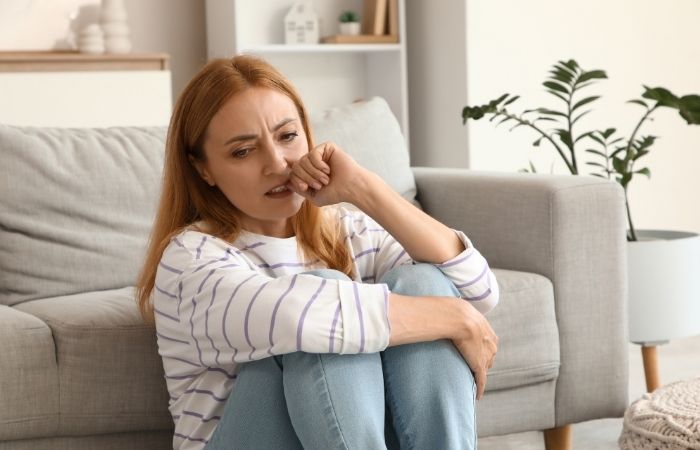
Let’s get one thing straight right away: anxiety symptoms are not “fake,” and they are not just you being dramatic. Anxiety and panic can trigger real physical changes in the body, including tingling, muscle tension, sweating, chills, stomach upset, racing heart, and a heightened awareness of sensations you would normally ignore. When that awareness gets focused on your genitals, throat, or urinary tract after a hookup, it can absolutely feel like something is wrong.
This is part of why health anxiety gets so convincing. The NHS notes that people with health anxiety may frequently check their bodies for signs of illness such as lumps, tingling, or pain, and may keep worrying even after reassurance or testing. That pattern matters in sexual health because once you start monitoring every itch, every sensation gets promoted to “possible STD” in your head, even when your nervous system may be doing a lot of the talking.
There is also a body-mechanics side to this. Anxiety can make pelvic floor muscles tighten, change the way you breathe, dry out tissues, and make normal friction after sex feel more intense the next day. In other words, your body can feel irritated, sensitive, or “off” without an infection being the reason. That does not mean you should ignore symptoms; it means the symptom itself is real, but the cause is not always an STI. STD Test Kits exists for exactly this messy middle ground, when what you need most is clarity instead of endless guessing.
What Anxiety Can Mimic, and What It Usually Cannot
The internet loves black-and-white answers, but bodies are more annoying than that. Anxiety can mimic broad, nonspecific sensations like tingling, itching, a hot or burning feeling, urinary urgency, stomach flips, pelvic tightness, throat tightness, and even the sense that something has “changed” down there. Those are exactly the kinds of symptoms that make people open twenty tabs and convince themselves they have three infections by midnight.
What anxiety usually does not do is create a classic infectious pattern all by itself. Anxiety is not a typical cause of a new genital sore, a blister, a foul-smelling discharge, visible pus, bleeding between periods, or a spreading rash with other systemic symptoms. Those kinds of findings can happen with STIs or with other medical issues, and they deserve a proper evaluation rather than a reassurance loop. CDC and Mayo Clinic guidance both emphasize that symptoms such as sores, unusual discharge, burning with urination, bleeding between periods, or genital rash should be taken seriously.
The twist is that many real STIs do not read like a movie scene either. CDC and Mayo Clinic both note that chlamydia, gonorrhea, herpes, and other STIs may cause only mild symptoms or no symptoms at all, which is why symptom-spotting alone is a terrible diagnostic strategy. So the answer is not “trust your anxiety” and it is not “ignore your body.” The answer is to notice the symptom, look at the exposure risk, and test appropriately instead of trying to solve the mystery by feel alone. A discreet at-home combo test kit can be a practical next step when your brain is stuck in the what-if loop.
| Symptom Pattern | More Consistent With Anxiety or Tension | More Concerning for STI or Other Medical Issue |
|---|---|---|
| Tingling, pins-and-needles, body scanning | Common during panic, hypervigilance, and health anxiety | Still test if it follows a meaningful exposure or keeps worsening |
| Mild burning or irritation after sex | Can happen with muscle tension, dryness, friction, or stress | More concerning if paired with discharge, sores, fever, or persistent pain |
| Itching without visible sores | Can happen with stress, irritation, shaving, sweat, or product sensitivity | More concerning if there is rash, lesions, odor, or ongoing discharge |
| Urgency to pee or pelvic tightness | Can happen with anxiety, pelvic floor tension, or panic | More concerning if urination is sharply painful, bloody, or accompanied by fever |
| Visible blister, ulcer, or unusual discharge | Not typically explained by anxiety alone | Needs STI testing or medical evaluation |
The point of a table like this is not to give you permission to self-diagnose from your phone. It is to show why your body can honestly feel alarming without that automatically meaning an infection, while also making clear that some signs deserve testing no matter how anxious you feel. Anxiety can mimic discomfort; it cannot reliably explain away every visible change.
Why Symptoms Get Louder After Sex, After Googling, or After a Negative Test
A lot of people notice the spiral starts in a very specific moment. Maybe the condom broke, maybe you had sex with someone new, maybe a partner sent the dreaded “we need to talk” text, or maybe you just woke up the next morning feeling a little more aware of your body than usual. Once your nervous system decides this might be a threat, it turns the volume up on every sensation. Suddenly a normal post-sex irritation feels ominous, and a completely ordinary twinge feels like evidence.
Googling rarely helps, because sexual health searches are basically designed to make people catastrophize. A generic symptom like burning can be linked to STIs, yeast, BV, friction, dehydration, concentrated urine, shaving irritation, contact dermatitis, pelvic floor tension, or vulvar pain disorders. ACOG notes that conditions affecting the vulva can cause burning, stinging, irritation, and rawness, which is one reason “it burns” is not a one-condition sentence.
Negative tests can also fail to calm people down if the anxiety engine is already running. MedlinePlus describes illness anxiety as a preoccupation with the idea that physical symptoms mean serious illness even when there is no medical evidence supporting that fear, and NHS guidance says people with health anxiety may keep worrying that tests missed something. That is why someone can test negative and still spend the next week checking, squeezing, comparing, and mentally replaying the encounter frame by frame.
There is one important reality check, though: a negative test only helps if it was the right test at the right time. Many STIs can be asymptomatic, and testing too early may miss an infection, which is why timing and test type matter. If your symptoms continue, if your exposure was recent, or if your result does not match what your body is doing, the answer is not endless reassurance-seeking. The answer is a smarter testing plan.
STD Symptoms vs Anxiety: How to Actually Tell the Difference
This is the part everyone wants a clean answer to: “How do I know if this is anxiety or an STD?” The honest answer is that you don’t diagnose that based on how something feels alone. You look at three things together: your exposure risk, the type of symptoms, and timing. That combination is what gives you real clarity, not just gut instinct.
Picture this: Jordan notices a slight burning feeling two days after a new hookup. No discharge, no sores, just awareness. Anxiety kicks in immediately. But here’s the biological reality, most bacterial STIs like chlamydia or gonorrhea don’t reliably show symptoms that fast. That gap between exposure and symptom timing is one of the biggest clues people overlook.
On the other hand, if symptoms appear in a pattern that lines up with known STI timelines, like sores a few days to weeks later, or discharge developing over time, that leans more toward something physical happening. The key is not to overtrust either your anxiety or your optimism. You use timing and testing to cut through the noise.
| Factor | More Likely Anxiety-Driven | More Likely STI-Related |
|---|---|---|
| Timing after exposure | Symptoms appear almost immediately (same day or next day) | Symptoms follow known incubation periods (days to weeks) |
| Symptom consistency | Changes frequently, comes and goes, shifts location | Progresses or stays consistent over time |
| Body checking behavior | Constant checking, Googling, comparing | Less about checking, more about persistent physical change |
| Response to reassurance | Temporary relief, then worry returns | Symptoms remain regardless of reassurance |
| Visible physical signs | Often minimal or absent | May include sores, discharge, rash, or lesions |
If you recognize yourself more in the left column, that doesn’t mean “it’s all in your head.” It means your nervous system is playing a bigger role. If you recognize the right column, it’s a sign to stop guessing and test. Either way, clarity comes from action, not analysis.
The Biology Behind It: Why Anxiety Feels So Physical
Anxiety is not just a mental loop, it’s a full-body event. When your brain detects a potential threat (like “what if I got an STD?”), it activates your sympathetic nervous system. That’s your fight-or-flight response, and it changes how your body feels almost instantly.
Blood flow shifts, muscles tighten, and your sensory awareness goes way up. That’s why people feel tingling, buzzing, warmth, or pressure in very specific areas. If your attention is focused on your genitals, that’s where those sensations get amplified. It’s not random, it’s targeted awareness combined with physical stress responses.
There’s also a loop that makes this worse. You feel something → you focus on it → your brain labels it as a threat → your body ramps up → the sensation intensifies. That’s how a mild irritation turns into something that feels impossible to ignore. It’s not imagined. It’s amplified.
A common example: someone feels a tiny itch, checks repeatedly, touches the area more, maybe uses different soaps or wipes trying to “fix it,” and ends up creating more irritation. Now the symptom is stronger, which reinforces the fear. That feedback loop is one of the most powerful drivers of phantom STD symptoms.
When You Should Stop Guessing and Get Tested
This is where we cut through everything and get practical. There are moments where it doesn’t matter if anxiety is involved, you should test anyway. Not because something is definitely wrong, but because testing is the fastest way to replace uncertainty with facts.
If you had a new or unprotected sexual encounter, testing is a smart move regardless of symptoms. If you have symptoms that are new, persistent, or worsening, that’s another clear reason. And if your brain won’t let it go, even after reassurance, that alone is a valid reason to test. Peace of mind is not trivial. It matters.
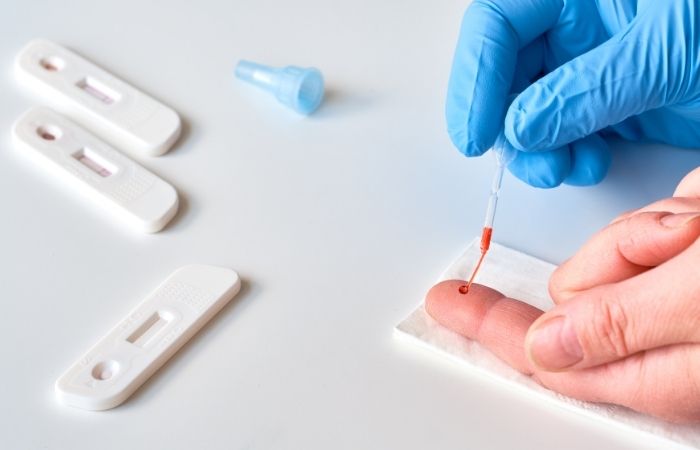
Think of testing as ending the argument between your body and your thoughts. Instead of replaying the same question for days, you get an answer. That’s why so many people turn to STD Test Kits, it removes the waiting, the awkward clinic visit, and the constant mental spiral.
And timing matters here. Testing too early can give you a false sense of security, while testing at the right window gives you real confidence in the result. If you’re unsure, it’s often better to test once at an appropriate time and then retest if needed, rather than testing too early and spiraling afterward.
The Trap of “Tested Negative But Still Feel Something”
This is one of the most frustrating experiences: you did everything right, you got tested, it came back negative… and your body still feels off. That disconnect can make anxiety even louder, because now it feels like something is being missed.
Avery went through this exact situation. After a hookup, they tested at the appropriate window and got a negative result. But the tingling didn’t go away. “I kept thinking, what if the test missed something? What if I’m the exception?” That thought pattern is incredibly common.
What’s often happening here is that the original trigger (the sexual encounter) activated anxiety, and the body stayed in a heightened state even after the risk was resolved. The symptoms linger not because of infection, but because the nervous system hasn’t fully settled yet.
That said, there are two important checks. First, make sure the test timing was correct. Second, make sure the right tests were done for the exposure type. If both are solid, and symptoms are mild or vague, anxiety becomes a much more likely explanation than a hidden infection.
What Your Body Is Actually Trying to Do
Your body is not trying to trick you, it’s trying to protect you. The problem is that it doesn’t always get the signal right. When it thinks something might be wrong, it increases sensitivity, awareness, and alertness. That’s useful if there’s real danger. It’s exhausting when there isn’t.
In sexual health, this often shows up as hyper-awareness. You suddenly notice things you’ve probably always experienced but never paid attention to. Normal discharge, normal skin texture, normal sensations, all of it gets reinterpreted through a fear lens.
There’s also a deeper layer: vulnerability after intimacy. Sex can make people feel exposed physically and emotionally. That vulnerability can amplify anxiety, especially if there’s uncertainty about a partner, protection, or risk. So the body goes into “scan mode,” looking for signs that something went wrong.
The takeaway here is not to ignore your body. It’s to understand that your body and your brain are working together, sometimes a little too aggressively, to keep you safe. The goal is not to shut that system off, it’s to guide it with better information and real answers.
In the final part, we’ll break down what to do next step-by-step, how to calm the symptom spiral, and how to handle partner conversations without panic.
How to Calm the “Do I Have an STD?” Spiral
Let’s go back to a real moment. You’re lying in bed, phone in hand, rereading symptoms for the tenth time. You check again. Maybe you even go to the bathroom just to “see if it still feels weird.” That loop can go on for hours, sometimes days. And the more you check, the more your body gives you something to notice.
The first step in breaking that cycle is understanding that reassurance doesn’t work the way you think it does. Googling, checking, comparing, those things give you a quick hit of relief, but they actually train your brain to stay alert. It learns: “This is important. Keep scanning.” That’s why the sensations don’t settle.
Instead, you need to interrupt the loop. That might mean setting a boundary like “I’m not checking again tonight,” or redirecting your focus when you feel the urge to scan. It sounds simple, but it’s powerful. You’re teaching your nervous system that this is not an emergency.
At the same time, give yourself a clear plan. If you’re within a testing window, schedule it. If you’ve already tested at the right time, remind yourself that you’ve done the responsible thing. And if you’re still unsure, using something like STD Test Kits can give you a concrete next step instead of endless guessing.
What to Do Next (Without Overthinking It)
Most people don’t need a complicated plan, they need a clear one. Start with exposure: did something happen that realistically carries risk? If yes, testing is the move. If no, and symptoms are mild or vague, it’s more likely your body reacting to stress, friction, or normal variation.
Next, look at timing. Testing too early can create more anxiety because results may not be reliable yet. Waiting for the appropriate window might feel uncomfortable, but it gives you a result you can actually trust. That trade-off matters more than immediate reassurance.
Then, pay attention to symptom patterns. Are they stable and progressing, or are they shifting, inconsistent, and tied to how much you’re thinking about them? That difference is often more telling than the sensation itself.
If you want to cut through the uncertainty quickly, a combo STD home test kit can check for the most common infections in one step. It’s not about assuming the worst, it’s about giving yourself a clear answer so your brain can finally stand down.
Talking to a Partner Without Panic
This is another moment where anxiety tends to take over. You start rehearsing conversations in your head: “What if I gave them something?” “What if they think I’m irresponsible?” “What if this turns into a whole situation?” That fear can feel heavier than the symptoms themselves.
But here’s the grounded version of reality: conversations about sexual health are normal, even if they feel uncomfortable. You don’t need a dramatic script. You just need honesty and clarity. Something as simple as, “Hey, I’m getting tested just to be safe, wanted to keep you in the loop,” is enough.
Most people respond better to calm, straightforward communication than to panic. And if you’re testing proactively, that actually signals responsibility, not risk. You’re handling your health, not hiding from it.
If anything, these conversations tend to get easier once you’ve taken action. Testing gives you something concrete to share instead of just uncertainty. And that alone reduces a huge amount of anxiety on both sides.

FAQs
- 1. Can anxiety really cause STD-like symptoms?
- Yes, anxiety can cause physical sensations like tingling, burning, itching, and pelvic discomfort. These are real physical sensations brought on by anxiety and increased nervousness, but they are not evidence of having an STD, so testing is still a good idea if you are at risk.
- 2. Why do I feel symptoms right after sex?
- This is most likely due to friction, sensitivity, or anxiety, but not necessarily STDs. STDs take a while to show symptoms, so if you are experiencing symptoms within a day, they are probably not due to having an STD.
- 3. Can anxiety cause burning when I pee?
- Yes, anxiety can sometimes cause a burning or irritated feeling, but pain while urinating can also be a symptom of a UTI or STD, so if you are experiencing pain, you should get tested.
- 4. What if I tested negative but still feel symptoms?
- This is a common phenomenon with health anxiety, and if you were tested at the right time with the right tests, your symptoms are likely due to increased nervousness and anxiety, not STDs.
- 5. How long do anxiety-related symptoms last?
- They can last as long as the anxiety loop is continuing. Once your nervous system relaxes and stops focusing on the feelings, they will gradually subside.
- 6. Can stress cause itching in the genital area?
- Yes, it can cause it. Stress can increase your awareness and sensitivity to your skin. It can also cause you to be more aware of your body.
- 7. Should I get tested even if I think it’s anxiety?
- If there is any chance at all, it is best to get tested. It is the safest option. It can break the cycle of not knowing.
- 8. What symptoms should I not ignore?
- Any visible sores, unusual discharge, unusual odor, blood, and pain should be checked. These symptoms are less likely to be caused by anxiety.
- 9. Can anxiety cause discharge?
- No, it does not. It can, however, increase your awareness of normal bodily fluids.
- 10. How do I stop obsessing over the symptoms?
- The best way to do this is to take action and set boundaries. Getting tested is the best option. It can help your mind stop obsessing over the symptoms because it can give it the answer it is looking for.
The Bottom Line: Your Symptoms Are Real, But They Need Context
If you take nothing else from this article, take this: your body sensations are real, but they are not always coming from an infection. Anxiety can absolutely create physical symptoms that feel convincing, especially after sex or during uncertainty.
At the same time, not every symptom should be dismissed. Some signs do need testing, and the only way to know for sure is through the right test at the right time. That’s the balance, respect your body, but don’t rely on guesswork.
A lot of people assume they should “just know” if something is wrong. That’s not how sexual health works. Many STDs are mild or silent, and anxiety can be loud and misleading. So instead of trying to outthink your body, give yourself a clear answer.
Because once you have real information, everything changes. The spiral stops. The second-guessing fades. And you can move forward with actual clarity instead of fear.
Our article was constructed based on current advice from the most prominent public health and medical organizations, and then molded into simple language based on the situations that people actually experience, such as treatment, reinfection by a partner, no-symptom exposure, and the uncomfortable question of whether it “came back.” In the background, our pool of research included more diverse public health advice, clinical advice, and medical references, but the following are the most pertinent and useful for readers who want to verify our claims for themselves.