Can You 100% Get Rid of Chlamydia? What “Cure” Really Means
Quick Answer: Chlamydia can be completely cured with the right antibiotics, but you can get it again if exposed. “Cure” means the bacteria are gone, not that you’re immune forever. But here’s where people get tripped up.

Quick Answer: Chlamydia can be completely cured with the right antibiotics, but you can get it again if exposed. “Cure” means the bacteria are gone, not that you’re immune forever.
So… Is Chlamydia Actually Curable or Not?
Let’s say this clearly, because it matters: chlamydia is one of the most reliably curable STDs we have. With the correct antibiotics, usually doxycycline or azithromycin, the bacteria Chlamydia trachomatis can be fully eliminated from your body.
But here’s where people get tripped up. When someone says, “I had chlamydia again,” it sounds like the infection came back on its own. That’s almost never what’s happening. What’s actually happening is reinfection, meaning the bacteria were gone, and then they were introduced again.
A lot of people don’t realize this until it happens to them. One patient once told me, “I thought the antibiotics didn’t work, but it turns out my partner never got treated.” That moment, where you realize it’s not failure, it’s exposure again, is incredibly common.
So yes, you can 100% get rid of chlamydia. But staying rid of it depends on what happens next.
What “Cure” Really Means (And What It Doesn’t)
In medical terms, a cure means the bacteria are no longer detectable in your body. Not sleeping, not hiding, gone. Antibiotics work by targeting the bacteria’s ability to reproduce, and once that process is stopped, your immune system clears the rest.
But here’s the part that messes with people’s expectations: a cure doesn’t create immunity. Your body doesn’t “remember” chlamydia the way it might remember certain viruses. So if you’re exposed again, even days, weeks, or months later, you can get infected again just as easily.
Think of it like this. It’s less like having chickenpox (where you usually don’t get it again) and more like getting a cold. You can recover completely, but you’re still capable of catching it again if the situation lines up.
This is why doctors emphasize partner treatment so heavily. Because if only one person gets treated, the infection can bounce back and forth without anyone realizing what’s happening.
Why It Feels Like Chlamydia “Comes Back”
This is probably the most annoying part of this whole process for people. You’ve done everything right. You’ve taken your medication. You’ve waited. And then, suddenly, you have your symptoms again, or you have a positive test result again.
There are three reasons for this, and none of them mean your body has failed in any way.
First of all, reinfection from an untreated partner is extremely common. If your partner has not been tested and treated at the same time as you, it is entirely possible for you to be reinfected by your partner, even if your treatment was a hundred percent effective.
Secondly, timing is a factor in this as well. If you test too soon after you’ve finished your antibiotics, it is entirely possible for you to still test positive for the infection, and this is causing a lot of confusion for a lot of people.
Thirdly, there is a phenomenon called persistent symptoms. Your body is still irritated and inflamed, even after it is no longer infected. So, in essence, you still don’t feel right, and you still think that there is something wrong, even though it is no longer in your body.
One person described it perfectly. “I kept thinking it was still there because I didn’t feel normal yet.”
How Effective Is Chlamydia Treatment, Really?
Here’s the reassuring part: when taken correctly, antibiotics for chlamydia are highly effective. We’re talking cure rates typically above 95%. That’s about as reliable as it gets in infectious disease treatment.
But “taken correctly” matters more than people realize. Missing doses, stopping early, or taking medication inconsistently can reduce effectiveness. It’s not about perfection, it’s about giving the antibiotics the best chance to fully do their job.
There’s also a difference between the two most common treatments. Doxycycline (taken over 7 days) is now generally considered the most effective, especially for certain types of infections. Azithromycin (a single dose) is still used, but in some cases, it may be slightly less reliable.
That doesn’t mean one is “bad” and the other is “good.” It just means treatment has nuance, and your provider chooses based on your situation.
And if you’re sitting there wondering whether your treatment worked, you’re not alone. That uncertainty is one of the most common reasons people turn to testing again.
How Do You Know If Chlamydia Is Actually Gone?
This is what keeps people awake at night: not "was I treated?" but "is it gone?"
The only surefire way of finding out is through testing, and timing is everything here. If you get tested too early, you might not get accurate results, and so it is recommended that you get tested around 3-4 weeks after treatment (unless your symptoms persist or you have a specific reason for getting tested earlier).
There is also what is called a "test of cure" that might be recommended in specific circumstances, such as during pregnancy or if your symptoms persist, and so on. However, for the average person, it is a case of ensuring that you get tested after sufficient time has passed so that your results are accurate.
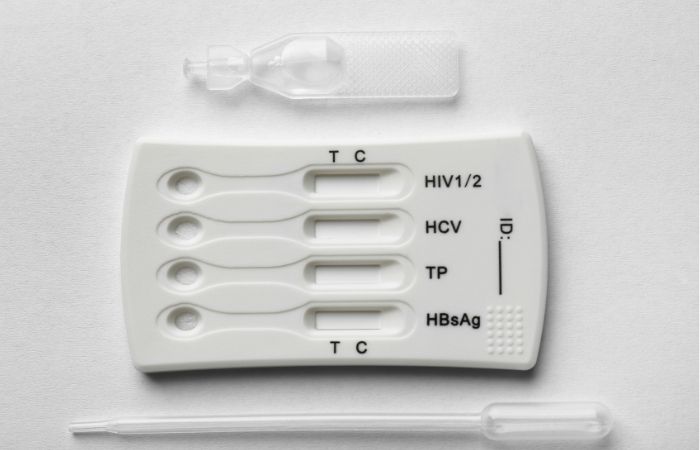
If you find yourself in a state of limbo, having finished treatment and still not sure of what to do, then at-home testing is what will help clarify things for you without having to go through the hassle of getting tested at a clinic. You can explore your options through STD Test Kits directly.
At the end of the day, peace of mind is just as important as getting accurate results.
What Happens If You Don’t Treat Chlamydia?
Let’s shift into a different scenario for a second. Someone notices mild symptoms, maybe a little burning, maybe nothing at all, but puts off testing because life gets busy or the symptoms fade. Weeks turn into months. The question becomes: if chlamydia is curable, what happens when it’s not treated?
Chlamydia doesn’t usually go away on its own in a reliable or predictable way. In some cases, the immune system may partially suppress it, but the bacteria can linger quietly in the body. This is why it’s often called a “silent infection.” You can feel completely fine while the infection is still active.
Over time, untreated chlamydia can lead to complications like pelvic inflammatory disease (PID) in women or epididymitis in men. These aren’t instant outcomes, they develop gradually, but they’re the reason early treatment matters. Not because chlamydia is permanent, but because waiting gives it more time to cause damage.
This is where the emotional piece comes in. People often delay testing because they’re afraid of the result. But in reality, chlamydia is one of the most manageable infections when caught early. The sooner you know, the simpler everything becomes.
Chlamydia Treatment Timeline: What to Expect
Once you begin your antibiotics, your body will begin clearing up the infection fairly quickly, though not right away. It is one of those situations in which expectations and reality do not always coincide. You will begin taking your medication and, of course, want things to return to normal right away.
For most people, their symptoms will begin clearing up within a few days. It will, of course, take a little longer for things to return to normal if there was some inflammation and irritation. Your body is, in essence, cleaning itself up from the infection, and it does not always do this in a timely fashion.
Here is a basic outline of how this process will likely progress:
| Stage | What’s Happening |
|---|---|
| Day 1–3 | Antibiotics begin working; bacteria reproduction is stopped |
| Day 3–7 | Symptoms (if present) often begin to improve |
| Day 7–14 | Infection is typically cleared from the body |
| 3–4 weeks | Best time to retest for confirmation if needed |
The key takeaway here is that feeling “off” for a little while after treatment doesn’t mean the infection is still there. It just means your body is finishing the job.
That said, if symptoms persist or worsen, that’s your signal to check in again, either through a provider or a reliable at-home testing option. Clarity always beats guessing.
Can You Get Chlamydia Again After Being Cured?
This is where a lot of people feel blindsided. You go through treatment, you move on, and then suddenly you’re back in the same situation. It feels unfair, but biologically, it makes sense.
Chlamydia doesn’t create lasting immunity. So if you’re exposed again, through the same partner or a new one, you can get infected again just like the first time. Your body doesn’t “build protection” against it.
One of the most common real-life scenarios looks like this: two people assume they’re fine, only one gets treated, they resume sex, and the infection quietly passes back. No one realizes what happened until symptoms or testing bring it back into focus.
This is why partner treatment is not optional, it’s essential. Treating one person without addressing the other is like mopping the floor while the faucet is still running.
If you’re navigating this situation right now, it’s not about blame. It’s about breaking the cycle. And sometimes, that starts with a simple, honest conversation.
Reinfection vs Treatment Failure: What’s the Difference?
Let’s clear up one of the biggest misconceptions: most cases of “chlamydia coming back” are not treatment failure. They’re reinfection.
Treatment failure, where antibiotics don’t work, is actually rare. It can happen, but it’s not the default explanation. Reinfection, on the other hand, is extremely common, especially when partners aren’t treated simultaneously.
Here’s a clear comparison to make this easier to understand:
| Scenario | What It Means |
|---|---|
| Reinfection | You were cured, then exposed again through a partner |
| Treatment Failure | The antibiotics did not fully eliminate the bacteria |
| Most Common? | Reinfection by far |
| Prevention | Ensure all partners are tested and treated at the same time |
This distinction matters because it changes how you respond. If it’s reinfection, the solution is communication and coordinated treatment. If it’s treatment failure (rare), your provider may adjust the medication approach.
Either way, the takeaway is the same: chlamydia is curable, but staying cured requires awareness of your sexual network, not just your own treatment.
The Emotional Side No One Talks About
There’s a moment after treatment that doesn’t get talked about enough. The physical part is handled, you took the medication, but mentally, there’s still a question mark hanging over everything.
People describe it as this quiet uncertainty. “What if it’s still there?” “What if I get it again?” “What if I gave it to someone?” These thoughts don’t come from nowhere, they come from caring about your health and your partners.
One person once said, “I felt clean after treatment, but not confident.” That distinction matters. Because confidence doesn’t come from guessing, it comes from knowing.
If you’re in that space right now, you’re not overreacting. You’re being human. And the fastest way out of that mental loop is clarity. Testing, communication, and understanding how this actually works, that’s what gives you control again.
If you want a discreet way to check your status or retest after treatment, options like the at-home chlamydia test kit can give you answers without the waiting room anxiety.
How to Stay Chlamydia-Free After Treatment
Getting cured is one thing. Staying cured is where real life kicks in. This is the part that doesn’t get enough attention, because once the antibiotics are done, people assume the story is over. But this is actually where prevention starts to matter the most.
Picture this: you’ve finished treatment, you feel fine, and things go back to normal with a partner. No symptoms, no warning signs. That’s exactly how reinfection happens, not because anyone did something “wrong,” but because no one realized testing needed to happen on both sides.
Staying chlamydia-free isn’t about paranoia. It’s about a few grounded, realistic habits that keep things simple and drama-free. Testing before new partners, making sure both people are treated at the same time, and giving your body enough time before resuming sex, these are the things that actually break the cycle.
And yes, condoms help. But even people who use protection consistently still benefit from regular testing, because no method is perfect 100% of the time. The goal isn’t perfection, it’s awareness.
When Can You Have Sex Again After Treatment?
This is one of the most Googled questions, and honestly, one of the most misunderstood. The short answer is: you should wait at least 7 days after completing treatment before having sex again.
But the longer, more realistic answer is this: it’s not just about your timeline, it’s about your partner’s too. If you’ve finished treatment but your partner hasn’t, or they never got treated at all, the risk of reinfection is still there.
There’s a very real moment people find themselves in. You’re feeling better, things are back to normal, and it feels safe to move on. But if both people aren’t fully treated and synced in timing, that “normal” can reset the entire situation.
So the real rule isn’t just “wait 7 days.” It’s: wait until everyone involved has completed treatment and enough time has passed for the antibiotics to work. That’s what actually protects you.
Talking to a Partner (Without It Becoming a Whole Thing)
This is the part people dread more than the infection itself. How do you bring it up without it turning into blame, awkwardness, or silence?
The truth is, chlamydia is incredibly common. Millions of cases happen every year, and most people who have it don’t even know. So the conversation doesn’t have to start with guilt, it can start with facts.
One approach that works surprisingly well is keeping it simple and direct. Something like: “Hey, I tested positive for chlamydia. It’s treatable, but you should get tested too so we don’t pass it back and forth.” No accusations, no assumptions, just information.
A lot of people expect the worst reaction, but in reality, many partners are just as relieved to have clarity. Because uncertainty is stressful for everyone involved.
This is one of those moments where honesty actually reduces drama instead of creating it.
Testing as Your Reset Button
If there’s one theme running through all of this, it’s that testing is what gives you control. Not guessing. Not symptoms. Not what you read online at 2AM. Testing.
Think of it as a reset button. Whether you’ve just finished treatment, started seeing someone new, or just want to be sure everything is okay, testing gives you a clear starting point.
And it doesn’t have to be complicated. For a lot of people, the biggest barrier is convenience or privacy. That’s why at-home options have become such a game changer. You can check your status without appointments, waiting rooms, or awkward conversations.
If your brain is stuck in that “what if it’s still there?” loop, the fastest way out is to get a real answer. You can explore discreet options through STD Test Kits, including combo kits that check for multiple infections at once.
Because peace of mind isn’t just nice to have, it’s part of taking care of yourself.
So… Can You Ever Be 100% Sure It’s Gone?
This is the question underneath all the others. Not just “is it curable,” but “can I actually feel certain about it?”
The honest answer is yes, with the right combination of treatment, timing, and testing, you can be confident the infection is gone. That’s what medical “cure” is built on.
But certainty doesn’t come from a feeling. It comes from understanding how this works. You take the antibiotics correctly. You give your body time. You test when appropriate. And you make sure partners are treated too.
When all of those pieces line up, you’re not guessing anymore. You’re informed. And that’s a very different place to be.
One person put it in a way that stuck with me: “I stopped spiraling once I understood the rules.” That’s really what this is about, learning the rules so your brain can finally relax.
FAQs
- 1. Can chlamydia be completely cured?
- Yes, chlamydia can be completely cured if treated with the right antibiotics. After being treated correctly, the bacteria will be removed from your body. Nevertheless, it is possible to be infected again if you are infected in the future.
- 2. How do I know if chlamydia is gone after treatment?
- The only sure way to know is to be tested after 3 or 4 weeks. Symptoms alone are not a good measure since irritation can persist after the infection is cured.
- 3. Can chlamydia come back on its own?
- No, chlamydia does not come back on its own after being cured. If it returns, it is usually because you have a new, untreated sex partner.
- 4. What happens if my partner does not receive treatment?
- If your partner does not receive treatment, he or she can give chlamydia back to you after your own infection has been cured. This is why it is essential for both of you to be treated simultaneously.
- 5. Can chlamydia go away without antibiotics?
- In some cases, the body may fight off the infection, although it does not eliminate it entirely. Chlamydia may persist and cause complications over time if not treated.
- 6. How long after treatment should I wait to have sex?
- You should wait at least 7 days after you have finished treatment and make sure you have treated your sex partner as well.
- 7. Why do I still have symptoms after treatment?
- You may still have symptoms even after you have finished treatment due to inflammation. However, you may want to undergo further testing if you still have symptoms after treatment.
- 8. Can you get chlamydia again after being cured?
- You can get chlamydia again even after you have been cured of the disease. This is because you do not develop immunity against the disease.
- 9. Do I need to retest after chlamydia treatment?
- You may want to retest after 3 months after treatment, especially if you are likely to get infected again.
- 10. Is chlamydia permanent?
- Chlamydia is not permanent as it can be cured with treatment.
You’re Not Stuck With This, You’re Just One Step From Clarity
If you’ve made it this far, you already care about your health, and that matters more than anything. Chlamydia is one of the most treatable infections out there, and getting rid of it is absolutely possible. The confusion usually comes from what happens after treatment, not the treatment itself.
The real goal isn’t just being cured, it’s feeling confident that you are. That comes from understanding how reinfection works, making sure partners are treated, and using testing as your reality check when your brain starts spiraling.
Don’t wait and wonder. Get the clarity you deserve. This at-home chlamydia test kit gives you a fast, private way to confirm your status and move forward with confidence.
Our article was constructed based on current advice from the most prominent public health and medical organizations, and then molded into simple language based on the situations that people actually experience, such as treatment, reinfection by a partner, no-symptom exposure, and the uncomfortable question of whether it “came back.” In the background, our pool of research included more diverse public health advice, clinical advice, and medical references, but the following are the most pertinent and useful for readers who want to verify our claims for themselves.