Can You Get Oral Herpes from a Friend’s Mascara or Lip Balm?
Quick Answer: Yes, you can potentially get oral herpes (HSV-1) from sharing lip balm, lipstick, or mascara, but the risk is low. Shared makeup is a much less common, but not impossible, route of transmission.

Quick Answer: Yes, you can potentially get oral herpes (HSV-1) from sharing lip balm, lipstick, or mascara, but the risk is low. Herpes spreads most easily through direct skin-to-skin contact, especially when a sore is active. Shared makeup is a much less common, but not impossible, route of transmission.
This Isn’t Just Lipstick Drama, It’s About Viral Reality
Sarah, 22, had never thought twice about sharing makeup during nights out or crashing at friends’ places. But when she woke up with a burning blister on her lip three days after borrowing a friend’s mascara, her confidence cracked.
“I thought it was just a pimple or an allergic reaction,” she says. “But when it crusted over and started stinging, I Googled cold sore images and my stomach dropped.”
Here’s the truth: while oral herpes is most often spread through kissing or oral sex, nonsexual transmission routes exist, especially when someone has an active cold sore. And it doesn’t take sex to spread HSV-1. It takes skin cells, timing, and friction. Your lip gloss might be sticky enough to carry more than shimmer.
How Herpes Actually Spreads (And Where Makeup Fits In)
The herpes simplex virus (HSV-1, in the case of oral herpes) is primarily spread through direct contact with infectious skin or saliva. According to the CDC, most people catch it from kissing, oral sex, or sharing utensils during an active outbreak. But objects, called fomites, can sometimes be part of the chain.
So, can lipstick or mascara really be to blame?
The answer depends on three things:
| Factor | Why It Matters |
|---|---|
| Timing of Contamination | Was the person shedding the virus actively? Herpes is most contagious during an outbreak, but viral shedding can occur without visible sores. |
| Surface Type | Herpes doesn’t live long on dry surfaces. Porous items like mascara brushes may retain moisture longer than smooth lipstick tubes. |
| Time Since Contact | HSV-1 begins to die quickly outside the body. Transmission risk drops sharply after a few minutes, especially in dry environments. |
Figure 1. Herpes surface transmission depends on contact timing, moisture, and active shedding.
In short: Yes, makeup can transfer herpes, but it’s unlikely unless the product was used shortly after contact with an active sore.
Still, we can’t ignore the emotional toll this question carries. For many, the real worry isn’t just the science, it’s the shame. HSV-1 is stigmatized as “dirty” or “promiscuous,” when in reality, you can catch it from a kiss on the cheek at your grandma’s birthday.
If you’ve got a cold sore after sharing makeup, you’re not gross. You’re human. And you deserve answers without judgment.
How Long Can Herpes Live on Makeup?
Herpes isn’t like bacteria that can thrive on a towel or toilet seat. It’s a fragile virus that needs moisture and live cells to survive. But under the right conditions, HSV-1 can hang around long enough to cause concern, especially when it’s hiding in places like a lip gloss applicator or a mascara wand.
A 2020 study in the Journal of Infectious Diseases found that HSV-1 can survive up to two hours on dry plastic or fabric under controlled conditions. In moist environments (like inside a lipstick cap), it may last longer, but these scenarios are lab-based and not common in real life. That said, makeup containers create micro-environments that retain moisture, especially if they're used and sealed right away.
Here’s what surface testing research tells us:
| Surface | Average Virus Survival | Real-World Transmission Risk |
|---|---|---|
| Lipstick / Lip Balm | Up to 2 hours (moist environment) | Moderate if used immediately after contamination |
| Mascara Wand | 30–60 minutes | Low, but higher with eye rubbing or contact |
| Utensils / Cups | Up to 1 hour | Medium if shared during active shedding |
| Cloth Towel / Pillowcase | Few minutes to 1 hour | Very low risk |
Figure 2. HSV-1 survival ranges on shared objects commonly linked to makeup and grooming.
It’s important to understand that even if HSV-1 is technically present on an item, actual transmission depends on contact with mucous membranes (like lips or eyes) and a high enough viral load. That means using a friend’s mascara five minutes after they applied it during a cold sore outbreak is risky, but borrowing their lipstick a day later? Not so much.
“I Got a Cold Sore After Sharing Lip Gloss”
Deja, 26, was getting ready for a bachelorette party when she forgot her favorite nude gloss. Her best friend handed her a nearly identical tube and said, “No worries, use mine.” A few days later, Deja noticed a tingling on her upper lip that turned into a blistered sore.
“I never had a cold sore in my life,” she says. “I thought I was being paranoid, but I couldn’t stop replaying that moment with the lip gloss.”
After getting tested, Deja learned it was her first outbreak of HSV-1. It’s impossible to know for sure how she contracted it, but the timing, the shared lip product, and the friend’s later admission that she “sometimes gets cold sores” made the dots line up.
This doesn’t mean every makeup swap leads to herpes. But for someone with no prior exposure to HSV-1, even a single moment of contact during viral shedding, symptoms or not, can be enough.
Don’t Wait and Wonder, There’s a Way to Know
If you’ve got a sore after a close contact moment, or if you’re just spiraling after borrowing mascara, it’s normal to feel overwhelmed. But testing is how you take back control.
Whether your symptoms are full-blown or just a tingling sensation, this at-home herpes test kit can help you confirm what’s really going on. Results in minutes. No clinic required.
Remember, not all cold sores are immediately painful. Some start with a mild itch or tightness. The sooner you catch it, the sooner you can manage it, and protect others, too.
This Isn’t an Allergic Reaction, Here’s How to Tell
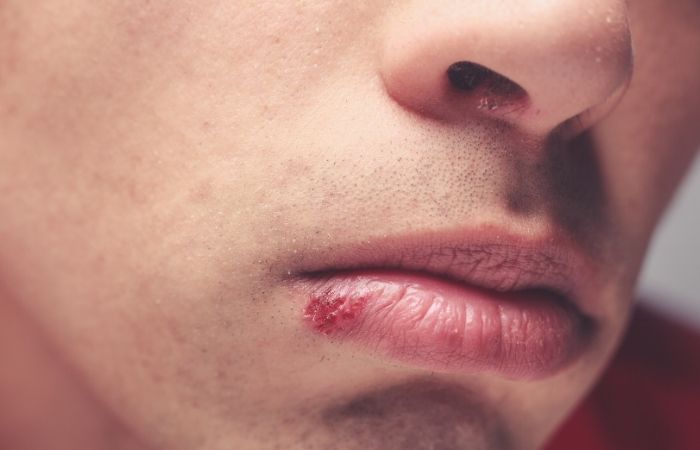
One of the most common delays in herpes diagnosis comes from mistaken identity. A cold sore can look like a pimple, an allergic reaction, or even a chapped lip. But certain clues can help you tell the difference, especially when it shows up days after sharing makeup, kissing, or borrowing a drink.
Herpes sores usually start with a tingling or burning sensation before the skin breaks. They often form in clusters and may ooze clear fluid before crusting over. In contrast, allergic reactions (like contact dermatitis) tend to be itchy, red, and spread across a wider area without forming blisters.
Still unsure? Here’s a general rule: If it blisters, burns, or recurs in the same spot, get tested. And if it’s your first time experiencing symptoms after a potential exposure (even nonsexual), don’t dismiss it, especially if it follows sharing something like a lip balm.
When in doubt, trust your instincts. You know your body, and when something feels off, it probably is.
Myths That Won’t Die (But You Should Ignore Anyway)
Let’s bust a few myths that fuel anxiety around makeup and herpes:
Myth 1: Herpes can live on any surface for days.
False. HSV-1 is an enveloped virus, it dies quickly without moisture and skin cells. According to recent lab studies, it survives only for short windows depending on the surface type and humidity.
Myth 2: You’re safe as long as the person didn’t have a sore.
Also false. Herpes can spread even when there’s no visible outbreak. This is called asymptomatic shedding, and it's more common than people realize.
Myth 3: Only sexual activity transmits herpes.
Wrong again. HSV-1 spreads through oral contact, kissing, sharing utensils, or makeup, especially during outbreaks. It has nothing to do with being “clean” or “promiscuous.”
Myth 4: You can’t get herpes from sharing mascara.
Mostly false. The eyes and lips are both vulnerable mucous membrane zones. Sharing mascara or eyeliner poses a low but real risk, especially during an active outbreak or if micro-cuts are present.
Protect Yourself Without the Paranoia
We’re not here to tell you to live in fear of your friend’s makeup bag. But we are here to help you set smart, protective boundaries, especially if you or someone close to you gets frequent cold sores.
Here are some trauma-informed steps to reduce your risk:
- Use your own lip products, mascara, and eyeliner, especially during cold sore season or travel.
- Don’t share drinks or utensils with anyone during an active outbreak.
- Wash hands before applying makeup or touching your face.
- Store makeup in a dry, clean environment and replace anything you used during an outbreak.
And yes, throw out that lip gloss if you used it while you had a sore. It’s not worth the risk to you, or someone else.
Emotional Safety Matters Too
If you're dealing with the emotional fallout of a possible herpes diagnosis, or just the anxiety of waiting for symptoms to pass, know this: you're not dirty, reckless, or broken. Herpes is extremely common. According to the World Health Organization, more than 3.7 billion people under age 50 carry HSV-1 globally.
So if you’re scared, you’re not alone. If you’re ashamed, you shouldn’t be. And if you’re unsure what’s going on, take the next step. Knowledge isn’t just power; it’s peace of mind.
This combo STD home test kit can help you screen for multiple infections discreetly. It's fast, accurate, and private. You deserve answers without stigma.
FAQs
- 1. Can you really get herpes from sharing lip balm?
- Yes, but it’s rare. For it to happen, the person you shared with would need to be shedding the virus (even without a visible cold sore), and you’d have to use the balm soon after. Think: same party, same moment. If it happened yesterday and you’re panicking today, testing can help calm the spiral.
- 2. But what if they didn’t have a visible sore?
- Here’s the kicker: herpes doesn’t need a visible blister to spread. HSV-1 is sneaky like that. It can shed invisibly, which means someone who feels totally fine can still pass it on. That’s why so many people get blindsided by a first outbreak.
- 3. Does mascara really carry herpes?
- Mascara isn’t the most likely carrier, but it’s not off the hook either. If someone with an active cold sore, or worse, ocular herpes, used the wand and then handed it to you? That’s a hard maybe. The risk is low, but your eyes are vulnerable, and sharing makeup that close to mucous membranes is never totally safe.
- 4. What if I used someone’s lipstick and now I have a bump?
- It could be a cold sore. It could also be irritation, a clogged pore, or nothing serious at all. But if that bump blisters, burns, or shows up in the same place again, you’ll want to get it checked out. Especially if your anxiety is already doing cartwheels.
- 5. How long does herpes live on stuff like makeup?
- Outside the body, herpes is a fragile little virus. It usually dies off within minutes, maybe a couple hours in moist environments. So if you used your friend’s lipstick five minutes after them? Possible. Two days later? Not likely.
- 6. Is it safer to just never share makeup?
- Honestly, yes. Not just for herpes, think about pink eye, staph, or even fungal infections. If it touches your eyes, lips, or face and isn’t brand new, it’s best kept personal. Love your friends, protect your face.
- 7. Can kids get cold sores from kisses or shared straws?
- Absolutely. That’s actually how a lot of people get HSV-1 to begin with, childhood kisses from relatives who didn’t know they were shedding the virus. If you’ve got a cold sore, skip the baby cuddles and straw-sharing until it’s healed.
- 8. How do I know if it’s a cold sore or something else?
- Cold sores usually start with a weird tingle or tightness before turning into a fluid-filled blister. They often hurt, crust, and come back in the same spot. Pimples, allergic reactions, or razor burn? Totally different vibe. If you’re not sure, a rapid test can give you clarity fast.
- 9. Do I need to throw out my makeup after a cold sore?
- Yes, especially anything that touched your lips or face during the outbreak. That lip gloss you love? Not worth the risk of reinfecting yourself later, or passing it to a friend. Toss it, mourn it, and treat yourself to a new one.
- 10. What’s the best way to find out if I have oral herpes?
- If you’re having symptoms right now, a swab test works best. If it’s been a while or you're just curious about your status, an at-home antibody test for HSV-1 can give you the answer in minutes. Either way, testing takes you out of the guessing game.
You Deserve Answers, Not Assumptions
Whether it came from a kiss, a gloss, or a moment you didn’t even register, oral herpes happens, and it’s more common than anyone talks about. But you don’t have to sit in silence or spiral through shame. You can act, get answers, and move forward.
Don’t second-guess your symptoms or your story. This at-home herpes rapid test offers clarity without clinics, stigma, or judgment. You deserve that peace of mind.
How We Sourced This Article: We combined current guidance from leading medical organizations with peer-reviewed research and lived-experience reporting to make this guide practical, compassionate, and accurate. In total, around fifteen references informed the writing; below, we’ve highlighted some of the most relevant and reader-friendly sources.