Oral Herpes vs Canker Sore: What That Lip Bump Means
If a sore is on the outer lip and follows tingling, think herpes; if it’s inside the mouth and painful but not blistered, think canker sore. This Is the Moment People Spiral Javier was brushing his teeth when he saw it.
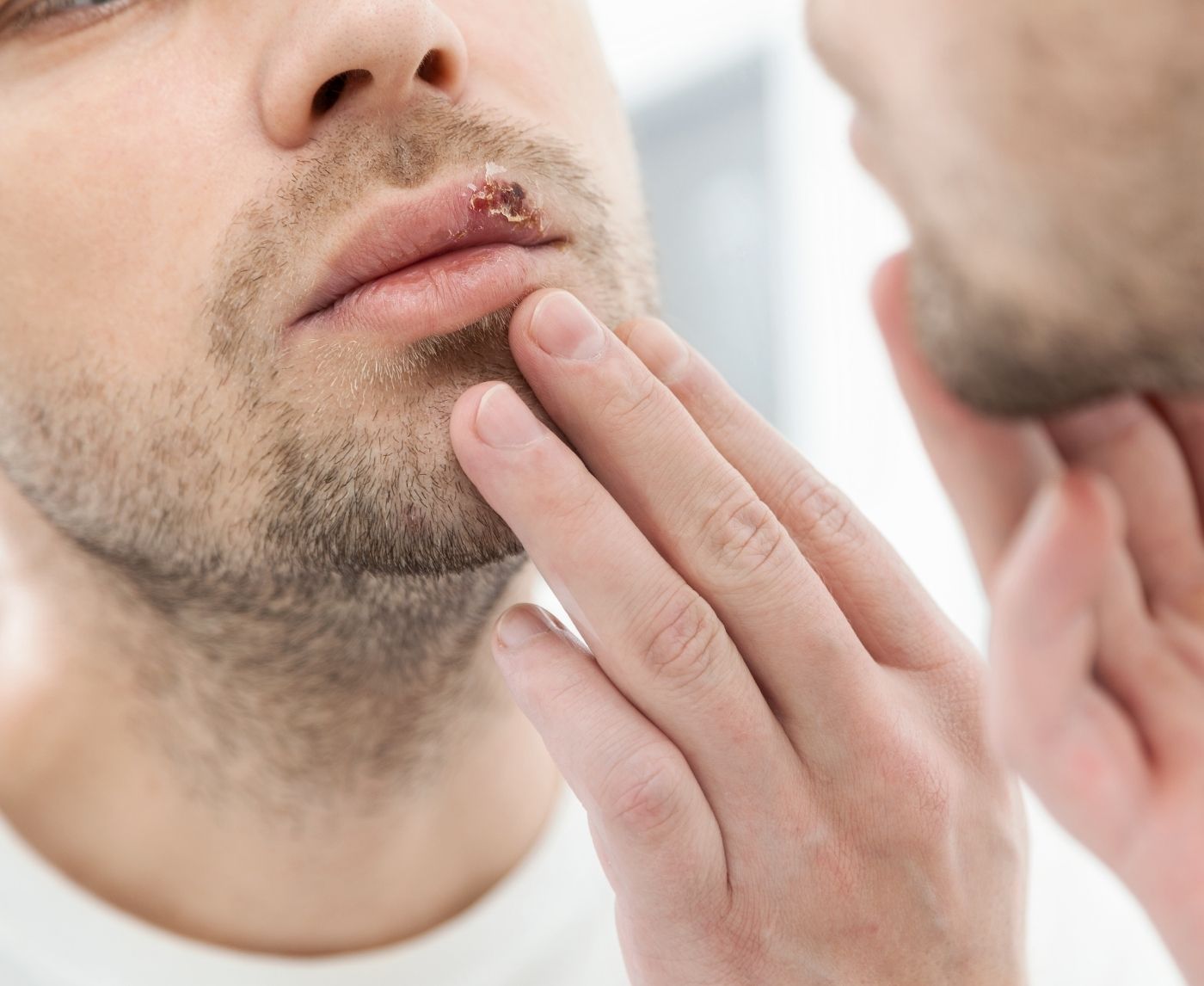
Quick Answer: Oral herpes usually causes clusters of fluid-filled blisters on or around the lips that tingle or burn before appearing, while canker sores are single shallow ulcers inside the mouth that are not caused by an STD. If a sore is on the outer lip and follows tingling, think herpes; if it’s inside the mouth and painful but not blistered, think canker sore.
This Is the Moment People Spiral
Javier was brushing his teeth when he saw it. A small blister at the edge of his lower lip. He froze. Three days earlier, he’d gone down on someone new. “I kept thinking, that’s it. I ruined my life,” he told me later. “I didn’t even know if it was a cold sore or something worse.”
Here’s the first truth: cold sores are oral herpes. The virus behind most lip blisters is HSV-1, and according to the World Health Organization, billions of people worldwide carry it. Many got it as kids from a relative’s kiss.
The second truth: a canker sore is not caused by a sexually transmitted infection at all. It’s not contagious. It’s usually triggered by stress, minor trauma, acidic foods, or immune shifts. The confusion happens because both can hurt, both can appear suddenly, and both show up exactly when your anxiety is already high.
People are also looking for: Itchy Anus: STD or Hemorrhoids? How to Tell the Difference
Cold Sore vs Canker Sore: The Side-by-Side Breakdown
When panic is loud, comparison is grounding. Here’s what actually separates oral herpes from a canker sore.
| Feature | Oral Herpes (Cold Sore) | Canker Sore |
|---|---|---|
| Location | Usually on the outer lip, lip line, or around the mouth | Inside the mouth: inner cheeks, tongue, gums |
| Appearance | Cluster of small fluid-filled blisters that may crust over | Single round ulcer with white or yellow center and red border |
| Early Sensation | Tingling, itching, or burning before visible blister | No tingling phase; pain begins once ulcer forms |
| Cause | HSV-1 virus (sometimes HSV-2) | Stress, irritation, immune response, not viral STD |
| Contagious? | Yes, especially during active outbreak | No |
| Healing Time | 7–14 days typically | 7–10 days typically |
Figure 1. Visual and behavioral comparison between oral herpes and canker sores.
If your sore started with tingling and formed multiple tiny blisters on the outside of your lip, oral herpes moves higher on the list. If it’s one shallow ulcer tucked inside your cheek after biting it or eating something acidic, a canker sore is more likely.
But What If It’s Not Either?
This is where STD anxiety creeps in. Because oral sex can transmit more than just HSV-1.
Syphilis can cause a painless sore in the mouth during its primary stage. According to the CDC, this sore, called a chancre, is often firm and not blister-like. It may not hurt at all. That’s different from the sharp sting of a canker sore or the burning blister cluster of herpes.
Gonorrhea and Chlamydia can infect the throat after oral sex, but they usually don’t cause visible lip blisters. Instead, they may cause sore throat, swollen lymph nodes, or no symptoms at all.
This is why location and texture matter. A lip blister is usually herpes. A painless firm ulcer could be syphilis. A scratchy throat after oral sex may warrant throat testing. The body tells stories, you just need to know how to read them.
Myth: “If I Have a Cold Sore, I Must Have Gotten It From Sex”
No. And this myth causes unnecessary shame.
Most oral herpes infections are acquired in childhood through nonsexual contact. Sharing utensils, a relative kissing your cheek, even innocent contact can spread HSV-1. By adulthood, a huge percentage of people carry it, even if they never notice symptoms.
Leila, 24, told me, “When my doctor said it was HSV-1, I felt dirty. Then she said, ‘Half my patients have this.’ That changed everything.”
Herpes is common. What’s stigmatized is the conversation around it.
When Timing Matters More Than Appearance
If you developed a lip blister two days after a new partner, that timeline actually fits herpes more than most other STDs. Initial outbreaks of oral herpes often appear 2–12 days after exposure, according to the Mayo Clinic.
A canker sore doesn’t follow exposure timelines. It follows stress, friction, hormone shifts, or immune dips. If you’ve been sleeping badly, traveling, or emotionally overwhelmed, your immune system can react in ways that look dramatic but aren’t sexually transmitted.
This is where we zoom out. The body under stress behaves differently. Not every symptom after sex was caused by sex.
So… Should You Get Tested?
If this is your first suspected herpes outbreak, testing can provide clarity. A swab of an active blister is the most accurate method during early stages. Blood tests look for antibodies but may not turn positive until weeks after infection.
If you’re unsure and the anxiety won’t quiet down, an at-home option can give you privacy and speed. You can explore discreet testing options at STD Test Kits, including combination panels that check for multiple infections at once.
Peace of mind isn’t dramatic. It’s responsible. It’s care.
When It’s More Than a Blister: Oral Herpes vs Other STDs
Here’s where anxiety gets louder. You Google “lip sore STD” and suddenly you’re reading about Syphilis, Gonorrhea, Chlamydia, even HIV. The internet doesn’t always separate likelihood from possibility. So let’s do that carefully and without drama.
Oral herpes usually presents as clustered blisters on the lip border. Syphilis, on the other hand, causes a chancre, typically a single, firm, round sore that may be painless. According to the Centers for Disease Control and Prevention (CDC), a syphilis chancre can appear in the mouth after oral sex, but it doesn’t look like a fluid-filled blister. It looks more like a clean-edged ulcer.
Meanwhile, oral Gonorrhea and oral Chlamydia usually infect the throat, not the outer lip. The CDC gonorrhea fact sheet notes that throat infections are frequently asymptomatic. If symptoms do show up, they feel more like strep throat than a visible blister.
This matters because people often panic about the wrong infection. A tingling blister on your lip is almost never gonorrhea. A painless mouth ulcer that doesn’t blister deserves a closer look for syphilis. A sore throat after oral sex may require a throat swab even if your lips look normal.
Visual Clues, Texture Clues, Pain Clues
Not all pain feels the same. And the body’s sensations often give better clues than Google Images ever could.
| Clue | More Likely Herpes | More Likely Canker Sore | Consider Syphilis |
|---|---|---|---|
| Number of sores | Cluster of small blisters | Usually one | Usually one |
| Fluid present? | Yes, before crusting | No fluid | No fluid |
| Pain level | Burning or stinging | Sharp, localized pain | Often painless |
| Location | Outer lip or lip line | Inside mouth only | Inside mouth or lip |
| Pre-sore tingling | Common | No | No |
Figure 2. Sensory and structural differences between common oral lesions.
If your sore began with tingling and became multiple tiny blisters that later scabbed, herpes is the strongest contender. If it’s a white-yellow crater inside your cheek that hurts when you eat salsa, that’s textbook canker sore. If it’s a single firm sore that doesn’t hurt much but appeared after unprotected oral sex, that deserves medical testing.
The First Outbreak Feels Different
First-time oral herpes outbreaks can feel intense. Fever. Swollen lymph nodes. Fatigue. Gum tenderness. The World Health Organization explains that initial infections can be more symptomatic than recurrences.
Rania described hers this way: “My lips felt electric. Then blisters showed up overnight. I thought I had the flu and an STD at the same time.”
Recurrent outbreaks, by contrast, are often smaller and faster. Many people get one tingling spot that heals within a week. Canker sores don’t follow that pattern of recurrence at the exact same lip border location. Herpes often does.
Testing: What Works, What Doesn’t, and When
If you’re standing in front of the mirror wondering whether to test, timing matters. Swab testing is most accurate when the blister is fresh and fluid-filled. Once it scabs, detection drops.
Blood tests detect antibodies to HSV-1 or HSV-2. However, antibodies can take weeks to develop. Testing too early may give you a false sense of reassurance. The Mayo Clinic notes that serology testing is most useful when there are no active lesions but exposure risk exists.
If you’re unsure whether this is herpes, syphilis, or something else, a combination STD panel may be practical. A discreet option like the 8‑in‑1 Complete At-Home STD Test Kit allows you to check for multiple infections privately, without sitting in a waiting room replaying your weekend in your head.
Testing isn’t a confession. It’s information. And information stabilizes everything.
Window Periods: Why a Negative Today Might Not Be Final
Every infection has a window period, the time between exposure and reliable detection. Testing before that window closes can produce false negatives.
| Infection | Earliest Detection | Best Accuracy Window |
|---|---|---|
| HSV-1 (blood test) | 2–3 weeks | 6–12 weeks |
| Syphilis | 3 weeks | 6 weeks+ |
| Gonorrhea (throat swab) | 5–7 days | 14 days |
| Chlamydia (throat swab) | 7 days | 14 days |
Figure 3. General window period timelines based on CDC and Mayo Clinic guidance.
This is where patience feels unfair. You want certainty immediately. But your immune system works on its own clock. If you test early and get a negative but symptoms persist, retesting later is smart, not paranoid.
The Emotional Weight of a Visible Virus
There’s something uniquely vulnerable about a lip sore. It’s public. You can’t hide it easily. And people still treat Herpes like a moral failure instead of a common virus.
“I didn’t want to leave my apartment,” said Noor after her first outbreak. “It felt like everyone could see something shameful on my face.”
But here’s the truth investigators and clinicians repeat constantly: oral herpes is common. It does not define your character, your cleanliness, or your worth. It’s a virus. It behaves like one.
And if it isn’t herpes, if it’s just a canker sore triggered by stress, then the spiral was louder than the biology.
What to Do Right Now
If the sore is new and blistered, avoid kissing and oral contact until healed. If it’s inside the mouth and looks like a canker sore, supportive care and time usually resolve it. If the sore is painless and unusual, or you’ve had high-risk exposure, schedule testing.
If your anxiety is the main symptom, that matters too. Clear answers reduce panic. You can explore private, FDA-authorized at-home testing options at STD Test Kits to get grounded in facts instead of fear.
Because a lip bump shouldn’t get to rewrite your entire story.
Kissing, Oral Sex, and the Transmission Reality
This is the part people whisper about. “Did I get this from kissing?” “Did I give someone something?” “Is oral sex riskier than I thought?”
Let’s separate fear from biology. HSV-1, the virus that causes most oral herpes, spreads through direct skin-to-skin contact. That includes kissing and oral sex. According to the CDC, the virus transmits most easily when a sore is present, but it can also spread through asymptomatic shedding, meaning no visible blister is required.
That sounds alarming until you zoom out. Because so many adults already carry HSV-1, transmission often happens years before anyone ever notices a symptom. Many people can’t trace when they acquired it. There isn’t always a dramatic “one night” explanation.
Oral sex can also transmit HSV-1 to a partner’s genitals. That’s how some cases of genital herpes now occur. But it does not automatically happen. Transmission risk depends on viral shedding, immune response, and whether a sore was active.
A canker sore does not transmit. It is not contagious. You cannot give someone a canker sore from kissing them.
When the Sore Appears After Oral Sex
This is the most common spiral scenario. You had oral sex. A few days later, your lip tingles. The brain immediately links the two events.
Sometimes the timing truly does fit a new herpes infection, which can appear within 2 to 12 days after exposure. But sometimes it’s coincidence layered onto anxiety. Stress alone can trigger both herpes recurrences and canker sores. The emotional intensity of a new partner can activate immune changes that make dormant HSV-1 flare.
Arjun described this after a new relationship began. “I hadn’t had a cold sore in five years. Then I started dating someone new, and boom, one showed up. I thought I caught something. My doctor told me it was likely stress and immune shifts.”
The body reacts to change. Not every post-sex symptom equals new infection.
Recurrent Outbreaks vs Random Ulcers
Herpes tends to recur in the same location. Many people feel a familiar tingling at a specific corner of the lip. The blister forms, crusts, and heals. Months later, it may return to that same spot.
Canker sores are less predictable. They appear on different internal mouth surfaces. They don’t crust. They don’t blister. They don’t usually return to the exact same outer lip location.
If your bump keeps appearing at the lip border with that same early burning sensation, herpes becomes more likely. If each sore appears in a different internal area and never blisters, that pattern leans toward canker sores.
Red Flags You Should Not Ignore
Most lip bumps are manageable. But some symptoms deserve immediate evaluation.
If you experience high fever, severe headache, neck stiffness, difficulty swallowing, or rapidly spreading facial swelling, seek urgent medical care. While rare, complications of primary herpes infections can occur, especially in immunocompromised individuals.
If a mouth sore lasts longer than three weeks without healing, or if it grows instead of shrinking, a clinician should examine it. Persistent ulcers are not typical for either standard herpes outbreaks or canker sores.
And if you have a painless sore inside the mouth accompanied by a rash on your palms or soles, that combination can suggest secondary Syphilis, which requires immediate antibiotic treatment.
Talking to a Partner Without Imploding
This part feels bigger than the blister. If you suspect herpes, you may feel obligated to disclose before the next kiss. The fear of rejection can feel heavier than the infection itself.
Start with facts. Oral herpes is common. Many adults carry HSV-1 already. Transmission risk is highest during active outbreaks, and avoiding contact while lesions are present reduces spread significantly.
One script that works: “I get occasional cold sores, which are caused by HSV-1. It’s common, and I avoid contact when I have symptoms. I wanted you to know.”
Clear, calm, honest. No apology necessary.
Decision Guide: What Your Lip Bump Probably Means
If the sore is outside the mouth, started with tingling, formed small fluid blisters, and crusted over within two weeks, it is most consistent with oral herpes.
If the sore is inside the mouth, looks like a shallow white-yellow ulcer with a red border, and hurts sharply when eating acidic food, it is most consistent with a canker sore.
If the sore is painless, firm, round, and followed recent high-risk oral sex exposure, testing for Syphilis is appropriate.
If there are no visible sores but persistent sore throat after oral sex, a throat swab for Gonorrhea or Chlamydia may be warranted.
And if you are unsure, testing provides clarity faster than scrolling.
Retesting and Moving Forward
If you test negative very early after exposure but symptoms continue, retest at the recommended window period. Immune detection takes time. That delay is biological, not personal.
If you test positive for HSV-1, understand that treatment focuses on managing outbreaks, not curing the virus. Antiviral medications reduce duration and transmission risk. According to the Mayo Clinic, medications like acyclovir and valacyclovir can shorten outbreaks and reduce frequency.
If you need privacy and control, exploring at-home testing options like the 8‑in‑1 Complete At-Home STD Test Kit allows you to screen for multiple infections discreetly. Your results belong to you.
The point isn’t to panic. The point is to know.
FAQs
- 1. Okay, be honest, can you get oral herpes from just kissing?
- Yes. Kissing is enough. If someone has an active cold sore, the virus can pass through direct contact. But here’s the part that usually surprises people: many adults already carry HSV-1 from childhood. So if you test positive, it doesn’t automatically mean you “just caught it” from your last date. Sometimes the virus has been dormant for years and only now decided to show itself.
- 2. If I’ve never had a cold sore before, does this mean I was just infected?
- Not necessarily. First outbreaks can happen long after the original exposure. Stress, illness, lack of sleep, even emotional shifts can wake the virus up. I’ve seen people in their 30s have their first visible outbreak from something they likely acquired as kids. The body keeps its own timeline.
- 3. How can I really tell the difference between a canker sore and herpes without guessing?
- Think about location and texture. Herpes usually lives on the lip border and starts with tingling before tiny fluid blisters appear. Canker sores stay inside the mouth and look like shallow craters, white or yellow in the center, red around the edges. No blisters. No crusting. If you’re staring at it in the mirror and it’s outside the mouth with a scab forming, herpes moves higher on the list.
- 4. Can I give someone genital herpes if I only have a cold sore on my mouth?
- Yes, during oral sex, it’s possible. If a cold sore is active, the virus can transmit to a partner’s genitals. Avoiding oral contact while you have symptoms dramatically lowers that risk. Communication matters here, not panic, not shame. Just facts and consent.
- 5. What if it doesn’t hurt at all? That’s what’s freaking me out.
- A painless sore changes the conversation. Herpes usually stings or burns. Canker sores usually hurt sharply. A painless, firm ulcer, especially after unprotected oral sex, should be evaluated for Syphilis. It’s treatable, but timing matters. When in doubt, test. Don’t speculate.
- 6. Do I need a test every time I get a lip bump?
- No. If you’ve already confirmed you have oral herpes in the past and the pattern is identical, same spot, same tingling, same healing timeline, you don’t need to retest each time. But if something looks different, lasts longer than usual, or follows a new exposure, that’s when testing becomes practical instead of repetitive.
- 7. Can stress alone really cause this?
- Absolutely. Stress suppresses immune function. For people who carry HSV-1, that can trigger an outbreak. For others, stress can cause canker sores. Breakups, exams, travel, new partners, emotional shifts often show up physically. The timing may feel suspicious, but biology doesn’t always match our narratives.
- 8. If I test positive for HSV-1, am I going to be contagious forever?
- The virus stays in the body, yes. But contagiousness isn’t constant. Transmission risk is highest during active outbreaks. Many people have long stretches with no symptoms at all. Antiviral medication can reduce both outbreak frequency and transmission risk. “Forever” sounds scarier than the reality most people live.
- 9. Should I cancel plans if I have a cold sore?
- You don’t need to isolate from the world. Just avoid kissing or oral contact until the sore heals. Go to dinner. See your friends. Live your life. A visible virus doesn’t revoke your social license.
- 10. What’s the fastest way to calm down when I’m spiraling about a lip bump?
- Pause. Breathe. Look at the facts: Where is it located? Did it start with tingling? Is it blistered or ulcerated? Does it hurt or not? Then decide: monitor, treat symptomatically, or test. Action reduces anxiety. Guessing feeds it.
You Deserve Clarity, Not Catastrophe
A lip bump can feel bigger than it is. It can send your thoughts racing toward worst-case scenarios. But most mouth sores fall into two common categories: oral herpes or canker sores. One is a common virus. The other isn’t sexually transmitted at all.
If you suspect herpes, avoid contact during active outbreaks and consider testing for confirmation. If you’re unsure whether it’s herpes, syphilis, or something else, screening provides answers faster than anxiety ever will.
Don’t sit alone with uncertainty. Explore discreet options like the Genital & Oral Herpes At‑Home STD Test Kit to check for multiple infections privately. Or browse trusted at-home options directly at STD Test Kits. Your health is information, not a verdict.
How We Sourced This Article: We reviewed current clinical guidance from the CDC, WHO, and Mayo Clinic regarding oral herpes, syphilis, and throat STDs. Peer-reviewed literature on HSV transmission patterns and recurrence informed our discussion of viral shedding and outbreak behavior. We also analyzed lived-experience narratives from reputable health publications to ensure the emotional realities reflected here align with how people actually experience and search for these symptoms. Approximately fifteen total references informed this article; six of the most authoritative are listed below.