One Night Stand STD Risk: What Should You Actually Test For?
Quick Answer: After a one night stand, most people should consider testing for chlamydia, gonorrhea, HIV, and syphilis. One person, one infection. Reality is messier. Chlamydia and gonorrhea frequently travel together.

Quick Answer: After a one night stand, most people should consider testing for chlamydia, gonorrhea, HIV, and syphilis. The most accurate results usually occur 14 days after exposure for bacterial STDs and 2–6 weeks for HIV, though earlier testing may require follow-up.
The Real Risk After One Night (And Why It’s Not Just “One STD”)
There’s a common myth that STDs happen in isolation. One person, one infection. Reality is messier. According to surveillance data from the CDC STD Surveillance Report, co-infections are not rare, especially with chlamydia and gonorrhea. If someone has one untreated infection, they statistically carry higher risk for others.
That’s why the question isn’t just “Do I have something?” It’s “If I test, should I test for multiple STDs at once?”
Chlamydia and gonorrhea frequently travel together. Syphilis can coexist silently for weeks. And untreated bacterial infections can biologically increase susceptibility to HIV because inflammation makes transmission easier. That’s not fear-mongering, that’s immunology.
One exposure does not guarantee infection. But one exposure is enough.

“But I Don’t Have Symptoms.” That Doesn’t Clear You.
Arjun, 26, thought he was in the clear. No discharge. No sores. No burning. “I kept checking in the mirror,” he said. “If nothing looks wrong, nothing is wrong… right?”
Not necessarily.
Up to 70% of people with chlamydia may have no symptoms at all, according to the World Health Organization STI Fact Sheet. Gonorrhea can be subtle or throat-only. Early HIV infection may feel like mild flu, or nothing.
This is why “no symptoms after hookup STD” is one of the most searched phrases online. Because the body can stay silent while infection is present.
Testing isn’t about visible proof. It’s about biological timing.
What to Test for After a Single Hookup
If you had vaginal, anal, or oral sex, protected or unprotected, the core infections most clinicians screen for include chlamydia, gonorrhea, syphilis, and HIV. Depending on exposure type, testing for trichomoniasis or hepatitis may also be appropriate.
Here’s how risk commonly breaks down after casual sex:
| Infection | How It Spreads | Often Has Symptoms? | Should You Consider Testing After One Night? |
|---|---|---|---|
| Chlamydia | Vaginal, anal, oral sex | Often no | Yes |
| Gonorrhea | Vaginal, anal, oral sex | Sometimes | Yes |
| Syphilis | Skin-to-skin contact with sore | Early sore may go unnoticed | Yes, especially if partner status unknown |
| HIV | Unprotected vaginal or anal sex | Often mild or none initially | Yes, especially without barrier use |
| Trichomoniasis | Primarily vaginal sex | Frequently asymptomatic | Consider if symptoms develop |
Table 1. Core infections to consider after a single sexual encounter.
This is why many people choose a combo STD test after exposure instead of picking just one. It eliminates guesswork. One collection. Multiple answers.
If privacy matters, and for most people it does, at-home panels from STD Test Kits allow discreet ordering and private results. No waiting room. No awkward insurance explanation.
Timing Is Everything: When to Test for Accurate Results
The hardest part of STD anxiety isn’t testing. It’s waiting. You want reassurance tomorrow. But the body doesn’t operate on emotional timelines, it operates on biological ones.
The “window period” is the time between exposure and when a test can reliably detect infection. Testing too early can give you a false negative. Testing at the right time gives you clarity.
| Infection | Earliest Likely Detection | Most Reliable Testing Window |
|---|---|---|
| Chlamydia | 7 days | 14 days post exposure |
| Gonorrhea | 7 days | 14 days post exposure |
| Syphilis | 3 weeks | 6 weeks post exposure |
| HIV (4th gen test) | 18–21 days | 45 days for high confidence |
Table 2. Approximate STD testing timeline after one night stand exposure. Based on CDC and peer-reviewed diagnostic guidance.
If you test at 5 days because anxiety wins, that’s understandable. Just plan a retest at the optimal window. Strategy beats spiraling.
This is also where combo STD testing can make practical sense. Instead of trying to stagger separate tests and remember different windows, a bundled panel simplifies the process. Many people choose an at-home combo STD test kit at the 14-day mark, then follow up for HIV again if needed at 6 weeks.
Condom, No Condom, or “I Think It Slipped”: How Risk Actually Changes
This is where the brain starts negotiating. “We used protection… mostly.” “It was just oral.” “It was quick.” The human mind is brilliant at minimizing risk after the fact because shame feels heavier than uncertainty.
Condoms significantly reduce the risk of HIV, chlamydia, and gonorrhea when used correctly, according to the CDC’s condom effectiveness guidance. But “correctly” means intact, used the entire time, and no slippage. Even with proper use, condoms do not fully eliminate risk for infections spread through skin-to-skin contact like syphilis or herpes.
If the condom broke, came off, or was applied late, your testing plan should mirror unprotected exposure. If it stayed on and was used start to finish, your overall risk is lower, but not zero. Lower risk does not mean no testing. It means calmer, smarter timing.
“It Was Only Oral.” Yes, That Still Counts.
Leila, 29, was sure she didn’t need a full panel. “We didn’t have sex,” she said. “It was just oral.” Two weeks later she developed a sore throat that wouldn’t go away. A throat swab confirmed gonorrhea.
Oral sex can transmit chlamydia, gonorrhea, syphilis, and even HIV in rare cases. The risk profile differs, receptive oral sex generally carries lower HIV risk than anal sex, for example, but “lower” is not “none.”
Throat infections are frequently asymptomatic. That means someone can carry and transmit infection without ever noticing anything unusual. If your encounter involved oral sex, especially with a new or unknown-status partner, a combo STD test after exposure may offer broader reassurance than testing for just one infection.
Can You Get Multiple STDs From One Person? Yes, And Here’s Why.
This is one of the most Googled fear-based questions after casual sex. And it deserves a direct answer.
Yes, you can have more than one STD at the same time. Co-infections occur because risk factors overlap. Someone with untreated chlamydia may also carry gonorrhea. Active genital inflammation can increase susceptibility to HIV. According to research published in clinical infectious disease journals, bacterial STDs can biologically facilitate viral transmission by disrupting mucosal barriers.
That doesn’t mean your partner “definitely had multiple infections.” It means sexual health risk is network-based. If someone is part of a sexual network with higher prevalence, multiple infections can cluster.
This is the clinical reasoning behind recommending broader testing rather than symptom-based guessing. A single hookup doesn’t mean you need every test on earth. But it does mean selective testing should be strategic, not emotional.
Single Test or Full Panel? How to Decide Without Overreacting
Here’s where people split into two camps. The minimizers test for one infection, usually HIV, and ignore bacterial STDs. The over-testers order everything immediately, then panic when early results are inconclusive.
The smarter approach falls in between.
If your exposure involved vaginal or anal sex, especially without consistent condom use, most clinicians recommend screening for chlamydia, gonorrhea, syphilis, and HIV. That’s effectively a core panel. If you only test for one, you may miss something more common.
Chlamydia remains one of the most frequently reported bacterial STDs in the United States, according to CDC surveillance data. Gonorrhea has also risen in recent years. Testing only for HIV because it feels scarier can leave more statistically likely infections unchecked.
A combo STD test simplifies this. One coordinated testing plan. One timeline. One decision instead of four separate ones. Many people choose a panel around the 14-day mark for bacterial infections, then follow HIV guidance for later confirmation if needed.
If you want discreet, structured testing without clinic visits, a comprehensive panel available through STD Test Kits can provide privacy and clarity. You control when you test and who knows about it. That autonomy matters.
What If You Test Too Early?
This is where anxiety tries to sabotage logic.
Darius tested five days after a hookup because he “just needed to know.” The result was negative for everything. For three days he felt relief. Then he read about window periods and spiraled again.
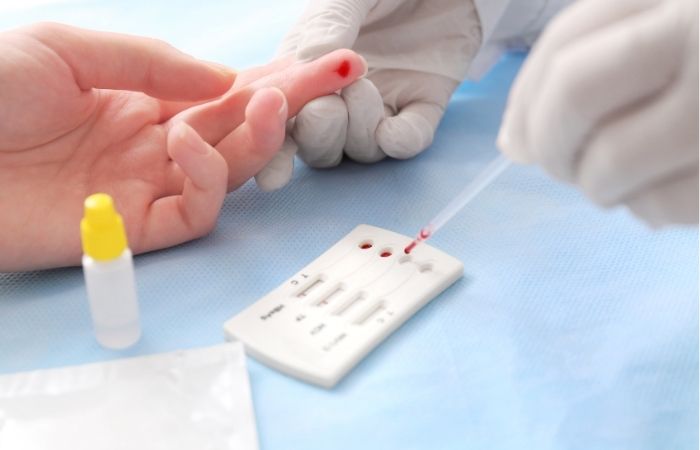
Testing very early can produce false reassurance. A negative at day five for chlamydia or gonorrhea doesn’t rule it out. A negative HIV test at one week does not provide definitive clarity. That doesn’t mean early testing is useless, it means early testing requires a plan for retesting.
Think of early testing as a baseline, not a verdict. If you choose to test before the optimal window, schedule the follow-up date immediately. Put it in your calendar. Remove the mental loop.
The Emotional Part No One Talks About
STD anxiety after hookup is real. It’s not just about microbes. It’s about vulnerability. Maybe the sex felt empowering in the moment. Maybe it didn’t. Maybe you trusted someone new. Maybe you didn’t ask enough questions.
Testing is not punishment. It’s maintenance.
There is nothing reckless about having sex. There is nothing shameful about wanting clarity. The only thing that prolongs anxiety is avoidance. Data reduces fear. Action reduces rumination.
And if you’re reading this because your brain won’t stop running worst-case scenarios, take a breath. Most single exposures do not result in infection. But the way you move next determines how long the uncertainty lasts.
Your Decision Roadmap: What to Test Based on What Happened
If you’re overwhelmed, simplify it. What kind of sex happened? Was a condom used the entire time? Do you know your partner’s recent testing status? Strip it down to those variables and the path becomes clearer.
If you had unprotected vaginal or anal sex with a partner whose status you don’t know, a core panel including chlamydia, gonorrhea, syphilis, and HIV is medically reasonable. If a condom was used correctly from start to finish, your risk decreases significantly, but many clinicians still recommend screening for common bacterial STDs because condom use is not 100% protective against all infections.
If the encounter involved oral sex only, consider throat testing for gonorrhea and chlamydia, especially if you are experiencing persistent sore throat, swollen glands, or no symptoms at all but lingering anxiety. If there was visible genital skin contact, testing for syphilis may still be relevant even without penetration.
The goal is not to assume worst-case. The goal is to match your test to your exposure, not your fear.
How Long Do You Need to Keep Testing?
This is where timing reduces mental noise. If you test at 14 days for bacterial infections and everything is negative, that result is highly reassuring for chlamydia and gonorrhea. If you included syphilis and it was negative at two weeks, you may need a follow-up at six weeks for maximum accuracy.
For HIV, modern fourth-generation antigen/antibody tests can detect most infections between 18 and 45 days after exposure, according to the CDC HIV Testing Guidelines. A negative result at 45 days is considered highly conclusive for most people.
That means your testing plan might look like this: a combo STD test at 14 days, then a follow-up HIV test at 6 weeks if the initial screen was early. Structured testing reduces repeated panic-searching.
Many people prefer to use an at-home combo STD test kit for the first round because it checks multiple infections at once. Then they follow up only where medically indicated instead of retesting everything blindly.
If a Test Comes Back Positive
Take a breath before your brain assigns meaning.
Most bacterial STDs, including chlamydia, gonorrhea, and early syphilis, are treatable with antibiotics. Treatment is straightforward and widely available. According to the CDC STD Treatment Guidelines, timely therapy prevents complications and reduces transmission.
A positive result is not a moral verdict. It’s a medical data point. And medical data points come with action steps.
First, confirm the result if required. Some rapid tests may recommend laboratory confirmation. Second, seek treatment promptly. Third, inform recent partners so they can test and treat as well. That conversation can feel intimidating, but it is an act of care, not confession.
Many people find it easier to say, “I recently tested positive for something treatable. You might want to get tested too.” Clear. Calm. Factual.
The Difference Between Anxiety and Actual Statistical Risk
After a one night stand, the mind exaggerates probability. It jumps from “possible” to “inevitable.” But statistically, transmission depends on multiple factors: the partner’s infection status, type of sex, presence of sores, condom use, and viral load in cases like HIV.
For example, the per-act transmission risk of HIV from a single vaginal exposure is significantly lower than many people assume, particularly when no ejaculation occurred and no other STDs were present. That doesn’t mean ignore it. It means calibrate your fear to evidence.
Testing once, at the right time, provides more clarity than mentally replaying the encounter a hundred times.
When a Combo Test Makes the Most Sense
A combo STD test after exposure is often most useful when:
You had unprotected vaginal or anal sex with a new partner and do not know their recent testing status. You want comprehensive reassurance instead of partial answers. You prefer not to navigate separate appointments or staggered tests.
It may be less necessary if your exposure was limited, condom-protected, and your partner recently tested negative, though some people still choose broader testing for peace of mind.
If privacy is a deciding factor, ordering through STD Test Kits allows you to test discreetly on your schedule. No waiting rooms. No billing codes mailed to your house. Just information you control.
Peace of mind is not dramatic. It’s practical.
FAQs
- 1. Can you really get an STD from just one night?
- Yes. It only takes one exposure if the other person has an infection. That doesn’t mean it’s likely every time, transmission depends on type of sex, condom use, viral load, and other factors, but “just once” is biologically enough. One encounter can change your status. That’s why testing after a new partner is normal, not dramatic.
- 2. Okay, but what are the actual odds something happened?
- This is where your brain wants a number. The truth is, risk isn’t one universal percentage. If your partner tested recently and used protection correctly, your odds are much lower. If there was unprotected anal sex with unknown status, the risk increases. Most single encounters do not result in infection, but testing once at the right time gives you certainty instead of mental math at 2AM.
- 3. If I feel completely fine, am I probably safe?
- Maybe. But “feeling fine” doesn’t clear you. Up to 70% of people with chlamydia have no symptoms. Early HIV often feels like nothing at all. Silence from your body is not the same thing as a negative test. If reassurance matters to you, test, don’t guess.
- 4. We used a condom the whole time. Do I still need testing?
- Condoms are powerful. They dramatically reduce risk for HIV and most bacterial STDs when used correctly from start to finish. But they don’t fully protect against skin-to-skin infections like syphilis or herpes. Testing after a new partner isn’t about distrust. It’s about routine sexual health maintenance.
- 5. What if it was only oral sex?
- “Only oral” still counts. Throat gonorrhea and chlamydia are real, and often symptom-free. HIV risk through oral sex is significantly lower than through anal sex, but lower is not zero. If your anxiety is loud, a targeted or combo test can quiet it faster than another week of Googling.
- 6. Can someone really have more than one STD at the same time?
- Yes, and this surprises people. Co-infections happen because the same behaviors that transmit one infection can transmit others. It’s not rare to see chlamydia and gonorrhea together. That’s one reason combo panels exist, they simplify the process instead of making you play infection roulette.
- 7. I tested at five days and it was negative. Can I relax?
- You can exhale a little. But check the timing. Five days is often too early for reliable detection of bacterial STDs, and definitely too early for conclusive HIV results. Early negatives are encouraging, not definitive. Mark the proper window in your calendar and test again once for closure.
- 8. If something does come back positive, does that mean I was reckless?
- No. It means you’re human and sexually active. Most bacterial STDs are treatable with straightforward antibiotics. A positive result is a medical situation, not a character flaw. The responsible move isn’t never having sex again. It’s getting treated and moving forward informed.
- 9. How do I tell someone if I test positive?
- Keep it simple and factual. “Hey, I recently tested positive for something treatable. You might want to get checked.” You don’t owe a dramatic confession. You’re sharing information that helps protect both of you. That’s maturity, not shame.
- 10. Is it overkill to order a combo STD test after one hookup?
- Not if it helps you sleep. A combo test isn’t panic, it’s efficiency. Instead of testing one infection now and another later, you cover the common ones in one step. If your exposure included vaginal or anal sex with unknown status, a comprehensive panel is medically reasonable and emotionally stabilizing.
You Don’t Need to Panic. You Need a Plan.
One night does not define your health. But ignoring it won’t protect it either. The smartest response to uncertainty is structured testing at the right time, not shame or silence.
If you’re at the two-week mark, this is your moment to act. A comprehensive at-home combo STD test kit checks for the most common infections discreetly and quickly. You deserve clarity without judgment, and you deserve it on your own terms.
Peace of mind isn’t dramatic. It’s proactive.
How We Sourced This Article: This guide was informed by current recommendations from the CDC, WHO, and peer-reviewed infectious disease research on transmission risk, co-infections, and testing windows. We reviewed approximately fifteen medical and lifestyle sources to balance statistical accuracy with real-world emotional experience. Only the most authoritative and reader-relevant six are listed below for clarity. Every external link opens in a new tab so you can verify information without losing your place.