Thick White Discharge With No Smell: What It Really Means
Quick Answer: Thick white discharge with no smell is most commonly caused by normal hormonal changes or a yeast infection. First: Not All White Discharge Is a Problem Your vagina is not supposed to be dry. She was fine.
Quick Answer: Thick white discharge with no smell is most commonly caused by normal hormonal changes or a yeast infection. STDs like chlamydia and gonorrhea usually produce discharge that is yellow, green, or has an odor, but testing is the only way to be certain.
First: Not All White Discharge Is a Problem
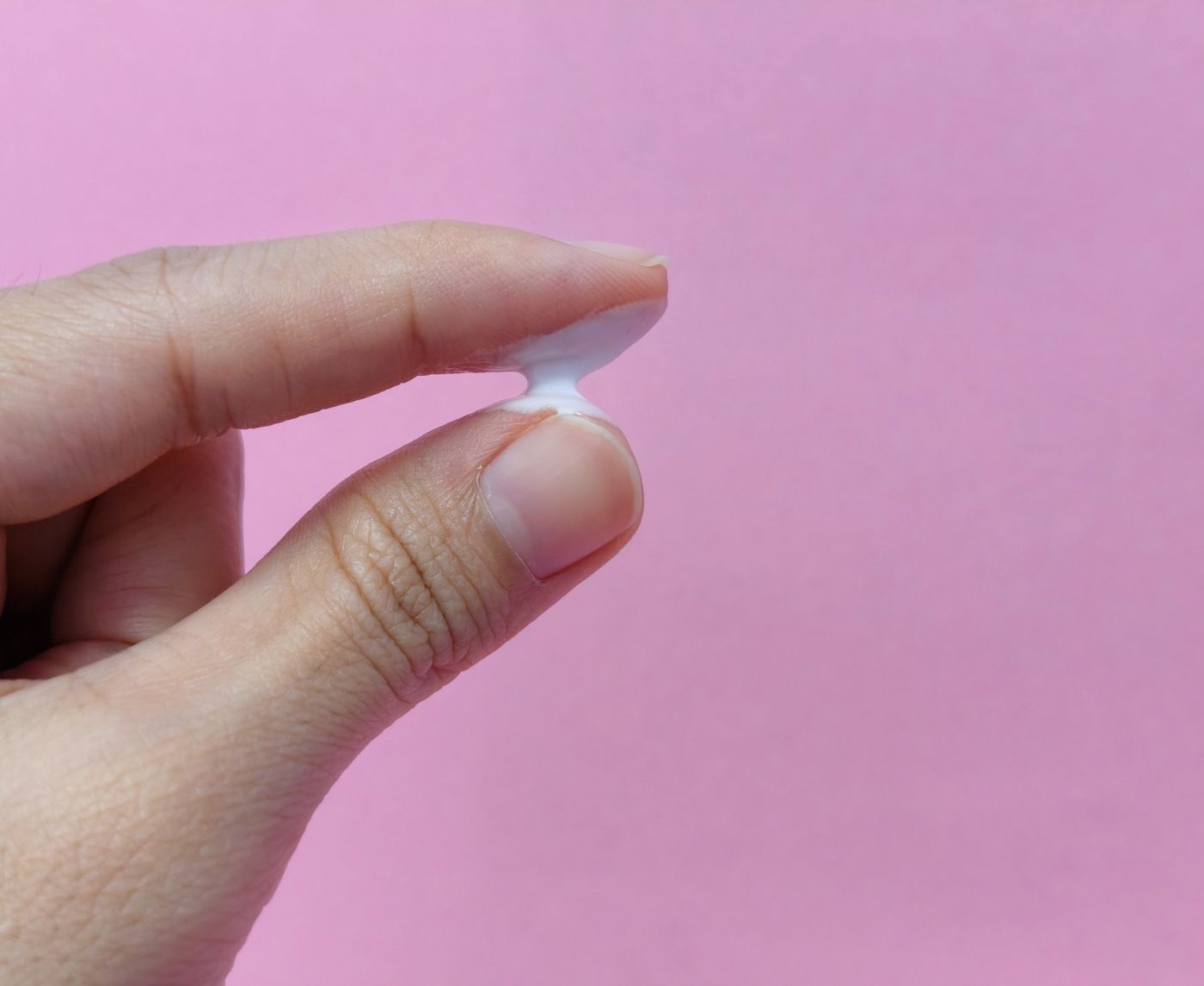
Your vagina is not supposed to be dry. It is designed to produce fluid. Cervical mucus shifts throughout your menstrual cycle based on estrogen and progesterone levels, and those shifts can make discharge appear creamy, sticky, stretchy, or thick.
Right before a period, or during ovulation, it’s completely normal to see thick white discharge with no smell. During pregnancy, discharge often increases and can look milky and heavy. Even stress, new exercise routines, or small hormonal fluctuations can change texture temporarily.
One patient, Aisha, once told me, “I thought something was wrong because it looked like lotion. But I felt fine.” She was fine. No itching. No burning. No odor. Just a normal hormone pattern she hadn’t paid attention to before.
If there is no itching, no irritation, no pain during urination, and no strong smell, thick white discharge is often physiological, meaning it’s your body functioning normally.
When It’s Likely a Yeast Infection
Now let’s talk about the scenario people are usually worried about: the classic “cottage cheese discharge.” A yeast infection, medically called vulvovaginal candidiasis, is caused by an overgrowth of Candida fungus, which naturally lives in the vagina in small amounts.
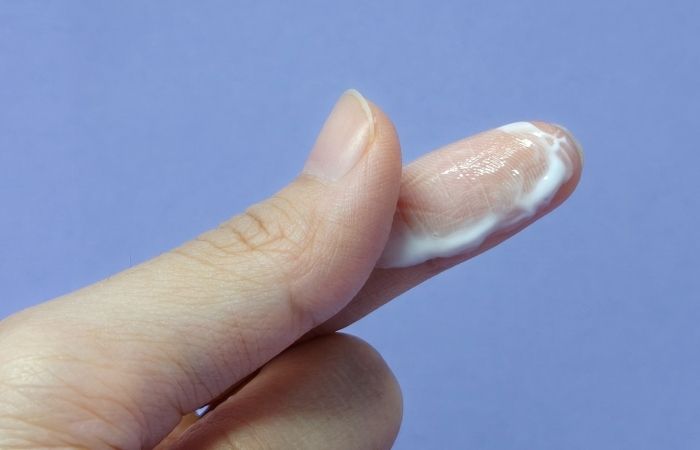
The discharge from a yeast infection is typically thick, white, and clumpy. Importantly, it usually has little to no odor. That’s why thick white discharge with no smell often gets associated with yeast.
But here’s the difference-maker: yeast infections almost always come with itching. And not subtle itching. We’re talking persistent, distracting, sometimes intense vulvar itching. There may also be redness, swelling, or a burning sensation during urination or sex.
| Feature | Normal Hormonal Discharge | Yeast Infection |
|---|---|---|
| Color | White or clear | White, often clumpy |
| Smell | None or very mild | Usually none |
| Itching | No | Common and noticeable |
| Burning | No | Possible |
| Vaginal redness | No | Often present |
Antibiotics, high-sugar diets, diabetes, tight synthetic clothing, new soaps, and even hormonal birth control can trigger yeast overgrowth. Many people experience at least one yeast infection in their lifetime, according to the CDC.
If thick white discharge appears suddenly and is paired with itching or irritation, yeast is statistically more likely than an STD.
What About Bacterial Vaginosis?
Bacterial vaginosis (BV) is another common cause of discharge, but it behaves differently. BV discharge is usually thin, grayish-white, and has a noticeable fishy odor, especially after sex. That odor is a defining feature.
So if you’re experiencing thick white discharge with no smell, BV is less likely. BV also rarely causes itching. It’s more about odor and consistency change than inflammation.
That said, bodies don’t read textbooks. Mixed infections can happen. If discharge texture changes dramatically and something feels off, testing can clarify what your nose and eyes can’t.
Could It Be an STD?
This is the question that tightens people’s chests. Thick white discharge alone, without smell or irritation, is not the classic presentation of most sexually transmitted infections.
Chlamydia and gonorrhea often produce yellow or green discharge, sometimes with pelvic pain or burning during urination. Trichomoniasis tends to cause frothy, yellow-green discharge with a strong odor. These infections are frequently asymptomatic, though, meaning there may be no discharge at all.
That’s the part people miss. The absence of odor does not automatically equal “not an STD.” Many STDs cause no smell and sometimes no symptoms whatsoever.
Leila, 27, once told me, “I convinced myself it was yeast because there was no smell. It turned out to be chlamydia.” She had no itching. No odor. Just mild discharge. Testing made the difference.
If you’ve had a new partner, unprotected sex, or a condom break, and you notice discharge changes, it’s reasonable to rule out infection. Peace of mind matters.
Timing Matters More Than Texture
If exposure is recent, within the last few days, discharge changes may not tell you much. Many STDs have window periods, meaning the infection may not be detectable immediately after contact.
For example, chlamydia and gonorrhea are typically detectable around 7–14 days after exposure using NAAT testing. Testing too early can give false reassurance.
If anxiety is high, testing at the appropriate window is more reliable than trying to decode discharge texture alone. A single symptom rarely tells the full story.
For those who want clarity quickly, an at-home combo test kit can screen for common bacterial STDs discreetly. It removes the guesswork and replaces it with data.
White Discharge but No Itching: Why That Detail Changes Everything
When someone says, “It’s thick and white but there’s no smell,” my next question is almost always: Is there itching? Because itching is the dividing line between irritation and physiology.
If there is no itching, no swelling, no raw feeling, and no discomfort during sex or urination, yeast becomes less likely. Not impossible, but less likely. A yeast infection without itching is uncommon.
That leaves us with a short list of likely explanations: normal hormonal discharge, early pregnancy shifts, post-ovulation cervical mucus, or mild vaginal flora fluctuations that correct themselves without treatment.
In other words, discharge without itching often means your body is balancing itself, not fighting something.
Pregnancy, Ovulation, and the Hormone Effect
Thick white discharge with no smell is extremely common in early pregnancy. It’s called leukorrhea, a thin to thick, milky-white discharge caused by rising estrogen levels and increased blood flow to the vaginal area. It’s protective. It helps prevent infection.
During ovulation, discharge can become stretchy and egg-white-like. After ovulation, progesterone rises and discharge may become thicker and creamier. That creamy phase is where many people panic unnecessarily.
One patient, Sofia, once came in terrified she had contracted an STD after a new relationship. The timing of her discharge lined up exactly with her luteal phase, the second half of her cycle. No infection. Just biology.
If discharge appears mid-cycle or a few days before your period and resolves naturally, it’s often hormone-driven.
After Antibiotics: The Yeast Domino Effect
Antibiotics don’t just kill harmful bacteria. They also reduce the protective bacteria in the vagina that keep yeast in check. That’s why thick white discharge often appears a few days after finishing antibiotics.
In this case, itching usually follows. But not always immediately. Sometimes discharge changes first, and irritation shows up later.
If you’ve recently taken antibiotics and now notice clumpy white discharge with no smell, monitor for itching. If irritation develops, yeast treatment may help. If not, your microbiome may simply be recalibrating.
After Sex: Semen, Lubricants, and Normal Mixing
Thick white discharge after sex, especially unprotected sex, can simply be semen mixing with cervical mucus. Semen can leak out hours later and look like new discharge. It may feel thicker than usual.
Lubricants and arousal fluids can also alter texture temporarily. The vagina is self-cleaning. It expels what doesn’t belong there.
Amara once described panic the morning after sex: “I thought it was infection because it was thicker than usual. But it stopped by the next day.” That’s a common story. If the discharge resolves within 24–48 hours and no other symptoms appear, infection becomes less likely.
When Discharge Changes After a New Partner
This is where anxiety spikes. A new partner doesn’t automatically mean infection, but it does mean your vaginal microbiome is meeting someone else’s bacteria for the first time.
Sometimes that alone can temporarily change discharge texture. The body adjusts. Most of the time, this stabilizes within a week.
But here’s the grounded investigator voice: if you’ve had unprotected sex with a new partner, testing is smart regardless of symptoms. Many infections like chlamydia and gonorrhea cause minimal or no early discharge changes.
You don’t test because you see discharge. You test because exposure happened.
Side-by-Side: Yeast vs Common STDs
Let’s put the differences into one clean visual. Texture alone doesn’t diagnose anything, but patterns can guide your next move.
| Condition | Discharge Appearance | Odor | Itching | Other Common Signs |
|---|---|---|---|---|
| Yeast Infection | Thick, white, clumpy | Minimal or none | Common | Redness, swelling, burning |
| Chlamydia | White, yellow, or cloudy | Usually none | Uncommon | Pain with urination, pelvic pain, often no symptoms |
| Gonorrhea | Yellow or green | Possible mild odor | Uncommon | Pelvic pain, bleeding between periods |
| Trichomoniasis | Frothy, yellow-green | Strong odor | Often present | Vaginal soreness, discomfort during sex |
Notice something important: thick white discharge with no smell most closely resembles either normal discharge or yeast. STDs rarely present as thick, odorless, clumpy discharge alone.
But again, and this matters, STDs can be silent. That’s why risk history is more powerful than discharge color.
When Testing Is the Smart Move
If discharge is the only symptom and you have no new exposure, no itching, and no odor, monitoring for a few days is reasonable. Bodies fluctuate.
If you’ve had unprotected sex, a new partner, or symptoms that persist longer than a week, testing provides clarity faster than guesswork. Anxiety thrives in uncertainty.
A comprehensive option like the Fishy Smell After Sex? BV, Semen pH, or an STD can screen for multiple infections at once, privately and discreetly. That doesn’t mean you’re assuming the worst. It means you’re choosing data over fear.
When Thick White Discharge Is Not Something to Ignore
Most of the time, thick white discharge with no smell is either normal or yeast-related. But there are moments when discharge becomes part of a bigger picture, and that’s when we stop watching and start acting.
If discharge is paired with pelvic pain, fever, sharp lower abdominal pressure, pain during sex, or bleeding between periods, that moves it out of the “monitor it” category. Those symptoms can signal pelvic inflammatory disease, which can occur when infections like chlamydia or gonorrhea travel upward.
Discharge alone rarely causes complications. Discharge plus systemic symptoms deserves medical evaluation. That’s not panic. That’s prevention.
Mixed Infections: When It’s Not Just One Thing
Bodies are complex ecosystems. It’s possible to have a yeast infection and a bacterial STD at the same time. It’s also possible to treat yeast repeatedly while an underlying STD goes undiagnosed.
I once saw a patient named Daniela who treated herself for yeast three times in two months. The discharge kept returning. No smell. Mild irritation. Eventually she tested, and it turned out she had chlamydia. The yeast wasn’t the root problem; it was a secondary imbalance.
This is why persistent discharge, even if it looks textbook yeast, should be tested if it doesn’t respond to standard treatment. Recurrent symptoms are information.
The Trap of Self-Diagnosis
Search engines are helpful. They are not diagnostic tools. Texture comparisons can guide suspicion, but they cannot confirm infection. Many infections overlap in presentation, and some present subtly.
People often rely on odor as the deciding factor. “No smell means no STD.” That assumption is not reliable. Chlamydia frequently has no odor. Sometimes no discharge at all.
On the other hand, treating every discharge change like an emergency can create unnecessary stress and over-treatment. The key is context: timing, exposure risk, accompanying symptoms, and duration.
The calm, data-driven approach sounds like this: What changed? When did it start? Was there exposure? Are there other symptoms? Has it lasted more than seven days?
A Simple Decision Framework
If discharge is thick, white, odorless, and there is no itching or irritation, and you are mid-cycle or close to your period, monitoring for a few days is reasonable. Hormones shift. Texture follows.
If discharge is thick, white, odorless, and accompanied by itching or redness, yeast is likely. Over-the-counter antifungal treatment may help. If symptoms do not improve within a few days, testing becomes important.
If discharge appears after a new partner or unprotected sex, regardless of smell, STD testing is the responsible next step. Even if everything turns out negative, clarity lowers stress levels dramatically.
If discharge persists longer than a week, keeps returning, or feels different from your usual pattern, testing replaces guessing.
The Emotional Spiral (And How to Step Out of It)
Let’s talk about what really happens. You see discharge. You Google. You read three articles. Suddenly you’re imagining worst-case scenarios. Your body feels like evidence against you.
Sexual health anxiety is powerful because it intersects with shame, vulnerability, and trust. A new partner can turn a completely normal discharge shift into a mental avalanche.
But here’s the grounded truth: discharge is one of the least specific symptoms in medicine. It changes for dozens of benign reasons. The majority of thick white discharge with no smell is not dangerous.
Testing is not an admission of guilt. It’s a health tool. It’s information. It’s care.

How to Avoid False Reassurance (and False Panic)
Testing too early after exposure can produce false negatives. For bacterial infections like chlamydia and gonorrhea, reliable detection typically occurs around 7 to 14 days after exposure using nucleic acid amplification tests (NAATs).
If you test at day three and it’s negative, that doesn’t necessarily mean you’re clear. Timing matters more than texture.
On the flip side, taking antifungal treatment repeatedly without confirmation can disrupt your vaginal microbiome and prolong imbalance. If yeast treatments fail twice, it’s time for testing.
Clarity doesn’t come from guessing harder. It comes from data at the right time.
What If You’re Still Unsure?
If you’re caught between “it’s probably nothing” and “what if it’s something,” you’re not alone. Many people hover in that in-between space for days.
A comprehensive test panel can eliminate common bacterial STDs in one step. The Women’s 10‑in‑1 At‑Home STD Test Kit screens discreetly for multiple infections at once, allowing you to stop interpreting discharge and start reading results.
Peace of mind is not dramatic. It’s practical.
FAQs
- 1. Okay, but seriously, if it’s thick and white and there’s no smell, how worried should I be?
- Take a breath. Thick white discharge with no odor is one of the most common normal variations of vaginal discharge. If there’s no itching, burning, pelvic pain, or recent high-risk exposure, the odds are strongly in your favor that this is hormonal. Your body is allowed to have texture changes without it meaning something catastrophic.
- 2. What if I don’t have itching… but I can’t stop thinking about it?
- That’s anxiety talking, not necessarily infection. Yeast almost always announces itself with irritation. If you’re checking every hour and nothing hurts, that’s reassuring. Give it a few days. If it doesn’t change or you’ve had a recent exposure, testing replaces spiraling with certainty.
- 3. Can an STD really have no smell at all?
- Yes. And that’s the part people don’t love hearing. Chlamydia in particular is often silent. No smell. Sometimes no discharge. That’s why we base testing decisions on exposure risk and timing, not odor alone. Smell helps, but it’s not a lie detector.
- 4. It looks like lotion. Is that yeast?
- Lotion-like discharge without itching is usually just progesterone doing its thing in the second half of your cycle. Yeast tends to look clumpier and feel uncomfortable. If it looks creamy but you feel completely fine, that’s often normal physiology.
- 5. What if it showed up right after sex?
- Semen mixing with cervical mucus can look exactly like thick white discharge. It can leak out hours later and cause unnecessary panic. If it resolves within a day or two and no other symptoms appear, infection becomes less likely. Bodies are self-cleaning.
- 6. I treated for yeast and nothing changed. Now what?
- That’s your cue to pause the over-the-counter cycle. If symptoms persist after one or two treatments, get tested. Repeated antifungal use can irritate tissue and disrupt your microbiome. Persistent discharge deserves confirmation, not guesswork.
- 7. Could stress actually change my discharge?
- Absolutely. Stress shifts hormones. Hormones shift cervical mucus. I’ve seen discharge changes during exam week, breakups, job interviews, and cross-country moves. If your life feels chaotic and your body follows suit temporarily, that doesn’t automatically mean infection.
- 8. How do I know if I should test even if everything seems mild?
- Ask yourself one question: Was there a risk? New partner, unprotected sex, condom break, or uncertainty about a partner’s status? If yes, test at the appropriate window. Not because you’re assuming the worst, but because clarity protects you and your partners.
- 9. What’s the biggest mistake people make with discharge?
- Two extremes. Either ignoring persistent symptoms for months because there’s no odor, or assuming every texture shift is an STD. The middle ground is smarter: observe, assess exposure risk, then act based on evidence.
- 10. If I test and it’s negative, will I finally relax?
- Most people do. Anxiety feeds on ambiguity. A negative result at the right time point can be profoundly calming. And if something does show up positive, you move from uncertainty to a treatment plan. Either way, you win by knowing.
You Deserve Clarity, Not Guesswork
Thick white discharge with no smell is usually normal or yeast-related. It is rarely the dramatic emergency your anxiety may suggest. But exposure history, persistence of symptoms, and accompanying discomfort are what determine whether monitoring or testing is the right move.
If uncertainty is lingering, replace speculation with information. A discreet panel like the Women’s 10‑in‑1 At‑Home STD Test Kit can screen for common bacterial STDs from home. Or explore options at STD Test Kits to understand timing and next steps. Your health decisions don’t have to be dramatic. They just have to be informed.
How We Sourced This Article: This guide integrates CDC treatment guidelines, peer-reviewed infectious disease research, and clinical diagnostic standards for vulvovaginal symptoms. We reviewed approximately fifteen references to ensure medical accuracy, symptom clarity, and testing timelines reflect current best practices. The six sources listed below represent the most reader-relevant and authoritative materials consulted.