Sexually Transmitted Fungus Outbreak: What This Ringworm STI Means for You
The NY Post article pulls attention toward something most people don’t even realize is possible: ringworm can be sexually transmitted. And if so, can you test for it at home?
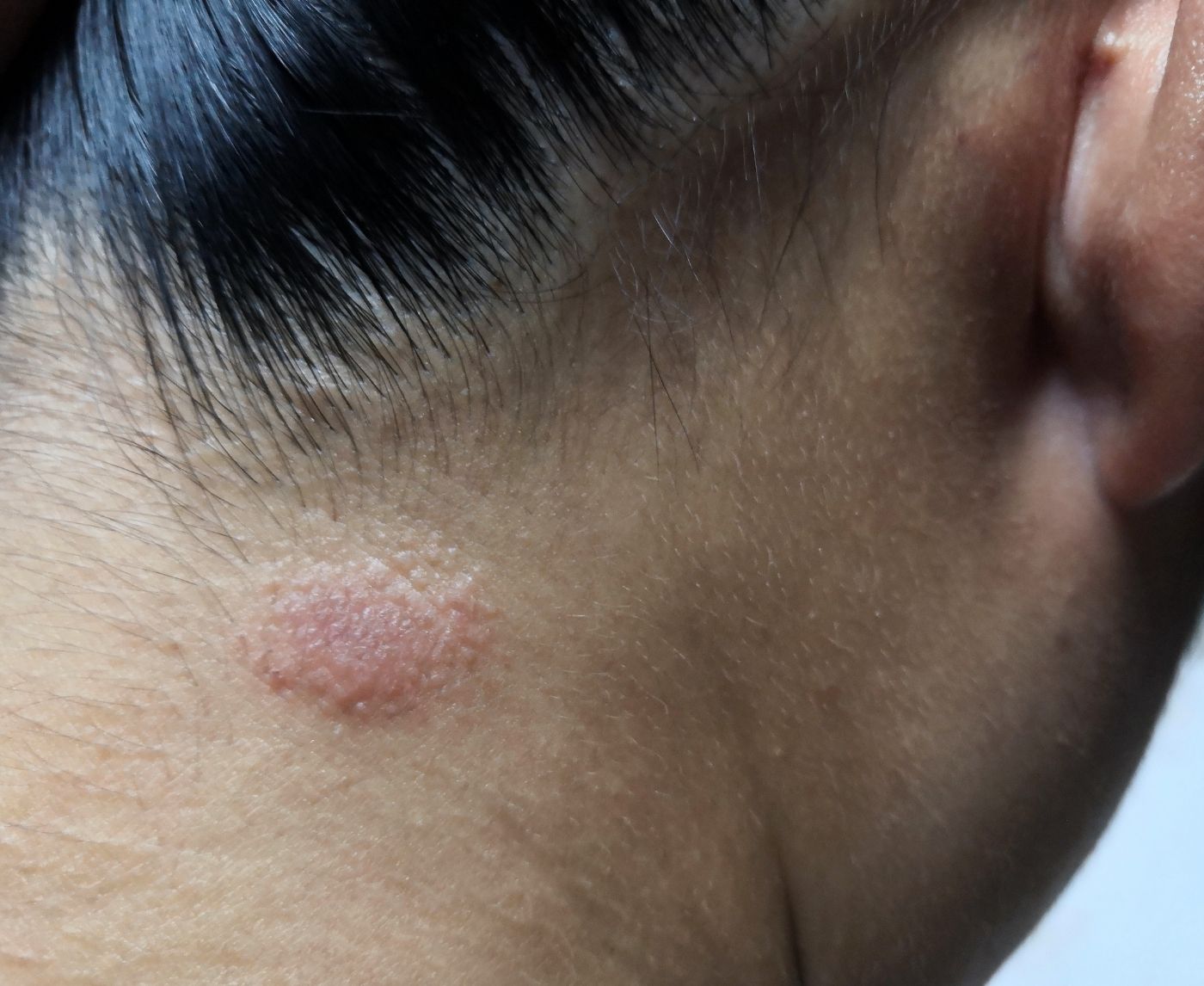
Quick Answer: A sexually transmitted fungus outbreak involving TMVII is causing ringworm infections through skin-to-skin sexual contact, but standard at-home STD test kits do not detect fungal infections. Diagnosis requires a clinical skin exam or lab testing, not a urine or blood STI panel.
The NY Post article pulls attention toward something most people don’t even realize is possible: ringworm can be sexually transmitted. While fungal infections have always existed, this particular genotype spreads efficiently during intimate contact and can appear exactly where people least expect it. That raises an urgent question for anyone experiencing an itchy rash after sex: Is this an STD? And if so, can you test for it at home?
This guide builds on that reporting. We’re going to unpack what TMVII actually is, how it spreads, what symptoms look like, how it differs from bacterial and viral STDs, and where at-home testing fits, and doesn’t fit, into this conversation. Because when headlines spike anxiety, clarity is the antidote.
When Ringworm Becomes a Sexually Transmitted Infection
Ringworm sounds almost harmless, like something you picked up at summer camp. Medically, it’s called tinea, a fungal infection of the skin. It’s not caused by a worm. It’s caused by dermatophyte fungi that live on skin, hair, and nails. Most cases spread through shared towels, gym mats, or close contact sports.
What makes TMVII different is how it’s spreading. Public health investigations linked many cases to sexual contact, particularly prolonged skin-to-skin contact. According to reporting summarized from state health officials, the lesions frequently appear in the groin, buttocks, and genital region, areas typically involved during intimacy.
That doesn’t mean it spreads the same way as chlamydia or gonorrhea. There’s no bacteria in urine. No virus in blood. Instead, fungal spores move across skin surfaces during friction and close contact. It behaves more like athlete’s foot than HIV, but the context of transmission changes how we categorize it.
And that distinction matters when it comes to testing.
What Symptoms Actually Look Like (And Why They’re Misdiagnosed)
Imagine this: You wake up three days after a new hookup. There’s a red patch near your inner thigh. It itches, but not dramatically. Maybe it’s razor burn. Maybe it’s sweat irritation. Maybe it’s nothing.
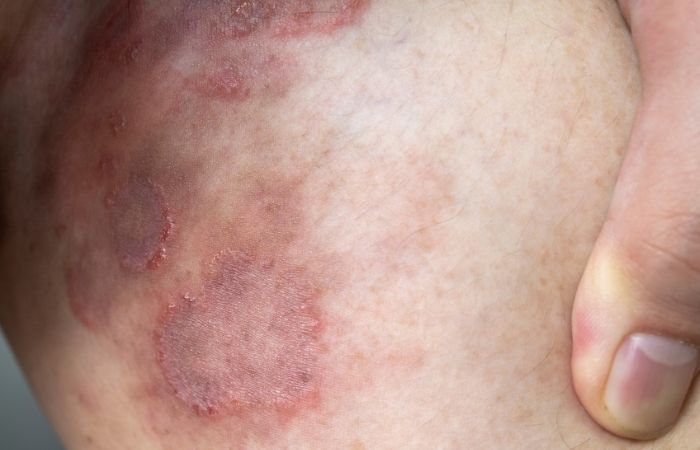
TMVII infections often start subtly. Early lesions may appear as circular or irregular red patches with raised borders. Over time, they can become scaly, inflamed, or painful. In some reported cases, lesions spread outward in a ring-like shape, classic ringworm presentation, but on the genitals or buttocks.
Because genital rashes already carry stigma, many people assume herpes immediately. Others assume eczema. According to dermatology guidance from the CDC and peer-reviewed infectious disease journals, fungal infections are frequently misdiagnosed when they appear in atypical areas, especially if clinicians are not suspecting a sexually transmitted source.
| Condition | Appearance | Itching | Pain | Discharge |
|---|---|---|---|---|
| TMVII Fungal Infection | Red, scaly patch with raised border | Common | Mild to moderate | None |
| Herpes | Clustered blisters or ulcers | Sometimes | Often painful | Clear fluid from blisters |
| Eczema | Dry, cracked skin | Common | Usually mild | None |
| Syphilis (Primary) | Single painless ulcer | Rare | Usually painless | None |
Figure 1. Comparison of common genital rash causes. Clinical diagnosis may require lab confirmation.
This overlap is why people spiral on Google at 2 a.m. “STD rash that looks like eczema.” “Ringworm on genitals.” “Itchy rash after sex but no blisters.” The symptoms blur lines.
And this is where we pivot to testing.
Why Standard At-Home STD Tests Won’t Detect This Fungus
At-home STD tests are designed to detect bacteria and viruses. They look for genetic material, antibodies, or antigens in urine, blood, or swab samples. A standard at-home STD kit screens for infections like chlamydia, gonorrhea, HIV, or syphilis. None of those tests identify fungal organisms living on the skin’s surface.
TMVII requires a completely different diagnostic approach. Clinicians typically perform a skin scraping and examine it under a microscope, or send it to a lab for fungal culture or PCR specific to dermatophytes. That means no urine cup. No fingerstick blood test. No rapid cassette.
This is critical: a negative STD test does not rule out a fungal infection.
However, and this is where nuance matters, if you have a rash after sexual contact, it may still be wise to rule out traditional STDs at the same time. Coinfections happen. Skin-to-skin contact that transmits fungus can also transmit viral or bacterial infections.
That’s why comprehensive screening, such as a Combo STD Home Test Kit, can provide clarity on common STDs while you seek dermatologic evaluation for a possible fungal cause. It’s not either-or. It’s layered reassurance.
How This Outbreak Changes the Conversation About “Skin-to-Skin” STDs
Public health messaging often focuses on fluid transmission, semen, vaginal fluids, blood. But infections like herpes, HPV, and now TMVII remind us that skin-to-skin contact alone can spread disease.
That doesn’t mean panic. It means precision.
Barrier protection reduces risk but doesn’t eliminate it. Fungal spores can live on surrounding skin that isn’t covered by a condom. Prolonged friction increases the chance of transfer. Close body contact during sex, particularly in warm, moist environments, creates ideal conditions for dermatophytes.
The outbreak also reinforces something we’ve known in infectious disease for decades: pathogens evolve socially as much as biologically. Travel, dating apps, crowded events, and changing sexual networks influence spread patterns.
And the solution isn’t shame. It’s awareness and early evaluation.
When to Seek Clinical Testing Instead of Self-Treating
Common ringworm infections are treated with antifungal creams available over-the-counter. However, this strain has shown infections requiring antifungal medications to be taken orally. If the rash persists longer than a few days, spreads quickly, or is painful, it’s worth getting checked.
Especially if it’s from a new sex partner.
A medical provider may perform a potassium hydroxide (KOH) preparation, culture, or molecular test to diagnose TMVII. Systemic antifungal medications are used to treat TMVII. These are usually taken for several weeks. The right medication needs to be started early to minimize discomfort and spread.
And until you get checked out, it’s best to abstain from sex.
The Timeline: From Exposure to That First Itch
The majority of people expect an STD to have a set clock. When it’s something like chlamydia or gonorrhea, we talk about an incubation period. When it’s something like HIV, we talk about a window period. When it’s something like TMVII, it doesn’t work this way.
Dermatophytes are fungi. When they start to produce symptoms, it’s usually within a week or two. When it’s reported in an outbreak, it’s because people are noticing red scaly lesions appearing on them due to having sex with an infected partner. However, due to the initial irritation being relatively minor, a little itch, a little redness, it’s possible to put off seeking medical care.
It’s possible to get to a point where it’s spread in a circular fashion. The ideal conditions are when it’s on a warm, moist skin fold. The longer it’s left untreated, the more it may spread.
The difference with fungal infections is that it’s on the outside. There’s no window period to get a urine test or a blood test. The tests don’t exist.
| Event | Typical Timeframe | What’s Happening |
|---|---|---|
| Sexual skin-to-skin exposure | Day 0 | Fungal spores transfer during intimate contact |
| Early irritation or redness | Days 3–7 | Fungus begins colonizing outer skin layers |
| Visible ring-like lesion | Days 7–14 | Inflammation increases, scaling appears |
| Untreated spread | 2+ weeks | Lesions expand or multiply in nearby areas |
Figure 2. Approximate timeline of TMVII fungal skin infection progression based on dermatophyte behavior.
Should You Still Take an STD Test If You Have a Fungal Rash?
If you experience a rash following sex with a new partner, getting common STDs cleared can be enlightening. Fungal infections and bacterial STDs are not mutually exclusive. Skin-to-skin contact with TMVII can also spread herpes or HPV. Penetrative sex with chlamydia or gonorrhea can occur without symptoms.
Layered testing can be a good approach. Getting a comprehensive test, such as a discreet at-home test kit by STD Test Kits, can rule out common infections while you pursue further investigation of a potential fungal rash.
Peace of mind isn’t dramatic. Peace of mind is strategic.

Rapid Tests vs Lab Tests: What Each Can and Cannot Do
Let’s break this down clearly. Rapid STD tests and lab-based tests are built for pathogens that live in fluids or bloodstream markers. They detect DNA, RNA, antibodies, or antigens. Fungal dermatophytes require microscopic visualization or fungal culture from skin scrapings.
That means comparing these tools requires honesty about their purpose.
| Testing Method | Detects Fungal TMVII? | Detects Bacterial/Viral STDs? | Best Use Case |
|---|---|---|---|
| At-Home Rapid STD Test | No | Yes | Quick screening for common STDs |
| Mail-In Lab STD Panel | No | Yes | High-sensitivity STD testing without clinic visit |
| Clinic Skin Scraping / Culture | Yes | No | Confirming suspected fungal skin infection |
Figure 3. Comparison of testing approaches relevant to fungal and non-fungal STDs.
The takeaway isn’t that at-home testing is insufficient. It’s that every tool has a scope. Using the right tool for the right organism prevents false reassurance and unnecessary panic.
Treatment: Why This Isn’t Just “Put Some Cream On It”
Many people hear “ringworm” and assume over-the-counter antifungal cream will solve it. Sometimes that’s true. But TMVII has shown cases requiring prescription oral antifungal medications, especially when lesions are extensive or resistant.
Oral antifungals like terbinafine or itraconazole may be prescribed for several weeks. That duration matters. Stopping treatment early can allow recurrence. Sharing towels, clothing, or bedding during infection can spread spores to others.
Unlike most bacterial STDs, fungal infections don’t involve antibiotic resistance, but they do require persistence. And unlike viral infections such as herpes, fungal infections are typically curable with appropriate therapy.
That distinction is reassuring. This outbreak is concerning, yes, but it is treatable.
Prevention Without Panic
Headlines about a “sexually transmitted fungus outbreak” can sound dramatic. The practical steps, however, are grounded and simple.
Limiting skin-to-skin exposure during active outbreaks, avoiding sexual contact when unexplained rashes are present, and seeking early evaluation reduce spread. Regular STD screening remains important for bacterial and viral infections, especially with new or multiple partners.
Barrier protection reduces risk but doesn’t eliminate fungal transmission entirely. Communication matters. If you notice symptoms after intimacy, telling a partner isn’t an accusation, it’s preventive care.
And if your anxiety is louder than your symptoms, testing can quiet it. A comprehensive Combo STD Home Test Kit can rule out common infections while you address a possible fungal cause with a clinician. Your results. Your privacy. Your next step.
If Your STD Test Is Negative but the Rash Isn’t Going Away
This is one of the most psychologically confusing scenarios. You take an at-home STD test. It comes back negative. You want relief. But the rash is still there, maybe larger, maybe itchier, maybe now impossible to ignore.
A negative test for chlamydia, gonorrhea, HIV, or syphilis does exactly what it’s supposed to do: it rules out those infections within their detection windows. It does not rule out fungal disease. That distinction can feel subtle in theory but massive in practice.
In the current sexually transmitted fungus outbreak, many patients initially assumed a classic STD. When tests came back negative, some delayed further care. By the time they saw a clinician, lesions had expanded.
If symptoms persist beyond a few days, especially if they are circular, scaly, or spreading, clinical evaluation for fungal infection should move up your priority list.
Retesting Logic: When to Recheck and Why Timing Still Matters
Even though TMVII itself requires a skin-based diagnosis, the broader sexual health conversation doesn’t stop there. Timing still matters for bacterial and viral STDs.
If exposure occurred within the last week, certain infections may not yet be detectable. For example, chlamydia and gonorrhea typically become reliably detectable around 7–14 days after exposure. HIV antigen/antibody tests have their own window period. Testing too early can produce false reassurance.
Here’s a grounded approach many clinicians use:
If you test within a few days of exposure and results are negative, consider retesting at the two-week mark for common bacterial STDs. If anxiety remains high, repeat screening at the appropriate window for viral infections as well. This layered approach is not paranoia. It’s accuracy.
Meanwhile, fungal infections do not require a retesting “window.” They require direct examination and, if confirmed, completion of treatment.
What to Do If a Fungal Infection Is Confirmed
First: breathe.
A confirmed fungal infection is not a lifelong diagnosis. It does not live in your bloodstream. It does not permanently alter your immune system. It is a superficial skin infection that can be treated.
Treatment may involve oral antifungal medication for several weeks. During this time, it’s recommended to avoid sexual contact until lesions resolve. Launder bedding, towels, and clothing in hot water. Keep affected areas clean and dry.
Partner notification, while uncomfortable, helps prevent reinfection. A simple message such as, “I was diagnosed with a fungal skin infection that can spread through close contact. You may want to get checked,” is both honest and preventive.
There is no moral language required. Only medical clarity.
Privacy, Discretion, and Getting Answers Without Public Waiting Rooms
One reason people delay care is privacy. Walking into a clinic with a genital rash feels vulnerable. Many readers prefer to rule out common STDs at home first, then seek dermatologic evaluation if necessary.
Discreet at-home testing from STD Test Kits allows you to screen for major infections privately. Shipping is discreet. Billing is discreet. Results remain confidential.
If fungal infection is suspected, telehealth consultations can sometimes guide next steps before an in-person exam. In other cases, a primary care visit is straightforward and routine. Healthcare providers see skin infections daily. Shame rarely survives clinical context.
Your body deserves clarity. Not secrecy fueled by fear.
Why This Outbreak Is Getting Attention Now
Fungal infections are not new. What’s new is the identified pattern of sexual transmission and clustered cases. Public health agencies monitor unusual genotypes because spread patterns can shift with travel, sexual networks, and antimicrobial use.
The Minnesota cluster described in recent reporting represents the largest documented U.S. outbreak of this specific genotype. That scale is what elevated it from dermatology footnote to headline.
But perspective matters. Compared to rates of chlamydia, gonorrhea, or HPV, the number of reported fungal cases remains relatively small. Awareness prevents escalation. Panic does not.
Testing, early treatment, and open communication are the stabilizers in any outbreak, fungal or otherwise.
FAQs
- 1. Wait… ringworm is an STD now?
- Not exactly “now,” and not in the traditional sense. Ringworm has always spread through close contact, but this specific strain (TMVII) has been documented spreading during sexual skin-to-skin contact. It’s not an STD in the blood-or-urine sense like chlamydia or HIV, but if it spreads through sex, we treat it like sexual health. Labels matter less than clarity.
- 2. If I have an itchy rash after sex, should I assume it’s this fungus?
- No. Take a breath. Most post-sex irritation is friction, sweat, shaving, or simple skin sensitivity. Fungal rashes usually expand slowly and develop a defined, sometimes scaly border. If it’s spreading, not improving, or clearly circular, that’s when evaluation makes sense. Not every itch is an outbreak headline.
- 3. Why wouldn’t my at-home STD test pick this up?
- Because those tests look for bacteria and viruses in fluids like urine or blood. This fungus lives on the outer layer of skin. It’s like trying to find athlete’s foot with a pregnancy test, wrong tool, wrong target. That doesn’t make at-home STD testing useless. It just means you’re solving a different part of the puzzle.
- 4. Could I have this and something else at the same time?
- Yes. Skin-to-skin contact doesn’t politely transmit only one organism at a time. If there was unprotected contact, screening for common STDs is still smart. Think of it as running through a checklist: rule out the big, common infections while you investigate the rash properly.
- 5. How fast would I notice symptoms?
- Usually within a few days to two weeks. It might start as something you dismiss, a pink patch, mild itch, maybe a “weird spot.” Fungal infections tend to grow outward slowly. If it’s getting bigger instead of fading, that’s your cue.
- 6. Can I just use drugstore antifungal cream and move on?
- Sometimes, yes. Many fungal infections respond to topical treatment. But this outbreak strain has required oral medication in some cases. If you try over-the-counter cream and nothing improves after several days, or it spreads, it’s time to level up to a clinician.
- 7. Is this permanent, like herpes?
- No. That’s an important emotional distinction. Fungal skin infections are generally curable with proper treatment. They don’t live in your nerves or bloodstream. Once treated effectively, they’re gone.
- 8. Do I have to tell my partner?
- If you’re diagnosed, yes, in the same calm tone you’d use for strep throat exposure. “Hey, I was diagnosed with a fungal skin infection that can spread through contact. You might want to get checked.” That’s it. Direct. Adult. Preventive.
- 9. Is this outbreak something to panic about?
- Panic is loud. Data is quieter. The reported cluster is small compared to common STDs, but awareness matters because misdiagnosis delays treatment. Think of it like a weather alert: be informed, not afraid.
- 10. What’s the smartest first move if I’m unsure?
- If there was sexual exposure, start by ruling out common bacterial and viral STDs with a discreet screening panel. Then, if the rash looks fungal or persists, seek a skin exam. Layered action beats anxious guessing every time.
Before You Spiral: Here’s What You Need To Know
A sexually transmitted fungus outbreak sounds dramatic because it is unusual. But unusual does not mean catastrophic. TMVII is treatable. It lives on the skin’s surface. It requires the right diagnosis, not panic-driven assumptions.
If you notice a rash after sex, rule out common STDs with appropriate testing, then pursue clinical evaluation if symptoms suggest a fungal cause. Layered action replaces fear with clarity. And clarity is the entire point of testing.
If you’re unsure where to begin, start with a discreet screening panel from this at-home combo STD test kit. It won’t detect fungal infections, but it will rule out the most common bacterial and viral STDs so you can focus on the right next step with confidence.
How We Sourced This Article: This guide was informed by recent outbreak reporting, dermatology research on Trichophyton mentagrophytes, and guidance from public health authorities. We reviewed peer-reviewed infectious disease literature, CDC dermatophyte resources, and clinical guidance on STD testing windows and diagnostic methods. Approximately fifteen sources informed this piece; below are six of the most relevant and reader-accessible references. All links open in a new tab for verification without losing your place.
- CDC – Sexually Transmitted Infections Treatment Guidelines
- New York Post – Outbreak of STI That Causes Ringworm in Unfortunate Places
- Emerging Types of Ringworm (CDC)
- Notes from the Field: Trichophyton mentagrophytes Genotype VII , New York City, April–July 2024 (CDC MMWR)
- Emerging Sexual Transmission of Trichophyton mentagrophytes Genotype VII Infections, United States (CDC Emerging Infectious Diseases)