Is One STD Test Enough After a One-Night Stand?
Quick Answer: One STD test can be enough after a one-night stand, but only if it’s taken at the right time. It has to do with biology. This is why people who search “tested negative too early STD” aren’t being paranoid.
Quick Answer: One STD test can be enough after a one-night stand, but only if it’s taken at the right time. Testing too early can miss infections, which is why some situations require a follow-up test after the window period.
The Part No One Talks About: Timing Is Everything
The biggest reason one STD test sometimes isn’t enough has nothing to do with how “risky” the hookup was. It has to do with biology. Every infection has what’s called a window period, the time between exposure and when a test can reliably detect it.
This is why people who search “tested negative too early STD” aren’t being paranoid. They’re bumping into a real medical limitation. If you test before the infection has built up enough to be detected, the result can come back negative even though transmission happened.
That’s not a faulty test. It’s just too soon.
According to the CDC and multiple peer-reviewed studies on NAAT and antigen/antibody testing, the detectability timeline varies significantly between infections like Chlamydia, Gonorrhea, Syphilis, and HIV. The difference between testing at day 5 and day 14 can completely change your result.
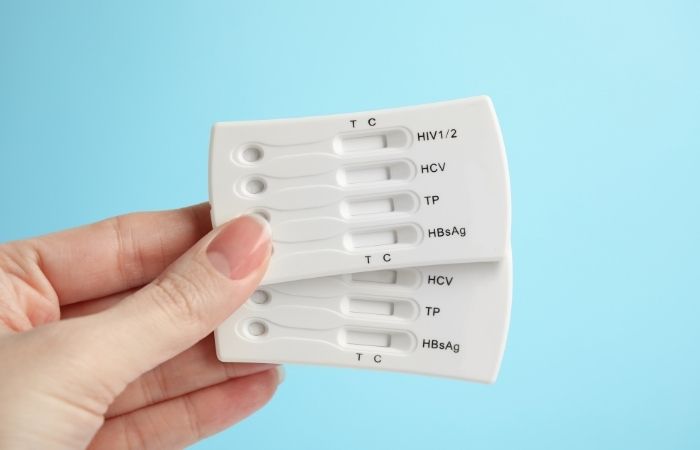
Here’s What the Window Period Actually Looks Like
Instead of guessing, let’s look at what “how soon after sex can I test for STDs” really means in practical terms. These are general medical ranges, individual cases vary, but this is the science most clinicians use when advising retesting.
| Infection | Common Test Type | Earliest Likely Detection | Best Accuracy Window |
|---|---|---|---|
| Chlamydia | NAAT (urine/swab) | 7 days | 14+ days |
| Gonorrhea | NAAT (urine/swab) | 7 days | 14+ days |
| Syphilis | Blood antibody test | 3 weeks | 6 weeks+ |
| HIV | 4th gen Ag/Ab test | 18–21 days | 45 days+ |
| Trichomoniasis | NAAT/rapid antigen | 5–7 days | 2–4 weeks |
Table 1. Approximate window periods based on CDC and major clinical guidance. Individual circumstances may vary.
If you tested three days after your one-night stand and everything came back negative, that result may not be definitive yet. If you tested at two weeks for chlamydia and gonorrhea, that’s much more reassuring. If you’re worried about HIV, testing at six weeks provides far stronger accuracy than testing at day ten.
So when someone asks, “Is one STD test enough?” the real answer is: it depends on when you took it.
“But It Was Only One Time.” Yes, And That Still Counts.
There’s a common myth that single exposure STD risk is negligible. It isn’t. While many infections require repeated exposures to increase probability, transmission absolutely can occur from one encounter, especially if there was unprotected vaginal, anal, or oral sex.
Aiden, 27, put it bluntly when he called a clinic hotline: “It was just one night. I don’t even know why I’m this stressed.” The nurse’s answer was simple: risk isn’t about how long you knew the person. It’s about whether transmission conditions were present.
Condoms reduce risk dramatically, but they don’t eliminate it. Skin-to-skin infections like Herpes and HPV can spread through areas not covered by a condom. Oral sex can transmit gonorrhea or chlamydia to the throat. Even protected sex sometimes leads people to search “STD test after protected sex” because anxiety doesn’t follow logic.
And that anxiety is normal. What matters is responding with strategy, not panic.
When One Test Is Usually Enough
There are scenarios where one well-timed STD test truly is enough. If you waited at least 14 days before testing for chlamydia and gonorrhea and you have no symptoms, that result is generally reliable. If you tested for HIV with a 4th-generation test at 6 weeks, that result is highly reassuring.
In lower-risk exposures, condom used correctly, no visible symptoms on either partner, no known positive status, a single appropriately timed panel may be medically sufficient. This is especially true if the test used was a high-sensitivity NAAT or lab-based antigen/antibody assay.
If that’s you, take a breath. You may not need to keep chasing additional tests just because your brain wants 100% certainty. Medicine deals in high probability, not absolutes.
Still unsure? You can review discreet, FDA-cleared at-home options at STD Test Kits to make sure you’re testing within the proper window without waiting weeks for clinic scheduling.
When One Test Is Not Enough
Now let’s talk about the other side, the reason people end up searching “should I retest after negative STD test” at 2 a.m.
If you tested very early, especially under 7 days post-exposure, you may need to retest. If you tested at two weeks but are worried about infections like HIV or syphilis, follow-up testing at the later recommended window adds clarity. If symptoms develop after a negative result, that’s also a reason to test again.
Janelle, 22, tested on day five because she couldn’t stand not knowing. It came back negative. Ten days later, she noticed burning during urination. A second test at day fourteen showed Chlamydia. “I thought the first test cleared me,” she said. It didn’t, it was just too soon.
That doesn’t mean early testing is pointless. It can establish a baseline. But it may not be the final word.
What About Symptoms, Or the Lack of Them?
One of the most misleading parts of post-hookup anxiety is how much we rely on how our body feels. You might be searching “STD symptoms no symptoms” because nothing hurts. Or because something does, and now every sensation feels suspicious.
Here’s the reality: many common infections like Chlamydia and Gonorrhea are frequently asymptomatic. According to CDC data, the majority of women and a significant percentage of men with chlamydia report no symptoms at all. That means feeling fine does not automatically equal being in the clear.
On the flip side, anxiety itself can mimic symptoms. Stress can cause urinary frequency, pelvic tension, digestive shifts, even tingling that people mistake for Herpes. I’ve had patients whisper, “I swear I feel something,” only for repeated testing to show nothing at all. The body reacts to fear as much as it reacts to infection.
So no, symptoms alone can’t determine whether one STD test is enough. Timing and risk profile matter more.
Let’s Break It Down by Risk Scenario
Not all one-night stands carry the same transmission probability. The type of sex, condom use, and known partner status all shape whether a single test is likely sufficient or whether follow-up makes sense.
| Scenario | Initial Test Timing | Is One Test Usually Enough? | Consider Retesting If |
|---|---|---|---|
| Condom used correctly, vaginal sex | 14 days | Often yes for chlamydia/gonorrhea | New symptoms or concern about HIV/syphilis window |
| Condom broke or slipped | 14 days | Sometimes | Test was under 7 days or anxiety persists |
| Unprotected vaginal or anal sex | 14 days + 6 weeks for HIV | Often requires staged testing | Testing done too early |
| Oral sex only | 14 days | Usually sufficient | Throat symptoms develop |
Table 2. General guidance for single-exposure STD risk and retesting considerations.
Notice the pattern. It’s rarely about needing “multiple tests forever.” It’s about testing at the correct windows for the specific infections relevant to your exposure.
The HIV Question: Why This One Causes the Most Spiral
When people ask how many times should I test after exposure, what they usually mean is: what about HIV?
HIV carries emotional weight that exceeds its statistical probability in many single-exposure scenarios. Modern 4th-generation antigen/antibody tests can detect most infections by 4–6 weeks. A negative result at 45 days is considered highly reliable in most cases.
Testing at day 7 for HIV? That’s almost guaranteed to create unnecessary fear because it’s simply too early for reliable detection. That’s where the myth of “false negative STD test” often starts, not because the test is flawed, but because the clock wasn’t ready.
If HIV is your primary concern, one properly timed test may absolutely be enough. But that test likely needs to happen later than people initially want.
Rapid Tests vs Lab Tests, Does Accuracy Change the Answer?
Another layer people don’t always factor in is the type of test used. Rapid at-home tests provide fast answers and privacy. Lab-based NAAT or antigen tests typically offer the highest sensitivity.
For infections like Chlamydia and Gonorrhea, NAAT tests are considered the gold standard. For HIV, 4th-generation lab tests are highly accurate after the proper window. Rapid tests are very reliable when used correctly, but like any screening tool, timing still affects performance.
If you tested with a high-quality kit at the appropriate window and the result was negative, repeating the same test the next day won’t increase accuracy. Waiting until the recommended follow-up window might.
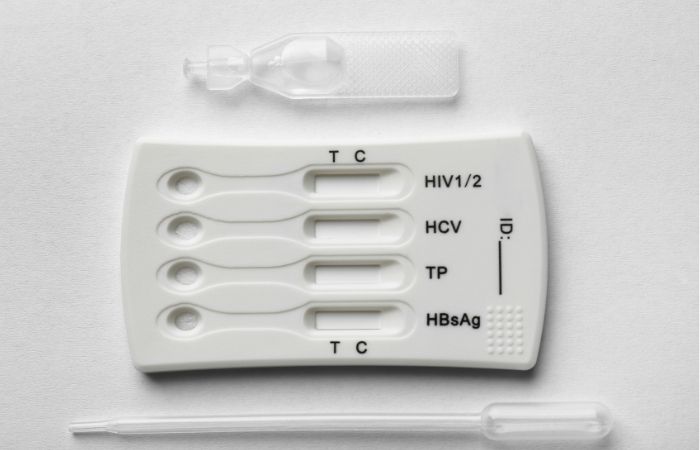
If you’re considering discreet retesting, options like the 6‑in‑1 At‑Home STD Test Kit allow you to screen for multiple infections at once without returning to a clinic. Peace of mind doesn’t require a waiting room.
The Psychology of “Just One More Test”
Sometimes the question isn’t medical. It’s emotional.
Re-testing can become a coping strategy. You search “do I need multiple STD tests” not because guidelines require it, but because uncertainty feels intolerable. A negative result gives temporary relief. Then doubt creeps back in. Maybe the swab wasn’t deep enough. Maybe the urine sample was diluted. Maybe the lab mixed it up.
I’ve seen this loop before. Samira, 31, tested three times in eight weeks after one protected encounter. All negative. When we talked, she admitted the testing wasn’t about science anymore. It was about guilt.
If your exposure was low risk and your testing was appropriately timed, chasing more tests won’t fix anxiety. Clear guidance will.
So, Do You Need Multiple STD Tests After One Night?
Most people need no more than two rounds of testing, and often only one, depending on timing. An initial test at 14 days covers bacterial infections like chlamydia and gonorrhea. A follow-up at 6 weeks may be recommended if HIV or syphilis risk is present.
Beyond that, additional testing is rarely medically necessary unless new exposures occur. The phrase “single exposure STD risk” sounds dramatic, but it doesn’t automatically translate into months of testing cycles.
The goal isn’t endless testing. The goal is strategic testing.
If You’re in the First 72 Hours, Here’s What Actually Helps
The first three days after a one-night stand are rarely about logic. They’re about adrenaline. You’re refreshing symptom lists, calculating odds, maybe replaying the exact second the condom slipped. But medically, most standard STD tests will not give you a definitive answer during this window.
Testing at day two or three may provide a baseline, but it will not reliably detect infections like Chlamydia, Gonorrhea, Syphilis, or HIV. That doesn’t mean you’re helpless. It means this is the moment for a plan, not panic.
If there was high-risk exposure for HIV, such as unprotected receptive anal sex, post-exposure prophylaxis (PEP) must be started within 72 hours to be effective. That is an urgent medical scenario and should be evaluated immediately. Outside of that, most people benefit more from scheduling the correct test date than testing immediately out of fear.
This is the investigator voice speaking clearly: early testing feels productive, but timing determines reliability. The compassionate voice adds this: waiting does not mean you’re irresponsible. It means you want accurate information.
What Changes If You Used Protection?
People often search “STD test after protected sex” hoping for a simple exemption. Condoms significantly reduce risk for fluid-transmitted infections like Chlamydia and Gonorrhea. They also lower HIV transmission risk dramatically. But they don’t eliminate every possibility.
Skin-to-skin infections such as Herpes or HPV can spread from areas not covered by a condom. Oral sex, even with protection, can transmit throat infections. That doesn’t mean panic is justified. It means protection lowers probability, not to zero, but close enough in many cases that one well-timed test is sufficient.
If protection was used correctly and remained intact, and you test at 14 days with no symptoms, one round of testing is usually medically reasonable. Additional testing is more about reassurance than necessity in most of these cases.
When Anxiety Masquerades as Medical Urgency
There is a difference between medical indication and emotional distress. After casual sex, especially if alcohol or regret is involved, the mind can escalate risk perception. You might interpret normal genital sensation as infection. You might wake up hyper-aware of your body.
I once spoke with Elias, 34, who told me, “I swear I feel burning, but I don’t know if it’s real.” His tests at 2 weeks and 6 weeks were negative. What he was experiencing was heightened stress response. Cortisol can amplify nerve sensitivity. The body feels louder under guilt.
This is not dismissal. It’s validation. Your stress is real. But if your test timing was appropriate and results were negative, repeating the same test repeatedly won’t uncover hidden disease. It will only prolong anxiety.
How to Know If Retesting Is Actually Recommended
There are legitimate situations where a follow-up test is medically advised after a one-night stand. These usually fall into three categories: early testing, evolving symptoms, or high-risk exposure.
If you tested under 7 days for bacterial infections, retest at 14 days. If you tested for HIV before 4 weeks, consider repeating at 6 weeks. If new symptoms develop, discharge, sores, persistent burning, do not wait for a calendar milestone. Test again.
Outside of those situations, most guidelines do not require serial testing for a single exposure. The idea that you must test at 2 weeks, 4 weeks, 8 weeks, and 12 weeks regardless of risk is largely internet amplification, not clinical necessity.
The Staggered Testing Strategy (When Needed)
In higher-risk situations, such as unprotected sex with a partner of unknown status, clinicians may recommend a staggered approach. This is not because one test is meaningless. It’s because different infections peak at different detection windows.
| Time After Exposure | Recommended Focus | Purpose |
|---|---|---|
| 14 days | Chlamydia, Gonorrhea, Trichomoniasis | Detect common bacterial infections |
| 6 weeks | HIV (4th gen), Syphilis | High-confidence viral and antibody detection |
| 3 months (rare cases) | HIV follow-up (if advised) | Added reassurance in high-risk cases |
Table 3. Example staggered testing plan for higher-risk exposure scenarios.
Notice this is not endless testing. It’s targeted. Most people do not need the 3-month follow-up unless advised by a clinician due to specific circumstances.
Practical Plan: What to Do After a One-Night Stand
If it’s been fewer than 7 days, mark your calendar for the 14-day test for bacterial infections. If HIV is a concern, mark 6 weeks for a definitive result. If symptoms appear sooner, test sooner.
Use high-quality tests. Follow instructions carefully. Avoid testing the day after heavy hydration if using urine-based kits, since diluted samples can affect clarity. Accuracy depends on both timing and proper collection.
If you need discreet access without clinic scheduling delays, you can explore reliable at-home options through STD Test Kits. Testing from home removes the friction that often delays people past ideal windows.
The goal is not fear-driven repetition. It’s clarity, efficiently.
Before You Spiral Again, Read This Slowly
If you’ve made it this far, you’re not careless. You’re conscientious. You’re trying to figure out whether one STD test is enough after a one-night stand, and the real answer is this: in most cases, yes, if it’s timed correctly.
A single properly timed test at 14 days can reliably detect common bacterial infections like Chlamydia and Gonorrhea. A single 4th-generation HIV test at 6 weeks is highly accurate for most exposures. What creates confusion isn’t that one test is useless. It’s that one test taken too early can create false reassurance.
Testing strategically is different from testing compulsively. You deserve the first. You don’t need the second.
If Your Result Is Negative
If you tested at the correct window and your result is negative, allow yourself to accept it. Medicine is built on probability and sensitivity thresholds, not superstition. A properly timed negative result is meaningful.
If anxiety lingers, ask yourself whether you are seeking new medical data or emotional relief. Those are different needs. The first may require retesting if timing was early. The second may require reassurance, not another swab.
And if you ever doubt your collection process or want broader screening in one step, options like the 7-in-1 Complete At-Home STD Test Kit can screen for multiple infections discreetly and efficiently. Peace of mind should not require repeated clinic visits.
If Your Result Is Positive
First: breathe. Most common STDs are treatable. A positive test after one encounter does not define you. It defines a moment in your health timeline.
Follow up with confirmatory testing if advised, complete prescribed treatment, and avoid sexual contact until cleared. Partner notification can feel intimidating, but it is an act of care, not confession. Many clinics and telehealth services can help guide that conversation.
Testing positive does not mean you were reckless. It means you were human. Acting on the result responsibly is what matters.
The Real Answer to “Is One STD Test Enough?”
For most people after a one-night stand, one well-timed test is enough. Sometimes two are recommended because different infections peak at different windows. Very rarely is ongoing serial testing medically necessary after a single exposure.
The better question isn’t how many times should I test after exposure. It’s: did I test at the right time, with the right method, for the right infections?
If the answer is yes, you can let your shoulders drop a little. You handled it.
FAQs
- 1. It was just one time. Am I overreacting by testing?
- No. You’re not dramatic. You’re responsible. Transmission can happen from a single encounter, even if it felt casual or brief. Testing isn’t a confession of guilt, it’s basic health maintenance, like checking your blood pressure after a stressful week.
- 2. I tested at five days and it was negative. Can I trust it?
- Probably not yet, and that’s not because the test failed. It’s because five days is often too early for infections like Chlamydia or Gonorrhea to show up. Think of it like taking a pregnancy test the morning after sex. Biology needs time. Retesting at the correct window gives you a real answer.
- 3. If I don’t have symptoms, doesn’t that mean I’m fine?
- I wish it were that simple. Many STDs are asymptomatic, especially early on. Some people never develop noticeable symptoms at all. Feeling normal is reassuring, but it’s not diagnostic.
- 4. How many STD tests do I actually need after a one-night stand?
- Most people need one well-timed test. In higher-risk situations, two rounds, one around 2 weeks and another around 6 weeks, may be recommended. Beyond that, repeated testing is rarely medically necessary unless new exposure happens.
- 5. What if the condom didn’t break, do I still need to test?
- Condoms reduce risk dramatically. If it stayed intact and was used correctly, your risk is much lower. In many of those cases, one properly timed test is enough for reassurance. Protection works, it’s just not a 100% force field.
- 6. I only had oral sex. Does that even count?
- It counts, but the risk profile is different. Oral sex can transmit infections like throat gonorrhea or, less commonly, chlamydia. If you’re testing, make sure the test type matches the exposure. A urine-only test won’t detect a throat infection.
- 7. Why do I still feel anxious after a negative result?
- Because anxiety doesn’t turn off the second you see “negative.” Especially if there was alcohol, regret, or shame involved. Sometimes the second-guessing is emotional, not medical. If your timing was correct and the test was reliable, the result deserves your trust.
- 8. What’s the biggest mistake people make after a hookup?
- Testing too early and assuming that result is final. Early negatives create confusion. Strategic timing prevents that spiral. The calendar matters more than people think.
- 9. Is it safer to just test again “just in case”?
- Not always. If your first test was taken at the correct window, repeating it days later won’t increase accuracy. More testing doesn’t equal more certainty if the science already did its job.
- 10. How do I stop obsessing about it?
- Make a clear plan. Mark your test date. Use a reliable kit. Follow through. Once you’ve done that, redirect your energy somewhere grounding. You handled it responsibly. That’s what adult sexual health looks like, not perfection, just action.