Swollen Lymph Nodes in Groin: STD or Something Else?
Quick Answer: Swollen lymph nodes in the groin can be caused by STDs like herpes or syphilis, but they’re more commonly triggered by minor infections, skin irritation, or ingrown hairs. Sometimes it’s tender.

Quick Answer: Swollen lymph nodes in the groin can be caused by STDs like herpes or syphilis, but they’re more commonly triggered by minor infections, skin irritation, or ingrown hairs. Testing makes sense if you’ve had recent sexual exposure, genital sores, discharge, or other symptoms, especially within the right window period.
This Isn’t Just a Random Lump, It’s Your Immune System Talking
Lymph nodes are small, bean-shaped immune filters scattered throughout your body. The ones in your groin are called inguinal lymph nodes. They respond to infections or inflammation in areas like your genitals, lower abdomen, buttocks, and legs. When something irritates or infects those areas, these nodes can swell as they produce more immune cells.
That swelling can feel like a soft, movable bump under the skin. Sometimes it’s tender. Sometimes it’s painless. The size can range from barely noticeable to grape-sized. And while a groin lump STD scenario is possible, lymph nodes don’t swell just because you had sex, they swell because your immune system detected something it wants to handle.
According to the CDC’s overview of sexually transmitted infections, many STDs trigger immune responses that can include lymph node enlargement. But the same is true for simple skin infections, shaving irritation, and even minor cuts you forgot about.

When Swollen Groin Glands Are Linked to an STD
Let’s be honest: this is the part you’re here for. Yes, some STDs can cause tender lymph nodes in the groin. But context matters, timing, accompanying symptoms, and your recent sexual history all change the picture.
Here’s how it usually shows up.
Herpes
If swollen groin glands appear with painful blisters, sores, or burning sensations around the genital area, herpes is more likely. In an initial herpes outbreak, the body is fighting the virus hard. This is when people typically experience tender groin glands.
According to the Mayo Clinic’s genital herpes facts page, swollen lymph nodes are possible during the first herpes outbreak, especially 2-12 days after exposure. Recurring herpes is typically milder and may not include swollen lymph nodes.
Having a painful lump in the groin and visible sores is a testing moment, not a guessing moment.
Syphilis
Syphilis can cause swollen lymph nodes in the groin during its primary stage, often near a painless sore called a chancre. Because the sore doesn’t hurt, many people don’t notice it. They only notice the lump.
According to the World Health Organization, early syphilis may present with enlarged lymph nodes near the site of infection. If you’ve had a recent exposure and feel a firm but painless node, testing is strongly recommended.
HIV
Acute HIV infection can cause lymph node swelling, but it typically affects multiple areas, neck, armpits, and groin, not just one isolated lump. It often comes with flu-like symptoms: fever, sore throat, fatigue, rash.
The CDC’s HIV basics guide notes that early symptoms appear 2–4 weeks after exposure in some individuals. Swollen lymph nodes alone, without systemic symptoms, are less typical but not impossible.
This is where timeline becomes critical, and we’ll break that down in detail shortly.
But Here’s the Part Most People Don’t Expect
Most swollen lymph nodes in the groin are not caused by STDs.
Read that again.
Your body reacts to everyday irritation. Shaving your pubic area can introduce tiny breaks in the skin. An ingrown hair can trigger localized inflammation. A minor fungal infection, jock itch, a small scratch from sex, or even tight underwear rubbing repeatedly can activate nearby lymph nodes.
That ingrown hair vs STD lump panic spiral is incredibly common. The difference often comes down to what else is happening around the area. Is there a visible irritated follicle? Redness? Warmth? A pimple-like bump? Those signs point more toward a localized skin issue than a systemic infection.
And here’s the grounding truth: lymph nodes are supposed to swell when your body fights something. Swelling alone does not equal sexually transmitted infection.
STD vs Non-STD Causes of Groin Swelling
| Possible Cause | Pain Level | Other Symptoms | Common Timing | Testing Needed? |
|---|---|---|---|---|
| Herpes | Tender | Blisters, burning, sores | 2–12 days after exposure | Yes, swab or blood test |
| Syphilis | Often painless | Single painless sore | 3–6 weeks after exposure | Yes, blood test |
| Ingrown hair | Mild to moderate | Visible irritated follicle | Any time after shaving | No STD test unless other symptoms |
| Skin infection | Tender, warm | Redness, swelling | Within days of irritation | Medical evaluation if worsening |
| Minor injury or friction | Mild | No discharge or sores | 1–3 days after activity | Usually not |
Figure 1. Comparison of common STD and non-STD causes of swollen groin lymph nodes. Timing and associated symptoms are key differentiators.
So When Should You Actually Test?
This is where we move from panic to plan.
You should strongly consider STD testing if swollen lymph nodes in the groin occur alongside genital sores, unusual discharge, painful urination, fever, rash, or if you had unprotected sex with a new or multiple partners. Even if the lump is painless, recent exposure within the past few weeks matters.
Window periods are crucial. Testing too early can give false reassurance. For infections like chlamydia or gonorrhea, testing is typically most accurate about 7–14 days after exposure. For syphilis, blood tests are more reliable around 3–6 weeks. For HIV, fourth-generation tests detect most infections within 2–6 weeks.
If your brain keeps looping on what if, peace of mind is worth something. Discreet, private testing from STD Test Kits allows you to check common infections without sitting in a waiting room replaying your weekend decisions. Knowledge is stabilizing.
And if you want broader coverage, a Combo STD Home Test Kit can screen for multiple common STDs at once, especially helpful when symptoms are unclear.
How Long Do Swollen Lymph Nodes in the Groin Last?
This is usually the second panic search: How long do swollen lymph nodes last? Because once you’ve found the lump, you start monitoring it like a crime scene. Every hour feels diagnostic. Every sensation feels like a clue.
Here’s what matters: lymph nodes typically shrink once the underlying trigger resolves. If the cause is minor, like shaving irritation, friction during sex, or a small skin infection, swelling often improves within a few days to two weeks. The node may remain slightly enlarged for a while even after the irritation is gone. That doesn’t automatically mean something serious is hiding underneath.
If the swelling is caused by an STD like herpes during a first outbreak, it may last one to three weeks while the immune system fights the virus. In early syphilis, lymph node enlargement can persist until treatment begins. According to the CDC’s syphilis fact sheet, antibiotic therapy typically resolves early symptoms, including gland swelling, once infection is treated.
Duration alone doesn’t diagnose the cause. But swelling that continues beyond three to four weeks, grows larger, becomes very hard, or doesn’t move under the skin deserves medical evaluation.
What Swollen Groin Lymph Nodes Feel Like, And What That Tells You
Your fingers can actually give you useful information.
A reactive lymph node, meaning one responding to infection or irritation, usually feels soft to rubbery and movable. It may be tender when pressed. This kind of tenderness often points toward an active immune response rather than something dangerous.
A painless, firm, fixed lump that doesn’t move under the skin is different. That doesn’t automatically mean cancer, but it’s not something to ignore. The Mayo Clinic guidance on swollen lymph nodes recommends evaluation if nodes are hard, immobile, rapidly enlarging, or associated with night sweats and unexplained weight loss.
In STD-related swelling, the lymph nodes are often tender, especially with herpes. With syphilis, they’re more likely to be firm but not painful. With non-STD skin infections, they’re typically tender and accompanied by visible redness nearby.
Timeline Matters More Than the Lump Itself
Let’s ground this in reality. Imagine three different scenarios.
One: You shaved two days ago and now feel a mildly tender lump with a visible irritated hair follicle. No fever. No sores. That’s much more likely irritation than an STD.
Two: You had unprotected sex 10 days ago. Now you feel a tender lymph node and notice small painful blisters. That timeline fits a possible herpes outbreak.
Three: You had a new partner a month ago. You notice a painless genital sore and a firm groin lump. That fits early syphilis timing more than anything else.
The difference isn’t just the swelling, it’s exposure plus symptom cluster plus incubation period.

When to Test for an STD After Swollen Groin Lymph Nodes Appear
If you’re wondering whether testing now will even show anything, this section is for you.
Testing too early can lead to false negatives because your body hasn’t produced detectable levels of antibodies or the pathogen isn’t present in high enough amounts yet. That’s called the window period. It’s biology, not punishment.
| Infection | Typical Window Period | Best Time to Test | Common Symptoms with Lymph Nodes |
|---|---|---|---|
| Herpes | 2–12 days for symptoms; blood tests reliable after 4–6 weeks | Swab active sores immediately; blood test after 4+ weeks | Painful blisters, tender groin glands |
| Syphilis | 3–6 weeks | 3–6 weeks after exposure | Painless sore, firm lymph nodes |
| Chlamydia | 7–14 days | 14 days after exposure | Often none; sometimes discharge |
| Gonorrhea | 5–14 days | 7–14 days after exposure | Discharge, burning urination |
| HIV | 2–6 weeks (4th gen test) | 18–45 days depending on test type | Flu-like illness, multiple swollen nodes |
Figure 2. Window periods and optimal testing times for common STDs that may involve groin lymph node swelling.
If swollen lymph nodes appear but you’re still within the early window, testing now and again at the recommended timeframe provides the clearest answer. A negative result too soon can falsely calm you, and anxiety tends to come roaring back later.
Red Flags You Shouldn’t Ignore
Most groin swelling is benign. But there are moments when waiting is not the move.
Seek medical care promptly if the lymph node is extremely painful, rapidly increasing in size, associated with high fever, spreading redness, or drainage. Also take night sweats, unexplained weight loss, and generalized swelling seriously.
If you’ve had recent sexual assault or high-risk exposure, immediate medical care matters, not just for testing, but for preventive treatment options that are time-sensitive.
What Happens If It Is an STD?
Now, let's break down the fear component. Most STDs, which cause swollen lymph nodes in the groin, are curable. Chlamydia, gonorrhea, and syphilis are easily cured with antibiotics. Herpes can be controlled with antiviral medication, which helps prevent outbreaks and transmission.
You are not reckless. You are human. Testing is not a confession, it’s maintenance.
If your symptoms line up with possible exposure, taking control matters. A discreet at-home option from STD Test Kits allows you to check common infections privately. If multiple infections are possible, the 6‑in‑1 At‑Home STD Test Kit can screen broadly so you’re not guessing.
Clarity lowers anxiety. Action lowers fear.
Does It Feel Different in Men vs Women?
Anatomy changes context, but not the biology. Swollen lymph nodes in the groin behave the same way in all bodies. What differs is what’s happening around them.
In men, a lump in the groin STD scare often follows visible genital symptoms like discharge, sores, or burning with urination. Because external anatomy is easier to inspect, people with penises may notice lesions earlier. That makes it easier to connect swollen glands after sex with a visible cause.
In women and people with vulvas, it can be trickier. Internal sores or irritation may go unnoticed. A painful lump in the groin female patients describe is sometimes the first visible clue something is happening deeper in the vaginal canal or on the cervix. According to the CDC’s herpes fact sheet, many first outbreaks involve both visible sores and tender lymph node swelling, but internal lesions may not be immediately obvious.
This is why testing decisions shouldn’t rely only on what you can see. Exposure plus symptoms plus timing always matter more than visibility.
HIV vs Localized Infection: What’s the Difference in Swelling?
People often Google HIV swollen lymph nodes groin after finding a lump. It’s a common spiral. But there’s a pattern difference worth understanding.
Early HIV infection tends to cause generalized lymphadenopathy, meaning multiple lymph node regions swell, not just the groin. The neck, underarms, and groin may all feel enlarged at once. It’s often accompanied by flu-like symptoms: fever, fatigue, sore throat, muscle aches. The World Health Organization HIV overview explains that acute infection symptoms typically appear 2–4 weeks after exposure in some individuals.
An isolated, single groin node without systemic illness is less characteristic of early HIV. That doesn’t mean ignore it, but it does mean panic isn’t productive. Testing based on exposure timeline is far more reliable than self-diagnosing based on one lump.
Ingrown Hair vs STD Lump: The Most Common Confusion
This one causes more anxiety than almost anything else.
An ingrown hair typically presents as a small red bump with a visible center. It may look like a pimple. It’s often tender to touch and directly tied to a hair follicle. The lymph node nearby may swell slightly if inflammation spreads, but the irritation is clearly localized to the skin surface.
An STD-related swelling usually involves deeper immune response. With herpes, the blisters are fluid-filled and clustered rather than centered on a single follicle. With syphilis, the sore is typically firm and painless, not pimple-like.
If you’re staring at the mirror asking whether it’s irritation or infection, look for pattern and progression. Ingrown hairs improve within days. STD lesions tend to follow known incubation periods and may worsen before improving.
When Anxiety Becomes the Loudest Symptom
Let’s talk about something real: sometimes the lump isn’t the biggest problem. The fear is.
Health anxiety after sex is common. Especially after a new partner. Especially after a condom breaks. Especially after you think, I should’ve asked more questions. The mind scans the body for threats. Every normal sensation feels amplified.
I’ve had patients sit across from me convinced they had a groin lump STD scenario unfolding, only for it to be a reactive node from minor friction. I’ve also had patients ignore painless swelling for weeks because it didn’t hurt. Both extremes are human. Neither is shameful.
The goal isn’t to minimize your concern. It’s to channel it into informed action. If testing will give you clarity, do it within the right window. If symptoms are mild and clearly tied to shaving or irritation, monitor them for a few days before spiraling.
How Doctors Evaluate Swollen Lymph Nodes
If you do see a clinician, here’s what actually happens. They’ll ask about recent sexual history, new partners, condom use, shaving habits, recent infections, travel, and systemic symptoms. This isn’t interrogation. It’s pattern recognition.
They’ll feel the node, checking size, mobility, tenderness. They may look for genital sores, rashes, or discharge. If STD exposure is possible, they’ll recommend appropriate testing based on timing.
In most cases, no imaging is needed. No biopsy. Just watchful waiting or targeted testing. The body is rarely as dramatic as Google makes it sound.
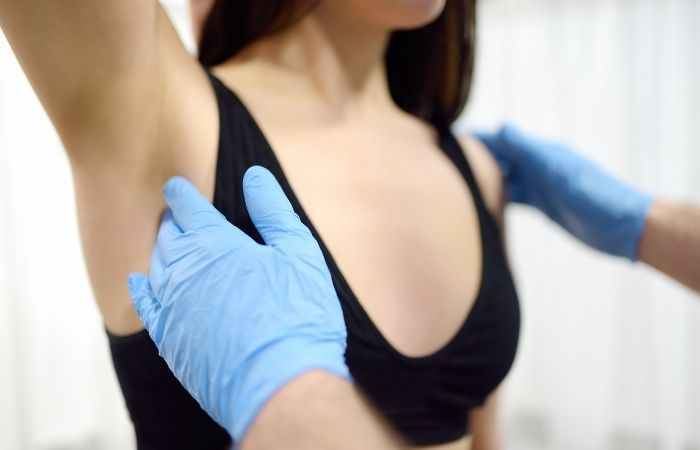
If You’re Still Unsure, Here’s the Grounded Path Forward
If swollen lymph nodes in the groin are accompanied by sores, discharge, fever, or recent unprotected sex within the past month, testing is reasonable. If you’re inside a window period, consider testing now and repeating at the optimal timeframe.
If the lump appeared after shaving, friction, or a visible skin issue and there are no other symptoms, monitor for 7–14 days. Most reactive nodes shrink on their own.
If the node persists beyond four weeks, grows, hardens, or comes with systemic symptoms, seek medical care regardless of STD risk.
Testing is not dramatic. It’s data collection. And if private testing feels safer, options like those at STD Test Kits exist for exactly that reason, quiet clarity without waiting rooms or side-eyes.
FAQs
- 1. I only feel one lump. If this were an STD, wouldn’t there be more symptoms?
- Not always. Some STDs whisper before they shout. Early syphilis, for example, can show up as a single painless sore and a nearby swollen lymph node, nothing dramatic, no fever, no chaos. But more often than not, if a groin node is the only thing you’re noticing, it’s reacting to something simple like irritation or a minor skin infection. Context matters more than the lump itself.
- 2. The lump is tender. Is that good or bad?
- Tenderness usually means your immune system is actively responding to something. That’s actually reassuring. With herpes, swollen groin glands can feel sore during a first outbreak because your body is mounting a strong defense. Painful doesn’t automatically mean dangerous. In fact, hard, painless, fixed lumps are typically more concerning than soft, movable, tender ones.
- 3. I had sex last weekend. Is it too early to know if this is an STD?
- Possibly. Many infections have window periods, that awkward stretch where your body is infected but tests may not detect it yet. Chlamydia and gonorrhea are usually detectable after about 7–14 days. Syphilis takes longer. HIV testing depends on the type of test used. If you’re only a few days out, testing now and repeating later is often the calmest, most grounded plan.
- 4. It showed up after I shaved. Am I overreacting?
- Probably, but lovingly so. Shaving can irritate hair follicles and introduce bacteria into tiny skin breaks. That can trigger a nearby lymph node to swell. If you can see redness, a small pimple-like bump, or a clear ingrown hair, and the swelling improves over several days, that’s usually your answer. Your immune system isn’t dramatic, it’s responsive.
- 5. What if the lump goes away in a week? Does that mean I’m fine?
- If the swelling fades quickly and you didn’t have other symptoms or high-risk exposure, that’s a reassuring sign. But if you had unprotected sex or noticed sores, discharge, or flu-like symptoms, even briefly, testing is still smart. Some STDs calm down before they cause bigger problems. Vanishing symptoms don’t always equal vanishing infection.
- 6. Can anxiety make lymph nodes swell?
- Anxiety can make you notice them. And once you start checking every hour, you’ll convince yourself they’re growing. Stress doesn’t directly cause lymph nodes to enlarge, but hyper-awareness can absolutely magnify normal body sensations. Sometimes the real battle is between your rational brain and your 2 a.m. Google history.
- 7. How do I know when it’s serious?
- Swelling that keeps growing, feels rock-hard, won’t move under the skin, or comes with night sweats, persistent fever, or unexplained weight loss needs medical evaluation. Not because it’s probably something terrible, but because persistent unexplained changes deserve professional eyes. Most cases aren’t dangerous. The key word is persistent.
- 8. I’m embarrassed to see a doctor. What are my options?
- You’re not the first person to feel that way. Sexual health carries unnecessary stigma, even though infections are common and treatable. If clinic visits feel overwhelming, discreet at-home testing is a practical bridge. It gives you data without the waiting room anxiety. And data replaces guesswork.
- 9. If it turns out to be an STD, does that mean I did something reckless?
- No. It means you’re human. STDs spread through normal sexual behavior, including protected sex in some cases. They are infections, not moral verdicts. Getting tested, treated, and informed is responsible. Shame has never healed a lymph node.
- 10. Why does pelvic pain always feel so scary?
- Because it lives in a vulnerable place. It touches sex, fertility, intimacy, and identity. Pain there can feel personal. But most pelvic pain ends with an answer that is manageable, treatable, or temporary. The fear is often louder than the outcome. And the more information you gather, the quieter that fear gets.
You Deserve Clarity, Not Catastrophe Thinking
A swollen lymph node in your groin is your immune system reacting to something. Sometimes that something is an STD. Often it isn’t. The difference comes down to context, exposure timing, additional symptoms, and how your body changes over days or weeks.
You don’t have to guess. If testing would give you peace of mind, act on that. Private options from STD Test Kits let you check common infections discreetly. If you want broader screening in one step, the 7-in-1 Complete At-Home STD Test Kit covers multiple major STDs so you’re not playing symptom roulette.
Fear thrives in uncertainty. Information shrinks it. You’re allowed to take care of yourself without shame.
How We Sourced This Article: We reviewed current guidance from the CDC, World Health Organization, and Mayo Clinic alongside peer-reviewed infectious disease literature to clarify how swollen lymph nodes relate to sexually transmitted infections and non-STD causes. Approximately fifteen medical and public health sources informed this article. Below are six of the most relevant and reader-accessible references. All external links open in a new tab and were verified for credibility and accuracy.