Syphilis vs Herpes Sore: How to Tell the Difference
Quick Answer: Syphilis sores are usually single, firm, round, and painless (called a chancre), while herpes sores are typically painful, fluid-filled blisters that cluster and break open. You Found One Sore.
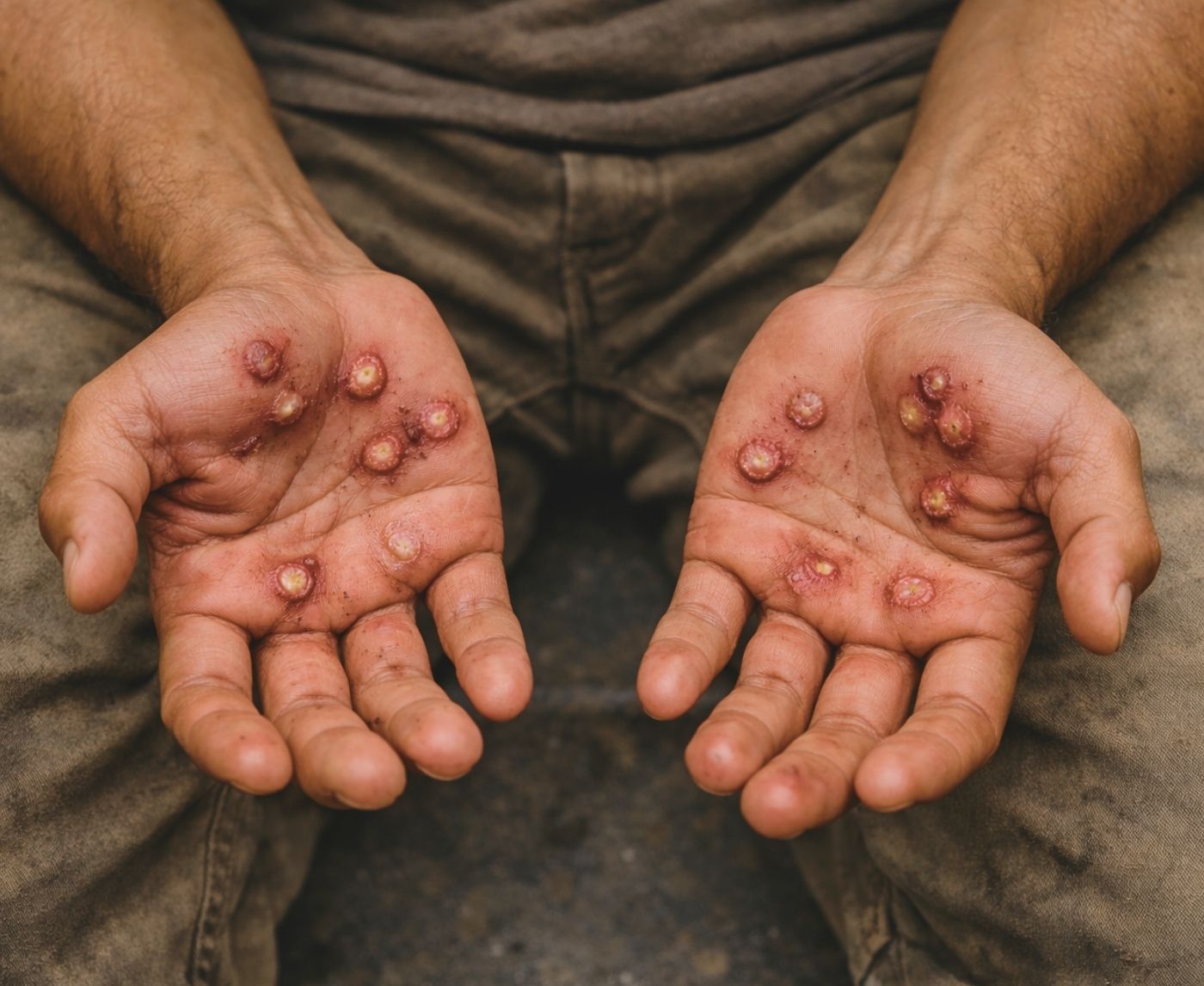
Quick Answer: Syphilis sores are usually single, firm, round, and painless (called a chancre), while herpes sores are typically painful, fluid-filled blisters that cluster and break open. Timing, pain level, and appearance help differentiate them, but testing is the only way to know for sure.
You Found One Sore. Now Your Mind Is Racing.
This is how it usually starts. A small bump on the penis. A shallow ulcer near the vaginal opening. A sore that doesn’t hurt but doesn’t look “normal” either. You type: “painless sore on genitals” or “single sore after sex”. And suddenly every image looks like worst-case scenario.
Here’s the grounded truth: not every genital sore is an STD. Ingrown hairs, friction burns, even minor cuts can look dramatic under panic. But when it comes to syphilis vs herpes sore confusion, there are specific patterns we can look at together.
The Visual Difference: Chancre vs Blister
If you’re Googling “syphilis chancre vs herpes blister,” you’re not alone. These two infections create sores that look and feel different in most cases. Not always, but often enough that pattern recognition helps.
| Feature | Syphilis Sore (Chancre) | Herpes Sore |
|---|---|---|
| Number of sores | Usually one single sore | Often multiple sores or clustered blisters |
| Pain level | Usually painless | Usually painful, burning, or tender |
| Texture | Firm, round, clean-edged ulcer | Fluid-filled blisters that break open |
| Surface | Smooth base, may look shiny | Crusted or weeping after blisters rupture |
| Healing time | 3–6 weeks (even without treatment) | 2–4 weeks for first outbreak |
Figure 1. Comparison of classic primary-stage syphilis chancre vs herpes outbreak lesions. Individual presentations vary.
A syphilis sore (called a chancre) often looks deceptively calm. It may not hurt at all. It can appear on the penis, vulva, anus, mouth, or wherever contact occurred. Many people ask, “Is a syphilis sore painful?” The answer is usually no.
Herpes, on the other hand, tends to announce itself. People describe burning, tingling, or flu-like symptoms before the blisters even appear. The sores often start as small fluid-filled bumps that rupture and crust. “Does herpes hurt?” In most first outbreaks, yes.
Pain vs No Pain: The Most Googled Question
Let’s address it directly. If you typed “STD sore that doesn’t hurt,” you’re likely worried about syphilis. That’s understandable. Primary-stage syphilis is known for painless ulcers. It’s one of the defining features described by the CDC’s syphilis fact sheet.
But here’s where nuance matters. Not all herpes sores are dramatically painful. Some people ask, “Is herpes always painful?” The honest answer: no. Especially in mild or recurrent outbreaks, discomfort can be subtle.
However, if your sore is completely painless, firm, and solitary, that leans more toward syphilis than herpes. It doesn’t confirm it. But it changes the probability.
How Soon After Sex Does It Appear?
Timing matters. A lot.
People frequently search: “How soon after sex does a syphilis sore appear?” or “How soon after sex do herpes sores appear?” Because that gap between exposure and symptom feels like a ticking clock.
| Infection | Typical Incubation Period | When Sores Appear |
|---|---|---|
| Syphilis | 10–90 days (average ~21 days) | Single chancre at infection site |
| Herpes (HSV-1 or HSV-2) | 2–12 days | Clustered blisters or ulcers |
Figure 2. Incubation timeline differences between herpes and syphilis. Based on CDC and WHO clinical data.
If you developed a sore just 3 days after sex, herpes is statistically more likely. If it showed up 3 weeks later, syphilis becomes more plausible. According to the World Health Organization, primary syphilis typically presents around 3 weeks after exposure.
Again, timing guides suspicion. It does not replace testing.
Can It Be Just One Sore?
This question comes up constantly: “Can herpes be just one sore?” Yes. It can. Especially early on. While herpes often causes clusters, a single lesion is possible.
“Can syphilis start with one sore?” Yes, and usually does. Primary syphilis typically presents as one chancre at the site of infection.
So if you’re staring at exactly one ulcer, that detail alone doesn’t solve the mystery. We need pain level, firmness, timing, and testing together.
Clinicians don’t just glance and guess. They consider texture, lymph node swelling, systemic symptoms, and sexual history. A syphilis chancre often feels firm to the touch, almost rubbery. Herpes lesions are usually softer and preceded by tingling or burning.
Swollen lymph nodes can happen with both infections. Fever and body aches are more common with first-time herpes outbreaks. A rash on palms and soles weeks later? That suggests secondary syphilis, not herpes.
If you’re thinking, “How do I know if it’s syphilis or herpes?” the honest answer is this: you don’t. Not with certainty. Not by looking alone.
Testing: The Only Way to Stop Guessing
This is where we shift from panic to action.
If you have one sore, painful or painless, testing is appropriate. Blood tests detect syphilis. Swab tests or blood antibody tests can detect herpes, depending on timing. The Mayo Clinic explains that swabbing an active herpes lesion gives the most accurate confirmation.
You don’t need to sit in anxiety for weeks. You can explore discreet, FDA-approved at-home options through STD Test Kits. Whether it’s a blood-based syphilis test or a broader panel, clarity is power.
If you want broader coverage, a combo kit that checks multiple infections at once can reduce the guesswork. One test. Real answers. No waiting room shame.
“It Didn’t Hurt, So I Thought I Was Fine.”
Marcus, 27, noticed a single sore on his penis about three weeks after a new partner. It didn’t burn. It didn’t itch. It didn’t even feel tender. He told himself it was friction. Maybe a rough night. Maybe nothing.
“I literally Googled ‘sore on penis not painful’ and convinced myself herpes always hurts. So I waited.”
The sore disappeared on its own after about a month. Marcus felt relief, until six weeks later when he developed a rash on his torso and palms. That’s when he finally tested. It was syphilis, already moving into its secondary stage.
This is why painless does not mean harmless. A primary syphilis sore can heal without treatment, but the infection remains in your body. According to the CDC, untreated syphilis progresses through stages even after the initial sore disappears.
Marcus got treated. He’s fine now. But he wishes he’d tested when he first noticed it.
Lena, 22, had the opposite experience. She felt tingling before she saw anything. Then came painful blisters around her vulva within five days of sex.
“It felt like razor burn at first. Then it got worse. I had a fever. I couldn’t sit comfortably.”
Her timing, under a week, and pain pattern pointed strongly toward herpes. A swab confirmed HSV-2. According to the CDC herpes fact sheet, first outbreaks can include flu-like symptoms and tender lymph nodes.
Her sores crusted over and healed in about three weeks. She started antiviral medication. She learned how to manage outbreaks. She also learned that herpes is common, extremely common, and manageable.
When It’s Not So Textbook: Blisters, Coinfections, and Mouth Sores
Here’s where things get messy, because bodies don’t always behave like medical diagrams.
People often ask, “Can syphilis sores look like blisters?” Short answer: not typically. A primary syphilis sore, called a chancre, is usually a firm, round, open ulcer with clean edges. It doesn’t start as a fluid-filled bubble. It looks more like a smooth crater than a popped blister. And most of the time, it doesn’t hurt.
Herpes, on the other hand, usually begins as small, clear blisters, what doctors call vesicles. They fill with fluid. They break open. They can merge together. They may look wet before they crust. If you’ve ever Googled “what does a herpes sore look like at first,” that fluid-filled stage is the key difference.
But here’s the part nobody tells you: real bodies improvise.
Immunocompromised people can have atypical lesions. Mild herpes outbreaks can look subtle. Secondary bacterial irritation can distort appearance. So while syphilis is usually an ulcer and herpes is usually a blister, visual clues are probabilities, not verdicts.
And yes, you can absolutely have both.
Having one STI does not cancel out the possibility of another. In fact, open herpes sores create tiny breaks in the skin that can make it easier to acquire syphilis during exposure. Coinfections are more common than people assume, especially when there was unprotected contact.
Now let’s talk location, because people panic even harder when the sore isn’t where they expect.
If it’s in your mouth, the same logic applies. Oral herpes (often HSV-1) tends to tingle before blisters appear. They cluster around the lips and can feel raw. Oral syphilis, by contrast, may show up as a single painless ulcer inside the mouth or on the lip, and because it doesn’t scream for attention, people miss it.
If you’re asking, “Is it herpes if it doesn’t hurt?”, whether it’s genital or oral, pain alone is not your answer. Timing. Texture. Number of lesions. Exposure history. And ultimately, testing.
The mirror gives you clues. A lab test gives you clarity.
When Should You Test If You Have One Sore?
If you’re staring at a lesion right now, here’s the calm guidance.
If the sore appeared within the last few days and you suspect herpes, a swab during the active stage provides the most accurate result. If it’s already healing, blood antibody testing may still help but can depend on timing.
If you suspect syphilis, blood testing is recommended. Most syphilis blood tests become reliable about 3–6 weeks after exposure. If it’s too early, a repeat test may be advised.
You can access confidential testing options, including at-home blood-based tests, through STD Test Kits. No clinic waiting room. No awkward explanations. Just answers.
If your anxiety is spiraling, let me say this clearly: getting tested is an act of care. For yourself. For your partners. For your peace of mind.
The Emotional Reality No One Talks About
When people search “how do I know if it’s syphilis or herpes,” they’re not just asking about lesions. They’re asking about trust. About guilt. About fear of stigma.
Here’s the grounded truth from someone who treats STIs every week: both infections are common. Both are treatable. Neither makes you reckless, dirty, or irresponsible.
Syphilis is curable with antibiotics. Herpes is manageable with antivirals. Early detection makes everything easier.
The worst thing you can do is avoid knowing.
Myth vs Reality: The Internet Gets This Wrong a Lot
Let’s clean up some of the loudest misinformation floating around Reddit threads and half-read forums.
| Myth | Reality |
|---|---|
| If it doesn’t hurt, it’s not serious. | Primary syphilis sores are often painless but medically serious if untreated. |
| Herpes always comes in clusters. | Herpes can sometimes appear as a single sore, especially early on. |
| If the sore healed, I’m fine. | Both infections can persist in the body after visible healing. |
| You’d know immediately if you had syphilis. | Symptoms may take weeks to appear, and some stages are subtle. |
| Only “promiscuous” people get these STDs. | Anyone who is sexually active can acquire an STI. It’s biology, not morality. |
Figure 3. Common misconceptions about syphilis vs herpes.
Shame delays testing. Delay allows infection to progress. And the longer you wait, the harder your anxiety bites.
What Happens If You Ignore It?
Let’s stay grounded, not dramatic.
Untreated syphilis progresses in stages. After the primary chancre heals, secondary symptoms may include rash (often on palms and soles), swollen lymph nodes, fever, and fatigue. According to the CDC, untreated syphilis can eventually affect the brain, heart, and nervous system in later stages.
Herpes does not progress through systemic stages like syphilis, but outbreaks can recur. Antiviral therapy reduces frequency and transmission risk. The Mayo Clinic explains that while herpes is lifelong, it is manageable.
This isn’t about fear. It’s about facts. Early treatment simplifies everything.
Healing Doesn’t Mean It’s Gone
This is one of the most dangerous myths online.
People Google: “Will a herpes sore go away on its own?” Yes, outbreaks resolve. But the virus stays in your body and can reactivate.
People assume: “The syphilis sore disappeared, so I’m fine.” Not true. Untreated syphilis progresses silently. Secondary symptoms can include rash, fever, and swollen glands weeks later.
Disappearance is not diagnosis.
FAQs
- 1. Okay, be honest, is a syphilis sore actually painless?
- Most of the time, yes. That’s what makes it tricky. A primary syphilis sore (called a chancre) is usually firm, round, and doesn’t hurt, even though it absolutely is an infection. People often say, “If it doesn’t hurt, it can’t be serious.” Unfortunately, syphilis didn’t get that memo. Painless does not mean harmless.
- 2. Does herpes always hurt like people say?
- Often, especially the first outbreak, but not always. Some people feel intense burning, tingling, or flu-like symptoms before blisters appear. Others describe it as mild irritation. Recurrent outbreaks can be subtle. So if you’re thinking, “It doesn’t hurt that bad, so it can’t be herpes,” that’s not a safe assumption either.
- 3. Can herpes really show up as just one sore?
- Yes. Textbooks love showing dramatic clusters, but real life is messier. Herpes can start as a single blister that later multiplies, or sometimes stays solitary. That’s why counting lesions isn’t enough to rule it in or out.
- 4. If I only have one painless sore, does that automatically mean syphilis?
- Not automatically, but it raises the index of suspicion. A single, firm, painless ulcer that showed up about three weeks after sex leans toward syphilis. Still, your eyes can’t confirm what a lab test can. If you’re guessing, you’re gambling.
- 5. How fast would herpes show up after sex?
- Usually within 2 to 12 days. Sometimes you’ll feel tingling or burning before anything visible appears. If a sore popped up three days after a new encounter, herpes is statistically more likely than syphilis. Timing doesn’t diagnose, but it does narrow the field.
- 6. How long does a syphilis sore last if I ignore it?
- Typically 3 to 6 weeks, and then it may disappear on its own. That’s the dangerous part. The disappearance can trick you into thinking you’re fine. The infection, however, stays in your body and moves to the next stage if untreated.
- 7. Will a herpes sore just go away on its own?
- Yes, outbreaks resolve. The blisters dry, crust, and heal. But the virus remains in your body. It can reactivate later, especially during stress or illness. Healing doesn’t equal cure, it equals dormancy.
- 8. What if it’s in my mouth instead of my genitals?
- Location matters less than people think. Oral herpes is common and often painful. Oral syphilis can appear as a painless ulcer inside the mouth or on the lip. If you had oral contact and now see a sore, testing is still appropriate. The body doesn’t care about geography.
- 9. Can I have both syphilis and herpes at the same time?
- Yes, and co-infections happen more often than people assume. Having one STI does not block another. In fact, open sores from herpes can increase susceptibility to other infections because they break the skin barrier.
- 10. I’m spiraling. Should I test even if I’m not 100% sure?
- If there’s an unexplained sore after sexual contact, yes. Testing is not overreacting. It’s responsible. Whether it turns out to be syphilis, herpes, or something completely benign, knowing is calmer than guessing.
If You’re Still Staring at That Sore Right Now
Here’s your calm, clear decision path.
If it’s one firm, round, painless ulcer that appeared about three weeks after sex, lean toward testing for syphilis first. If it’s painful, blistered, and appeared within a week, lean toward testing for herpes. If you’re unsure, test for both.
You don’t have to wait in a clinic lobby replaying every life choice. You can order discreet testing directly from STD Test Kits and get clarity privately. Whether it’s a focused Syphilis Test Kit or a broader panel, the goal is the same: stop guessing.
Your health is not a confession. It’s maintenance.
How We Sourced This Article: We combined current guidance from the CDC, WHO, and Mayo Clinic with peer-reviewed infectious disease research to ensure clinical accuracy. Additional lived-experience reporting informed the emotional and narrative tone. In total, more than a dozen references shaped this guide; below are six core sources selected for clarity and authority. All links were verified to lead to reputable medical institutions and open in a new tab.
- World Health Organization – Syphilis
- World Health Organization – Herpes Simplex Virus
- Mayo Clinic – Genital Herpes Diagnosis & Treatment
- Diseases Characterized by Genital, Anal, or Perianal Ulcers - STI Treatment Guidelines (CDC)
- Genital Ulcers: Differential Diagnosis and Management (American Family Physician)