Why Fertility Clinics Care About STDs
It's necessary to screen patients to keep the results safe. The Silent Threat: Why Clinics Test When You Feel Fine Most people who test positive for STDs during fertility treatment have no idea they’re infected.

Quick Answer: Fertility clinics screen patients for STDs, including those without symptoms, because asymptomatic diseases like chlamydia and gonorrhea can damage the reproductive organs, reduce the chances of success with IVF, or jeopardize the embryo transfer procedure. It's necessary to screen patients to keep the results safe.
The Silent Threat: Why Clinics Test When You Feel Fine
Most people who test positive for STDs during fertility treatment have no idea they’re infected. That’s not a judgment, it’s a biological fact. The CDC estimates that up to 70% of women with chlamydia show no symptoms. In men, asymptomatic gonorrhea can still damage the prostate or reduce sperm motility over time.
Fertility clinics aren’t trying to shame you, they’re trying to protect the entire process. An undiagnosed infection can:
- Damage fallopian tubes or uterine lining, reducing embryo implantation
- Affect the quality and count of sperm
- Cause infection during egg retrieval and embryo transfer
- Complicate pregnancy and fetal development if left untreated
It’s like gardening. Even if the soil looks great, you still want to test it before planting. STDs can affect the biological environment in a way that doesn’t become apparent until it’s most critical.
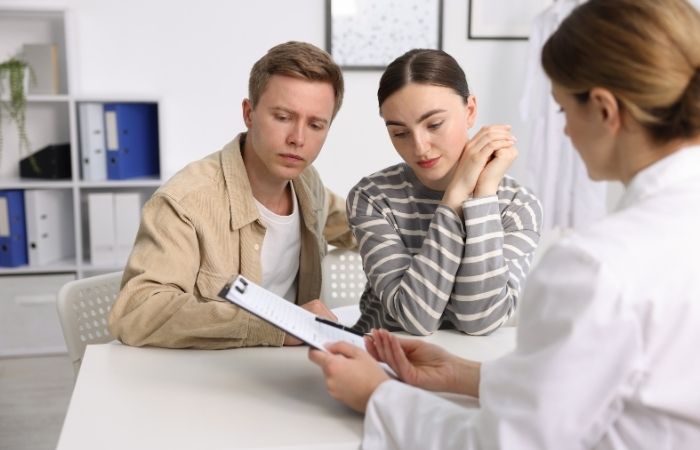
How STDs Actually Impact Fertility (Even Without Symptoms)
Let’s get specific. Certain STDs are notorious for their fertility-related consequences, even if you’ve never had a single symptom. Here’s what’s happening under the surface:
Chlamydia may lead to pelvic inflammatory disease, which causes scarring of the fallopian tubes and may result in difficulties with conception or IVF procedures. Similarly, gonorrhea may lead to the same problem, and untreated cases may result in decreased uterine receptiveness.
Herpes simplex virus is not generally related to fertility issues but may require special consideration of the transfer schedule, especially during an outbreak. While not common, syphilis and HIV require special safety precautions for both the patient and the lab.
For sperm, studies have shown that chlamydia infection reduces sperm motility and morphology, even when semen looks “normal.” It’s not about what you see, it’s about what’s happening on a microscopic level.
What Fertility Clinics Are Screening For
STD testing isn’t one-size-fits-all. Clinics vary slightly, but most follow CDC or ASRM guidelines requiring screening for:
| STD | Why It Matters | Common Tests |
|---|---|---|
| Chlamydia | Can cause PID, tubal damage, sperm defects | NAAT (urine or swab) |
| Gonorrhea | Impacts uterine lining, fertility, and sperm quality | NAAT (urine or swab) |
| Syphilis | Required due to fetal risk and clinic safety | Blood test (RPR or treponemal) |
| HIV | Lab protocol and partner transmission considerations | Antigen/antibody blood test |
| Hepatitis B/C | Important for donor matching and infection control | Blood test |
| Herpes (HSV-2) | May affect embryo transfer timing | Optional unless symptomatic |
Note: Some clinics also test for CMV or HPV depending on patient history and protocol.
“I Had No Symptoms. I Still Got Delayed.”
Karen, 36, had been prepping for IVF for nearly a year. She and her partner had their calendar set, stim meds ready, embryo transfer scheduled. “Everything was going smoothly,” she said. “Then I got a call from the clinic nurse. They found chlamydia on my routine screen.”
“I was shocked. I hadn’t had any symptoms, nothing. It delayed my transfer by over a month.”
She was treated within days, but the protocol required retesting and confirmation of clearance before the next embryo step. “It wasn’t shame that hit me, it was frustration,” she said. “I just wish I’d tested earlier so it didn’t throw off our timeline.”
What Happens If You Test Positive Mid-Treatment?
If you test positive for an STD, it does not necessarily mean your fertility plans are over, although it will certainly affect your fertility plan’s timeline. In fact, most fertility clinics will require that you seek immediate treatment, provide clearance through another test, and possibly additional waiting periods depending on the STD.
For example, if you test positive for chlamydia, you will have to undergo a 7-day antibiotic regimen, abstain for a week, and then retest in 3-4 weeks. However, if you test positive for syphilis or HIV, you will have to abstain for a longer period of time because of lab reviews and clearance.
You should not take this as the fertility clinic trying to punish you, because they are not. In fact, they are protecting your fertility and your potential pregnancy. Untreated STDs can affect implantation, as well as increase the risk of miscarriage and vertical transmission of diseases.
If you are already far into your fertility cycle, such as egg stimulation or just before an IUI, your fertility clinic will be able to advise you on whether to continue with your plan, whether to start over, and so on. It’s not ideal, I know, but it can be fixed, and you are not the first person to go through this.
Do Both Partners Have to Test?
In most fertility settings, yes. If you’re doing IUI or IVF with a male partner, both of you will be screened for STDs, especially HIV, Hepatitis B/C, chlamydia, and gonorrhea. This isn’t just about your body, it’s about shared risk, sperm safety, and lab handling protocols.
It’s not uncommon for one partner to test positive and the other to test negative, especially with asymptomatic infections. Many couples discover an old or dormant infection during this stage, leading to awkward but necessary conversations.
For same-sex couples or individuals using donor sperm or eggs, screening is still required, for you, and often for your donor or gestational carrier. Egg donors and surrogates have to meet stringent FDA screening standards, including negative results for STDs, HIV, and Hepatitis within a specific time frame before donation.
Can You Use an At-Home STD Test for IVF Clearance?
Here’s the truth: most fertility clinics won’t accept at-home STD results for formal documentation. But that doesn’t mean at-home tests aren’t valuable. In fact, they can be life-changing in the early phases of planning.
Testing at home before your official clinic intake appointment can provide you with a vital head start. If you are positive, you can start treatment earlier, and this can prevent delays during your cycle. It's like clearing the runway before your plane takes off.
If you are between cycles, on the go, or live in a location where access to a clinic is limited, discreet home combo kits are a great way for you to be proactive and check your status. Many women use home combo kits quarterly, after a new sex partner, and even while trying to conceive.
Peace of mind is one test away. It’s not about paperwork. It’s about preparation.
Which STDs Can Affect Fertility (And How)
| STD | May Affect | Symptom Likelihood | Impact on IVF/IUI |
|---|---|---|---|
| Chlamydia | Fallopian tubes, sperm motility | Low (asymptomatic in most) | Can delay or reduce success |
| Gonorrhea | Uterus, cervix, prostate | Moderate (often mild or unnoticed) | May pause treatment, requires clearance |
| Syphilis | Placental risk, fetus, partner | Low early on | Triggers partner protocols and retesting |
| HIV | Not fertility directly, but lab protocols | Variable | Requires clinic prep and disclosure |
| Herpes (HSV) | Timing of embryo transfer | Recurring outbreaks | May delay transfer if outbreak present |
Procedure Prep: Which Fertility Steps Require STD Screening?
Here’s where testing becomes non-negotiable. Federal and state health regulations often require STD screening before certain assisted reproductive technologies (ART), not just clinic policy. Below is a snapshot of what’s typically required:
| Procedure | Mandatory STD Testing? | Typical Timeline |
|---|---|---|
| IVF (in vitro fertilization) | Yes (both partners) | Initial intake and every 6–12 months |
| IUI (intrauterine insemination) | Yes (male partner and recipient) | Before first cycle or donor sample use |
| Egg Retrieval / Egg Donation | Yes (donor and often recipient) | Within 30 days before procedure |
| Embryo Transfer | Sometimes (based on previous results) | Clinic-dependent; often not repeated if recent |
| Sperm Donation | Yes (full FDA infectious disease panel) | 30–60 days pre-freeze |
Always confirm your specific clinic’s protocol, especially if working with donors, surrogates, or traveling internationally.
Retesting Logic: Why Fertility Clinics Sometimes Ask for a Second STD Screen
One of the most confusing times for a patient is when they have already been tested for STDs and have come back negative. However, the fertility clinic is asking them to get tested again. While it may seem redundant or even frustrating to get tested for a second time, especially if you want to move forward with your treatment as soon as possible, retesting is not a sign of mistrust; it is a sign of the timing and the biology of the test itself.
For example, all diseases have a window period, which is the time after a person is exposed to a disease before the test will accurately reflect the infection. If you got tested too soon after a new partner, a trip to another country, or an unprotected encounter with a partner, your test may not accurately reflect your status. Fertility clinics want to ensure that you have not contracted an STD during this unseen time.
The second reason for retesting is simply a clinic's policy. Many clinics require that you get tested for STDs within a certain time frame, such as within 6 to 12 months or within 30 days before a procedure like egg retrieval or a donor cycle.
“But I Haven’t Slept With Anyone New”: Why Risk Isn’t Always Obvious
Patients often feel blindsided when told they need screening despite a stable relationship. But infections can linger silently for months or years. Someone might carry chlamydia without symptoms long enough to enter a fertility journey unaware. Others may have acquired infections during earlier relationships that were never tested or treated.
One patient described it like this:
“I felt almost defensive when the nurse asked for repeat testing. I kept thinking, ‘Do they think I’ve been cheating?’ But she explained it wasn’t about behavior, it was about protecting the embryos and making sure my body was ready.”
This is where the investigative side of medicine meets the compassionate side. Clinics are not assessing you as a character. They're assessing you as a biological risk. Fertility treatment is a costly process in terms of financial, emotional, and physical investment. It’s a top priority to reduce preventable complications.
Privacy, Discretion, and Navigating the Awkward Parts
Now, let’s discuss the elephant in the room. STD testing in the context of fertility treatment can be a very personal issue. You may be concerned about the possibility of a stigma, what your partner thinks, and what happens behind the scenes. Fertility clinics understand all of this and have confidentiality procedures in place for you.
Your results will be shared with only the people who need to know. Labs have strict rules about who can access confidential information. And fertility clinics are used to working with people who have a variety of emotional responses to testing. You aren’t the first person to feel nervous and embarrassed about STD testing. And you won’t be the last. But many fertility clinics expect that reaction and work to normalize it.
You can also consider testing outside of the fertility clinic with STD Test Kits. These allow you to take control of your testing between cycles and approach the fertility clinic with a better understanding of your status.
Why Clinics Treat STD Screening as a Team Effort
Fertility is rarely an individual journey. Whether you’re working with a partner, donor, surrogate, or co-parent, STD testing becomes a shared responsibility. Clinics frame it as part of collaborative care, not a blame game.
Imagine preparing for a marathon. You wouldn’t only check one runner’s health, you’d evaluate the entire team supporting the race. In reproductive medicine, that means ensuring that sperm, eggs, uterus, and laboratory environments are all protected from infections that could compromise outcomes.
For couples, this can actually strengthen communication. Many people say fertility testing opened conversations they had never fully explored before. One patient put it simply: “We thought we knew everything about each other. The testing process forced us to talk honestly about past health and take responsibility together.”
When Silence Is the Symptom: The Emotional Side of Asymptomatic STDs
Here’s the reality nobody talks about enough: discovering an STD during fertility treatment can trigger complicated feelings. Shock, shame, anger, fear, all of it is normal. You might question your past, your relationship, or your body’s reliability. But it’s important to remember that asymptomatic infections are incredibly common, and they don’t define your worth or your future as a parent.
Fertility clinics often approach STD care with a solution-focused mindset. Treatment plans are straightforward for many infections, and once cleared, most patients proceed with successful cycles. The delay may feel devastating in the moment, but it’s often temporary, and it reduces risks that could cause deeper setbacks later.
This is why proactive testing matters. If your mind keeps circling worst-case scenarios, remember that clarity is an action, not just a feeling. Some patients choose to use discreet at-home combo test kits between cycles for reassurance. It’s a small step that can prevent big surprises.
FAQs
- 1. Why do fertility clinics care if I have an STD if I don't even have symptoms?
- Well, a lot of STDs don't come with a neon sign that flashes "Hey, I'm here!" They just quietly cause problems with implantation, damage sperm cells, or create problems during pregnancy. They're not trying to judge you; they're just trying to give you the best possible shot at a baby.
- 2. I've been with my partner for years. Why do we still have to take tests?
- This is a totally fair and understandable question, and it's a very common one too! It's not that the fertility clinics think you're cheating or that you're not faithful to each other. It's just that some STDs can lie dormant in the body for months or even longer without any symptoms at all. Maybe you got infected a year or two ago, and now that you're about to transfer embryos into a carefully prepared uterus, it's a good time to find out if you have any STDs.
- 3. Can I take the tests at home instead of at the fertility clinic?
- You absolutely can take the tests at home, and in a lot of cases, you absolutely should take the tests at home! Combo tests can give you a tremendous head start in the process of figuring out what's going on with your body and can save you a lot of time and hassle in the long run. Just remember that the fertility clinic might still require their own paperwork and tests, but you can take care of the worrying at home.
- 4. What if I find out I have something during the IVF process?
- Don't freak out just yet! Most STDs that people contract are easily treated with antibiotics. They might temporarily halt the process while you take the medication and then retest you to ensure that the infection has been cleared out of the system.
- 5. How soon should I test before starting a fertility cycle?
- The sooner you test, the better. Try to test between 30-90 days before you plan to start your fertility cycle. This allows you to get any issues resolved before you begin. If you’ve been with a new partner or have had unprotected sex, you may want to test sooner or test twice to ensure you don’t get stuck with a window period problem.
- 6. Do I have to tell my partner if I test positive?
- The answer from a medical perspective is yes. In most cases, clinics recommend or require that you test your partner if you test positive. The answer from a human perspective is yes too. When you are in a reproductive partnership, you are a reproductive team. If you are afraid of having this conversation with your partner, don’t worry. Clinics and even online services are available to assist you with this.
- 7. I tested negative last year. Why are they asking me to test again?
- The reason you are being asked to test again is because time is of the essence. In most cases, STD test results are only good for a year or so. In donor gamete cases, clinics want you to test within 30 days. Even if you haven’t changed from last year’s test, you still need to test this year.
- 8. What if I don’t feel sick at all?
- The problem with most of the STDs that interfere with fertility is that you won’t feel anything. You won’t feel sick. You won’t know that your fallopian tubes or uterus or sperm are under attack. But don’t assume that because you don’t feel anything that you are safe.
- 9. Is herpes a fertility issue?
- Not usually, as herpes does not affect fertility, although an active herpes breakout at the time of the procedure will likely delay the process. Your physician will likely give you medication to keep the herpes under control during the procedure. It is not uncommon.
- 10. Do LGBTQ+ patients still need to get an STD screening if we are not using our own sperm or eggs?
- Yes, you still need to get an STD screening, especially if you are the gestational carrier or are getting the embryos. Everyone is tested, from the donors to the surrogate mothers, as fertility is a joint responsibility.
You Deserve Answers, Not Assumptions
Fertility is hard enough without extra layers of shame, confusion, or surprise. If you’ve been told you need an STD test, even though you feel completely fine, it’s not a judgment. It’s a safeguard. It’s the clinic protecting your chances, your future pregnancy, and your emotional investment in this process.
Whether you’re just starting to explore IVF or you’ve been navigating cycles for years, testing doesn’t mean something is wrong. It means you’re being thorough. And thorough is love, love for yourself, your body, and the family you’re working so hard to build.
Don’t wait and wonder, get the clarity you deserve. This at-home combo test kit checks for the most common STDs discreetly and quickly. It’s a simple way to prepare for fertility treatment with confidence and peace of mind.
How We Sourced This Article: We've used the expertise of top reproductive health organizations, academic research, and the experiences of IVF and IUI patients themselves to create a balance of clinical accuracy and real-life emotional depth. All outside sources were carefully reviewed for medical accuracy and relevance, with each claim verified against the recommendations of the CDC, WHO, and ASRM.
- WHO – Sexually Transmitted Infections (STIs)
- Prerequisite Testing (SART)
- Recommendations for reducing the risk of viral transmission during fertility treatment with the use of autologous gametes: a committee opinion (ASRM)
- 21 CFR Part 1271 Subpart C: Donor Eligibility (eCFR)
- Infertility & STDs (CDC Archive)