Partner Positive, You Negative? The Real Reasons Behind Mismatched STD Tests
Quick Answer: STD test results can mismatch because of timing issues, window periods, false negatives, or different types of tests. A negative doesn’t always mean you’re clear, it might just be too early.

Quick Answer: STD test results can mismatch because of timing issues, window periods, false negatives, or different types of tests. A negative doesn’t always mean you’re clear, it might just be too early. Retesting is often the missing link.
When Your Results Don’t Match Theirs (And It Feels Like Betrayal)
Here’s a truth bomb most clinics won’t tell you: STD testing is a science, but it’s also timing, luck, and human behavior. It’s entirely possible for one person in a sexual relationship to test positive while the other comes up negative, even if both were exposed to the same infection.
Ty, 28, shared: “I tested negative for chlamydia. A week later, my girlfriend tested positive and accused me of lying. I hadn’t been with anyone else. I was confused and defensive until I learned about the window period. I retested 10 days later, and it came back positive.”
“I felt betrayed, but by my body, not her. Like the test gaslit me.”
This situation happens more often than people think. One test doesn’t tell the whole story. STD transmission and detection are messy, emotionally and medically. And you are not alone if you feel gutted and confused right now.

How Long Does It Take for an STD to Show Up on a Test?
Each STD has what’s called a window period, a stretch of time between exposure and when a test can reliably detect the infection. Some window periods are just a few days; others can take weeks. If you test too early, you could get a false negative. That means you have the STD, but your body hasn’t produced enough detectable markers yet.
| STD | Usual Window Period | Best Time to Test |
|---|---|---|
| Chlamydia | 7 to 14 days | 14+ days after exposure |
| Gonorrhea | 5 to 14 days | 14+ days after exposure |
| HIV (4th gen) | 18 to 45 days | 4–12 weeks |
| Syphilis | 3 to 6 weeks | 6–12 weeks |
| Herpes (HSV-2 IgG) | 3 weeks to 3 months | 12+ weeks |
| Trichomoniasis | 5 to 28 days | 2–4 weeks |
Figure 1. Window periods for common STDs. Testing too early can lead to false negatives, even if you’re infected.
That means if your partner tested positive today, and you tested last week, your test might have been too early to catch the infection, especially if you were both recently exposed.
False Negatives Are Real (And They Can Wreck Trust)
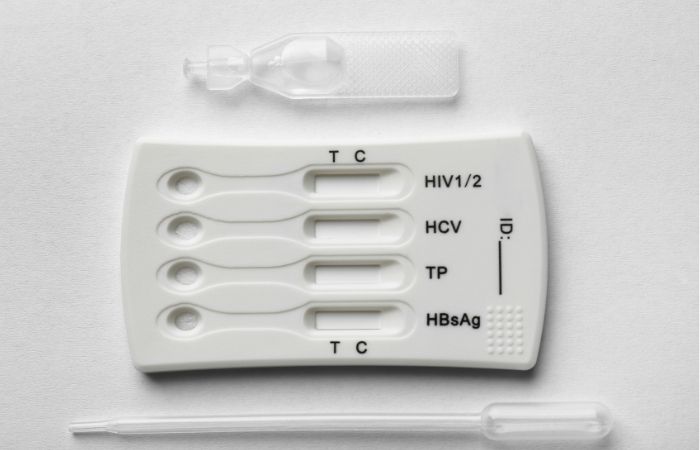
Not all STD tests are created equal. Some are super sensitive, like NAAT (nucleic acid amplification tests), which detect DNA or RNA. Others, like rapid lateral flow tests, are faster but slightly less sensitive, especially early on. Even lab-based tests can miss infections if they’re run before the infection hits a detectable threshold.
So what causes a false negative?
| Cause | Why It Happens |
|---|---|
| Testing too early | Before the window period closes, infections may not register |
| Incorrect sample collection | Swabs or urine not collected properly or too soon after urination |
| Low sensitivity test | Some over-the-counter tests miss low viral/bacterial loads |
| Storage or transport issues | Mail-in kits exposed to heat/cold can be compromised |
Figure 2. Common causes of false negative STD results. Even accurate tests have blind spots when timing or conditions aren't ideal.
If you’re testing at home, always follow the instructions closely and try not to test right after peeing (especially for chlamydia or gonorrhea). And remember, a single test is not the final word on your status.
“But They Just Tested Negative…”: The Window Period Trap
One of the most emotionally loaded moments is when you or your partner had recent clean results, and then someone turns up positive. It feels like betrayal, or at least like someone’s lying. But here’s what often gets missed: clean doesn’t always mean clear.
If someone got exposed during the window period, say a hookup or a condom slip-up last week, and tested within a few days, their negative result might have felt reassuring… but wasn’t accurate yet.
Amari, 31, described it this way: “I showed my partner my negative from last month. She still tested positive for trich. I panicked thinking she cheated. But then I realized I never retested after the last person I slept with. I might’ve given it to her, even though my result looked clean.”
“It destroyed our trust for a while. But the test wasn’t lying, it was just too soon.”
Window periods are not just medical trivia, they’re the reason so many people get caught in this confusing mismatch. That’s why many clinics and at-home providers recommend retesting 14–30 days after any possible exposure, even if you’ve already tested once.
Can Someone Be a Carrier Without Knowing It?
Yes. In fact, that’s how most STDs keep spreading, people don’t know they’re infected because they feel totally fine.
Up to 70% of people with chlamydia have no symptoms. Same with trichomoniasis. Even gonorrhea can live quietly in the throat or rectum without obvious signs. So if someone gets tested regularly but happens to skip the right kind of test (say, no throat swab for oral gonorrhea), they can keep coming up negative, even if they’re passing something on.
That doesn’t mean they’re lying. It means most STDs don’t act like Hollywood STDs. There’s rarely dramatic itching or burning. There’s just… silence. Or mild symptoms people chalk up to other things like UTIs, shaving irritation, or yeast infections.
This is especially true for people who:
- Get exposed during casual encounters and don’t remember exact timing
- Don’t test every orifice (vaginal, rectal, oral)
- Rely only on visual checks or feel “fine” so assume they’re clear
If your partner just tested positive and you’re wondering if they’ve “had it all along,” the answer might be yes, and they might genuinely not have known. Likewise, if you’re the one who tested negative, you might still be carrying it. That’s why a retest matters more than a reaction.
Testing Timeline vs. Infection Timeline: Why You Might Be Out of Sync
Let’s map this out. Imagine two people, Alex and Jordan, hook up. The condom breaks. Alex gets tested five days later (too soon for most STDs) and gets a negative result. Jordan waits a few weeks, gets tested at 14 days, and comes back positive for chlamydia.
Alex now assumes Jordan cheated. Jordan assumes Alex lied. But here’s what really happened:
- Alex tested inside the window period and got a false negative
- Jordan’s test caught the infection after it became detectable
So who “had it”? Possibly either one of them. Possibly both. But timing, not lying, is the likely culprit.
Here’s a simple visual guide:
| Test Day | Person A | Person B | Infection Status |
|---|---|---|---|
| Day 5 | Tests negative | Not yet tested | Too early for detection |
| Day 14 | Still assumes negative | Tests positive | Window closes, infection visible |
| Day 20 | Retests → positive | In treatment | Both confirmed |
Figure 3. When tests and infection timing don’t line up, mismatched results can happen, even with full honesty and recent exposure.
Should You Retest? (Yes, Here’s When and Why)
Retesting isn’t overkill, it’s clarity. If your test was done:
- Within the past 7–10 days of exposure, retest at day 14
- Before your partner tested positive, consider retesting now
- After treatment for a prior infection, retest in 3–4 weeks to check clearance
Testing isn’t just about catching what’s there, it’s about not missing what might have been too early to find. The 6‑in‑1 At‑Home STD Test Kit allows you to check for multiple STDs at once, and it's one of the best tools if you're unsure where you stand.
Testing again gives you peace of mind and answers. Don’t let pride or panic stop you from getting the full picture.
What If You’re Still Negative, and They’re Still Positive?
Sometimes, the mismatch doesn’t resolve. You retest. It’s negative. They’re still positive. Now what?
First, not all infections transmit easily. For example, HPV and herpes often pass skin-to-skin, but not always. One partner may contract it, the other may not. This doesn’t necessarily mean anyone did anything wrong.
It also depends on the kind of sex, condom use, and where the infection is. If someone has rectal gonorrhea and you only had oral sex, transmission risk is different. If someone has HSV-2 genitally but you didn’t have skin-to-skin contact in that area, you may not catch it, even after multiple encounters.
And yes, immune systems matter too. Some people clear trich or HPV naturally. Others don’t. Some people carry but don’t transmit. Some test positive only once then never again. STD dynamics are complicated, not clean.
This is why judgment has no place in the testing conversation. Science, care, and timelines are more useful than shame.
If you’re stuck in mismatch limbo, talk to a provider, or use our resource pages to map your next move.
How to Talk to a Partner When Results Don’t Match
This might be the hardest part. You’re holding a negative result, they’re holding a positive one, and now there’s a trust gap you can feel in your chest. This is where things can spiral fast.
Here’s what we want you to know: conflicting results don’t automatically mean someone cheated. They also don’t mean someone’s lying. They might mean someone tested too early, didn’t know they were exposed, or had an asymptomatic infection from a previous partner.
Try this:
“I know this is scary. I tested negative, but I’m open to retesting and figuring it out together. Let’s get clarity instead of blame.”
Or, if you’re the one who tested positive:
“My result came back positive. I’m not accusing you, I just want us both to be safe. I know this is confusing.”
Talking without blame keeps the door open to healing. You’re both navigating something medical, not moral. Test results aren’t character traits. They’re just snapshots in time.
Need to start the retesting process? You can explore confidential options here and get a fresh baseline.
FAQs
1. Can I really have an STD if my test came back negative?
Unfortunately, yes, especially if you tested during the “window period” when the infection isn’t detectable yet. Think of it like trying to see a bruise the second after bumping into something. Your body hasn’t shown it yet, but it’s there. Retesting a week or two later usually gives you the real picture.
2. My partner says they tested positive. I tested negative. Does that mean they cheated?
Not necessarily. It could just mean they got tested at the right time, and you didn’t. Or maybe they had an old, untreated infection that never showed symptoms. These mismatches suck, emotionally, but cheating isn’t the only explanation. Timing is a tricky little beast.
3. Could I be the one who gave it to them… even with a negative test?
Yup. This is the “oh sht” realization a lot of people have. You might’ve picked something up a while ago, tested too early, or never had symptoms at all. Just because your test said “negative” doesn’t mean you weren’t carrying something that flew under the radar.
4. How long should I wait before testing again?
It depends on the infection, but two weeks after exposure is a good benchmark for chlamydia, gonorrhea, and trich. For syphilis or HIV, you’ll want to test again at the 4–12 week mark. And honestly? If your gut says something’s off, listen to it. Retest.
5. Can I get an STD from just oral sex?
Yes, yes, a hundred times yes. Gonorrhea loves throats. Herpes can pass skin-to-skin during oral. Chlamydia doesn’t care if it’s “just a little.” If it involved body fluids or mucous membranes, there’s a risk, so don’t skip testing just because it wasn’t “real” sex.
6. I have symptoms but my test says negative. Am I going nuts?
You’re not. This happens more than providers like to admit. Either it’s too early to show up, or the test missed the site of infection. That burning? That weird discharge? That doesn’t mean you’re imagining things. It means you need to retest, and maybe test other areas too.
7. Do at-home STD tests even work?
Yes, if you use them right and time them properly. They’re not magic, but they’re solid tools. Think: rapid COVID test, but for your downstairs.
8. If I’m negative, do I still need to tell people I was exposed?
If it was recent, yeah. Honesty gives people agency. Just say, “Hey, I tested negative but there was a possible exposure. I’m retesting soon.” That’s it. You’re not confessing. You’re giving someone else a chance to stay safe, too.
9. What’s the biggest reason people get caught off guard by STDs?
Honestly? Believing a negative test means you’re bulletproof. People trust one test like it’s gospel, and then bam, a partner tests positive and everything unravels. It’s not about being careless. It’s about not knowing how window periods work. That’s what this whole guide is for.
10. So what’s the best move if our results don’t match?
Take a breath. Retest. Talk like grown-ups. No one needs to get thrown out or ghosted over something that might just be a timing issue. Get a fresh test with the right timing, like the ones we offer here. Clarity over chaos.
You’re Not Crazy, and You’re Not Alone
Getting blindsided by a positive result, yours or a partner’s, is emotional warfare. But conflicting results aren’t rare. They don’t mean your relationship is doomed, and they don’t always mean someone was dishonest.
They mean testing is tricky. STDs can be quiet. And timing changes everything.
Don’t stay stuck in confusion. You deserve answers, not assumptions. You deserve care without shame.
Need clarity? This at-home combo test kit checks for multiple STDs discreetly and accurately. Peace of mind is one test away.
How We Sourced This Article: We combined current guidance from leading medical organizations with peer-reviewed research and lived-experience reporting to make this guide practical, compassionate, and accurate. In total, around fifteen references informed the writing; below, we’ve highlighted six of the most relevant and reader-friendly sources. Every external link in this article was checked to ensure it leads to a reputable destination and opens in a new tab, so you can verify claims without losing your place.