How Long Can You Have Chlamydia Without Knowing?
Quick Answer: Chlamydia can go unnoticed for months or even years without symptoms. Many people never experience clear signs, which is why regular testing, not symptoms, is the only reliable way to know. Honestly?

Quick Answer: Chlamydia can go unnoticed for months or even years without symptoms. Many people never experience clear signs, which is why regular testing, not symptoms, is the only reliable way to know.
The “I Feel Fine” Trap: Why Chlamydia Goes Unnoticed
Let’s start with the biggest myth: “I’d know if I had an STD.” Honestly? That’s just not how chlamydia works. Around 70–90% of women and about 50% of men with chlamydia don’t notice symptoms at all. That’s not rare, that’s the norm.
Imagine this: someone like Daniel hooks up with a new partner, uses protection, and moves on with life. Weeks pass. Months pass. He feels completely normal. No burning, no discharge, no red flags. Then a routine test, maybe before a new relationship, comes back positive. That moment hits hard because it feels like it came out of nowhere.
The reality is, chlamydia is a bacteria that often causes very mild or internal inflammation. It doesn’t always trigger pain or visible changes. So your body isn’t sending alarm bells, it’s whispering, if anything at all.

How Long Can Chlamydia Stay in Your Body Without Symptoms?
This is the question everyone really wants answered: how long can it actually last? The honest answer is uncomfortable but important, there’s no exact expiration date. Without treatment, chlamydia can stay in your body for months or even years.
Some people clear the infection naturally over time, but that process is unpredictable and slow. And during that time, the bacteria can still be active, still transmissible, and still capable of causing damage beneath the surface.
Think of it less like a sudden illness and more like something quietly lingering. You might feel completely fine going about your day, working, dating, having sex, while the infection is still there in the background. That’s why relying on symptoms alone is basically gambling with your health.
| Stage | What Happens |
|---|---|
| Week 1–3 | Infection begins, often no symptoms at all |
| 1–3 Months | Most people still feel completely normal |
| 3–12 Months | Infection may persist silently while still contagious |
| 1 Year+ | Possible complications begin, especially without testing |
That timeline isn’t meant to scare you, it’s meant to explain why this infection is so commonly missed. People don’t ignore symptoms. They simply never had any to begin with.
When Symptoms Do Show Up (And Why They’re Easy to Miss)
When chlamydia does cause symptoms, they’re often subtle enough to brush off. A slight burning when you pee. A little more discharge than usual. Maybe some spotting between periods or discomfort during sex. Nothing that screams “this is definitely an STD.”
Take Sofia, for example. She noticed a mild irritation and assumed it was a yeast infection. She tried over-the-counter treatment, felt slightly better, and moved on. Months later, she found out it was chlamydia the whole time. That’s not unusual, that’s incredibly common.
Symptoms can also come and go. So even if your body does react, it might not be consistent enough to trigger concern. And if you’re someone who already deals with things like UTIs or hormonal changes, it’s even easier to misread the signs.
What’s Actually Happening Inside Your Body
Even without symptoms, chlamydia isn’t just “sitting there doing nothing.” It’s actively infecting cells in the reproductive tract. In women, that can mean the cervix, uterus, and fallopian tubes. In men, it usually affects the urethra. The key issue is that the damage is often internal and invisible.
This is where the stakes get real. Over time, untreated chlamydia can lead to complications like pelvic inflammatory disease (PID), which can affect fertility. And here’s the tricky part, this damage can happen quietly, without pain or warning.
That’s why people are often shocked when they connect the dots later. It’s not about ignoring symptoms, it’s about never being given any clear signal in the first place.
The Moment People Usually Find Out
Most people don’t discover chlamydia because of symptoms. They find out during testing, often for a completely different reason. A new relationship. A routine check. A partner saying, “Hey, I tested positive.”
There’s a very specific emotional moment that comes with that result. Confusion. Embarrassment. Questions like “How long have I had this?” or “Did I give it to someone?” That uncertainty is one of the hardest parts.
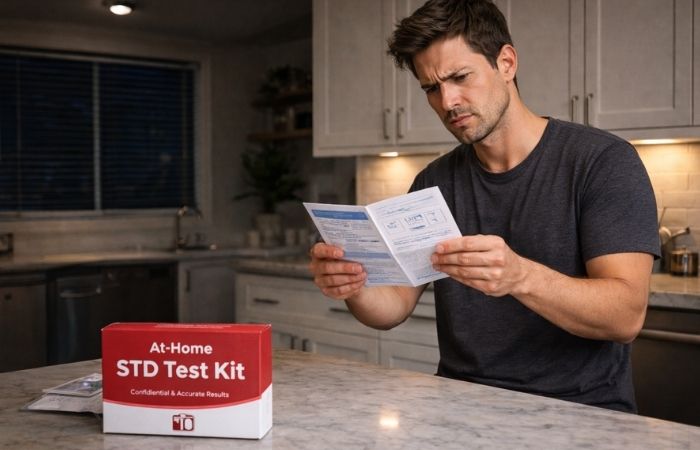
This is where testing becomes less about fear and more about clarity. If your brain is stuck in that “what if” loop, the fastest way out is simply knowing. You can check discreetly from home using options like a chlamydia test kit or explore full-panel options through STD Test Kits for broader peace of mind.
Can Chlamydia Really Last for Years?
Yes, it can, and that is the part that most people do not expect. While some infections can be self-correcting, some can linger in the long term if they are not treated. There are cases in which a person had chlamydia for over a year and did not know it.
That does not mean it does not cause severe damage, but it is a possibility the longer it is left untreated. It is not a matter of fear, it is a matter of probability. The longer something is in a body, the higher the chances it will cause problems.
It is like a slow leak in a car. At first, it does not seem to be a big deal. However, it can cause problems down the road that are a lot harder to deal with.
| Time Without Treatment | Potential Impact |
|---|---|
| Weeks | Often no symptoms, infection remains active |
| Months | Higher chance of spreading to partners |
| 6–12 Months | Increased risk of internal inflammation |
| 1 Year+ | Possible complications like PID or fertility issues |
The key takeaway isn’t fear, it’s awareness. Silent doesn’t mean harmless. It just means unnoticed.
Why Testing Matters More Than Symptoms
If there’s one thing to take away from all of this, it’s this: symptoms are unreliable. You can’t depend on your body to “tell you” when it comes to chlamydia. That’s why testing isn’t optional, it’s essential.
Think about it this way. If you only tested when something felt wrong, you’d miss a huge percentage of infections. That’s exactly why public health guidelines recommend routine testing for sexually active people, especially with new or multiple partners.
And this doesn’t have to be a big, awkward process. Testing today is fast, private, and accessible. Whether it’s a clinic visit or an at-home kit, the goal is the same: clarity, not guessing.
“I wish I had just tested earlier,” is something people say all the time after the fact. The good news is, you don’t have to wait for that moment.
The “Dormant” Myth: Why Chlamydia Feels Invisible But Isn’t
A lot of people use the word “dormant” when talking about chlamydia. As in, “Maybe it’s just sitting there inactive,” or “Maybe it’s not doing anything right now.” I get why people think that, it feels dormant because nothing obvious is happening. But biologically, that’s not really what’s going on.
Chlamydia doesn’t go to sleep like some viruses do. It stays active inside your cells, quietly replicating and spreading at a low level. You just don’t feel it. That’s a big difference. Invisible doesn’t mean inactive, it means undetected.
Picture this: Alex had a partner months ago, felt completely fine afterward, and never thought twice about it. No symptoms showed up, so life moved on. But during that time, the infection could still be present, still transmissible, and still affecting tissue in ways that aren’t obvious day to day.
This is why the idea of “waiting it out” doesn’t really work. Even if nothing feels urgent, the infection doesn’t just pause. It continues in the background, which is why testing becomes the only real way to interrupt that timeline.
How People Accidentally Spread It Without Ever Knowing
This is where things get a little uncomfortable, but also very real. Most chlamydia transmission doesn’t happen because someone knowingly passed it on. It happens because they had no idea they were carrying it in the first place.
Think about Jordan, who starts seeing someone new after a few months of being single. Everything feels normal. No symptoms, no concerns. They don’t get tested right away because nothing seems “off.” Weeks later, their partner tests positive, and suddenly the question becomes: “Did I give this to them?”
That moment is incredibly common. Not because people are careless, but because chlamydia is built to be silent. You can be contagious the entire time you’re unaware of the infection. That means days, weeks, or even months of unintentional transmission.
And this is exactly why testing isn’t about blame, it’s about breaking that invisible chain. When you know, you can treat it quickly and protect both yourself and your partners moving forward.
| Situation | What’s Happening Behind the Scenes |
|---|---|
| No symptoms after sex | Infection may already be present but not noticeable |
| New partner weeks later | Still contagious despite feeling completely fine |
| No testing between partners | Infection continues undetected and spreads unknowingly |
| Routine test months later | Infection finally discovered after long silent period |
The takeaway here isn’t guilt, it’s awareness. Most people who have had chlamydia didn’t “miss” something obvious. They simply didn’t have the information yet. And once you do have that information, you’re already in a better position to handle it.
FAQs
- 1. Can you have chlamydia for years and not know it?
- Yes, it is possible for someone to carry and transmit chlamydia for years and not even know they have it. This is particularly true if they don’t get checked regularly.
- 2. Does chlamydia always cause symptoms?
- Not always, and this is exactly why it is quite sneaky. Most cases of chlamydia don’t really cause any obvious signs and symptoms.
- 3. Can chlamydia cure itself?
- While it is theoretically possible for chlamydia to go away on its own, this is not always guaranteed and can take a very long time. Even if it does, it is still risky and is therefore not recommended.
- 4. How quickly after infection can chlamydia be detected?
- It is possible for chlamydia to be detected 7-14 days after infection. It is therefore important to note that if you get tested too early after infection, it is likely that you will test negative for chlamydia.
- 5. What are the first signs of chlamydia?
- While some of the signs and symptoms of chlamydia include burning during urination, abnormal discharge, and pain in the pelvis and during sex, it is also important to note that some people don’t always notice any of this.
- 6. Can I spread chlamydia if I’m not showing any signs of illness?
- Yes, absolutely. Even if you are not showing any signs of illness, chlamydia can still be spread by engaging in sexual intercourse. This is why chlamydia spreads so easily, and people do not even know they have it.
- 7. How do I know if I have chlamydia if I’m not showing any signs?
- The only way to know for sure is to get tested. Getting tested will definitely give you a clear indication. Without getting tested, there is no way of knowing for sure, even if you show no signs.
- 8. What happens if chlamydia is left untreated?
- If chlamydia is left untreated, there is a high possibility that it will lead to other complications such as PID, infertility, and chronic pain. This will happen even if you are not showing any signs of illness.
- 9. Is chlamydia easy to treat once I know I have it?
- Yes, chlamydia is very easy to treat, and it is very manageable once you know you have it. The problem is knowing that you have it.
- 10. Should I get tested even if I’m not showing any signs of illness?
- Yes, absolutely. Just because you feel fine does not mean that everything is okay.
You’re Not “Supposed to Know”, That’s the Point
One of the biggest misunderstandings about chlamydia is the idea that your body will alert you if something’s wrong. In reality, this infection is designed, biologically speaking, to stay quiet. No dramatic symptoms. No obvious signals. Just a silent presence that can last far longer than most people expect.
If you’ve been wondering whether you could have it without knowing, you’re not overthinking, you’re asking the right question. This is exactly how chlamydia spreads: not through carelessness, but through invisibility.
And here’s the part that actually matters: you don’t need to guess. Whether it’s been a week or a year, you can get clear answers today. If your brain keeps circling back to “what if,” that’s your cue. A simple, discreet test, like this at-home STD test kit, can give you peace of mind without the waiting room stress.
Because at the end of the day, this isn’t about fear. It’s about clarity, control, and taking care of yourself like someone who actually deserves answers.
Our article was constructed based on current advice from the most prominent public health and medical organizations, and then molded into simple language based on the situations that people actually experience, such as treatment, reinfection by a partner, no-symptom exposure, and the uncomfortable question of whether it “came back.” In the background, our pool of research included more diverse public health advice, clinical advice, and medical references, but the following are the most pertinent and useful for readers who want to verify our claims for themselves.