Paranoid After a Hookup? Here's How to Check Your Real STD Risk
Quick Answer: STD exposure risk depends on what type of contact you had, even if you don’t fully remember. If it’s been under 3 days, emergency care might still help. But the anxiety is real, and so is the risk.
Quick Answer: STD exposure risk depends on what type of contact you had, even if you don’t fully remember. If it’s been under 3 days, emergency care might still help. Testing becomes most accurate between 2 and 6 weeks depending on the STD, but sooner testing may still be worth doing with follow-up.
Why We Panic: When Guilt and Risk Collide
Sometimes the fear hits harder than the hangover. You wake up, piece together flashes of the night, and suddenly wonder: Did I just ruin my health over nothing? Maybe there was no penetration, or you think a condom was involved. But the anxiety is real, and so is the risk. Especially with STDs that don’t need penetration, or don’t cause symptoms right away.
Take herpes, for example. It can pass through skin-to-skin contact, even if no fluids are exchanged. Or chlamydia, which rarely causes symptoms in the first few weeks but can still do damage silently.
According to the CDC, the majority of STIs in young adults go undetected because people assume they’d “feel it” if something was wrong.
The Fuzzy Night Risk Calculator: What Actually Counts as Exposure?
Let’s walk through it step by step, just like you would with a doctor, if you weren’t too embarrassed to ask. Here’s how clinicians assess STD risk, and how you can do the same from your bedroom, car, or wherever your worry hits hardest.
Ask Yourself:
| Risk Factor | Examples | STD Risk Level |
|---|---|---|
| Oral, vaginal, or anal sex without a condom | Unprotected intercourse of any kind | High |
| Condom used but unsure about breakage/slippage | “I think we used one...?” | Moderate to high |
| Oral sex only (giving or receiving) | No penetration, just oral contact | Moderate (for herpes, gonorrhea, chlamydia, syphilis) |
| Grinding, dry humping, or outercourse | Skin-to-skin contact without fluids | Low to moderate (herpes, HPV) |
| Kissing only or mutual masturbation | No genital contact or fluids exchanged | Low (herpes, mono possible) |
Figure 1. STD Risk Calculator based on remembered behaviors. This is not diagnostic but helps estimate real vs perceived exposure.
Can’t remember exactly what happened? That counts too. Clinicians often assume the higher-risk scenario when memory is unclear, especially after alcohol, weed, or any dissociative substances. You deserve testing based on possibility, not just proof.
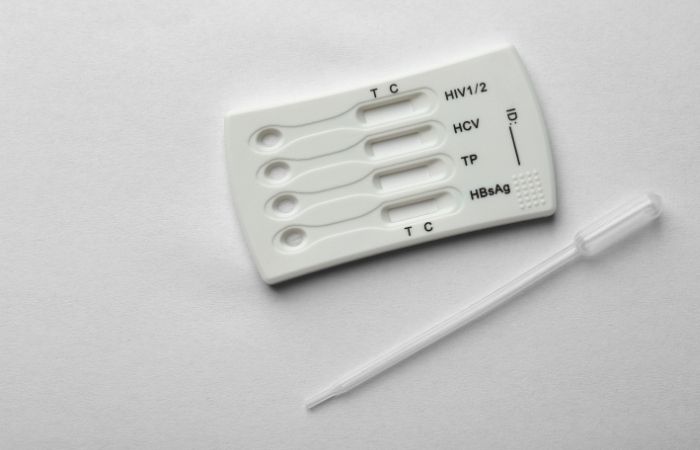
If you want a no-shame, at-home way to find out, you can use a Combo STD Home Test Kit for multiple infections at once.
What If I Don’t Have Symptoms Yet?
Most STDs don’t come with red flags in the first few days. In fact, you might not feel anything for weeks, or ever. That’s why relying on how you “feel” is misleading. Here’s how symptoms stack up across a few common infections:
| STD | Typical Symptoms | When Symptoms Appear (If They Do) |
|---|---|---|
| Chlamydia | Burning pee, discharge (often none) | 1–3 weeks after exposure |
| Gonorrhea | Discharge, painful urination, sore throat | 2–7 days |
| Herpes (HSV-1/2) | Blisters, burning skin, tingling | 2–12 days (can be longer) |
| Syphilis | Painless sore or rash | 10–90 days |
| Trichomoniasis | Itching, discharge, odor (or nothing) | 5–28 days |
Figure 2. Symptom timelines. Remember: many cases have no symptoms at all.
This is why many people test negative early, feel better, and never retest, only to find out later they’ve been carrying something silently.
When Should I Test? Timing Matters More Than You Think
One of the biggest mistakes people make is testing too early. It’s understandable, you want answers now. But every STD has a window period: the time between exposure and when a test can reliably detect the infection. Test too soon, and you could get a false negative that gives you false peace of mind.
Let’s break it down with real-world examples:
- It’s been 2 days since the hookup: Most tests will not detect anything yet. Emergency contraception or PEP (for HIV) may still be an option. Reach out to a provider immediately.
- It’s been 5–10 days: You can test for gonorrhea or chlamydia, but some results may not be conclusive yet. Plan to test now and again later.
- It’s been 2–4 weeks: Prime window for most bacterial STDs and earliest detection for HIV (via NAAT) or herpes (via symptoms or PCR).
- It’s been 6+ weeks: Ideal timing for full-panel accuracy, including antibody-based tests like HIV and syphilis.
If your timeline is in the early phase, consider this a “baseline test” and plan to retest in 2–4 weeks for confirmation. Many at-home kits, like the STD Test Kits line, offer discreet options that can be used multiple times.
“I Thought I Was in the Clear”
Kayla, 24, tested herself five days after a blurry night out with someone she met at a club. The test came back negative. She relaxed, until two weeks later when itching and spotting began. She retested on day 20 and found she had chlamydia.
“I felt stupid for trusting the first result. I wanted to believe I was fine.”
This isn’t uncommon. It’s not about intelligence, it’s about biology. Bacterial infections like chlamydia often take 7–14 days before they’re detectable. And viruses like HIV may take even longer unless you use a NAAT (nucleic acid amplification) test.
Waiting sucks. But retesting protects your partners, and your future health.
False Negatives and Fuzzy Facts: Why Timing Can Trick You
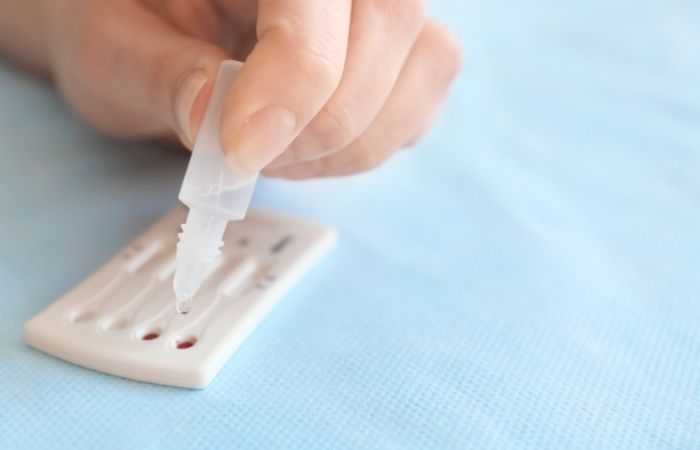
Let’s talk about false negatives, the kind that mess with your peace of mind. If you test too early, especially with rapid kits, you might get a clean result even if the infection is silently growing. According to the National Library of Medicine, some tests for syphilis and herpes can miss infections during early stages due to how long antibodies take to form.
That’s not a failure, it’s a reminder. Use testing like a snapshot in time, not a guarantee. A good rule: if you’re within two weeks of exposure, plan a follow-up test regardless of result.
Pro tip: Always read instructions carefully and avoid common mistakes like testing mid-period (for people with vaginas), using expired tests, or handling swabs with unwashed hands. Our 6‑in‑1 At‑Home STD Test Kit includes clear guidance to reduce error and increase accuracy.
Should I Retest? Here’s When It Makes Sense
You might have to take the test again if:
- You took the test 7 to 10 days after being exposed (early window).
- After the first test, your symptoms got worse or changed.
- Even though your test was negative, you're still worried.
- Your partner either tested positive or showed signs of illness.
In most cases, testing again 3 to 6 weeks after being exposed gives a clearer answer. If you've started treatment for a confirmed STD, you may need to retest to make sure it worked. This is especially true for infections like trichomoniasis that can stay in some people after treatment.
If you took antibiotics for gonorrhea, for instance, you should wait 7 to 14 days before getting tested again. If you test too soon, you might still see DNA from the infection, even if it's gone.
In the end, retesting is not a sign of paranoia. It's a good idea, especially if you weren't sure when it would happen or how much you would be exposed to it.
Confused or Panicked? Here's Your Next Move
If you’re still spinning, take a deep breath. Write down what you remember. Estimate how many days it’s been. Check your calendar, messages, or any saved location data if you’re blanking. Then plug that into your testing timeline.
You don’t need a doctor to start getting answers. You can order an at-home STD test kit today, fast, private, and without judgment. If you test now and again later, you’re doing exactly what most clinicians would recommend.
You deserve peace of mind, not self-blame. And clarity is closer than you think.
What If You Test Positive?
First, take a deep breath. Just because you test positive doesn't mean you're dirty, broken, or doomed. You know what to do now that you know. Most sexually transmitted diseases can be treated. Some STDs, like chlamydia and gonorrhea, can be cured with just one round of antibiotics. Some, like herpes or HIV, can be managed with ongoing care.
If you used a rapid home kit, you should start by getting a follow-up test to make sure your result is correct. A clinic or telehealth provider can help you understand the result, give you medicine, or order tests. You can also order mail-in tests that confirm your results if you don't want to go to the doctor in person.
We’ve built an option that skips the shame spiral: the 7-in-1 Complete At-Home STD Test Kit offers rapid results in private, and retesting kits are available too.
Testing positive isn’t the end of your sex life. It’s the start of taking control of it.
How to Tell a Partner, Even If You’re Not Sure
This part can feel harder than the test itself. But telling a partner doesn’t have to be dramatic, and it definitely doesn’t need to be perfect. If you're not even sure what happened or with whom, your focus should be on treating yourself and using protection going forward. If you do know your partner, consider a simple message like:
“Hey, just a heads-up, I tested positive for [STD] after the night we hung out. I’m getting treated, and I wanted to let you know so you can take care of yourself too.”
Anonymous notification tools exist, too, including services through Tell Your Partner and many local health departments. You can send a message without sharing your name. The goal isn’t to shame, it’s to stop the chain quietly and safely.
And remember: a surprising number of people are grateful you told them. Silence may feel safer, but it delays healing, for both of you.
Your Results, Your Business: Privacy and Discreet Testing
Worried someone will see your test kit? Don’t be. All orders from STD Test Kits are shipped in unmarked packaging with no branding or medical labels. No one will know what’s inside but you. Results are not shared with insurers, employers, or health records unless you choose to share them.
Need to test while traveling or away from home? You can ship the kit to any secure location or PO box, and complete the test in minutes with clear instructions. Some users even test from hotels, Airbnbs, or parked cars for privacy.
This is care on your terms. Whether you’re on campus, off-grid, or just don’t want to talk to a stranger, you have options.
You’re Not Alone, And You’re Not Broken
Luis, 31, remembers waking up after a birthday party where he hooked up with a friend’s friend. He didn’t remember the details, but a few days later, he started Googling symptoms obsessively. When he finally ordered a home test, it showed a faint positive for herpes.
“I felt like I had ruined my future. But after talking to a provider, I realized I could still date, still have sex, and still live my life. I just needed to get smart about it.”
That’s the truth we’re rarely told: testing positive doesn’t define your value. It means you’re part of a silent majority, people who are sexually active and honest enough to check. And if your result is negative, you’ve done something powerful: you’ve chosen clarity over silence.
Whichever way your results go, take the next step. Testing is care. And care means power.
FAQs
- 1. I used a condom… do I really still need to test?
- Short answer: probably, yes. Condoms are superheroes at reducing risk, especially for fluid-based STDs like chlamydia and HIV. But they don’t cover everything. Skin-to-skin infections like herpes or HPV can still spread if they touch exposed areas. If the encounter was fuzzy, testing gives peace of mind that even the best latex can’t guarantee.
- 2. What if I literally don’t remember anything?
- Then trust your gut and test anyway. Blackout or fuzzy memory situations suck, and they also raise risk. Not because you did something “bad,” but because you don’t have a reliable recall. Many people in your shoes opt for a full-panel test just to get clarity. You’re not being dramatic. You’re being proactive.
- 3. How soon is too soon to test?
- Depends on what you’re testing for. Gonorrhea and chlamydia can show up in 5–7 days. HIV and syphilis often need 2–6 weeks for accurate detection. Think of early testing as a first look, not the final word. If you’re under 10 days from exposure, plan to test again later, just to be sure.
- 4. I feel fine. That means I’m fine, right?
- Not necessarily. Most STDs are annoyingly good at hiding. Over half of chlamydia infections have zero symptoms. Same with early HIV. Even herpes can stay dormant for weeks. So yeah, you could feel totally normal and still be carrying something without knowing it. That’s why “feeling fine” shouldn’t be your only safety check.
- 5. I tested negative, but something still feels off. Now what?
- Listen to that feeling. If your symptoms popped up after you tested, or your exposure was recent, it might have just been too early. Retest in 2–3 weeks, or sooner if things escalate. You know your body better than any chart or calendar. Trust that instinct.
- 6. Can I get an STD from oral sex?
- Yes, and it’s more common than people think. Gonorrhea loves the throat. Syphilis can sneak in via tiny cuts. And herpes? It doesn’t need an invitation. If your hookup involved oral without protection, it counts as real exposure, especially if you have a sore throat or notice irritation afterward.
- 7. How do I even bring this up with someone I hooked up with?
- It’s awkward, we know. But awkward doesn’t mean impossible. Try something like: “Hey, I recently tested positive for [X] and wanted to give you a heads-up so you can take care of yourself too.” You don’t have to confess, apologize, or spiral. You’re offering care, not blame.
- 8. Is dry humping risky or am I just overthinking it?
- Depends on what you mean by "dry." If genitals touched, even without penetration, there’s still a small risk for herpes or HPV. If you both kept clothes on, the risk is basically zero. So yes, you can relax… unless clothes came off and there was skin contact or fluids involved. Then a quick test might be worth it.
- 9. Are at-home tests even accurate?
- The good ones? Yes. Especially for bacterial STDs like chlamydia or gonorrhea. Just follow the instructions to the letter, and time it right. For full confidence, some folks test with a rapid kit early and follow up with a lab kit later. Think of it as the DIY version of what clinics do, without the waiting room awkwardness.
- 10. Do I have to tell my doctor or insurance if I test positive?
- Not with at-home testing. If you use kits like the ones from STD Test Kits, your results stay private. Nobody sees them but you. If you go to a clinic and use insurance, it might show up on records, but only you decide what to do with that info.
You Deserve Answers, Not Assumptions
If you’re asking “Was I exposed or just paranoid?” you’ve already taken the most important step, you're paying attention. And no matter what the answer is, you deserve to know. Whether your night was blurry, regretted, amazing, or confusing, your health still matters.
Don’t sit in the spin cycle. You can order a discreet combo test kit today, test at home tomorrow, and start the new week with answers.
How We Sourced This Article: We combined current guidance from leading medical organizations with peer-reviewed research and lived-experience reporting to make this guide practical, compassionate, and accurate. In total, around fifteen references informed the writing; below, we’ve highlighted some of the most relevant and reader-friendly sources.