Polyamory and STD Risk: Honest Testing Tips That Actually Work
Quick Answer: There is a risk of STDs in polyamory, but it can be controlled. Testing every three to six months (or more often if you have new or group partners) helps keep your whole network safe and stop the spread.

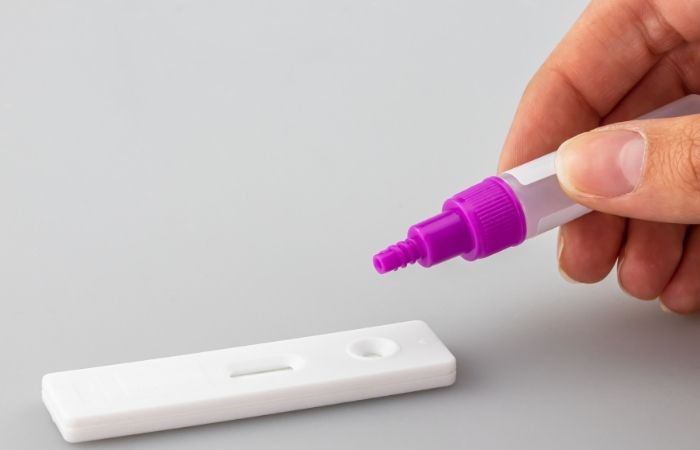
Quick Answer: There is a risk of STDs in polyamory, but it can be controlled. Testing every three to six months (or more often if you have new or group partners) helps keep your whole network safe and stop the spread. Home tests are a private and quick way to check for open relationships.
Who This Guide Is For (And Why It Matters)
If you’re in an open relationship, thinking about joining a polycule, or exploring swinging for the first time, this guide is for you. It’s for the person googling “is it paranoid to ask my partner to test?” at 2AM. It’s for the couple recovering from a misstep or looking to prevent one. And it’s especially for anyone who wants to enjoy sex with multiple people while protecting everyone’s health and emotional safety.
Polyamory isn’t inherently riskier, but it does require more coordination. One person’s exposure can ripple through a whole network. This doesn’t mean you need to swab before every hookup or carry test kits to parties. It just means building testing into your relationship agreements, like scheduling, boundaries, and contraception, is one more form of care.
In this article, we’ll cover how testing works, how often to test depending on your dynamic, how to talk to partners, what to do if someone tests positive, and how to access discreet, fast testing at home.
Why Open Relationships Don’t Eliminate Risk (But Don’t Deserve Shame)
One of the most persistent myths about STDs in open relationships is this: “If we’re honest, we’re safe.” Honesty is essential, but it doesn’t kill pathogens. You can communicate perfectly and still share a virus or bacteria without knowing. Many common STDs, including chlamydia, trichomoniasis, and even HIV in early stages, can pass silently, with no symptoms at all.
In fact, research shows that people in consensually non-monogamous relationships often engage in safer sex practices more consistently than monogamous folks, using condoms, getting tested, and talking about boundaries upfront. But the flip side is that open dynamics can involve more total partners, more shared body fluids, and sometimes overlapping exposure before results are known. That’s not a moral failing, it’s just biology.
A 2021 study published in the Journal of Sexual Medicine found that non-monogamous people were no more likely than monogamous people to test positive for STDs, but were significantly more likely to test at all. That’s a good sign. Testing is the opposite of paranoia. It’s protection, for you and the people who trust you.
How Often Should Poly or ENM People Get Tested?
There’s no one-size-fits-all answer, but here are general guidelines backed by sexual health research and provider recommendations:
| Relationship Structure | Recommended Testing Frequency |
|---|---|
| Closed monogamy (no outside partners) | Every 12 months, or if symptoms appear |
| Open relationship with consistent barriers | Every 6 months |
| Polyamory with multiple ongoing partners | Every 3–6 months |
| Swinging, group sex, or new partners frequently | Every 1–3 months |
Table 1. Testing frequency by relationship dynamic. Adjust timing if a partner tests positive, symptoms arise, or new connections are added.
Testing schedules can feel awkward to bring up, especially early in a relationship. But many polycules create Google Calendars, “testing day” rituals, or check-ins tied to their agreements. Making it routine removes the shame. If you can schedule date nights, you can schedule test nights too.
How to Talk About Testing Without Killing the Mood
Let’s be real, there’s no “perfect” time to bring up STD testing. But here’s a rule: earlier is better. The longer you wait, the heavier it can feel. Testing doesn’t mean you think someone is dirty. It means you want to protect them, and yourself.
Try framing it like this: “I feel most connected and relaxed when I know where I stand health-wise. Would you be open to testing together before we take this further?” Or: “I test every few months, let’s sync up.” If someone reacts with defensiveness or confusion, that’s not a red flag, it’s a chance to educate. Many people simply haven’t been taught that testing can be a sign of trust, not a lack of it.
What If Someone Tests Positive?
This is where things get real, and where trust matters most. A positive result doesn’t mean someone was reckless, dirty, or deceitful. It means they’re human. Chlamydia, gonorrhea, syphilis, and trichomoniasis are all highly treatable with antibiotics. Herpes and HPV are manageable. Even HIV, with today’s meds, can become undetectable, and untransmittable.
What you do next is what counts. Start with honesty, not blame. If you're the one testing positive, notify partners as soon as possible. You don’t have to give a speech, just the facts and a resource. Example: “Hey, I just got tested and came back positive for chlamydia. You should test too. Here’s a link to a home kit that’s private and fast.” That’s care. That’s courage.
If someone else discloses to you, ask about their treatment timeline and when you last had contact. Most clinics recommend waiting at least 7 days after finishing treatment before resuming sex. In open networks, a single untreated infection can recirculate, so make sure everyone connected is informed and clear.
Which Tests Should You Use in Open Relationships?
Not all STDs show up on every test. That’s why combo kits or custom test panels are ideal for open dynamics. Here’s a breakdown of the most useful tests for people with multiple or overlapping partners:
| STD | Why It Matters in Poly/ENM | Best Test Method |
|---|---|---|
| Chlamydia | Often silent, easily passed via oral/vaginal/anal sex | NAAT via urine or swab |
| Gonorrhea | Can infect throat and rectum, often symptomless | NAAT via oral/rectal/urine swab |
| Syphilis | Early symptoms often missed, but highly infectious | Blood test for antibodies |
| HIV | Critical to detect early in high-partner networks | Ag/Ab combo blood test or finger prick rapid |
| Trichomoniasis | Common, often undiagnosed, especially in men | NAAT or antigen swab/urine test |
| Herpes (HSV-2) | Can be spread even without symptoms or sores | Blood test or swab during outbreak |
Table 2. Recommended STD tests for polyamorous or non-monogamous individuals. Combine tests for best coverage or use a multi-infection combo kit.
Need a discreet, at-home solution? The Combo STD Home Test Kit screens for several infections using simple swabs or drops of blood, no clinic visit required. Test from home, get results in minutes, and keep your whole network safer.
What About Barriers, Condoms, and Protection?
Barriers help, but they aren’t foolproof. Condoms reduce the risk of transmission for many STDs, but they don’t eliminate it. Skin-to-skin infections like herpes, syphilis, and HPV can spread even with condoms if contact occurs outside the covered area.
Dental dams, gloves, and internal condoms offer added protection during oral, manual, or penetrative sex. But let’s be real, during a group scene, play party, or kink encounter, these tools don’t always stay consistent. Fingers, toys, mouths… they move fast. Testing becomes even more important in those contexts, not to punish anyone, but to clean the slate afterward.
If you’re engaging in fluid bonding (intentional sex without barriers), talk about testing frequency and recent results upfront. This isn’t about earning someone’s trust. It’s about honoring their body. Testing is a pre-care act, not just a post-care response.
How to Handle Testing in a Polycule or Open Network
If you’re part of a polycule, a connected network of partners, you already know that one person’s choices can affect everyone. That’s why some groups build “testing agreements” alongside their relational agreements. These don’t need to be complicated. They can be as simple as: “Everyone gets tested every 3 months” or “We all test before adding a new partner.”
In more fluid networks, where not everyone knows everyone, default to protecting yourself. Use barriers with new partners until you’ve had a testing conversation. Don’t assume someone is testing just because they’re in a polyamorous relationship. Some people test monthly. Some haven’t tested in years. Asking isn’t accusatory, it’s caring.
And if you’re the one suggesting it? Offer options. Send a link. Say you’ll test together. Take the awkward out of it. Normalizing testing starts with someone saying, “Hey, I’d feel better if we both checked in.”

Privacy, Shipping, and Discreet Testing From Home
Let’s face it, standing in line at a clinic, explaining your partner structure to a receptionist, or waiting days for results isn’t always ideal. For poly folks, especially those in smaller towns or conservative areas, the fear of judgment is real. That’s where at-home STD testing becomes not just convenient, but emotionally protective.
STD Test Kits ships discreetly, with no visible branding. Kits arrive in unmarked packaging, and results are private, shared only with you. You choose what to share, when to share it, and how. For those navigating complex dynamics, this kind of autonomy matters.
Most kits involve a finger prick, swab, or urine sample, depending on the test. Some offer instant results; others involve mailing your sample to a lab. Both options beat the clinic for privacy. Plus, you can test on your schedule, before a date, after a party, during a quiet weekend in.
“I Was Testing Alone. Then I Brought It to the Group.”
Andre, 29, had been in a loosely connected poly network for two years. He got tested every three months, just for himself. “I didn’t want to push it on anyone,” he says. But when a partner tested positive for gonorrhea, everything shifted.
“We all had a wake-up call. No one was lying. But we weren’t synced. I realized I could’ve spoken up sooner.”
After that, Andre started sharing his test dates and inviting partners to test alongside him, sometimes over video, sometimes just by sending screenshots. “It wasn’t a power move. It was a care move. And honestly, it made us closer.”
Today, his group has a simple rule: test every quarter or when adding a new person. No shame. Just mutual respect.
Retesting: When, Why, and How Often?
Sometimes you still need to follow up even after a negative test. This is why:
- Window periods: Most STDs don't show up right away. If you test too soon after being exposed, you might get a false negative. Retesting after 2 to 4 weeks (depending on the infection) makes the results more accurate.
- Ongoing exposure: In open dynamics, exposure happens more than once. Retesting every three months can find infections that might happen between partners or during encounters.
- After treatment: For bacterial STDs like chlamydia or gonorrhea, test again three months after treatment to make sure the infection is gone and you haven't gotten it again.
Some people find it easier to set up a testing schedule by matching it to the seasons or a calendar app. Some people connect it to events in their lives, like after a vacation or a festival. Whatever works for you, just make sure to do it regularly and without judging yourself.
When to Be Extra Cautious (And Why That’s Not Paranoia)
Sometimes, you need to break your usual testing routine and get checked sooner. Here are scenarios where urgent testing makes sense:
- You had unprotected sex with a new or unknown-status partner
- You notice new symptoms (rash, discharge, itching, sores)
- A partner notifies you of a recent positive test
- You engaged in group sex or high-fluid activities (rimming, sharing toys)
- You’re preparing to fluid-bond with someone new
Urgent doesn’t mean panic. It just means being proactive. Use a Combo Home Test or schedule a clinical test within the appropriate window for the STD in question. If you’re unsure, start with the most common: chlamydia, gonorrhea, trichomoniasis, syphilis, and HIV.
FAQs
- 1. How often should I really get tested if I’m poly?
- Think of it like brushing your teeth, just part of regular care. Every 3 to 6 months is a solid rhythm if you have ongoing partners. But if you’re meeting new folks frequently or diving into group scenes? Monthly might be smarter. It's not about fear, it's about keeping things clean for everyone you care about.
- 2. Do I have to test even if I always use condoms?
- Yup. Condoms are amazing but not magical. STDs like herpes, syphilis, and HPV can spread from areas condoms don’t cover, like the base, thighs, or mouth. Think of testing as your backup system, not your plan B.
- 3. Can I get something just from oral?
- Unfortunately, yes. Gonorrhea, chlamydia, syphilis, and herpes all make moves through oral sex, especially if there are tiny cuts or a sore throat involved. And here's the kicker: most people don’t feel anything. Throat swabs matter more than folks realize.
- 4. How do I even bring up testing without killing the vibe?
- Lead with care, not caution. Try: “Hey, I’d feel even better knowing we’re both recently tested, want to swap dates or test together?” Or keep it light: “I’ve got my results, your turn ????.” Confidence helps. Awkward doesn’t mean wrong.
- 5. What if my partner doesn’t want to test?
- You can’t control their choices, but you can hold your own boundaries. “I’m not comfortable having sex unless we’re both up-to-date” is a powerful and respectful line. If they flinch at that? Might be more of a trust issue than a testing one.
- 6. Are at-home STD tests even legit?
- The good ones? 100%. Many use the same tech as clinics, NAAT for chlamydia and gonorrhea, rapid antigen tests for others. Just make sure you're buying from a real provider and testing at the right time post-exposure. Accuracy depends on timing, not just the test.
- 7. Do I really need to retest after treatment?
- If you’ve been treated for something like chlamydia or gonorrhea, retesting in about 3 months is smart. Not because the meds failed, but because reinfection is super common in poly networks. You might be clear… but your partners might not know they were exposed.
- 8. Can you get STDs from fingers or toys?
- Absolutely. If it touches genitals or goes inside and isn’t washed or covered between uses, it can carry infection. Use gloves, condoms on toys, and soap like it matters, because it does. And no, saliva isn’t a safe “lube.”
- 9. What’s the best test to take if I don’t have symptoms?
- A combo test panel that covers chlamydia, gonorrhea, syphilis, HIV, and maybe trichomoniasis is your safest bet. You don’t need symptoms to have, or spread, something. Silent STDs are the sneakiest.
- 10. Is it okay to ask someone when they last tested?
- Not just okay, it’s encouraged. Normalize it like asking about allergies or love languages. “When was your last test?” is way sexier than “What are you into?” when you think about it. Testing talk shows you're grown, respectful, and playing for the long haul.
You Deserve Answers, Not Assumptions
Open relationships, when grounded in honesty and respect, can be vibrant, joyful, and deeply connected. But no matter how thoughtful your agreements are, biology doesn’t follow relationship rules. STDs don’t care if you’re ethical. They only care if they have a path.
That’s why testing isn’t about paranoia. It’s about protection, yours, your partners’, and the broader network you move in. Whether you’re new to non-monogamy or years into a polycule, take this as your invitation to get checked, get clear, and keep your pleasure life thriving.
Don’t wait and wonder, get the clarity you deserve. This at-home combo test kit checks for the most common STDs discreetly and quickly.