Why Syphilis Is So Easy to Miss
Quick Answer: Syphilis rashes are often painless, non-itchy, and easy to mistake for harmless skin issues like eczema or allergies. No itching. No pain. No urgency. That’s exactly why so many people miss it.

Quick Answer: Syphilis rashes are often painless, non-itchy, and easy to mistake for harmless skin issues like eczema or allergies. If you notice unexplained rashes after sexual contact, testing is the only way to know for sure.
It Doesn’t Look “Bad,” That’s the Problem
The first time Marissa saw the faint red dots, nothing about them screamed “infection.” No itching. No pain. No urgency. That’s exactly why so many people miss it. Syphilis doesn’t always show up looking dramatic. It shows up looking… forgettable.
This is why syphilis has earned the nickname “The Great Pretender.” It blends in with everyday skin issues so well that even people paying attention to their bodies can brush it off. A rash that doesn’t itch or hurt doesn’t trigger alarm bells the way people expect.
And yet, that quiet presentation is exactly what allows the infection to move forward unnoticed. While someone is applying moisturizer or switching detergents, the bacteria are already circulating through the bloodstream.
| Feature | Syphilis Rash | Common Skin Conditions |
|---|---|---|
| Itchiness | Usually none | Often itchy (eczema, allergies) |
| Pain | None | Can be irritated or sore |
| Location | Palms, soles, trunk | Rarely palms/soles |
| Appearance | Faint red or brown spots | Often inflamed or raised |
When a Rash Isn’t Just a Rash
Here’s where things get more complicated. Syphilis spreads through skin-to-skin contact, not just through obvious symptoms. That means even one encounter can be enough, especially if the infected area isn’t covered by protection. It doesn’t require visible sores, and it doesn’t wait for a “clear sign” before transmission happens.
Many people never see the first-stage sore at all. It can be hidden in places you don’t check daily, like inside the mouth, under the foreskin, or inside the vagina. Sometimes it shows up and disappears quietly within a couple of weeks, leaving no trace and no reason to suspect anything happened. By the time the rash appears, the infection has already moved beyond the surface and into the bloodstream.
This is the part that throws people off. There’s no dramatic moment where your body signals that something is seriously wrong. No sudden pain, no urgent symptoms, nothing that forces you to stop what you’re doing and pay attention. Instead, it unfolds quietly, in the background.
And the strangest part? Most people don’t feel sick. They’re going to work, going to the gym, texting friends, living their normal routine, completely unaware that anything is happening internally. The rash might be the only visible clue, and even that can be easy to dismiss if it doesn’t itch, hurt, or spread aggressively.
That’s why syphilis is so often missed in this stage. It doesn’t interrupt your life in an obvious way. It blends in. And when something blends in, it’s easy to explain it away instead of asking the one question that actually matters: should I get tested?
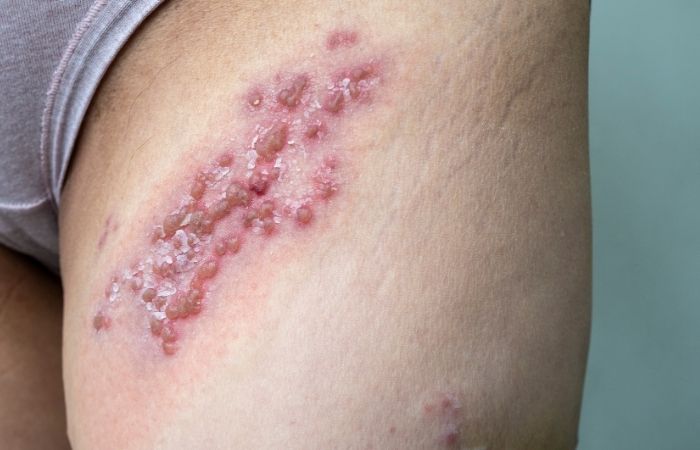
Why It Gets Missed So Often
One of the worst things about syphilis is the way it seems to constantly be misdiagnosed. People are told it’s eczema, stress, dry skin, an allergic reaction to something benign. They leave with a cream and possibly a wave and a nod and a half-hearted “don’t worry.” They don’t leave with answers.
The problem is, syphilis just doesn’t present itself as a problem. It doesn’t itch. It doesn’t spread around. It doesn’t scream for attention. So it gets dismissed as nothing important, nothing serious, nothing worth looking at.
There is a huge degree of assumption involved with syphilis testing too. People who don’t fit the mold of “at risk” don’t get an STD test, and they don’t seek out a test for themselves. They’re in a long-term relationship, they don’t have multiple partners, they don’t think they’re at risk for anything. They don’t think syphilis is anything they need to think about at all.
But that’s a longer process than people think. Weeks turn into months. The rash goes away, comes back, or moves to a different area of the body. This keeps the guessing game going. Every time it goes away, it reinforces people’s minds that it wasn’t that serious in the first place.
However, in the background, nothing has been stopping. The infection continues to progress forward. The rash goes away, but that’s not true of the bacteria. And when it’s finally identified, it’s often progressed further than it should have.
There are places where cases of syphilis have been going up in dramatic numbers over the past decade. It’s not a mystery why. It’s because of a lack of access to testing, a lack of clinics, and because of the distances people have to travel to get tested.
There’s also the stigma associated with it. People are unwilling to ask to get tested because they don’t want to be judged. This causes a delay in getting tested. This causes more cases to progress further than they should have. It’s not about behavior; it’s about access and silence.
Why People Wait Longer Than They Should
Most people don’t delay testing because they don’t care. They delay because nothing feels urgent. A rash that doesn’t itch or hurt doesn’t create pressure to act. It sits in that gray area of “probably nothing,” which is where a lot of infections quietly stay undetected.
There’s also the internal negotiation that happens. You notice something, then immediately start explaining it away. Maybe it’s a new soap. Maybe it’s stress. Maybe it’ll disappear on its own. And when it does fade, even temporarily, it reinforces the idea that it wasn’t worth worrying about in the first place.
Then there’s timing. Life gets busy. Work, relationships, plans, getting tested doesn’t feel urgent enough to interrupt any of it. So it gets pushed to “later.” And later turns into weeks, sometimes months, especially when symptoms aren’t demanding attention.
But this is exactly the window where testing matters most. Not when things get worse, not when symptoms become obvious, but when something feels slightly off and you don’t have a clear answer yet. That moment of uncertainty is actually the most useful moment to act.
How the Rash Actually Shows Up
The rash usually appears during what’s called the secondary stage, often weeks after the initial infection. But real life doesn’t follow textbook timelines. Some people skip noticing earlier symptoms entirely.
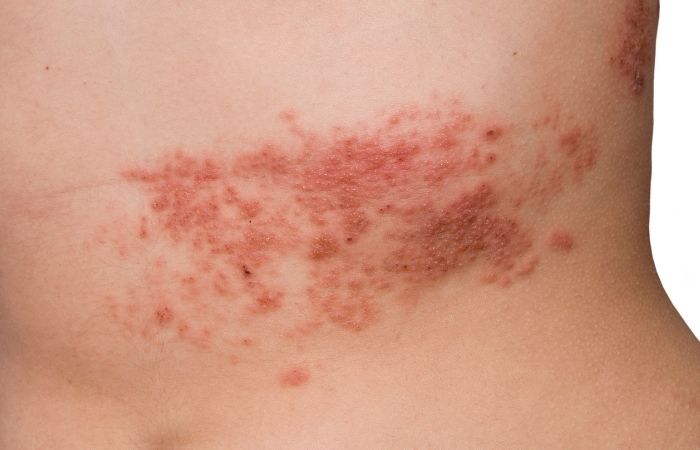
The rash itself can be incredibly subtle. People describe it as faint freckles, light discoloration, or patches that come and go depending on lighting or temperature.
And unlike most skin conditions, it often shows up on the palms and soles. That’s one of the biggest clues, but only if you know to look for it.
| Stage | What Happens |
|---|---|
| Primary | Painless sore (often unnoticed) |
| Secondary | Rash, mild symptoms, or none at all |
| Latent | No visible symptoms |
| Tertiary | Potential damage to organs and nervous system |
When Should You Actually Get Tested?
This is the question most people ask too late. Not because they don’t care, but because they’re waiting for a clearer sign. Something more obvious. Something that confirms it’s worth the effort. But with syphilis, waiting for certainty is exactly what causes delays.
If you’ve had unprotected sex, noticed an unexplained rash, or had any kind of exposure that leaves you questioning things, that’s enough reason to test. You don’t need dramatic symptoms. You don’t need pain. You just need a reason to wonder.
Testing isn’t about confirming the worst-case scenario. It’s about ending the guessing. The longer you stay in that “maybe it’s nothing” space, the more time the infection has to progress quietly. A simple test replaces uncertainty with clarity, and clarity makes everything easier to handle.
And if the result is negative, you move on with peace of mind. If it’s positive, you deal with it early, when treatment is straightforward. Either way, testing shifts you out of the waiting phase and into action, which is where control actually starts.
| Situation | Should You Test? |
|---|---|
| Unprotected sex (even once) | Yes, especially within a few weeks |
| Unexplained rash (non-itchy) | Yes, regardless of timing |
| Partner tested positive | Yes, immediately |
| No symptoms but unsure exposure | Yes, for peace of mind |
What Happens If You Ignore It
This is where syphilis becomes less forgiving. The rash may fade, which can feel like the problem solved itself. A lot of people take that as reassurance, like their body handled it and moved on. But that’s not what’s happening. The infection doesn’t disappear, it just moves deeper.
What makes this stage tricky is the silence. There’s no obvious warning sign that things are getting worse. You don’t suddenly feel ill or unable to function. Life continues as normal, which makes it easy to assume everything is fine. Meanwhile, the bacteria are still active, still circulating, still affecting the body in ways you can’t see.
Over time, untreated syphilis can begin to affect major systems, including the heart, brain, and nervous system. This doesn’t happen overnight, and it doesn’t happen to everyone, but when it does, it can lead to serious and sometimes irreversible complications. The gap between “this seems minor” and “this is a real problem” can be wider than people expect.
There’s also a psychological side to it. Once symptoms disappear, the urgency disappears with them. People stop thinking about it. Testing gets pushed off. The moment passes. And that delay is exactly what allows the infection to progress unchecked.
The frustrating part is that it’s completely preventable. Syphilis is one of the most treatable STDs when caught early. A simple test, followed by straightforward treatment, can stop it before it ever becomes complicated. Waiting doesn’t make it go away, it just gives it more time to develop into something harder to deal with.
FAQs
- 1. Is a non-itchy rash really something to worry about?
- It can be. Most non-threatening rashes itch or burn, while syphilis rashes do not. If you get a rash for no apparent reason, it may be a good idea to get tested.
- 2. What makes a syphilis rash different?
- It is painless, non-itchy, and may occur on the palms of the hands and soles of the feet. This combination is not typical for regular rashes.
- 3. Can I have syphilis without any noticeable symptoms at first?
- You can. Many people do not even realize they have syphilis until they get the rash.
- 4. Does the rash come and go?
- It can. This may make it even harder to realize what you might have.
- 5. How soon do I get tested after I get a rash?
- As soon as you can. If you suspect you might have gotten syphilis, get tested as soon as you can.
- 6. Is syphilis treatable?
- Yes. Syphilis is one of the easiest STDs to treat.
- 7. Can I get tested at home for syphilis?
- Yes. This way you can get tested without having to go to a doctor.
- 8. Do I need symptoms to get tested for syphilis?
- No. You do not need symptoms to get tested for syphilis.
- 9. What if I get tested and it turns out I don’t have syphilis? Is it worth it then?
- Then you will know for sure you don’t have syphilis. That would be good news.
- 10. Do I need to tell my partner?
- If you do have syphilis, yes you do.
You Deserve Clarity, Not Guesswork
Maybe it’s nothing. Maybe it’s a harmless reaction that will disappear in a few days. But when something on your body doesn’t quite make sense, ignoring it doesn’t actually resolve the question, it just delays the answer.
Syphilis is one of those infections that relies on that delay. It stays quiet, blends in, and gives just enough uncertainty for people to wait longer than they should. The good news is that it’s also one of the most treatable infections when caught early. That’s the part most people don’t hear enough.
If you’re stuck in that “should I be worried?” loop, testing is the fastest way out of it. You can check discreetly from home with a Syphilis At-Home STD Test Kit, or explore broader options on the STD Test Kits homepage. Either way, you’re replacing uncertainty with clarity, and that’s what actually puts you back in control.
Our article was constructed based on current advice from the most prominent public health and medical organizations, and then molded into simple language based on the situations that people actually experience, such as treatment, reinfection by a partner, no-symptom exposure, and the uncomfortable question of whether it “came back.” In the background, our pool of research included more diverse public health advice, clinical advice, and medical references, but the following are the most pertinent and useful for readers who want to verify our claims for themselves.