When to Test for Syphilis After Exposure (Window Period Explained)
Testing earlier can still be useful in some situations, but an early negative does not always rule syphilis out. They do not. That means there is a lag between exposure and a test becoming meaningfully accurate.

Quick Answer: Best time to test for syphilis after exposure is usually around 3 to 6 weeks, with stronger test reliability by about 6 weeks and follow-up testing sometimes recommended at 3 months if exposure was recent or risk was high. Testing earlier can still be useful in some situations, but an early negative does not always rule syphilis out.
The First Thing to Know: Exposure Does Not Mean Instant Detectability
One of the most frustrating things about STD testing is that people assume infection and detection happen on the same timeline. They do not. Syphilis is caused by Treponema pallidum, and standard testing is usually based on blood tests that look for your immune response, not a flashing sign that appears the morning after sex. That means there is a lag between exposure and a test becoming meaningfully accurate.
According to the CDC’s 2024 laboratory recommendations for syphilis testing, diagnosis commonly relies on both treponemal and nontreponemal blood tests used together rather than a single all-knowing result. The MedlinePlus syphilis testing guide also notes that antibodies can take a couple of weeks to develop, which is why an early negative result can be misleading instead of reassuring.
This is the part people hate, and I get it. You want a clean answer right now, especially if the condom broke, a partner texted you afterward, or you noticed something weird and your search history is now basically a medical drama. But testing too early can create a false sense of calm, and that is not clarity. That is just bad timing dressed up as certainty.

Incubation Period vs Window Period: These Are Not the Same Thing
People mix these up all the time, and honestly, the internet does not help. The incubation period is the time between exposure and the first possible symptoms. The window period is the time between exposure and when a test is likely to detect the infection. Those two clocks can overlap, but they are not twins.
For syphilis, the first stage often begins with a chancre, which is usually a painless sore. The CDC notes that primary syphilis often appears about 3 weeks after exposure, with an incubation period ranging from 10 to 90 days. The NHS similarly says symptoms can take 3 weeks or more to appear. So yes, somebody can feel completely normal early on and still have been exposed.
Now layer testing on top of that. A sore can show up before a blood test turns clearly positive, especially very early in infection, and sometimes the sore is tucked somewhere easy to miss like the rectum, mouth, cervix, or inside the vagina. That is why “I do not see anything” is not the same as “I am definitely negative,” and why “I tested on day four” is not the same as “I am in the clear.”
| What you are tracking | What it means | Typical timing | Why it matters |
|---|---|---|---|
| Exposure day | The sexual contact when transmission may have happened | Day 0 | This is the reference point for every testing decision after that |
| Incubation period | Time until symptoms could begin | Often around 3 weeks, but can range from 10 to 90 days | You can still have no symptoms during this time |
| Early blood-test window | Time when antibodies may begin to become detectable | Often a few weeks after exposure | Testing too early raises the chance of a false negative |
| Higher-confidence window | Time when serologic testing is more dependable | Often around 6 weeks, with some follow-up at 3 months depending on risk | This is where a negative result becomes more reassuring |
Table 1 shows why the phrase “too soon to test” is not scare language. It is just how immune-based testing works.
So, When Should You Actually Test?
If you want the practical version, here it is. If exposure was only a few days ago, a blood test is often too early to give you a reliable answer. If you are around the 3-to-6-week mark, testing becomes much more useful. If the exposure was recent, the risk was significant, or symptoms show up despite an earlier negative, follow-up testing may still be the smarter move.
The CDC STI Treatment Guidelines specifically recommend repeat nontreponemal testing 2 to 4 weeks later in certain early-infection scenarios when initial results are mixed and recent exposure is on the table. That is a clinical way of saying this: if the timeline is still early, one test result may not be the end of the story. Recent exposure changes how a negative result should be interpreted.
A lot of people want a single magic date, but syphilis does not really work like that. The better question is not “What is the earliest possible day?” It is “When will this test give me an answer I can actually trust?” For most readers, that means thinking in weeks, not hours.
| Time since exposure | What a test can tell you | What to do |
|---|---|---|
| 0 to 7 days | Usually too early for a blood test to reliably rule out infection | Do not rely on a negative result alone; plan follow-up testing based on risk and symptoms |
| 2 to 3 weeks | Some infections may begin to show, but negatives can still miss early cases | Test if a clinician advises it or if symptoms appear, but expect possible retesting |
| 3 to 6 weeks | Testing becomes much more informative | This is often the key window for an initial blood test after exposure |
| 6 weeks and beyond | Negative results are more reassuring if no new exposure occurred | Use this window for stronger confidence, especially if the first test was early |
| Up to 3 months | Used as a follow-up point in some higher-risk or uncertain cases | Retest if advised, especially after very recent exposure or ongoing risk |
Table 2 is a reader-friendly timing guide, not a replacement for individualized medical advice. Symptoms, pregnancy, HIV status, and ongoing exposures can change the testing plan.
What If You Have a Sore, Rash, or Something Feels Off Right Now?
This is where people get stuck, because they assume testing guidance means waiting in silence while their body throws up possible warning signs. Not exactly. If you have a painless sore, a weird mouth lesion after oral sex, a rash on your palms or soles, swollen lymph nodes, or a recent exposure that feels genuinely concerning, you should seek testing and clinical evaluation sooner rather than later. Waiting for the “perfect” day is not the goal when symptoms are already in the room.
The reason is simple. Syphilis diagnosis is not always limited to a single screening blood test, and symptoms plus exam findings matter. The World Health Organization notes that diagnosis is based on clinical history, physical examination, and laboratory testing, and that rapid tests can support immediate treatment pathways in the right setting.
If your head is already spinning, this is a good moment to stop playing detective with blurry phone photos and panic searches. Start with a real test plan instead. You can explore discreet screening options through STD Test Kits while keeping in mind that any positive screening result for syphilis should be confirmed according to standard testing algorithms.
Why This Window Period Confuses So Many People
Because it feels unfair, honestly. Someone can do the responsible thing, test quickly, and still not get the clearest answer yet. That gap between “I want to know” and “the test can truly know” is where a lot of anxiety lives.
In the next section, we are going to get much more specific about early testing, false negatives, rapid tests versus lab testing, and how to handle common exposure scenarios like a one-night stand, oral sex, or getting tested after a partner text blows up your evening.
The Early Testing Trap: Why Negative Results Can Mislead You
Picture this moment because it happens constantly. Someone has a risky night, wakes up uneasy, and schedules a test the same week. The result comes back negative, and for a day or two there is relief. Then someone online mentions the syphilis window period, and suddenly the calm disappears again.
The uncomfortable truth is that early testing can miss an infection. This does not mean the test is bad or that laboratories are unreliable. It simply means your immune system may not have produced enough detectable antibodies yet for the test to register the infection.
Most traditional syphilis screening relies on serologic testing, which detects antibodies your body produces in response to Treponema pallidum. According to the Mayo Clinic’s overview of syphilis diagnosis, blood tests can detect these antibodies even when symptoms are subtle or absent. But they still require time for the immune response to develop.
This is why testing a few days after exposure is rarely definitive. A negative result in the first week mainly tells you that your body has not produced measurable antibodies yet. It does not always rule out infection if the exposure was very recent.
What Happens Inside the Body After Syphilis Exposure
When syphilis enters the body, the bacteria begin multiplying quietly. The immune system gradually recognizes the infection and starts producing antibodies. These antibodies are what most screening tests are designed to detect.
That immune response is not immediate. It usually takes a few weeks for antibody levels to reach detectable levels in blood tests. During that time, someone may have no symptoms at all, which explains why many early infections are discovered only through screening rather than obvious signs.
The CDC’s syphilis fact sheet notes that early-stage infections often present with a painless sore called a chancre. But here is the part that surprises people: that sore can appear somewhere you might never see, such as inside the vagina, rectum, or mouth.
So someone may be infected, have mild or hidden symptoms, and still receive an early negative test result if testing happens before the immune system’s antibody response is fully detectable. That is why follow-up testing is sometimes recommended even after a negative result.
| Stage | What is happening biologically | What you may notice | Testing reliability |
|---|---|---|---|
| Exposure | Bacteria enter through small breaks in skin or mucous membranes | No symptoms yet | Too early for most tests to detect |
| Early infection | Bacteria multiply and immune system begins responding | Possible painless sore or no symptoms | Tests may still miss infection if taken very early |
| Developing antibody response | Antibody levels rise in the bloodstream | Possible rash, fatigue, swollen lymph nodes | Blood tests become increasingly reliable |
| Established detection window | Immune response clearly measurable | Symptoms may appear or remain subtle | Testing accuracy significantly improves |
Table 3 illustrates how the immune response develops gradually, which is why timing plays such a major role in accurate testing.
Rapid Tests vs Lab Tests: Do They Detect Syphilis Sooner?
This is another question people ask constantly when anxiety is high. Someone wants to know if a rapid test can give an earlier answer than a laboratory blood test. The short answer is that both types of screening still depend on the body producing detectable markers of infection.
The goal of rapid tests is to be quick and easy to use. Laboratory tests may use more advanced technology and give more accurate results for antibody levels, but they are based on the same ideas as the quick tests.
The World Health Organization's recommendations for the use of rapid syphilis tests state the importance of the tests for screening and the fact that they can be very useful in certain situations where quick results are necessary. However, in many cases, further testing is recommended when the results of the screening test are positive.
For the individual with exposure anxiety, the main difference between the two tests is not the speed of detection; rather, the tests are based on the level of convenience they provide.
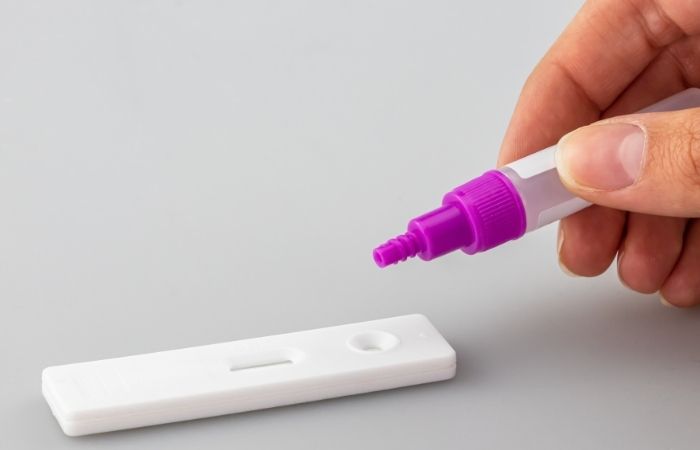
If your brain is stuck in the “what if” loop, a discreet home screening option can help you move from speculation to data. Exploring options through an at-home syphilis rapid test kit allows many people to begin the testing process privately while still following recommended retesting timelines.
Common Exposure Scenarios and When Testing Makes Sense
Let’s talk about the situations that send people down the late-night Google rabbit hole. In real life, testing decisions rarely happen in a vacuum. They usually follow a specific moment: a condom breaks, a partner mentions a diagnosis, or someone notices something unusual after sex.
Take the classic scenario. Someone receives a message a week after a hookup: “Hey, I just tested positive for something. You might want to get checked.” That message alone can trigger a surge of anxiety even if the risk is uncertain.
In that situation, testing immediately might provide a baseline result, but clinicians often recommend repeating testing several weeks later to rule out infection more confidently. This approach acknowledges both emotional reality and biological timing.
| Exposure scenario | Initial testing approach | Follow-up recommendation |
|---|---|---|
| Condom broke during vaginal or anal sex | Baseline test within a couple of weeks | Repeat testing around the 6-week window |
| Partner later reports a syphilis diagnosis | Immediate consultation and testing | Repeat testing based on clinical guidance |
| Painless genital sore appears | Immediate medical evaluation and testing | Possible confirmatory testing depending on results |
| No symptoms but ongoing risk exposure | Routine screening schedule | Periodic retesting recommended |
Table 4 reflects common testing pathways clinicians use when assessing possible exposure.
The Emotional Side of Waiting for the Right Testing Window
Waiting is the part nobody enjoys talking about, but it is a real part of STD testing. People often describe the period between exposure and testing as a mental loop of “what if” scenarios. You might notice every sensation in your body, every skin change, every random itch that suddenly feels suspicious.
Working in sexual health, I have seen this pattern hundreds of times. Someone lies awake at two in the morning refreshing search results, trying to figure out whether a single encounter means something serious. The internet tends to amplify worst-case possibilities instead of explaining probabilities calmly.
The truth is that most people who test for syphilis after a single exposure do not end up testing positive. But the only way to move from uncertainty to clarity is testing at the right time. A test taken too early might feel like action, but it may not actually provide the answer you are looking for.
The good news is that modern testing options make it easier than ever to get that clarity. Between clinic visits, mail-in laboratory testing, and rapid home kits, people have more control over their sexual health decisions than previous generations ever did.
Do You Need to Retest for Syphilis After a Negative Result?
This is the moment that frustrates people the most. You finally get tested, the result comes back negative, and instead of relief you see one more line in the report or clinic instructions: “repeat testing may be recommended.” It can feel like the finish line keeps moving.
The reason is simple biology. If testing happens during the early window period, the infection might not yet be detectable in the bloodstream. A negative test in the first few weeks after exposure can still be accurate, but clinicians often recommend repeating the test later just to be certain.
For syphilis, many health authorities suggest follow-up testing several weeks after the initial screening when recent exposure is suspected. The CDC STI Treatment Guidelines explain that repeat testing may be necessary when early infection is possible but initial results are negative or unclear.
Think of the first test as a snapshot of the moment your blood was analyzed. If exposure was recent, that snapshot may have been taken before the immune system fully raised the alarm.
A Practical Retesting Timeline Most Clinicians Follow
People love exact dates because anxiety wants certainty. Biology tends to work in ranges instead. Instead of one single “perfect” testing day, clinicians usually think in phases that improve reliability as time passes after exposure.
If you test very early after a potential exposure, a repeat test a few weeks later helps confirm the result. This approach is common in sexual health clinics because it balances early detection with biological reality.
| Testing stage | Approximate timing | Purpose of the test | Interpretation |
|---|---|---|---|
| Baseline test | Within the first 2–3 weeks after exposure | Establish early status and identify possible existing infection | A negative result may still require follow-up if exposure was recent |
| Primary follow-up test | Around 6 weeks after exposure | Higher confidence screening once antibodies are more detectable | Negative results become more reassuring if no new exposures occurred |
| Final confirmation window | Up to 3 months after exposure | Confirm absence of infection in higher-risk scenarios | At this point testing reliability is typically strongest |
Table 5 outlines a general approach used in many sexual health settings.
Why Some Syphilis Tests Stay Positive for Years
People are also surprised by this. A person tests positive for syphilis, gets treatment, and then later finds that some tests still come back positive even though the infection is no longer active. If you don't know how the testing system works, that can be confusing.
There are two main types of blood tests that are used to check for syphilis: treponemal tests and nontreponemal tests. Treponemal tests look for antibodies that only attack the Treponema pallidum bacteria. Those antibodies can stay in the blood for a long time after they form.
The CDC says that many people who have been successfully treated for syphilis will continue to test positive on some treponemal antibody tests for a long time. That doesn't mean the infection is still going on.
Instead, doctors keep an eye on how well treatment is working by using different tests that measure antibody levels over time. These levels usually go down after treatment works, which helps healthcare providers make sure that the infection has been controlled.
What If Symptoms Appear After a Negative Test?
Imagine this situation. Someone tests two weeks after a possible exposure and gets a negative result. A week later they notice a painless sore that definitely was not there before. Suddenly the earlier test feels irrelevant.
That scenario is exactly why clinicians emphasize symptoms alongside laboratory testing. If a suspicious sore, rash, or other symptoms appear after an early negative test, evaluation should happen again rather than assuming the first result is final.
The NHS overview of syphilis notes that primary infection often begins with a painless ulcer called a chancre. Because these sores can appear in areas that are not always visible, such as the mouth or rectum, they can easily go unnoticed.
If you notice something unusual, it is worth getting evaluated again even if your last test was negative. Early treatment is highly effective, and catching the infection sooner makes treatment simpler and prevents complications.
How At-Home Testing Fits Into the Timeline
One of the biggest changes in sexual health over the past decade is how accessible testing has become. You no longer need to wait weeks for a clinic appointment just to get screened. Many people now begin the testing process privately at home.
At-home screening kits allow individuals to collect samples discreetly and obtain results quickly. For people dealing with exposure anxiety, this can shorten the mental gap between suspicion and information.
If you are unsure where to start, exploring options through STD Test Kits can provide a discreet way to begin screening. Some readers choose a rapid home test for an initial check and then follow recommended retesting windows to confirm results.
The key thing to remember is that the window period still applies whether testing happens at home or in a clinic. A test taken too early may need to be repeated later to provide full confidence.
FAQs
- 1. How soon after exposure can syphilis be detected on a test?
- The majority of the blood tests that test for syphilis begin detecting the disease within 3-6 weeks of exposure. It is not recommended to test sooner because the results might be false. It is recommended that you test again in a few weeks.
- 2. Can you test for syphilis one week after sex?
- Yes, you can test for syphilis a week after sex. However, the results might be false. It takes a few weeks for the antibodies that the test detects to develop.
- 3. What is the syphilis window period?
- The window period of syphilis is the period between the time you have sex and the period when the test can detect the disease. For the majority of the blood tests that test for syphilis, the window period is between 3-6 weeks.
- 4. If my syphilis test is negative at 2 weeks, am I safe?
- A negative test at 2 weeks is a positive sign. However, the test results might be false because the antibodies that the test detects have not yet developed.
- 5. Can syphilis show up on a test before symptoms appear?
- Yes, sometimes it can. Blood tests measure for the presence of antibodies rather than symptoms, so the infection could be identified before the appearance of the sore or rash. The timing, however, will still depend on the buildup of the antibodies into detectable amounts.
- 6. Should I get tested immediately after the risky encounter?
- Yes, you can get yourself tested immediately after the risky sexual encounter. The results of the test, however, might not give you the exact results you are expecting. It is recommended that you get yourself tested again after two or three weeks for more accurate results.
- 7. Do at-home syphilis tests work the same way as the ones conducted at the clinic?
- Yes, the at-home syphilis tests work the same way as the ones conducted at the clinic. The only difference is the convenience and privacy that you get at home. The accuracy of the test results, however, will depend on the number of weeks that have passed after the risky sexual encounter.
- 8. Can you get syphilis from oral sex and when should you get yourself tested?
- Yes, you can get syphilis from oral sex if you have an open sore. The timing for getting yourself tested after the risky sexual encounter is the same, three weeks after the encounter. If you feel the symptoms after the encounter, you should get yourself tested immediately.
- 9. If I test positive for syphilis, what happens next?
- If you test positive for syphilis, the next thing you need to do is get yourself treated for the infection. The infection can be treated easily using antibiotics such as penicillin. The treatment will not only cure you of the infection but also prevent you from infecting others.
- 10. Should I get tested again after treatment?
- Yes, you should get yourself tested again after treatment using blood samples collected over a period of time to determine whether you are cured of the infection.
The Real Goal of Syphilis Testing: Clarity, Not Guessing
When people start Googling symptoms after sex, the internet tends to push them toward worst-case thinking. Every rash becomes a diagnosis. Every sore becomes a crisis. That is not how medicine actually works.
Most sexual health decisions come down to replacing guesswork with reliable information. Testing at the right time removes the mental noise and lets you make decisions based on facts rather than internet speculation.
How We Sourced This Article: This guide was developed by reviewing current recommendations from public health agencies, peer-reviewed research, and clinical guidance on syphilis diagnosis and testing timelines. We analyzed medical literature on antibody development, incubation periods, and diagnostic accuracy to explain testing windows in plain language. While more than a dozen sources informed the research, the six below represent the most reader-friendly and authoritative references used for this article.