Can You Catch Gonorrhea from a Toilet Seat?
Over 2.Nearly all of those infections came from direct sexual contact. Understanding why that is, and where the rare exceptions actually live, is what this article is for.
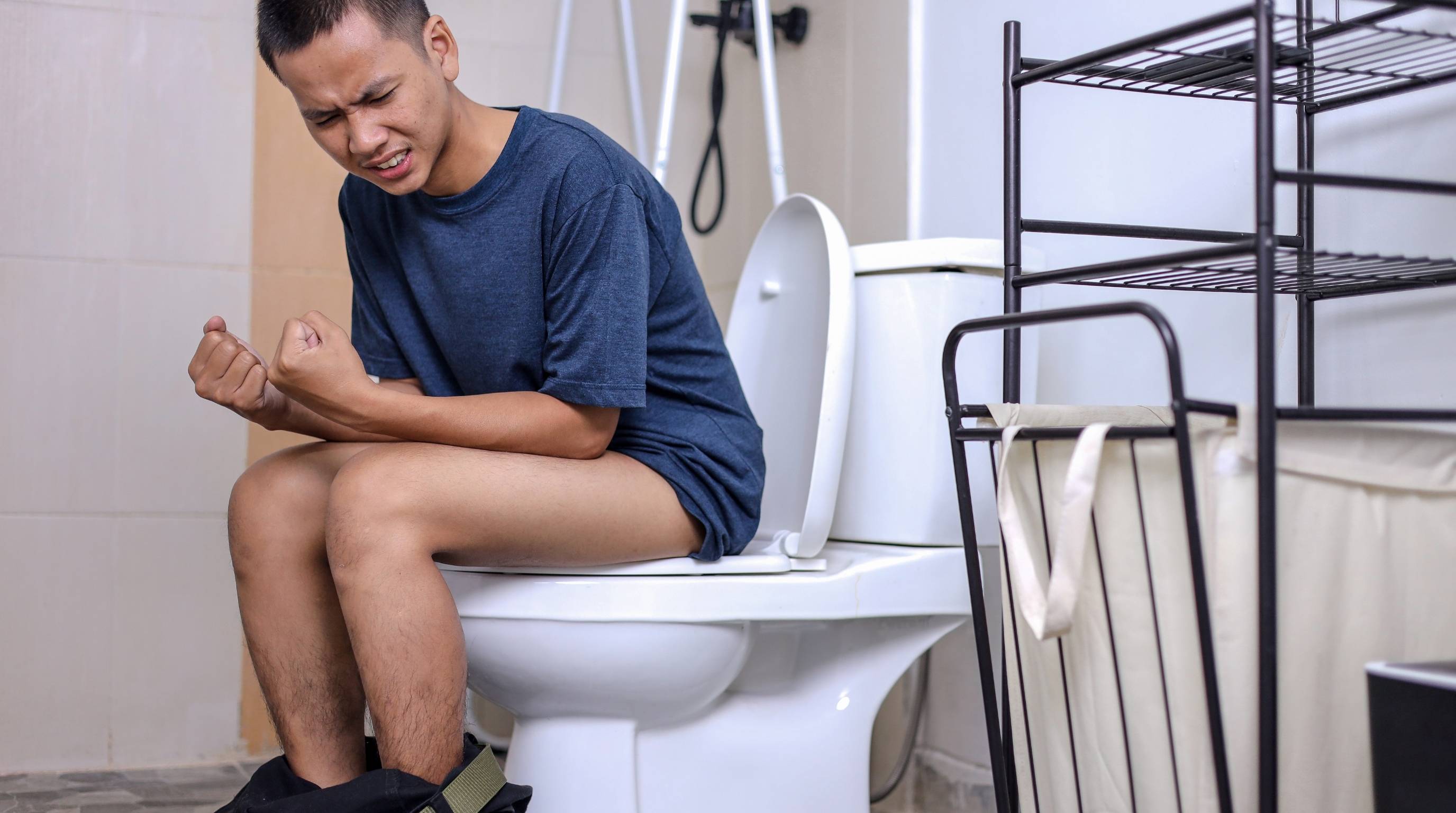
Over 2.2 million STIs were reported in the United States in 2024 alone, according to provisional CDC surveillance data, and yet surface transmission from toilets, towels, or shared objects accounts for essentially none of that burden. Nearly all of those infections came from direct sexual contact. Understanding why that is, and where the rare exceptions actually live, is what this article is for. If you've been searching for this question at midnight after an unexpected result or a moment of anxiety, you're not alone, and you deserve a straight answer.
This article covers every major STD: chlamydia, gonorrhea, syphilis, herpes, HIV, HPV, hepatitis B, hepatitis C, and trichomoniasis, and explains exactly what each one needs to survive outside the body, what surface transmission actually requires, and when testing is the right move. One infection behaves differently from the others, and we'll get to that. But the toilet seat? For nearly every STD, the science is as clear as it gets.
Why Does the Toilet Seat Myth Refuse to Die?
This isn't just urban legend. The toilet seat myth has psychological staying power because it solves a problem that science sometimes doesn't: it gives people an explanation that doesn't involve sex. When a positive result appears and the exposure route isn't immediately obvious, maybe because you've been in a relationship, or because you don't count oral sex as "real" sex, or because the infection has been silently present for months, the brain goes looking for alternatives. A dirty bathroom feels like a safer answer than the conversation you'd need to have otherwise.
Shame and stigma amplify this. Decades of public health messaging around STDs leaned hard on fear and moral judgment, which taught people to hide rather than disclose. When disclosure feels dangerous, alternative explanations become emotionally necessary. The toilet seat has been absorbing that anxiety since at least the 1950s, when campaigns around "venereal disease" were deliberately designed to avoid frank discussion of how these infections actually spread.
There's also a genuine knowledge gap at play. Most people don't know that the gonorrhea bacteria and herpes simplex virus behave completely differently outside the body. They don't know that "bacterial STD" and "viral STD" have meaningfully different survival profiles on surfaces. When everything gets grouped under the umbrella of "STD," it's easy to assume they all spread the same way. They don't. And once you understand the biology, the toilet seat theory stops being plausible for almost every infection, and becomes impossible for most of them.
According to the CDC, STIs spread primarily through sexual contact, and the microorganisms that cause them are adapted to living inside the body, not surviving independently on environmental surfaces. That's not spin. It's why epidemiologists tracking millions of STI cases year after year have never identified toilet seats as a transmission route.
How STD Pathogens Actually Behave Outside the Body, by Infection Type
To understand surface transmission risk, you need to understand what kind of pathogen you're dealing with. STDs are caused by three types of organisms: bacteria (chlamydia, gonorrhea, syphilis), viruses (herpes, HIV, HPV, hepatitis B and C), and parasites (trichomoniasis). Each category has a different relationship with the environment once it leaves the body.
Bacterial STDs are the most straightforward. Chlamydia, gonorrhea, and syphilis all live in mucous membranes, the soft, moist tissue lining the genitals, urethra, rectum, throat, and eyes. Outside those tissues, they don't go dormant or wait for a new host. They die. Air kills them. Drying kills them. A cold plastic surface kills them within minutes. There is no scenario in which sitting on a toilet seat transmits chlamydia, gonorrhea, or syphilis to the next person. The biology simply doesn't allow it.
Viral STDs are more variable in their environmental resilience, though the practical conclusion is similar. Herpes (HSV-1 and HSV-2) can survive for a short time on damp surfaces in laboratory conditions, but "short time" means minutes to a couple of hours, and "laboratory conditions" means controlled humidity and temperature that don't exist in a real bathroom. HIV is actually among the most fragile common viruses outside the body, dying rapidly on exposure to air. HPV is more resilient than most and can survive on surfaces for hours, but no studies have established toilet seats as a realistic transmission route. Hepatitis B is the most environmentally persistent of the group; it can survive on dried surfaces for days, but it still requires blood-to-blood or fluid-to-mucous-membrane contact to infect anyone, which doesn't happen through normal bathroom use.
Trichomoniasis occupies a category of its own. As a parasitic infection, it has slightly different survival characteristics, and it's the one infection where "essentially impossible from surfaces" becomes "extremely unlikely but theoretically possible under specific conditions." More on that shortly.
| Infection | Pathogen Type | Survival Outside Body | Toilet Seat / Surface Risk |
|---|---|---|---|
| Chlamydia | Bacteria | Minutes on dry surfaces | None |
| Gonorrhea | Bacteria | Minutes to ~2 hours (moist lab conditions only) | Effectively none |
| Syphilis | Bacteria | Seconds to minutes outside the body | None, CDC confirms casual contact cannot transmit syphilis |
| Herpes HSV-1 & HSV-2 | Virus | Minutes to ~2 hours (damp surfaces, controlled conditions) | Extremely low, no documented real-world transmission cases |
| HIV | Virus | Minutes, dies rapidly on air exposure | None |
| HPV | Virus | Hours (more resilient than most) | Very low, no confirmed toilet seat transmission cases |
| Hepatitis B | Virus | Up to 7 days on dried surfaces | Very low, requires blood-to-blood or direct mucosal contact |
| Hepatitis C | Virus | Up to several days in some conditions | Very low, primarily blood-to-blood transmission |
| Trichomoniasis | Parasite | Several hours on damp surfaces | Rare but theoretically possible under very specific conditions |
The critical distinction in that table is between "theoretically possible in a lab" and "no documented real-world cases." Pathogen survival on a surface is only step one of transmission. The organism then has to remain viable in sufficient quantity, make direct contact with a mucous membrane or open wound, and successfully establish infection. That chain of events is vanishingly unlikely in any real bathroom scenario, even for the infections that survive the longest.
Bacterial STDs: Why Chlamydia, Gonorrhea, and Syphilis Can't Survive a Toilet Seat
Chlamydia, gonorrhea, and syphilis are three of the most commonly reported STIs in the US, and they share a crucial biological characteristic: they are obligate intracellular or mucous-membrane-dependent organisms. They need the specific chemical environment of living human tissue to survive and reproduce. This isn't a weakness that evolved by accident; it's the result of millions of years of adaptation to a very particular host environment.
Chlamydia trachomatis, the bacterium responsible for chlamydia, is actually an intracellular parasite; it can only replicate inside human cells. Once it's outside a host, it has no mechanism to stay alive on its own. Neisseria gonorrhoeae, which causes gonorrhea, requires warm, moist mucous membranes and begins dying almost immediately on exposure to air and dry surfaces. Treponema pallidum, the syphilis bacterium, is so environmentally fragile that it cannot survive more than seconds to minutes outside the body under normal conditions. The CDC explicitly states that syphilis cannot be transmitted through casual contact with toilet seats, doorknobs, or shared utensils.
This is why, when someone tests positive for one of these infections and cannot immediately identify a sexual exposure, the explanation almost always comes down to one of two things: a timeline misunderstanding (these infections can be silently present for weeks or months before detection), or an exposure that wasn't counted as risky. Oral sex is the most common overlooked route; chlamydia, gonorrhea, and syphilis can all be transmitted through oral contact, even when both partners feel fine and no symptoms are present. The toilet seat isn't the missing piece. The timeline usually is. If this question resonates, our full STD myths guide walks through the most common misconceptions about how these infections actually spread.

Viral STDs: Herpes, HIV, HPV, and Hepatitis, What They Actually Need
Viral STDs generate the most anxiety around surface transmission, partly because they feel more persistent and partly because herpes and HPV in particular can spread through skin-to-skin contact rather than strictly fluid exchange. But environmental persistence on surfaces and actual transmission risk are two different things, and it's worth separating them carefully.
Herpes simplex virus (HSV-1 and HSV-2) is probably the most anxiety-inducing in this context. Herpes does spread through skin contact, not just sexual fluids, which makes people worry that it might be lurking on surfaces in ways that gonorrhea isn't. Research has found that HSV-2 can survive on surfaces for a short time under specific humid conditions. But there are zero documented real-world cases of someone contracting herpes from a toilet seat. The virus doesn't survive the transition from surface to intact skin to mucous membrane in any scenario that normal bathroom use provides. Herpes spreads through direct skin-to-skin contact during sexual activity, through active sores, or through viral shedding from mucosal surfaces, not through toilet seats. For a fuller picture of how herpes actually spreads and why it's so commonly misunderstood, see our piece on what really happens with STDs that seem to disappear, herpes latency is one of the most misread phenomena in sexual health.
HIV deserves direct attention because the fear around it is often the most intense. HIV is actually one of the most environmentally fragile of the common STDs. It requires direct contact with infected blood, semen, vaginal fluid, rectal secretions, or breast milk, and those fluids need to reach a mucous membrane or enter the bloodstream. Exposure to air destroys HIV rapidly. The idea of contracting HIV from a toilet seat isn't just unlikely, it's biologically implausible. The World Health Organization is unambiguous on this point: HIV cannot survive on environmental surfaces in a way that allows casual contact transmission.
HPV is slightly more complicated because it is genuinely more environmentally resilient than most STDs. Studies have detected HPV DNA on inanimate surfaces in healthcare and gym settings. But detected DNA is not the same as a viable virus capable of causing infection, and no studies have established toilet seat contact as a realistic route of HPV transmission. HPV spreads through skin-to-skin genital contact; it doesn't need penetrative sex, but it does need direct skin contact with the infected area. A toilet seat doesn't provide that.
Hepatitis B is the most environmentally persistent of the group and can survive on dried surfaces for up to several days. But hepatitis B still requires blood-to-blood contact or infected fluid directly reaching a mucous membrane. Sitting on a surface where hepatitis B may have dried does not create those conditions. Hepatitis C similarly requires blood-to-blood transmission and is primarily associated with shared needles or, historically, blood transfusions.
When to Actually Test, and the Exact Windows That Matter
Here's where the toilet seat question resolves most usefully: if you're asking whether you got an STD from a surface, the fastest way to end that uncertainty is a test. Not because the surface risk is real, for most infections it isn't, but because testing answers the question you're actually asking, which is "do I have an STD right now?" A negative result is peace of mind. A positive result is the information you need to get treated, protect partners, and stop the chain of transmission.
The window periods below matter more than most people realize. Testing too early can produce a false negative, not because the test is broken, but because your immune system hasn't had time to generate the markers the test is looking for. These are the exact timing windows the science supports:
| Infection | Test From | Key Notes |
|---|---|---|
| Chlamydia | 14 days after exposure | Often completely asymptomatic; many people carry it for months without knowing |
| Gonorrhea | 3 weeks after exposure | Can infect the throat and rectum as well as genitals, site matters |
| Syphilis | 6 weeks after exposure | Early sores may be painless and go completely unnoticed |
| HIV | 6 weeks (first indicator); retest at 12 weeks for certainty | Modern 4th-generation tests are highly accurate at 6 weeks |
| Herpes HSV-1 & HSV-2 | 6 weeks after exposure | Antibody tests; the majority of people with herpes never have noticeable symptoms |
| Hepatitis B | 6 weeks after exposure | Vaccine-preventable, worth checking your status if you're unsure |
| Hepatitis C | 8–11 weeks after exposure | Most commonly transmitted blood-to-blood; curable with modern antivirals |
Testing on day three after a possible exposure and getting a negative result doesn't mean you're clear; it means you tested too early. This is one of the most common sources of false reassurance, and it's worth being aware of before you commit to a result. At-home rapid test kits have made getting tested significantly easier than it used to be. The 7-in-1 Complete At-Home STD Test Kit covers HSV-2, chlamydia, gonorrhea, syphilis, HIV, hepatitis B, and hepatitis C, with results in 15 minutes, no clinic required. Testing is not a confession. It's a health decision. And it's the fastest way to stop the guessing loop.
The One Real Exception: Trichomoniasis and Damp Shared Surfaces
Trichomoniasis is the one infection in this article that deserves its own honest caveat, because the science here is genuinely different. Trich is caused by a parasite, Trichomonas vaginalis, rather than a bacterium or virus. Parasites have different environmental survival needs, and research has found that the trich parasite can survive for several hours on damp surfaces, including wet towels, damp swimwear, and, under certain conditions, toilet seats with fresh moisture contamination.
Real-world transmission from surfaces is still rare. The conditions have to align precisely: the surface needs to be wet, the contamination needs to be recent (within a few hours), and your genital area needs to make direct contact with that specific spot. It's not the scenario most people imagine when they worry about public bathrooms. But unlike chlamydia or syphilis, where the biology is a flat no, trich is more accurately characterized as extremely unlikely but not biologically impossible under specific circumstances.
The more practical concern with trich and shared objects is immediate towel-sharing, particularly damp towels used on the genital area and then handed to another person. That scenario has a small but non-zero biological plausibility. Which is why the standard hygiene advice, use your own towel, launder regularly, is worth following. But the toilet seat, even for trich, is not the realistic transmission route people imagine. The parasite needs moisture, proximity, and immediacy that a public toilet seat almost never provides. For a deeper look at what does and doesn't spread STDs in everyday situations, our breakdown of STD risk from massage and close contact covers the same underlying biology from a different angle.
The Emotional Weight of an Unexplained Diagnosis
Let's address the real situation head-on: an STI result that doesn't seem to make sense is one of the more emotionally disorienting health experiences a person can have. If you're in what you believed was a monogamous relationship, or you've been mostly celibate, or the timing just doesn't add up, the instinct to search for an alternative explanation is completely understandable. The toilet seat, the gym towel, the hotel sheet, these explanations exist in your brain because your brain is trying to protect you from a harder conversation.
What actually resolves the confusion, almost every time, is a more complete look at the timeline and the definition of risk. Chlamydia and gonorrhea can be silently present for months; a positive test today might reflect exposure from half a year ago. Oral sex is frequently discounted as "not really sex" or "not really risky," which means a lot of people don't include it when they mentally audit their exposure history. Partners don't always disclose. And some infections can lie dormant for long enough that tracing them accurately requires a proper exposure timeline conversation with a healthcare provider, not just Google at midnight.
This is exactly the kind of anxiety that regular testing prevents, because if you're testing regularly, a positive result isn't a mystery. You know approximately when your last negative was, which narrows the exposure window considerably. There's a reason the CDC and WHO both recommend routine testing for sexually active people regardless of symptoms: the infections most likely to go undetected are the ones most likely to spread. Knowing your status is the move. Not because you've done anything wrong, but because knowing is always better than wondering. If you're curious about what condoms actually do and don't cover in terms of surface-contact risks, our guide on STD risk with a virgin partner covers the overlapping biology in a way that might reframe how you think about transmission overall.
What You Can Actually Catch in a Shared Bathroom (Spoiler: Not STDs)
Shared bathrooms do carry genuine infection risks, just not the ones most people worry about when they're thinking about sexual health. The actual concerns in public restrooms are gastrointestinal bacteria like E. coli and salmonella, norovirus, and some fungal infections like athlete's foot. These spread through fecal-oral routes, surface contact with broken skin, or respiratory droplets, entirely different transmission mechanisms from STDs.
The toilet flush plume is worth knowing about: flushing an open toilet can aerosolize particles from the bowl and disperse them into the surrounding air. This is a real phenomenon and relevant to gastrointestinal infections, a good reason to close the lid before flushing in small, enclosed bathrooms. But it has nothing to do with sexually transmitted infections, which require direct mucosal contact or fluid exchange to spread.
Good bathroom hygiene is genuinely worthwhile, but for the right reasons. Washing your hands after using a public restroom helps prevent stomach bugs and respiratory infections. It does essentially nothing to protect you from chlamydia, because chlamydia isn't on doorknobs. Your sexual health and your bathroom hygiene operate in almost entirely separate risk categories, and conflating them doesn't protect anyone, it just redirects anxiety in a direction that doesn't lead to useful action. The useful action, for sexual health, is testing. Not hand-washing.
FAQs
- 1. Can you get chlamydia from a toilet seat?
- No. Chlamydia bacteria are intracellular parasites; they can only survive inside human cells. The moment they're on a dry, cold surface, they're already dying. There is no documented case of anyone contracting chlamydia from a toilet seat, and no plausible biological mechanism by which it could happen. If you have a positive chlamydia result and no obvious exposure, the timeline is almost always the explanation; chlamydia can be completely silent for months.
- 2. Can you get herpes from a toilet seat?
- Essentially no. Herpes can survive on surfaces for a short time in humid, warm lab conditions, but in a real bathroom, with airflow, ambient temperature, and the time that passes between uses, the virus doesn't survive long enough to infect anyone through normal toilet use. Zero real-world cases have ever been documented. Herpes spreads through skin-to-skin contact during sexual activity, not through shared surfaces.
- 3. Can you get HIV from a toilet seat?
- No. HIV is one of the most environmentally fragile viruses once it leaves the body. It's destroyed rapidly by exposure to air. It requires direct contact with infected blood, semen, vaginal fluid, or rectal secretions, and those fluids need to reach a mucous membrane or enter the bloodstream. A toilet seat provides none of those conditions under any circumstances.
- 4. Is trichomoniasis different when it comes to surface transmission?
- Yes, slightly. Trich is the one infection on this list where "impossible" is the wrong word. The parasite can survive on damp surfaces for several hours, which makes immediate shared-towel transmission a genuine (if rare) biological possibility. That's meaningfully different from chlamydia or gonorrhea, where no surface survival scenario leads to real-world transmission. Still, even for trich, the toilet seat isn't the realistic concern; the damp towel shared immediately between two people is.
- 5. Can you get syphilis from sharing a bathroom?
- No. The CDC explicitly states that syphilis cannot be contracted through casual contact with toilet seats, doorknobs, shared objects, or clothing. The syphilis bacterium cannot survive outside the human body for more than a few seconds. It spreads through direct contact with a syphilitic sore during sexual activity, not through surfaces of any kind.
- 6. What about sex toys? Are they a surface transmission risk?
- Yes, genuinely. Unlike toilet seats, sex toys are warm, retain moisture, and go directly to the areas where STDs establish infection. Several infections, such as gonorrhea, chlamydia, trichomoniasis, and herpes, can survive on toys for hours if not cleaned between uses. Using a condom on shared toys and cleaning them properly between uses eliminates all of that risk, essentially. The toilet seat myth survives culturally, while this much more real risk often goes unacknowledged. For more on what everyday activities do and don't carry STD risk, our guide on blood transfusions and STD risk looks at another commonly misunderstood transmission question.
- 7. If I got an STD but I know I haven't had sex, what's going on?
- The most likely explanation is a sexual exposure you didn't register as risky. Oral sex is the most commonly dismissed route; chlamydia, gonorrhea, and syphilis all transmit through oral contact. Another explanation is timing: some infections, especially chlamydia, can be completely silent for months. A positive result now might reflect an exposure from much earlier than you're thinking. A provider who takes a thorough, non-judgmental sexual history can usually find the actual explanation.
- 8. Does washing bedding and towels kill STD pathogens on fabric?
- Yes. Standard laundering with hot water and detergent is sufficient to kill gonorrhea, chlamydia, trichomoniasis, and most other STD-causing organisms on fabric. High-heat drying adds extra insurance. The scenario where fabric poses any meaningful risk is immediate sharing of damp, just-used towels, not a washed towel from last week or a hotel sheet that went through commercial laundering.
- 9. What's the right time to test after a possible exposure?
- It depends on the infection. Chlamydia: test from 14 days after exposure. Gonorrhea: 3 weeks. Syphilis and herpes: 6 weeks. HIV: 6 weeks for a strong indicator, retest at 12 weeks for certainty. Hepatitis B: 6 weeks. Hepatitis C: 8 to 11 weeks. Testing before these windows can produce false negatives; the infection is present, but hasn't generated enough detectable markers yet.
- 10. If STDs don't spread from surfaces, why do so many people think they do?
- Because the alternative explanation requires a harder conversation, when a result appears that doesn't seem to match someone's mental timeline of their sexual history, the brain looks for alternatives. Surfaces feel like a safe explanation that doesn't require disclosure, doesn't imply dishonesty, and doesn't invite shame. That's the real reason the myth persists, not because there's scientific ambiguity, but because it's emotionally useful. The science has been clear for decades. The anxiety it's answering hasn't gone anywhere, which is why the myth hasn't either.
Get Your Answers in 15 Minutes, No Clinic Needed
The cleanest way out of the anxiety loop isn't reassurance reading, it's a test. A negative result is information. A positive result is also information, and the earlier you have it, the sooner you can do something about it. At-home rapid test kits now match the accuracy of clinic-based testing and give you results in 15 minutes from your own bathroom.
For comprehensive coverage, the 8-in-1 Complete At-Home STD Test Kit screens for HSV-1 and HSV-2, chlamydia, gonorrhea, syphilis, HIV, hepatitis B, and hepatitis C in one order. For women who want the full picture including trichomoniasis and HPV, the Women's 10-in-1 At-Home STD Test Kit covers all ten infections. If you've narrowed it down and need to check the bacterial three quickly, the Chlamydia, Gonorrhea & Syphilis At-Home STD Test Kit delivers those three results fast and discreetly. Find the right test at stdtestkits.com, testing is the fastest way to stop the guessing game.
Our article was constructed based on current advice from the most prominent public health and medical organizations, and then molded into simple language based on the situations that people actually experience, such as treatment, reinfection by a partner, no-symptom exposure, and the uncomfortable question of whether it "came back." In the background, our pool of research included more diverse public health advice, clinical advice, and medical references, but the following are the most pertinent and useful for readers who want to verify our claims for themselves.
- About STIs | Centers for Disease Control and Prevention (CDC)
- Sexually Transmitted Infections (STIs) | World Health Organization (WHO)
- Sexually Transmitted Infections Surveillance, 2024 (Provisional) | CDC
- Can You Get an STI/STD from a Toilet Seat? | Healthline
- STDs and Toilet Seats: Possible Risks and Preventions | Medical News Today
- Can a Toilet Promote Virus Transmission? From a Fluid Dynamics Perspective | NCBI / PMC