Can You Have Syphilis and Not Know It? Teens Can
Quick Answer: Yes, teens can have syphilis without knowing it. Many experience no obvious symptoms, especially in the early or latent stages, making regular testing critical for early detection and treatment. The catch?

Quick Answer: Yes, teens can have syphilis without knowing it. Many experience no obvious symptoms, especially in the early or latent stages, making regular testing critical for early detection and treatment.
The STD That Doesn’t Always Show Its Face
Syphilis is one of the oldest known sexually transmitted infections, but today it’s acting more like a modern stealth threat, especially among young people. Caused by the bacterium Treponema pallidum, it spreads through vaginal, anal, or oral sex, and can also pass from a pregnant person to their baby. The catch? It doesn’t always come with warning signs.
In the early “primary” stage, syphilis might cause a small sore (called a chancre) that’s often painless and easy to miss. It might show up on the genitals, inside the mouth, or even under the foreskin or within the vagina, places teens may not check or feel comfortable examining. By the time secondary symptoms appear, like a rash or flu-like fatigue, weeks have passed. And for many, nothing feels wrong at all.
That’s what makes it so dangerous: you can have syphilis and feel perfectly fine. It can quietly progress into the latent stage, where it hides without symptoms for months, or even years, before causing serious organ damage. During that time, it can still be transmitted to partners.

Teenagers Are Driving the Surge, and Don’t Know It
According to the CDC’s most recent STI surveillance data, adolescents and young adults account for nearly half of all new sexually transmitted infections in the United States, despite representing just over a quarter of the sexually active population.
That includes syphilis. And while the highest syphilis rates are still among men who have sex with men, rates are rising fastest among teens of all genders, especially in underserved communities. In 2023, total syphilis cases in the U.S. reached a record high, with over 200,000 reported, including thousands among people under 20. Many of these were not caught until months or years after exposure.
Why? Because symptoms don’t always appear, or they don’t look like what people expect. Teens may confuse a painless sore with a shaving cut or ignore a rash that disappears in a few days. Some have no symptoms at all. Others are too afraid or embarrassed to ask a parent or doctor about what they’re seeing (or not seeing).
Inside the Invisible Stages of Syphilis
To understand how syphilis slips under the radar, it helps to break down its stages:
| Stage | Symptoms | Timing | Can It Go Unnoticed? |
|---|---|---|---|
| Primary | Painless sore (chancre) at site of infection | 10–90 days after exposure | Often yes, especially if sore is internal |
| Secondary | Rash (palms, soles, or body), sore throat, fatigue, hair loss | 2–12 weeks after sore | Yes, rashes may be mild or misdiagnosed |
| Latent | No symptoms at all | Months to years | Always, only detectable via blood test |
| Tertiary | Brain, nerve, or organ damage; blindness | Years later (if untreated) | Becomes visible when damage is done |
Figure 1. Syphilis stages and symptom visibility. Many teens test positive during latent stages, never realizing they had early symptoms.
This quiet progression is why public health experts call syphilis “the great imitator.” It mimics other conditions or causes no signs at all, and teens, in particular, are less likely to recognize what’s happening.
When “Just Tired” Meant Something More
Let’s revisit Jazmine. After that early rash faded, she felt fine, until she started sleeping 12 hours a night and struggling to focus at school. Her teachers thought it was stress. Her mom thought it was hormones. But a provider at a community clinic ran a standard STI panel after Jazmine asked for birth control, and that’s when the positive syphilis test appeared.
She had no idea where it came from. Her last partner had been someone she trusted. She hadn’t had sex in months. And because no one ever talked to her about syphilis, she never thought she’d be the one facing it.
This is the reality for many teens: they don’t have the information, they don’t see symptoms, and they don’t think it applies to them, until it does.
Why Teens Often Miss the Signs, And Why It Matters
Most teens don’t expect to get an STD. They might have heard about chlamydia or herpes in health class, but syphilis? That sounds like something from an old black-and-white movie. That disconnect, between what teens expect and what’s actually happening, is one reason syphilis often goes undiagnosed in this age group.
Some of the most common reasons syphilis is missed in teens include:
- Symptoms aren’t painful , so they’re dismissed or go unnoticed.
- Sores may be hidden , inside the vagina, anus, or mouth.
- Rashes are misread , often as allergies, heat rash, or acne.
- Many have no symptoms at all , especially in the latent stage.
- Shame or fear of judgment , stops teens from asking for help.
Clinicians report that some teens come in for unrelated concerns, fatigue, headaches, low appetite, only to be diagnosed with syphilis during routine STI panels. Others find out only because a partner tested positive and told them to get checked.
What Parents and Teens Should Know
If a teen is sexually active, whether with one partner or multiple, they should be screened for STIs regularly. That includes syphilis, even if there are no visible symptoms. Testing is especially important for those with inconsistent condom use, anonymous partners, or any history of a prior STD.
Here’s what syphilis testing looks like in practice:
| Test Type | What It Detects | Sample Needed | Time to Results |
|---|---|---|---|
| Rapid Syphilis Test | Syphilis antibodies | Finger prick (blood) | 10–20 minutes |
| Treponemal Test (e.g., FTA-ABS) | Long-term antibodies to syphilis | Blood draw | 1–3 days |
| Non-treponemal Test (e.g., RPR, VDRL) | Current infection activity | Blood draw | 1–3 days |
Figure 2. Common syphilis tests and how they work. Teens usually receive a combination of treponemal and non-treponemal testing when screened.
Most clinics use a two-step testing model: a screening test followed by a confirmation test. The idea is to catch both early and late infections with the most accuracy possible.
What If Your Teen Doesn’t Want You to Know?
Many states allow minors to access STD testing without parental consent. This helps protect their privacy and autonomy, but it can also leave parents feeling in the dark.
So what can you do?
Start with conversation. Not lectures. Ask open-ended questions. Create an environment where your teen feels safe talking about relationships, sex, and health without punishment. If they think they’ll get in trouble, they won’t come to you when it matters.
Some parents worry that talking about STDs will “encourage” risky behavior. But research shows the opposite: teens who feel informed and supported are more likely to use protection, get tested, and make healthier choices overall.

Why Early Testing Changes Everything
The earlier syphilis is caught, the easier it is to treat, and the less likely it is to cause long-term harm. A simple shot of penicillin can clear the infection completely in early stages. But once it moves into the brain, eyes, or heart, damage can be permanent, even with treatment.
Here’s where things get real: untreated syphilis can cause blindness, dementia-like symptoms, coordination loss, and even death. That’s not a scare tactic, it’s just biology. The good news? It’s preventable. But only with timely testing.
Let’s say a teen had unprotected oral sex with a partner who later tested positive for syphilis. If the teen gets tested within a few weeks, treatment is straightforward. If they don’t get tested for months, or until strange neurological symptoms appear, the risk of lasting complications rises dramatically.
This is why many clinics now include syphilis as part of standard STI panels for sexually active teens, especially those with multiple partners or symptoms of concern.
How Teens Search for Answers (and Why It Matters)
“Rash after sex but no STD?” “STD with no symptoms?” “How long can syphilis go undetected?”
These are real searches. Real teens. Real confusion.
And that’s where misinformation sneaks in. A Reddit thread. A friend’s TikTok. A half-remembered rumor from middle school health class. The internet gives teens access to information, but not always the right information. Without accurate, relatable resources, teens may falsely believe they’re “fine” because they feel fine. Or that STDs only affect “promiscuous” people, which fuels shame and stigma.
Your teen might be searching for answers right now. The best way to support them? Be one of those answers. Without panic. Without judgment. Just facts, care, and options.
When Nothing Feels Wrong, But Something Is
“But I don’t feel sick.” That’s the line clinicians hear most often from teens diagnosed with syphilis. And they’re not wrong, many feel totally normal. That’s what makes the infection especially tricky. It doesn’t need to cause pain to do damage. It doesn’t need to make you feel sick to make you contagious.
Take Malik, 17. He came in for a sports physical and decided to get tested for STDs after hearing a teammate mention “getting checked out.” He had no symptoms, no complaints, no reason to worry. When the results came back positive for syphilis, he was stunned. His last sexual encounter had been months earlier, and he’d had no idea anything was wrong.
That kind of silent transmission is more common than most people realize. It’s also part of what’s driving the rise in congenital syphilis, cases where pregnant teens or young adults unknowingly pass the infection to their babies. In 2023, over 3,700 congenital syphilis cases were reported in the U.S., a 30% increase over the previous year. Many of those mothers had no idea they were infected during pregnancy.
One missed test can mean irreversible harm, not just to the person with syphilis, but to others they care about. That’s why regular screening is about protection, not punishment.
Preventing Syphilis: More Than Just Protection
Yes, condoms are important. And yes, they lower the risk. But stopping syphilis, especially in teens, is also about making it easy to get, teaching people about it, and talking about it.
Here is what really lowers the number of teens with syphilis:
- Easy access to private testing: Clinics, telehealth, and home testing kits make it easier.
- Full sex education: not just abstinence. Not just fear.
- Supportive talks at home: Teens need to know the truth and trust.
- Regular visits to the doctor: Make STI panels a normal part of life, not something to be ashamed of.
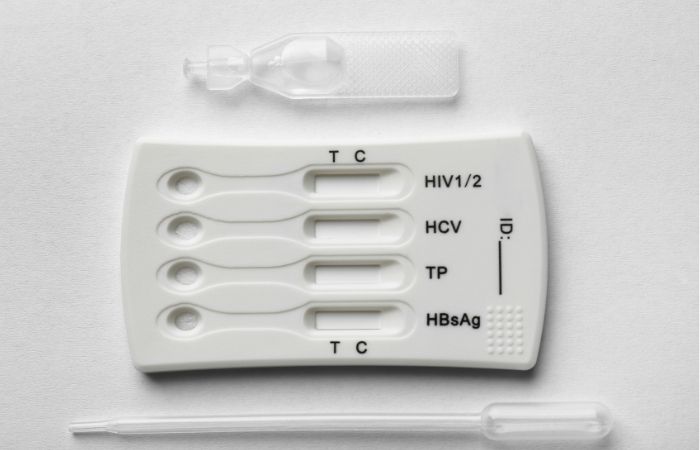
Testing kits that you can use at home are also changing the game. Teens who are too scared to ask their parents for a ride to the clinic can now test for multiple STDs, including syphilis, at home without anyone knowing. These kits are private, quick, and easy to get to, which is what teens want.
But it doesn't matter how good the tools are if no one uses them. The biggest problem is still silence. People stay sick because they are ashamed. Empowerment puts them to the test.
“I Have Syphilis”, What Happens Next?
Getting that diagnosis is scary. But it’s not the end. In fact, it’s usually the beginning of clarity.
After Malik received his positive test result, the clinic staff explained the next steps: he’d receive a single dose of long-acting penicillin, delivered via injection. No hospital stay. No complex treatment. Just one shot, and a follow-up in a few weeks to confirm success.
They also talked with him about notifying past partners. The clinic offered anonymous partner notification services, so he didn’t have to do it all himself. They walked him through how syphilis spreads, what to expect emotionally, and how to prevent reinfection.
He left the clinic with more than just treatment. He left with a plan, a new understanding of his health, and the tools to protect himself going forward.
That’s the best-case scenario. And it’s not rare. The earlier teens find out, the easier it is to resolve, and the less likely they are to carry shame or long-term complications with them into adulthood.
Why This Is Bigger Than One Diagnosis
Syphilis in teens is more than a medical issue. It’s a mirror reflecting how we talk, or don’t talk, about sexual health, trust, and care. It’s a signal that even “good kids” from “safe homes” can get caught in something they didn’t see coming. It’s proof that waiting for symptoms doesn’t work. Prevention isn’t just about stopping disease. It’s about creating a culture where getting tested is normal, not shameful. Where asking questions is brave, not taboo.
For every teen like Jazmine or Malik, there are dozens more who don’t even know they’re at risk. Who won’t feel symptoms. Who might not test unless someone they trust says: “It’s okay to check. It’s smart to check.”
You don’t have to wait until something feels wrong to do something right.
FAQs
- 1. Can you really have syphilis and not know it?
- Yes, and that’s the whole problem. Syphilis is sneaky. You might never feel a thing. No burning, no weird discharge, no pain. The early sore might be so small or tucked away that you don’t notice it. Or it disappears before you think to ask. That’s why it’s called the “great imitator”, or sometimes the “silent STD.”
- 2. How long can syphilis hang around before it causes real problems?
- Longer than most people realize. Months, even years. It can lie low in your body without symptoms during the latent stage. But just because you don’t feel it doesn’t mean it’s gone. If untreated, it can eventually damage your brain, nerves, heart, and eyes. Yes, really.
- 3. What does syphilis even look like in teens?
- Honestly? It often doesn’t look like much. Maybe a bump that feels like an ingrown hair. Maybe a rash on your palms or feet that you think is eczema. Maybe nothing at all. One 17-year-old told us he only got tested because his friend did, and was floored when he tested positive too. He had zero symptoms.
- 4. Is oral sex “safer” when it comes to syphilis?
- Not really. Syphilis can spread through oral sex just like through vaginal or anal sex. If someone has a sore in their mouth or on their genitals, even if you can’t see it, it’s game on for transmission. This is how a lot of teens get it without ever realizing it.
- 5. Are at-home STD tests legit?
- The good ones are. Look for FDA-cleared or CLIA-certified test kits that screen for multiple STDs, including syphilis. They’re often discreet, fast, and accurate. But like anything, read the instructions, check the timing, and if you get a positive result, follow up with a provider. Privacy doesn’t mean skipping medical advice.
- 6. Can syphilis just go away on its own?
- Nope. It might look like it goes away when the rash or sore disappears, but that’s just the infection hiding. Syphilis doesn’t cure itself. The bacteria keep working quietly behind the scenes, which is how people end up with long-term complications.
- 7. If a teen tests positive, what should happen next?
- Treatment is fast and simple: usually one shot of penicillin in the hip. No judgment, no lectures. The clinic will also talk about how to let partners know (some offer anonymous notification options). Most important thing? Getting treated quickly and avoiding reinfection. That’s how you shut it down.
- 8. Can teens get tested without telling their parents?
- In most U.S. states, yes. Minors have the legal right to confidential STD testing and treatment. Clinics know how to protect privacy. If you’re worried about insurance or billing showing up at home, ask the clinic ahead of time, they deal with this every day.
- 9. How often should a sexually active teen get tested?
- At least once a year is a good baseline, but more often if there are new partners, condom mishaps, or symptoms, even if they seem small. Many providers recommend testing every 3–6 months if you're in a higher-risk group.
- 10. Why is syphilis even making a comeback?
- A mix of things: less sex ed in schools, pandemic-related clinic shutdowns, social stigma, hookup culture, and plain old misinformation. Teens (and adults) don’t always realize that syphilis is back in a big way, and that it often doesn’t cause the “obvious” symptoms people expect. That’s why catching it early is key.
You Deserve Answers, Not Assumptions
No one expects to get syphilis, especially not teens. But the numbers don’t lie. It’s rising, it’s sneaky, and it’s treatable. If you’re a teen reading this, or a parent trying to figure out how to help, know this: getting tested isn’t a confession. It’s care. It’s clarity. And it’s completely within your control.
Don’t wait until symptoms show up, or until it’s too late to act. This at-home combo test kit checks for the most common STDs discreetly and quickly.
How We Sourced This Article: We combined current guidance from leading medical organizations with peer-reviewed research and lived-experience reporting to make this guide practical, compassionate, and accurate. In total, around fifteen references informed the writing; below, we’ve highlighted some of the most relevant and reader-friendly sources.