Can You Trust At-Home Syphilis Tests? What Buyers Need to Know
Quick Answer: At-home syphilis tests in 2025 are accurate when used correctly and after the proper window period. Why People Are Choosing At-Home STD Tests (And Why They’re Hesitant) It’s 2025. No small-town gossip.

Quick Answer: At-home syphilis tests in 2025 are accurate when used correctly and after the proper window period. FDA-cleared rapid tests can detect syphilis antibodies with 85–98% sensitivity, but false negatives may occur if testing too early or incorrectly.
Why People Are Choosing At-Home STD Tests (And Why They’re Hesitant)
It’s 2025. You can get groceries, therapy, and even birth control online, why not STD testing? For millions of people like Olivia, at-home testing isn’t just convenient. It’s the only option that feels emotionally safe. No judgmental waiting rooms. No small-town gossip. No awkward “why are you here today?” questions from a stranger behind a reception desk.
Still, syphilis is scary. The name alone brings up images of untreated sores, health classes, and worst-case scenarios. People want privacy, yes, but they also want to be absolutely sure they can trust the results. That’s where most of the anxiety lies: “What if it says I’m negative and I’m not?” “What if I do it wrong?” “How would I even know if it’s real?”
This article answers all of that, starting with how syphilis tests actually work and why timing is everything.
How Syphilis Tests Work (And What They Can, and Can’t, Tell You)
Syphilis testing isn’t like testing for the flu. You’re not looking for the bacteria itself. You’re looking for your body’s reaction to it, specifically, antibodies that appear once your immune system notices the infection. That’s why most at-home syphilis tests are either treponemal antibody tests (looking for long-term immune response) or non-treponemal tests (which track ongoing infection).
At-home kits in 2025 fall into two categories:
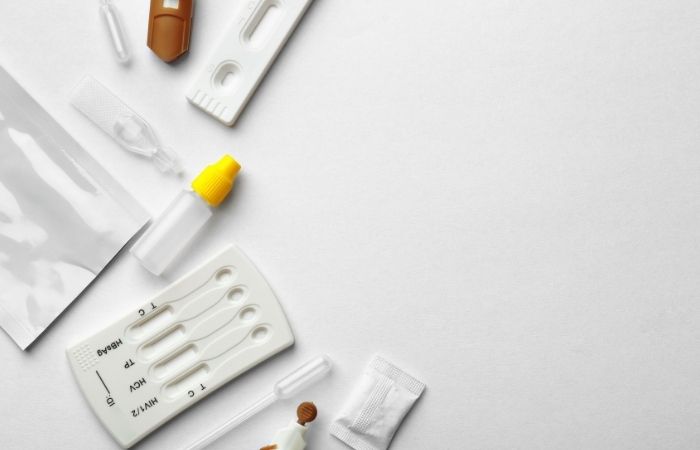
One is the rapid test, often using a finger-prick blood sample that you collect and read yourself in minutes. These are similar in form to a COVID or pregnancy test, cassette-based, color-indicated, and often under 20 minutes from start to result. They’re used around the world in mobile clinics and outreach programs, and several FDA-cleared options are now available for personal use.
The other is the lab-processed mail-in kit. These still use your sample, but you mail it to a lab. The upside is lab-level accuracy. The downside? Waiting 3–5 business days for results, and crossing your fingers nothing leaked in the return envelope.
If you’re testing for peace of mind after a recent exposure, that distinction matters. So does timing. No test, clinic or at-home, can detect syphilis the moment you’re infected.
People are aslo reading: Condoms Cover Genitals, Not Everything Else: The Skin-to-Skin STD Problem
Timing Matters: When At-Home Syphilis Tests Work Best
It’s tempting to test right after a risky night. Olivia almost did. But here's the catch: if you test too soon, the result could be negative even if you’re infected. That’s because your body needs time to produce detectable levels of antibodies. This time window is called the seroconversion period, and it’s different for every STD.
| STD | Detectable Earliest | Best Time to Test | Sample Type |
|---|---|---|---|
| Syphilis | 3–6 weeks after exposure | 6–12 weeks for highest accuracy | Finger-prick blood |
| Chlamydia | 1–2 weeks | 2+ weeks | Urine or swab |
| HIV | 2–4 weeks (4th gen test) | 4–12 weeks | Blood or oral fluid |
Table 1. Testing windows for common STDs. Testing before the “best time” increases risk of false negatives.
Olivia waited. Day 21, she ordered a combo STD kit that included a syphilis test. It arrived in discreet packaging two days later with everything labeled, sealed, and tamper-proof. Even the return envelope had no branding. But Olivia still had one big question: “How do I know this is legit?”
Accuracy in 2025: Are Rapid Syphilis Tests Really Reliable?
The short answer is yes, with caveats. According to CDC guidance on syphilis testing, rapid treponemal tests like those used in many at-home kits have sensitivity between 85% and 98% depending on the stage of infection and the user’s technique.
That means they catch most infections, but not all. And if you’re in an early stage (primary syphilis), the chances of a false negative are higher. On the flip side, a past infection that was treated can still produce a positive result on some treponemal tests, even if you’re no longer infectious. That’s why context matters, and why some results need confirmation.
| Test Type | Sensitivity Range | False Negative Risk | Recommended Use |
|---|---|---|---|
| At-Home Rapid (Treponemal) | 85%–98% | Higher in early infection | Initial screening |
| Lab-Based RPR + Treponemal | 95%–99% | Low if timed correctly | Confirmatory & staging |
| Clinic Exam + Blood Panel | ~99% | Very low | Symptomatic or exposed |
Table 2. Comparing test types for syphilis detection in 2025. Accuracy improves with timing and user precision.
If you’re testing at home, the best strategy is to follow up a positive result with a clinical confirmatory test, or, if you test negative but still have symptoms or high-risk exposure, retest in 2–4 weeks. Olivia’s kit came with a QR code to order a follow-up mail-in panel with full RPR testing. That gave her peace of mind.
How to Use an At-Home Syphilis Test Without Screwing It Up
No one talks about how awkward it is to stab your own fingertip while trying not to drip blood everywhere. Olivia was shaking slightly when she did it, but the instructions were clear: wash hands, prick the side of your fingertip (not the pad), collect the blood using the provided dropper, then apply it to the cassette. Add the buffer solution. Wait 10 minutes. Don’t interpret after 20.
The key with these tests is timing, lighting, and patience. Many false reads happen because users misread faint lines, test too soon after exposure, or wait too long and read a dried-out cassette. If the control line doesn’t appear? The test is invalid. If the test line is faint but present within the window time? It’s likely positive.
What Olivia saw was a faint pink line next to “T”, the test line, and a clear control line. Her heart dropped. She wasn’t sure if it was real. She took a photo, emailed the test manufacturer’s support team (they responded within a day), and booked a confirmatory test through a local walk-in lab using an anonymous order link from the kit’s resource guide.
Three days later, the lab confirmed what she feared: positive for syphilis. But they also explained: it was caught early, highly treatable, and no longer uncommon.
What to Do If You Test Positive at Home
The shame doesn’t hit all at once. It comes in waves. Olivia described it like a cloud moving through her: confusion, embarrassment, anger, silence. But the truth is that syphilis is one of the most treatable STDs, and a single dose of penicillin usually does the job.
Here’s what she did next: First, she confirmed the result through a lab. Second, she spoke to a telehealth provider who prescribed treatment and sent her to a clinic partner. Third, she notified her most recent partners using a free, anonymous notification service embedded in the provider portal. Nobody yelled. Nobody blamed her. In fact, two of them said thank you. One even replied, “Wow. I wouldn’t have known if you hadn’t told me.”
Testing positive for syphilis isn’t the end of your sexual health. It’s a reminder that testing works, and that catching it early can prevent complications. Left untreated, syphilis can progress to secondary stages (rash, flu-like symptoms) and eventually affect organs. But caught early? It’s a detour, not a dead end.
If you’ve tested positive with an at-home kit, start here: STD Rapid Test Kits offers discreet follow-up testing options and guides to help you navigate what’s next.
Do You Still Need a Clinic? Pros and Cons of At-Home Testing
At-home testing isn’t perfect. It doesn’t replace a full exam. It won’t treat you. But it can catch infections early, provide clarity, and open doors to care you might otherwise delay. For people without insurance, queer people avoiding discrimination, or anyone just trying to avoid the awkwardness of a clinic, these tests are a lifeline.
Still, there are times when a clinic is the better call:
If you’re pregnant. If you have visible sores. If your immune system is compromised. Or if you’ve tested positive before and need staging. Clinics offer a full panel of confirmatory tests, direct treatment, and, when needed, partner services that help trace and treat exposures.
But if you’re someone who’s just trying to know, to breathe easier, to rule something out, that discreet box on your doorstep might be exactly what you need. Especially if you’re within the right testing window.
Not sure where to start? You can order a Syphilis Rapid Test Kit here, no prescription, fast shipping, and easy to use.
People are aslo reading: How Safe Is Grinding? The STD Risk You Didn’t Think About
Real People. Real Results. No Judgment.
Olivia isn’t alone. According to a 2025 consumer study by Healthline, more than 38% of STD testing in urban Gen Z populations is now done at home. Rural users rely even more heavily on rapid tests due to clinic closures and geographic isolation. LGBTQ+ communities have also driven innovation in discreet, self-guided care, especially when navigating stigma or previous trauma in healthcare systems.
Stories pour in online every day:
“I caught syphilis during my first month of college. I didn’t want to tell my parents or risk getting billed through insurance. The home test gave me answers, and the clinic confirmed. Treatment was fast. Nobody judged me.”
“I travel constantly for work. I keep a combo STD kit in my suitcase. It’s just part of the routine now, like brushing my teeth.”
“My first test was negative, but I retested at six weeks like the site suggested. That second test? Positive. I’m so glad I didn’t trust the first one blindly.”
At-home testing isn’t just about privacy. It’s about access. Autonomy. Control. And yes, trust. But trust isn’t blind. It’s built on timing, instructions, follow-up, and informed action. When all those things align? You can absolutely trust the result.
Still Not Sure If You Should Test? Let’s Talk About That
You might be halfway down this page thinking, “Okay, but do I really need to test?” And that’s fair. Maybe you haven’t had symptoms. Maybe you’re telling yourself it was just one night. Or maybe you’re frozen in that weird shame-fear-limbo where doing nothing feels easier than knowing.
Let’s be real: syphilis doesn’t always come with a red flag. There’s not always a sore you can point to. It can live quietly in your body for weeks or months, and then flip the switch. And even if you’ve used protection, syphilis can still transmit through skin-to-skin contact, especially during oral or anal sex. That doesn’t make you reckless. It makes you human.
If what’s holding you back is fear of being judged, remember this: nobody’s watching. No nurse, no clipboard, no side-eyes. Just you, a test, and the truth. That’s powerful. Testing is not a confession. It’s an act of care. For you. For the people you’ve been with. For the people you want to be with in the future.
And if the result is negative? Relief. If it’s positive? A plan. That’s it. You deserve both, relief or a plan. Not guessing games. Not spiral thoughts at 2AM. You deserve to know. You deserve to move forward.
Order your at-home syphilis test today, quietly, quickly, and on your terms.
FAQs
- 1. Can I actually trust an at-home syphilis test?
- Yeah, you can. As long as you’re using a legit, FDA-cleared test and you follow the directions, the accuracy is solid. These kits use the same science clinics do: they detect syphilis antibodies in your blood. What matters most? When you test. Too early, and the test might miss it. But if you’re in the right window, that little test strip can give you a real answer, and peace of mind.
- 2. How soon is “too soon” to test?
- Think of it like this: syphilis doesn’t show up on tests the second you’re exposed. Your body needs time to react. Most people should wait at least three weeks after potential exposure. Six weeks is better. Twelve weeks is gold-standard. So if you tested at week two and got a negative, that doesn’t mean you’re totally in the clear. Mark your calendar and retest.
- 3. What if I don’t have any symptoms, should I still test?
- Absolutely. Syphilis loves to stay quiet, especially in the early stages. You can have it and not feel a thing. No sores, no rash, no flu-y stuff. So don’t wait for symptoms to show up. If you had a partner who tested positive, a new partner whose history you’re unsure of, or a condom slip-up… just test. Quiet infections are still real infections.
- 4. I got a faint line on my test, what does that mean?
- If there’s a line, even a ghost of one, in the test area within the time limit on the instructions, count it as positive. A faint line means antibodies are present. It doesn’t mean “maybe.” It means “follow up.” Go get a lab-confirmed test and talk to a provider. And if you’re not sure, take a photo and reach out to the test kit’s support, they usually answer fast.
- 5. What if I had syphilis before, could this test still say I’m positive?
- Yes, and that’s not a flaw, it’s just biology. Treponemal tests (most at-home ones) detect antibodies, and those stick around even after you’ve been treated. So if you were treated last year and test today, you could still show positive. That’s why follow-up testing and medical history matter. A provider will use a different test (like RPR) to see if it’s a new infection or an old echo.
- 6. Is the packaging really discreet? I live with roommates
- It is. No pink letters screaming “STD TEST INSIDE.” Just a plain box or envelope, usually from a neutral company name. No one’s going to guess what’s inside unless they open it, which they shouldn’t. Also, most kits fit in a mailbox or PO box, so you don’t need to worry about a roommate signing for anything.
- 7. What should I do if the test says I’m positive?
- Breathe. Then plan. Syphilis is treatable, usually with one penicillin shot. Step one: confirm with a lab test or clinic. Step two: get treated. Step three: tell your partners. That last part can feel scary, but there are anonymous tools to help, and honestly? Most people are grateful you told them. You’re protecting them, not confessing a crime.
- 8. Are mail-in syphilis tests more accurate than rapid tests?
- Sometimes, yeah. Mail-in kits are lab-analyzed, which lowers the risk of user error and can catch earlier stages. But rapid tests are still solid, especially if you’re beyond the six-week mark. They’re fast, private, and legit when you use them right. If you want an extra layer of confirmation, you can always follow a rapid with a mail-in.
- 9. Should I retest after I finish treatment?
- Definitely. Think of it as a “did it work?” check. Most providers recommend retesting three months after treatment. If you’re still sexually active with new or untreated partners, test again at six months and a year. Reassurance is worth it.
- 10. Can my partner and I test together?
- Please do. It’s not just responsible, it’s intimate in the best way. Grab a two-pack kit, light some candles, and normalize sexual health as part of the relationship. Some couples even make it part of their routine when they go exclusive or after travel. Think of it as “Netflix and know your status.”
You Deserve Answers, Not Assumptions
Olivia’s story could’ve gone very differently. She could’ve brushed off the warning text. Waited for symptoms. Hoped for the best. But she didn’t. She trusted herself enough to get tested, even if it meant doing it from her kitchen table with shaky hands. That test changed everything. It didn’t just give her answers. It gave her back her agency.
If you're sitting on a “maybe,” don't stay stuck. Don’t wait until it’s worse. Don’t let shame win. This at-home syphilis test kit can help you get clear, get treated, and get back to living your life, on your terms.
How We Sourced This Article: We combined current guidance from leading medical organizations with peer-reviewed research and lived-experience reporting to make this guide practical, compassionate, and accurate.
- WHO – Syphilis Fact Sheet
- What the CDC recommends for accurate syphilis testing in 2024
- Syphilis: Diagnosis & Treatment — Mayo Clinic
- Syphilis Total Antibody with Reflex (Mayo Clinic Labs)
- Syphilis Tests — MedlinePlus Lab Tests
- Syphilis IgG Screening and Reflex Testing (Mayo Clinic Labs)
- Syphilis – Workup and Diagnostic Testing (Medscape)
- CDC: Syphilis – STI Treatment Guidelines