How Accurate Are At-Home Herpes Tests Really?
Quick Answer: While at-home herpes tests can be accurate, they are highly dependent on timing and type. Lab tests are more sensitive, yet a well-timed at-home HSV-2 test can be accurate if done properly. Not true.
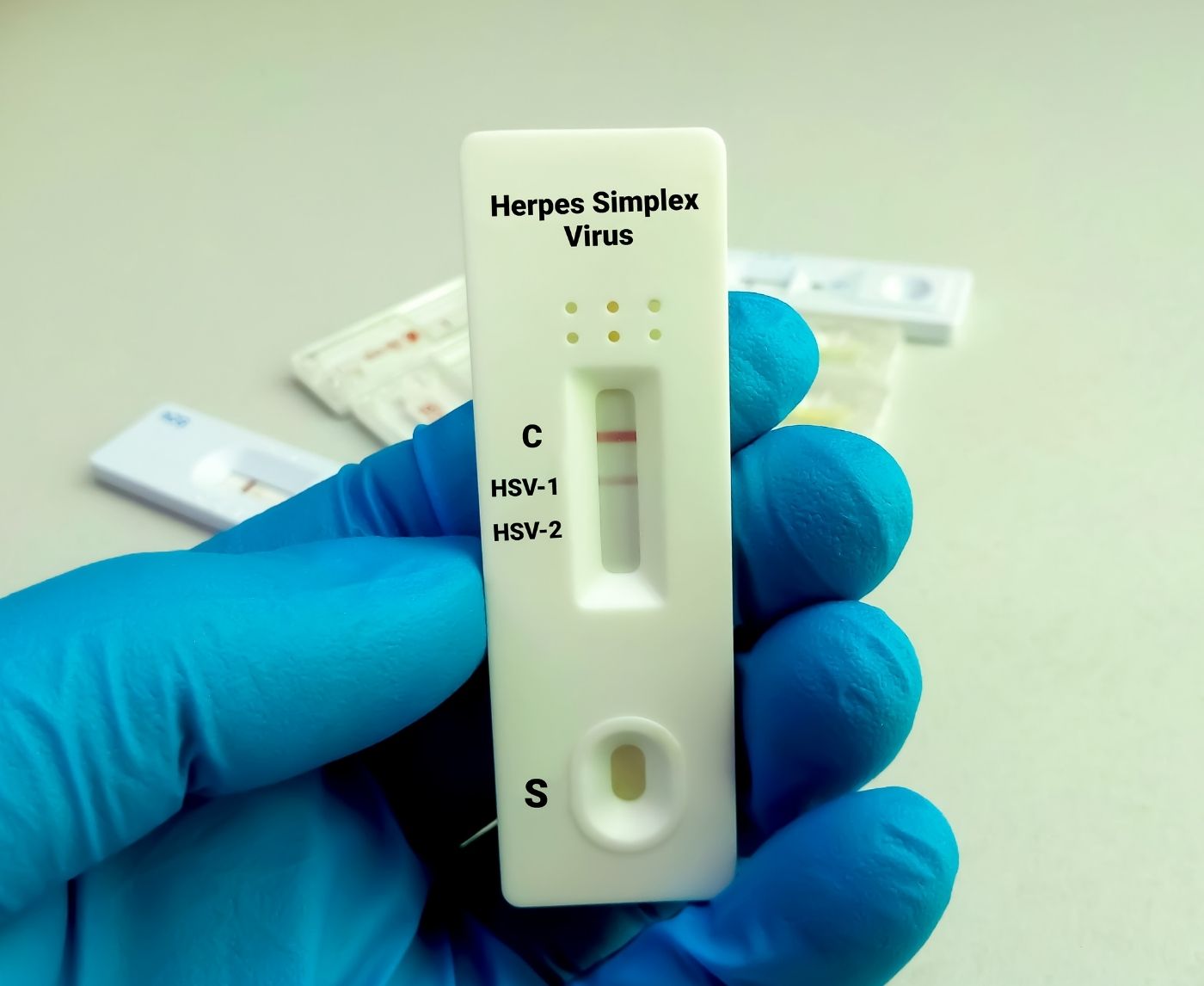
Quick Answer: While at-home herpes tests can be accurate, they are highly dependent on timing and type. Lab tests are more sensitive, yet a well-timed at-home HSV-2 test can be accurate if done properly.
This Is Where Most People Get Confused About Herpes Testing
One of the largest reasons that herpes tests cannot be trusted is that people want a simple yes/no answer right away. That’s just not how herpes type 2 tests work. You have a window in which to produce herpes 2 antibodies so that they can detect the herpes 2 virus.
Let’s say that Daniel gets with someone new and then suddenly worries about herpes two days into their relationship. He decides to get an at-home herpes test and gets the results right away. Two weeks later, symptoms show up. Suddenly, the first test was a lie. Not true. It was just too soon.
This is how both at-home herpes tests and lab herpes tests get their accuracy all wrong. It’s not that the tests cannot accurately determine herpes; it’s when they get done. Even the best herpes lab blood tests cannot detect herpes if they get done too soon.
So when someone asks, “Can a herpes test be wrong?” the answer is no. They can get incorrect results if they get done too soon. This is true for at-home herpes tests and lab herpes tests.
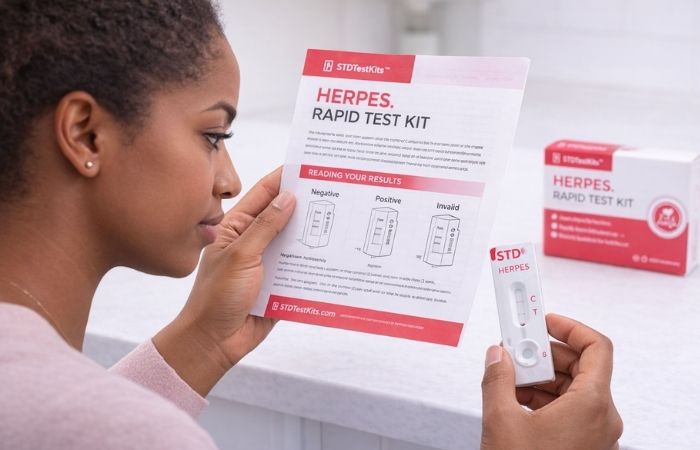
How At-Home Herpes Tests Actually Work (In Plain English)
Most at-home HSV-2 tests are blood-based, meaning they look for antibodies your immune system creates after exposure. These are usually IgG antibody tests, the same category used in many lab settings. You’re not testing for the virus directly, you’re testing for your body’s response to it.
That distinction matters more than people realize. Antibodies don’t show up instantly. For some people, it takes a couple of weeks. For others, it can take over a month. So if you’re testing too early, even a high-quality test may come back negative simply because your body hasn’t caught up yet.
This is also why you’ll see mixed opinions online about rapid herpes test accuracy. Some people swear by them. Others say they’re unreliable. In reality, both experiences can be true, depending entirely on when the test was taken.
If you’re using a trusted option like a discreet at-home STD testing kit, you’re typically getting a medically validated format. The difference isn’t whether it works, it’s whether it’s used at the right time and interpreted correctly.
There’s also a psychological layer here. Taking a test at home can feel more uncertain simply because you’re doing it yourself. But the actual science behind many of these kits overlaps significantly with what labs use.
At-Home vs Lab Herpes Tests: What’s Actually Different?
This is where things get more practical. The real difference between at-home herpes tests and lab tests isn’t that one works and the other doesn’t, it’s how they handle sensitivity, timing, and confirmation.
Picture two scenarios. In one, someone orders a home test, does a finger prick, and reads results in privacy. In another, someone sits in a clinic, gets blood drawn, and waits days for lab processing. The core biology is similar, but the depth of analysis can vary.
| Factor | At-Home Test | Lab Test |
|---|---|---|
| Privacy | Very high | Moderate |
| Speed | Minutes to days | 1–5 days |
| Accuracy (well-timed) | Moderate to high | High |
| Sensitivity (early detection) | Lower | Higher |
| Follow-up testing | May be needed | Often built-in |
Lab tests tend to have slightly higher sensitivity, especially in early or borderline cases. That means they’re better at catching low levels of antibodies. But that doesn’t mean at-home tests are inaccurate, it just means they require better timing for best results.
There’s also the issue of false positives in herpes blood tests, which can happen in both settings. Sometimes a test picks up antibodies that cross-react with similar viruses. That’s why confirmatory testing is often recommended after a positive result, regardless of where you tested.
So if you’re deciding between at-home vs lab herpes testing, it’s less about “which is real” and more about “what situation are you in right now?”
Why Timing Changes Everything (More Than the Test Itself)
This is the part most people don’t want to hear, but it’s the most important. The accuracy of any herpes test, whether at-home or lab-based, is heavily tied to timing. Not brand. Not price. Not even location. Just timing.
Think about it like this: your body needs time to react. After exposure to HSV-2, your immune system starts producing antibodies, but that process isn’t instant. Testing too early is like checking for smoke before the fire has fully started, it doesn’t mean nothing is there, just that it hasn’t shown up yet.
There’s a moment a lot of people go through. You wake up, notice a weird sensation, maybe some irritation, and your mind starts racing. You want answers immediately. So you test immediately. And when that result comes back negative, you want to believe it completely. But biology doesn’t move at panic speed.
| Time After Exposure | What’s Happening in Your Body | Test Accuracy Level |
|---|---|---|
| 0–7 days | Virus may be present, antibodies not formed | Low (high chance of false negative) |
| 7–14 days | Early antibody development begins | Moderate (still possible to miss infection) |
| 14–28 days | Antibodies increasing | Moderate to high |
| 4–12 weeks | Antibodies fully detectable in most cases | High (best accuracy window) |
This is why people sometimes feel like herpes testing is inconsistent. It’s not that the HSV-2 blood test accuracy is unreliable, it’s that people are often testing during the least reliable window.
If you’re using an at-home kit and wondering, “can herpes tests be wrong?”, the better question is: “Did I test at the right time?” That single factor explains most confusing results.
False Positives, False Negatives, and Why They Happen
Let’s discuss the two results that create the most anxiety: false positives and false negatives. These are the tales that create Reddit threads, late-night Google searches, and that nagging feeling in the back of our minds: “Can I trust this result?”
A false negative occurs more frequently in the early stages. This is when an individual actually possesses HSV-2 but receives a negative test result because they haven’t yet developed enough antibodies to be detected by the test.
A false positive is less common but can be more emotionally taxing. This is when an individual receives a positive test result but HSV-2 is not actually present. This can sometimes be caused by herpes virus antibodies because they can also be present in individuals infected with similar but different viruses.
There is a story that I hear frequently. An individual receives a positive test result from an initial test, which causes them to feel a sinking feeling in their stomach. They then proceed to think about all of their relationships. They then take a second test to confirm the results, which comes back negative. This emotional rollercoaster is very real. In both at-home testing and in a clinical setting, false positives and false negatives can occur. The difference is that in a clinical setting, they automatically perform a second test to confirm initial results. In an at-home setting, this is in your hands.
You are in that gray area. This is where taking action can actually help you achieve clarity with a second test option with a reliable at-home STD testing solution.
What People Get Wrong About “Accuracy” in Herpes Testing
When people search “is HSV-2 test 100 percent accurate,” what they’re really asking is: “Can I trust this enough to stop worrying?” And that’s a fair question, but it’s based on a misunderstanding of how medical testing works.
No medical test is 100% perfect. Not for herpes, not for anything. Accuracy is usually described in terms of sensitivity (how well it detects true positives) and specificity (how well it avoids false positives). Most HSV-2 IgG tests fall into a high range for both, but not absolute.
Here’s the part people don’t talk about enough: accuracy isn’t just a number. It’s a combination of timing, your immune response, and the context of your symptoms. Someone testing at 6 weeks with no symptoms might get a different level of confidence than someone testing at 2 weeks with active sores.
There’s also a quiet truth that doesn’t get enough airtime: a lot of people assume they have herpes when they don’t. Skin irritation, friction, allergic reactions, these things get mistaken for HSV-2 all the time. Testing isn’t just about confirming infection. It’s also about ruling things out.
So instead of asking, “Are at-home herpes tests accurate?” the more useful question is: “When used correctly, how reliable are they?” And the answer is: very reliable, when timing and expectations are aligned.
What It Feels Like Waiting on Results (And Why That Matters More Than You Think)
There’s a very specific kind of anxiety that comes with herpes testing. It’s not just about the result, it’s about the waiting. Whether you’re sitting on your bed refreshing your email for lab results or staring at a test strip on your bathroom counter, your brain fills in the silence with worst-case scenarios.
Alex described it perfectly: “I wasn’t even sure I had symptoms, but once the idea got in my head, I couldn’t unsee it. Every sensation suddenly felt like proof.” That mental spiral is incredibly common, and it’s one reason people question herpes test accuracy so intensely.
At-home testing changes that experience. You get faster answers, more privacy, and control over the moment. But it also means you’re interpreting results on your own. That independence can feel empowering, or overwhelming, depending on how prepared you are for what you might see.
This is why understanding what results actually mean is just as important as the test itself. Accuracy isn’t just about science, it’s about how confidently you can interpret what you’re seeing.
How to Read Your Result Without Spiraling
Let’s say you’ve taken an at-home herpes test. You’ve followed the instructions, waited the right amount of time, and now you’re looking at the result. This is the moment where a lot of people either feel relief, or confusion.
If the result is negative, the first question should always be: was the timing right? If you tested too early, that negative doesn’t necessarily mean “you’re clear.” It might just mean “it’s too soon to tell.” This is where people unknowingly rely on false reassurance.
If the result is positive, take a breath. A single positive HSV-2 result, especially from a blood test, doesn’t always mean a confirmed diagnosis. In many cases, a second confirmatory test is recommended to rule out false positives, particularly if the result is unexpected.
Jordan shared something that sticks with me: “I saw the positive line and immediately felt like my life split into before and after. But my doctor told me to slow down and confirm it first, and that changed everything.”
This is where a follow-up plan matters more than the initial result. Whether you test at home or in a lab, accuracy isn’t just about that first answer, it’s about what you do next.
If you’re unsure, using a comprehensive option like a combo STD home test kit can help you rule out multiple infections at once and give you a clearer overall picture.
When You Should Choose At-Home Testing vs a Lab
This is where things get practical. Not every situation calls for the same type of test, and understanding your context can help you choose the right approach instead of guessing.
If privacy is a major concern, at-home herpes testing is often the better fit. You don’t have to explain anything to anyone, sit in a waiting room, or worry about medical records being shared. For many people, that alone makes testing feel more accessible.
If you’re early after a potential exposure or dealing with unclear symptoms, a lab test may offer a slight edge in sensitivity. Clinics can also run additional tests or confirmatory screenings more quickly, which helps in more complex cases.
There’s also a middle ground that doesn’t get talked about enough. Many people start with an at-home test for peace of mind, then follow up with a lab if needed. That approach combines convenience with confirmation, and it’s often the most balanced path.
Chris once told me: “I didn’t want to go to a clinic unless I had to. The home test gave me a starting point, and that made the whole situation feel less overwhelming.” That’s really what testing should do, reduce uncertainty, not add to it.
At the end of the day, both options are valid. The best choice is the one that helps you get clear answers without delaying action.
So… Can You Actually Trust At-Home Herpes Tests?
Here’s the honest answer, without the internet drama: yes, you can trust at-home herpes tests, but only if you understand how they work. They’re not magic. They’re tools. And like any tool, they’re only as reliable as how and when you use them.
When taken during the right window period, most at-home HSV-2 tests provide solid, medically meaningful results. They’re not “fake” or “inferior”, they’re just slightly less sensitive than lab tests in early-stage detection. That difference matters early on, but much less once your body has had time to respond.
The bigger risk isn’t the test itself, it’s misunderstanding the result. Testing too early, assuming one result is final, or skipping confirmatory testing when needed… that’s where people get tripped up.
If your brain is stuck in that loop of “what if this is wrong,” the fastest way out isn’t more Googling, it’s a clear testing plan. That might mean testing now, retesting later, or confirming a result with a lab. But either way, you’re moving forward instead of guessing.
What to Do Next (Without Overthinking It)
If you’ve made it this far, you’re probably not just casually curious, you’re trying to figure out what to do with a real situation. Maybe there was a recent hookup. Maybe you noticed something that didn’t feel normal. Maybe you just want clarity.
Here’s the grounded approach: if it’s been less than two weeks since exposure, test now if it helps your peace of mind, but plan to retest later. If it’s been over a month, your results, whether from an at-home herpes test or a lab, are much more reliable. And if something doesn’t add up, follow up instead of sitting in uncertainty.
The goal isn’t to get a perfect answer instantly. The goal is to move from confusion to clarity, step by step.
And if you’re ready to take that step, you can explore discreet options through STD Test Kits, where testing is designed to be private, straightforward, and actually usable in real life, not just in theory.
Because at the end of the day, testing isn’t about labeling yourself. It’s about understanding what’s going on in your body so you can make confident decisions, without the panic spiral.
FAQs
- 1. Can at-home herpes tests be trusted?
- Yes, at-home herpes tests can be trusted if they are used properly and at the right time. They work similarly to most tests done in the lab. The main thing is to make sure that the tests are conducted after the right window period.
- 2. How accurate is the HSV-2 blood test?
- The HSV-2 IgG blood tests are considered to be accurate tests for herpes. They can detect most of the infections within 4-12 weeks after the window period. However, there is nothing that is 100% perfect.
- 3. Can a herpes test be wrong?
- Yes, the tests can be wrong. There is a possibility of false negatives as well as false positives. The false negatives occur when the tests are conducted too soon.
- 4. Do at-home STD tests work for herpes?
- Yes, most at-home STD tests work for herpes. They are capable of detecting the HSV-2 antibodies properly. They can be trusted if they are conducted at the right time.
- 5. When is the best time to test for herpes?
- The best time to conduct a herpes test is 4-12 weeks after exposure to the virus.
- 6. Why do herpes blood tests have false positive results?
- There is a chance that false positive results may occur when herpes blood tests cross-react with antibodies produced by other viral infections.
- 7. Is a herpes blood test conducted in a lab more accurate than a herpes test conducted at home?
- While herpes blood tests conducted at home may not be as accurate, they are still quite accurate when conducted during the right testing window.
- 8. Should I retake the herpes blood test if I receive a negative result?
- If you have conducted the herpes blood test too soon after being infected with the virus, or if you have symptoms, it is recommended to retake the herpes blood test after the window period.
- 9. Can I take a herpes blood test even if I have no symptoms?
- While most people infected with HSV-2 may not have any obvious symptoms, herpes blood tests can help detect the virus even when symptoms are not obvious.
- 10. What is the difference between HSV-1 and HSV-2 testing?
- While herpes blood tests conducted to detect HSV-1 and HSV-2 infections involve the same type of testing, HSV-2 is known to cause genital herpes, while HSV-1 is known to cause oral herpes.