No Symptoms but Worried? When to Get an STD Test Anyway
Quick Answer: If you have no STD symptoms but are worried, testing is still recommended. When “Nothing Feels Wrong” Is Actually Misleading A lot of people assume STDs come with obvious warning signs.

Quick Answer: If you have no STD symptoms but are worried, testing is still recommended. Most infections can be asymptomatic, and the best time to test is typically 1–2 weeks after exposure, with follow-up testing at later windows for full accuracy.
When “Nothing Feels Wrong” Is Actually Misleading
A lot of people assume STDs come with obvious warning signs. Pain, bumps, discharge, something dramatic. But in reality, infections like chlamydia and gonorrhea are often completely silent, especially in the early stages. Someone can carry and transmit them without ever noticing a single symptom.
Imagine someone like Jordan, who felt totally fine after a new partner. No symptoms, no reason to stress, until a routine screening months later came back positive. “I was shocked,” they said. “I kept thinking, how could I have something and not know it?” That’s the nature of asymptomatic infections, they don’t ask for your attention.
This is why public health guidelines don’t rely on symptoms alone. Testing is based on exposure risk, not just how you feel. Because biologically, your body can host an infection quietly while it develops or spreads.
The Window Period: Why Timing Matters More Than Symptoms
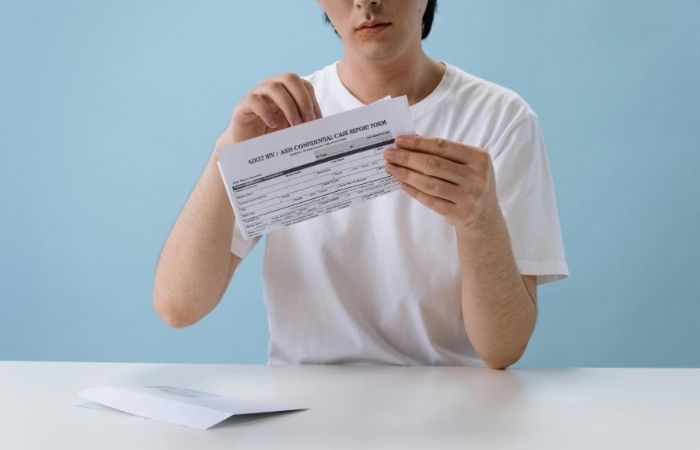
One of the biggest misconceptions is that you can test immediately after a sexual encounter and get a clear answer. It makes sense emotionally, you want certainty right away. But biologically, infections need time before they show up on a test. This is called the “window period.”
Think of it like this: even if an infection is present, your body (or the test) may not detect it yet. Testing too early can give you a false negative, which feels reassuring, but isn’t always accurate. That’s why timing your test correctly is just as important as taking one at all.
| STD | Typical Detection Window |
|---|---|
| Chlamydia | 7–14 days after exposure |
| Gonorrhea | 7–14 days after exposure |
| HIV (4th gen test) | 18–45 days |
| Syphilis | 3–6 weeks |
| Trichomoniasis | 5–28 days |
This means if you’re testing just a few days after sex, the result may not reflect reality yet. Waiting until the right window, or planning a follow-up test, is what gives you real clarity.
“But I Feel Fine…” The Most Common Testing Delay
There’s a very human pattern that shows up again and again. Someone feels fine, so they delay testing. Days turn into weeks, and the urgency fades. “If something was wrong, I’d know,” they tell themselves. It’s comforting, but not always accurate.
Alex had this exact thought after a casual hookup. “I kept putting it off because nothing felt off,” they said. “Then my partner texted me weeks later saying they tested positive.” Suddenly, what felt like a non-issue became urgent overnight.
The truth is, absence of symptoms is one of the biggest reasons infections go undetected. And during that time, they can still be passed to others or develop into more serious issues if left untreated.
When You Should Test Even Without Symptoms
There are certain situations that warrant testing even if everything is perfectly normal. Such situations are not about freaking out; they’re about being aware and being in control of your life.
If you’ve had a new sex partner, especially without protection, getting tested within the window period is a smart thing to do. The same goes for when a condom breaks, when you’re entering a new relationship, or when your partner tells you they might have been exposed.
Even regular testing is important. There are many people who don’t show symptoms of HIV; they’re just being proactive. If your mind is constantly wondering what if, it’s probably worth getting tested.
| Situation | Why Testing Matters |
|---|---|
| New sexual partner | Unknown status increases risk |
| Unprotected sex | Higher likelihood of transmission |
| Partner tested positive | Exposure risk even without symptoms |
| Routine screening | Many STDs are asymptomatic |
| Peace of mind | Stops ongoing anxiety and uncertainty |
If you’re unsure where you fall, that gray area is exactly where testing becomes useful. It turns uncertainty into a clear answer.
Testing Options: Private, Fast, and Actually Simple
One reason people delay testing is the idea that it’s complicated or awkward. Sitting in a clinic, answering questions, waiting days for results, it can feel like a whole process. But testing today is much more flexible than people expect.
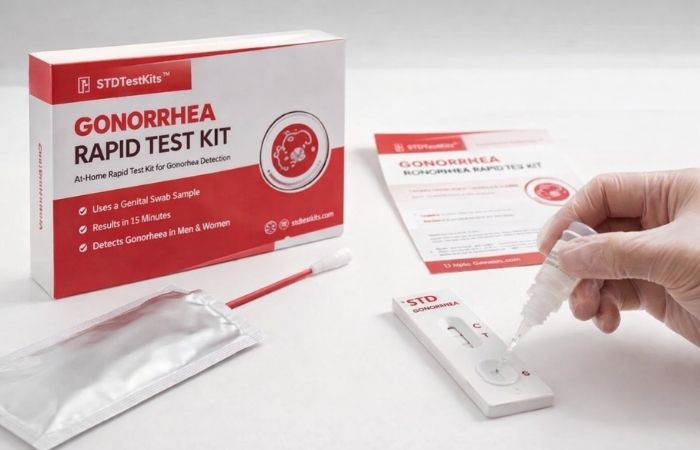
You can now use discreet at-home options like the STD Test Kits homepage, which allow you to test privately and get results quickly. For many people, this removes the biggest barrier: the discomfort of going in person.
If you want broader screening, a complete at-home STD test kit can check for multiple infections at once. It’s a practical option when you’re unsure what to test for but want clarity across the board.
Testing isn’t about assuming something is wrong. It’s about giving yourself a clear answer so you can move forward without second-guessing every sensation, or lack of one.
The Mental Spiral Is Real, Testing Stops It
There’s a very specific kind of anxiety that comes with not knowing. It’s not pain or discomfort, it’s uncertainty. You start noticing everything. A random itch suddenly feels suspicious. A completely normal sensation gets overanalyzed. Your brain fills in gaps with worst-case scenarios because it doesn’t have real information.
One person described it like this: “I kept checking myself in the mirror like something would suddenly appear. I knew logically I felt fine, but mentally I wasn’t fine at all.” That’s the part no one talks about enough, the emotional weight of not knowing can be heavier than symptoms themselves.
Testing cuts through that noise. It replaces guessing with facts. Whether the result is negative or positive, you move from uncertainty into clarity, and that shift alone is often a huge relief.
What Happens If You Test Too Early (And Why Retesting Matters)
Let’s say you give in to the anxiety and test a few days after exposure. The result comes back negative. For a moment, you feel better. But then the doubt creeps back in: “Was it too soon?” That’s not overthinking, that’s actually a valid concern.
Testing too early is one of the most common reasons people get misleading results. The infection might be there, but not detectable yet. This is especially true for infections like HIV or syphilis, where the body needs time to produce detectable markers.
That’s why retesting is part of the process, not a failure of it. If your first test happens early, a follow-up test at the right time window gives you confirmation you can actually trust. It’s not about doing more, it’s about doing it correctly.
Think of it like taking a pregnancy test too soon. The timing matters just as much as the test itself. STD testing works the same way.
If the Result Is Positive, What That Actually Means
This is where a lot of people’s minds go immediately, even before testing: “What if it’s positive?” And yeah, that thought can feel heavy. But the reality is very different from the fear most people imagine.
Most common STDs, like chlamydia, gonorrhea, and trichomoniasis, are treatable, often with straightforward medication. Others, like herpes or HIV, are manageable with modern treatments that allow people to live completely normal lives.
There’s also something grounding about finally knowing. One person put it simply: “Waiting was worse than the result. Once I knew, I had a plan.” That’s the shift, testing turns a vague fear into something concrete you can handle.
If a result is positive, the next steps are clear: confirm if needed, get treated, and communicate with partners. It’s not the end of anything, it’s just information you didn’t have before.
Testing as a Normal Part of Sexual Health (Not a Red Flag)
There’s still this quiet stigma around STD testing, like it’s something you only do if something went wrong. But in reality, regular testing is just part of taking care of yourself, like dental checkups or annual physicals.
People who test regularly often aren’t reacting to symptoms. They’re staying ahead of uncertainty. They’re choosing clarity over guessing. And honestly, that’s a much calmer way to navigate sex and relationships.
If you’re someone who’s sexually active, especially with new or multiple partners, routine testing every few months is a solid baseline. Not because something is wrong, but because you deserve to know what’s going on in your body.
And if you’re here reading this, feeling that quiet worry even without symptoms, that’s already your signal. Not panic, just awareness.
FAQs
- 1. Can you really have an STD without any symptoms?
- Yes, you can really have an STD without any symptoms. Many STDs, like chlamydia and gonorrhea, can be asymptomatic, especially in their early stages. This means you can actually have an STD and not even know it. Therefore, it is not based on symptoms when you go in for a test. It is more based on when you might have been exposed.
- 2. How soon should I test after sex if I have no symptoms?
- In general, you can be tested 7-14 days after being exposed. The exact timing depends on the specific STD. However, you can be tested sooner, but you will probably have to retake a test as a follow-up. Timing is everything when it comes to STDs. If you don’t wait the right period of time, you might end up with a false negative result.
- 3. If I feel completely fine, do I still need an STD test?
- Just because you feel fine doesn’t mean you don’t have an STD. Many STDs don’t have symptoms, especially in their early stages. The only way you can be sure is if you get a test. This is especially important if you have a new sexual partner or multiple partners.
- 4. What happens if I test too early?
- If you test too early, you might get a false negative result. This means you might not know you really have an STD. You might also be lulled into a false sense of security. Therefore, it is always a good idea to retake a test after the right period of time has passed.
- 5. How often should I get tested if I have no symptoms?
- If you’re sexually active, it is a good idea to get a test every 3-6 months. This is especially important if you have a new partner or multiple partners. Even if you’re in a monogamous relationship, it is always a good idea to know. Getting a test is not about fixing a problem. It’s about being informed.
- 6. Can I use an at-home STD test if I do not have any symptoms?
- Yes, you can definitely use at-home STD tests if you do not have any symptoms. These tests are created to be used for both symptomatic as well as asymptomatic testing. These tests are very convenient, which makes them popular among people who wish to test themselves without having to visit any clinic or hospital.
- 7. What if my partner has already tested positive for STDs, but I am still feeling fine?
- In this case, you are advised to take a test as soon as possible within the window period. This will help you get accurate results.
- 8. Do all STDs show some signs or symptoms at some point?
- No, not all STDs show any signs or symptoms at some point. Some STDs are asymptomatic.
- 9. Is a single test enough if I am worried?
- No, a single test is not enough. This is because you have to test within a certain window period. So, if you have already taken a test too early, you will need to take a second test to be absolutely sure.
- 10. What is the most common mistake people make when they have not shown any signs or symptoms?
- The most common mistake people make when they have not shown any signs or symptoms is that they think that they are not infected because they have not shown any signs or symptoms. This is not true because most people are infected with STDs without showing any signs or symptoms.
You Deserve Clarity, Not Guesswork
If your mind keeps circling back to “what if,” that’s not something to ignore, it’s something to answer. You don’t need symptoms to justify testing. You just need a reason to want clarity, and that’s already enough.
Instead of waiting and wondering, take control of the situation. This at-home combo STD test kit gives you a simple, private way to get real answers without the stress of a clinic visit.
Our article was constructed based on current advice from the most prominent public health and medical organizations, and then molded into simple language based on the situations that people actually experience, such as treatment, reinfection by a partner, no-symptom exposure, and the uncomfortable question of whether it “came back.” In the background, our pool of research included more diverse public health advice, clinical advice, and medical references, but the following are the most pertinent and useful for readers who want to verify our claims for themselves.