Sore Throat After Oral Sex? These STDs Could Be the Cause
Quick Answer: Sore throat after oral sex can be caused by STDs like gonorrhea, chlamydia, herpes, syphilis, or HPV, but many cases are also due to irritation or common infections. “It started like a normal sore throat.
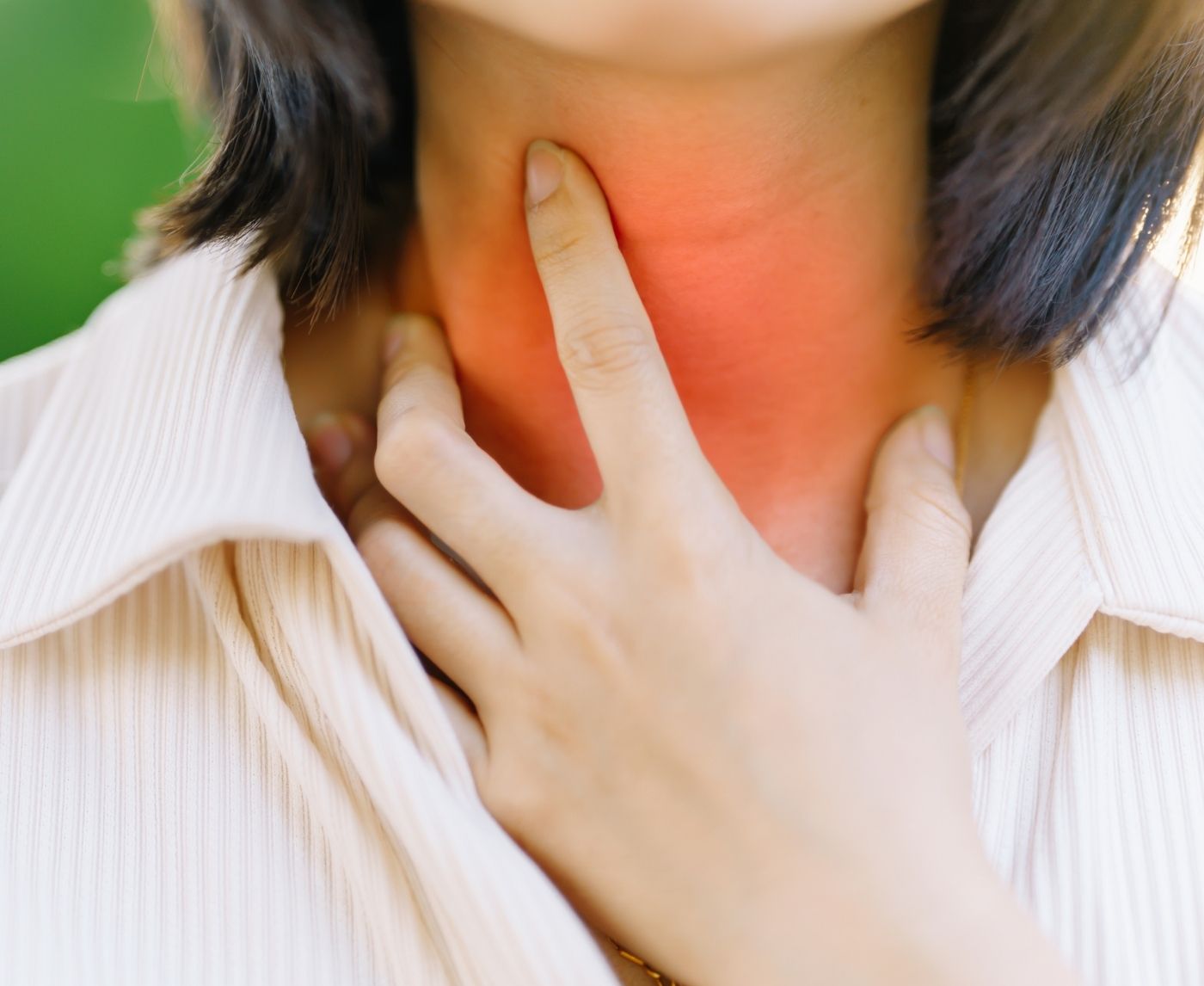
Quick Answer: Sore throat after oral sex can be caused by STDs like gonorrhea, chlamydia, herpes, syphilis, or HPV, but many cases are also due to irritation or common infections. Testing is the only way to know for sure.
“I Thought It Was Just a Cold”, Until It Wasn’t
Jordan, 27, told me the story in a tone that was half embarrassed, half relieved. “It started like a normal sore throat. I figured it was allergies or maybe I’d been talking too much. But then I remembered the hookup.”
They waited a few days. No fever. No cough. Just that persistent scratchy feeling. “I kept thinking, this would be such a dumb way to get an STD. Like… from oral?”
“I didn’t even know that was a thing.”
It is a thing. And not a rare one.
Oral sex often gets labeled as “safe,” but what people really mean is “lower risk than penetrative sex.” That’s not the same as risk-free. The mouth and throat are made of soft, vulnerable tissue, exactly the kind bacteria and viruses can latch onto.
And here’s where it gets tricky: symptoms in the throat don’t always look dramatic. Sometimes it’s just mild irritation. Sometimes nothing at all.
What Actually Lives in the Throat After Oral Sex
Let’s get grounded in reality for a second. Not every sore throat after oral sex is an STD. In fact, most aren’t. But when it is, there are a few usual suspects that show up again and again.
The challenge is that oral STD symptoms in the throat often mimic everyday illnesses. That’s why so many people dismiss them, or spiral unnecessarily.
| STD | What It Feels Like | Key Detail |
|---|---|---|
| Gonorrhea | Mild sore throat, sometimes redness | Often no symptoms at all |
| Chlamydia | Rare throat symptoms, slight irritation | Usually silent in the throat |
| Herpes (HSV-1/HSV-2) | Painful sores, burning, tingling | Can look like cold sores or ulcers |
| Syphilis | Painless sore or ulcer | Often missed because it doesn’t hurt |
| HPV | Usually no early symptoms | Can cause throat growths over time |
Notice something? Most of these don’t scream for attention. They whisper. And sometimes they stay completely silent.
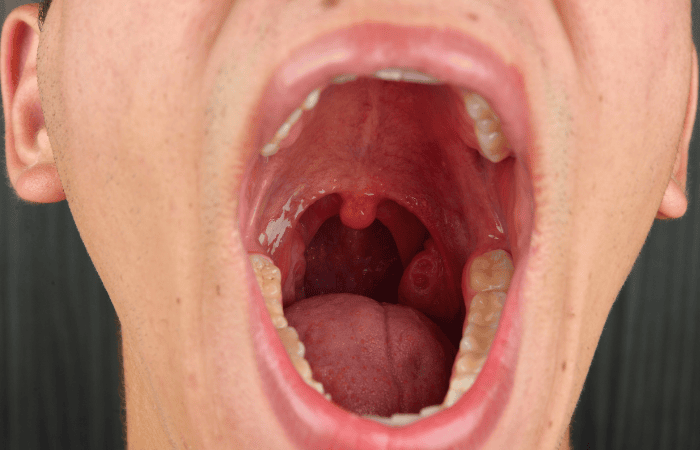
That’s why people searching “STD symptoms in mouth” often feel confused. They’re expecting something obvious. Instead, they get ambiguity.
This Is What It Actually Feels Like (Not the Textbook Version)
Let’s ditch the clinical language for a second and talk about real experiences. Because when people describe oral STD symptoms, they rarely sound like a medical pamphlet.
They sound like this:
“It felt like the start of strep, but it never got worse.”
“There was this weird patch in my throat I could feel when I swallowed.”
“I kept checking my mouth in the mirror like I was going to catch it changing.”
That last one? Extremely common.
When anxiety kicks in, your awareness of your body goes into overdrive. Every sensation feels amplified. Every swallow becomes a diagnostic test.
Here’s the grounded reality:
- Gonorrhea in the throat often feels like nothing, or a mild irritation that doesn’t escalate.
- Herpes tends to be more noticeable, with burning, tingling, or visible sores.
- Syphilis can create a sore that doesn’t hurt, which throws people off completely.
And then there’s the biggest curveball of all: sometimes the sore throat after oral sex has nothing to do with an STD at all.
Friction, dehydration, allergies, even sleeping with your mouth open can all mimic the same sensation. The throat is not a precise storyteller.
Not Every Sore Throat Is an STD (But Here’s How to Think About It)
This is where people tend to split into two camps: panic or denial. Neither is helpful.
The smarter approach is to look at context.
| Situation | What It Suggests |
|---|---|
| New partner, unknown status | Higher need for testing |
| Symptoms persist beyond a few days | Worth checking, especially for gonorrhea |
| Visible sores or lesions | Possible herpes or syphilis |
| No symptoms but anxiety is high | Testing gives clarity |
Testing isn’t about assuming the worst. It’s about removing uncertainty.
Because guessing? That’s what keeps people stuck in that cycle of Googling, overthinking, and checking their throat in bad lighting.
If you’re in that space right now, there’s a reason your brain won’t let it go. It’s not irrational, it’s trying to protect you. It just doesn’t have enough information yet.
And that’s something we can fix.
When Symptoms Show Up, and When They Don’t
One of the most frustrating parts of trying to figure out if you got an STD from oral sex is timing. People expect symptoms to show up fast, loud, and obvious. But the body doesn’t work on that kind of schedule.
Some infections start quietly. Some take days. Others take weeks. And some never announce themselves at all.
This is where a lot of people get misled. They feel something the next morning and assume it must be related. Or they feel nothing for a week and assume they’re in the clear.
Neither assumption is reliable.
| STD | Earliest Symptoms | What Most People Notice |
|---|---|---|
| Gonorrhea | 2–7 days | Often nothing or mild irritation |
| Chlamydia | 1–3 weeks | Usually no symptoms in throat |
| Herpes | 2–12 days | Painful sores, burning sensation |
| Syphilis | 10–90 days | Single painless sore |
| HPV | Weeks to months | Often no early symptoms |
Now here’s the part people don’t expect: that sore throat you feel the next morning? It’s usually too soon to be an STD.
That doesn’t mean ignore it. It just means your timeline matters more than your symptoms alone.
“I kept thinking it had to be from the night before,” said Lena, 24. “But when I got tested, they told me it probably wasn’t related at all. That actually helped me calm down.”
This is why understanding window periods matters just as much as recognizing symptoms. Without it, everything feels suspicious.
Testing Isn’t About Panic, It’s About Ending the Guessing
There’s a moment most people hit where Googling stops helping. You’ve read ten different explanations, compared your symptoms to photos you regret clicking on, and somehow feel less certain than when you started.
That’s the moment testing becomes the most rational move, not because something is definitely wrong, but because uncertainty is exhausting.
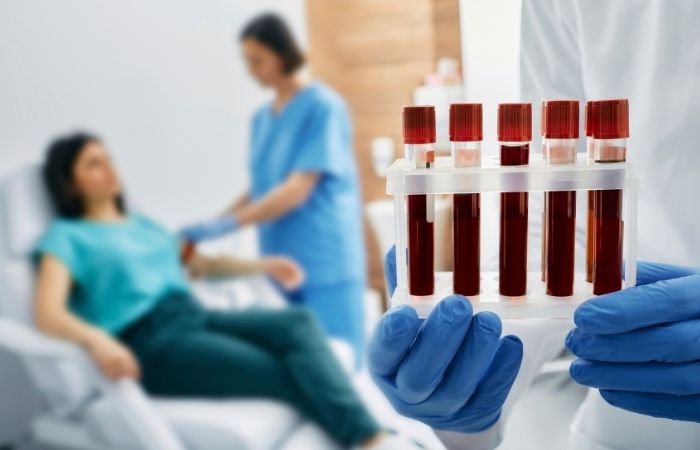
And when it comes to oral STDs, testing is often the only way to get a clear answer. Especially for infections like gonorrhea or chlamydia, which can live in the throat without obvious symptoms.
This is where at-home options have changed the game. You don’t have to sit in a waiting room replaying your life choices. You can take control privately, quickly, and without judgment.
Take back control of your health. Get clear answers from home with a discreet, doctor-trusted option like the STD Rapid Test Kits homepage, where you can explore testing that fits your situation.
If you want broader coverage, especially after a new partner, something like a combo STD home test kit can check multiple infections at once without the stress of multiple appointments.
“Honestly, the worst part wasn’t the test, it was the waiting and not knowing,” said Andre, 31. “Once I had an answer, I could actually breathe again.”
That’s the real value of testing. Not just diagnosis, relief.
Why Oral Sex Feels “Safe”, And Why That Belief Trips People Up
Let’s talk about the myth directly: oral sex is often treated like a loophole. Safer, casual, not really “sex” in the same category.
That belief is everywhere, in conversations, in media, even in how people justify risk to themselves.
But the biology doesn’t care about those categories.
The mouth is full of tiny entry points: micro-cuts, gum irritation, inflamed tissue. That’s all bacteria or viruses need. Add direct contact with genitals, and you have a clear pathway for transmission.
Still, it’s important to keep perspective. Oral sex is generally lower risk than penetrative sex for many STDs. But lower risk doesn’t mean zero.
And here’s where people get stuck: they either underestimate the risk completely or overestimate every symptom afterward.
The balanced reality sits in the middle:
- Yes, you can get STDs from oral sex.
- No, every sore throat after oral sex is not an STD.
- Yes, testing is the fastest way to move from guessing to knowing.
That middle ground is where clarity lives. And it’s a lot calmer than either extreme.
The Emotional Loop No One Talks About
There’s a pattern I see over and over again. It’s not just about symptoms, it’s about what happens after.
First comes the sensation. Then the memory. Then the spiral.
You replay the moment. You question the risk. You search symptoms. You compare. You doubt yourself. You check again.
“I felt like I couldn’t trust my own body,” said Rafael, 29. “Every little thing felt like proof of something.”
This isn’t weakness. It’s how uncertainty works on the brain. When there’s a possible threat and no clear answer, your mind keeps scanning for patterns.
That’s why articles like this exist, not to scare you, but to ground you.
Because once you understand what’s actually possible, what’s likely, and what’s just your brain filling in gaps, everything gets a little quieter.
And from there, you can make a decision that’s based on clarity instead of fear.
What Testing Actually Looks Like (And When to Do It)
If you’ve made it this far, you’re probably not just curious, you’re trying to figure out what to do next. And this is where things shift from “what could this be?” to “how do I actually get clarity?”
The first thing to understand is that testing for oral STDs isn’t always the same as testing for genital ones. Throat infections often require a swab of the back of the throat, not just urine or blood.
And timing matters more than most people realize.
| STD | Earliest Reliable Test Window | Best Time to Test |
|---|---|---|
| Gonorrhea | 3–5 days | 7–14 days |
| Chlamydia | 5–7 days | 2 weeks |
| Herpes | When sores appear | During active symptoms |
| Syphilis | 3–6 weeks | 6 weeks+ |
| HIV | 10–14 days | 3–6 weeks |
Here’s the key takeaway: testing too early can give you a false sense of security. That’s why people sometimes test, get a negative result, and still feel unsure.
It’s not that the test failed, it’s that the timing wasn’t right yet.
If you’re dealing with a sore throat right now, you don’t necessarily have to wait in silence. You can test at the appropriate window and retest if needed. That’s a normal, responsible approach, not overreacting.
Whether it’s a symptom or just a question mark, you deserve clarity. A discreet option like the at-home combo STD test kit gives you answers without turning your life into a waiting room.
What Happens If It Is an STD (And Why That’s Not the End of the Story)
This is the part people don’t always say out loud: the fear isn’t just about the symptom. It’s about what it means.
There’s this underlying thought, “Did I mess up?” or “Is this going to change everything?”
Let’s ground that.
Most STDs that affect the throat, especially gonorrhea and chlamydia, are treatable with antibiotics. Syphilis, when caught early, is also highly treatable. Even herpes, which stays in the body, is manageable in a way that allows people to have completely normal relationships and sex lives.
This isn’t a life sentence. It’s a health situation. And like most health situations, it becomes manageable the moment you actually know what you’re dealing with.
“I thought my life was over,” said Camila, 26. “But once I talked to a doctor, it turned into something I could actually handle. The fear was way worse than the reality.”
That’s a pattern worth remembering. The unknown almost always feels bigger than the truth.
And the sooner you move from guessing to knowing, the sooner you get your sense of control back.
FAQs
- 1. I woke up with a sore throat after oral sex, did I just mess up?
- Probably not. Most next-day soreness is irritation, not an STD, especially if it showed up within hours. Your throat is sensitive, and friction, dryness, or even dehydration can leave it feeling raw. If it lingers or something else changes, that’s when testing makes sense.
- 2. What STD actually causes a sore throat?
- If we’re being real, gonorrhea is the one that shows up most often in the throat, but even then, it’s usually subtle or completely silent. A lot of people expect something dramatic, and instead it just feels… off. That mismatch is what sends people down the Google spiral.
- 3. Can I have something in my throat and not feel it at all?
- Yes, and this is the part no one loves hearing. You can have chlamydia or gonorrhea in your throat and feel absolutely normal. No pain, no redness, nothing obvious. That’s why “I feel fine” doesn’t always equal “I’m clear.”
- 4. How do I tell if it’s herpes or just a random mouth sore?
- Look at the pattern, not just the spot. Herpes tends to come with clusters, small blisters, burning, tingling before they show up. A random canker sore usually shows up alone and doesn’t have that same buildup. If you’re staring at your mouth in the mirror trying to decode it, you’re not alone, that’s basically a universal experience.
- 5. Be honest, can oral sex really give you HIV?
- The risk is very low, but not zero. It depends on things like cuts in the mouth, gum health, and exposure to fluids. Most people hear “possible” and translate it to “likely,” but those are very different things.
- 6. I saw white spots in my throat… should I be freaking out?
- Take a breath. White spots are way more commonly things like tonsil stones or a regular throat infection. That said, if they showed up after oral sex and don’t go away, it’s worth checking, not panicking, just checking.
- 7. What does syphilis in the mouth even look like?
- This one’s sneaky. Syphilis can show up as a single sore that doesn’t hurt at all. No burning, no sting, just there. That’s why people miss it or assume it’s nothing important.
- 8. My symptoms are super mild… am I overthinking this
- Maybe, but that doesn’t mean ignore it. Mild symptoms are actually where most of the confusion lives. If it’s on your mind enough to keep checking or Googling, testing isn’t overreacting, it’s closing the loop.
- 9. When should I actually get tested so I don’t mess up the timing?
- Most throat infections show up on tests within about 1–2 weeks. Testing the next day won’t give you a reliable answer, and that’s where people trip themselves up. If you’re unsure, testing now and again later is completely reasonable.
- 10. If everything comes back negative, can I finally relax?
- If you tested at the right time, yes, you can exhale. And if your brain still tries to drag you back into “but what if,” that’s just anxiety doing its thing, not your body signaling danger. A follow-up test can help, but most of the time, one clear result is enough.
You Deserve Clarity, Not Guesswork
A sore throat after oral sex can feel loaded. Not just physically uncomfortable, but mentally loud. Every swallow turns into a question. Every Google search adds another possibility. And suddenly something small starts to feel bigger than it is.
The goal isn’t to panic or brush it off. It’s to separate signal from noise. If symptoms showed up too fast, it’s likely irritation. If something lingers, changes, or doesn’t sit right, test at the right window. Each step gives you more clarity, and less mental static.
Don’t stay stuck in the loop of guessing. If there’s even a small chance you were exposed, start with a discreet screen like the Combo STD Home Test Kit. Private, simple, and designed to give you answers without turning your life into a waiting room. Because knowing feels a lot better than wondering.
How We Sourced This Article: This guide pulls together real medical guidance on oral STD transmission with what people actually experience in their bodies. We looked at trusted health sources, clinical research, and STI studies, but also kept in mind how confusing symptoms can feel in real life. The goal here is simple: give you clear, accurate information without making it feel cold, overwhelming, or hard to understand.
- Centers for Disease Control and Prevention – Sexually Transmitted Diseases Overview
- Centers for Disease Control and Prevention – Gonorrhea Fact Sheet
- NHS – Sexually Transmitted Infections Overview
- Mayo Clinic – STDs Symptoms and Causes
- PubMed – STI Research Database
- World Health Organization – Sexually Transmitted Infections Fact Sheet