Swollen Testicle: When It’s an Emergency vs When You Can Wait
Quick Answer: A swollen testicle is an emergency if it appears suddenly with severe pain, nausea, or firmness, possible testicular torsion. But the dangerous ones tend to follow very specific patterns.
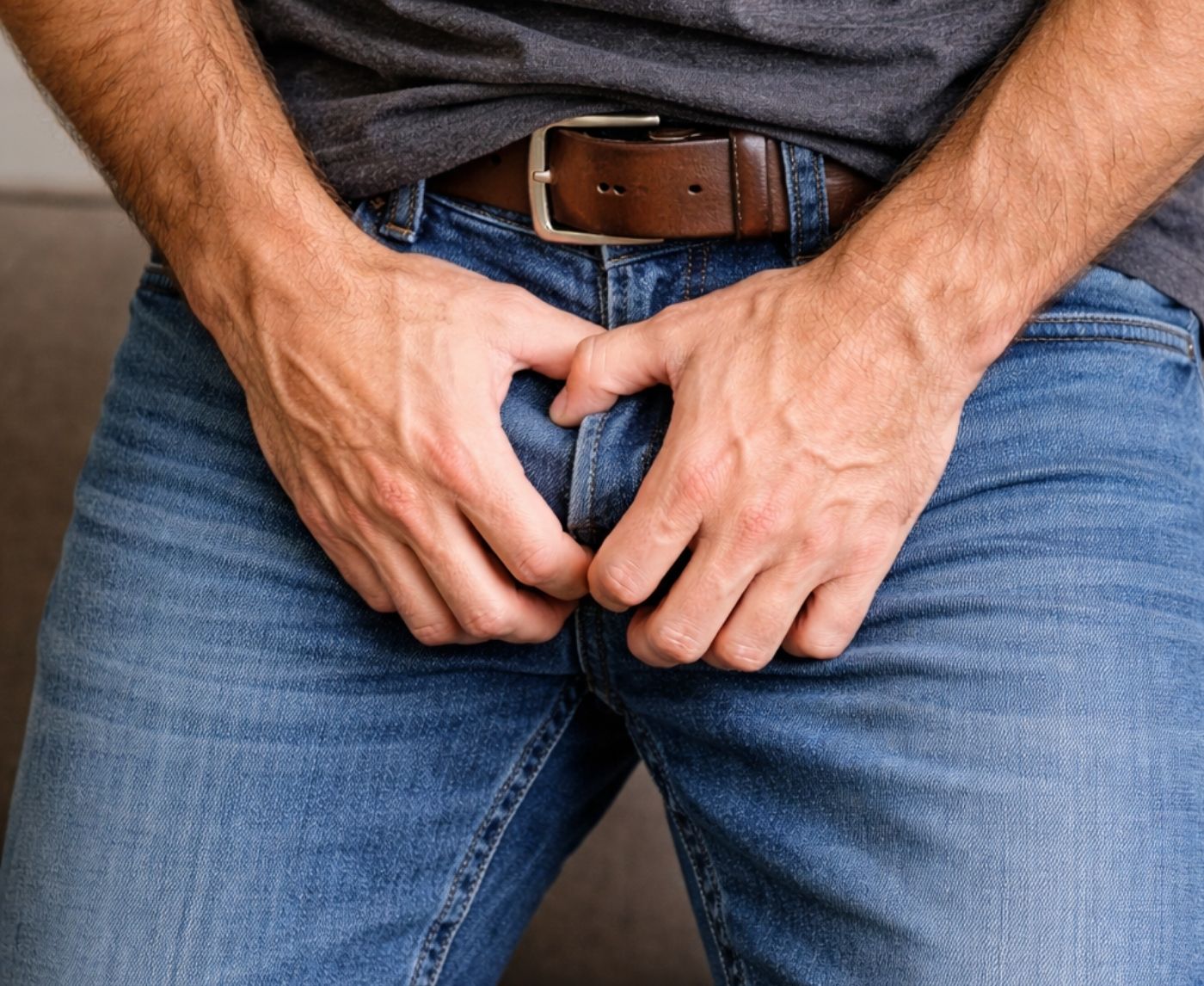
Quick Answer: A swollen testicle is an emergency if it appears suddenly with severe pain, nausea, or firmness, possible testicular torsion. Gradual swelling with mild pain or no pain is often infection or fluid buildup, which usually allows time for evaluation.
This Is the Moment Most People Start Googling
For a lot of people, this doesn’t start in a doctor’s office. It starts at 2 AM, lying in bed, checking again and again, wondering if it’s getting worse. You might press on it lightly, compare sides, or even convince yourself it was always like this.
One guy described it perfectly: “I kept thinking, maybe I’m overreacting… but I couldn’t stop checking.” That loop, uncertainty mixed with fear, is exactly why clear guidance matters here.
Here’s the truth most people don’t hear: not every swollen testicle is dangerous. But the dangerous ones tend to follow very specific patterns. Recognizing those patterns is what keeps you safe.

The Big Divide: Sudden Pain vs Gradual Changes
But if there is one thing more than anything else that is important, it is the timing. Not only when the swelling started, but how quickly it is occurring and what it feels like.
An individual who is experiencing a severe amount of pain and rapid swelling when they wake up is in a completely different situation from someone who is experiencing a dull ache that comes on gradually over a couple of days. These are two totally different processes.
This is when doctors tend to think of things in two ways: the emergency and the non-emergency.
| Symptom Pattern | What It Usually Suggests |
|---|---|
| Sudden severe pain + swelling | Possible testicular torsion (emergency) |
| Gradual swelling + dull ache | Infection like epididymitis |
| Painless swelling | Fluid buildup or possible tumor |
| Swelling after injury | Trauma or minor bleeding |
Even just looking at this, you can probably already see where you fall. And that’s powerful, because it shifts you out of panic and into decision-making.
But let’s go deeper, because one of these scenarios is time-critical in a way that surprises most people.
The One You Never Wait On: Testicular Torsion
This is the condition doctors are most worried about when someone says “my testicle suddenly started hurting.” And it’s not rare enough to ignore.
Testicular torsion happens when the spermatic cord twists, cutting off blood flow to the testicle. And unlike most conditions, this is not something your body can fix on its own.
One patient once said: “It felt like someone flipped a switch. One minute I was fine, the next I was doubled over.”
That description, sudden, intense, unmistakable, is classic.
| Symptom | Why It Matters |
|---|---|
| Sudden severe pain | Indicates possible loss of blood flow |
| One testicle higher than the other | Sign of twisting |
| Nausea or vomiting | Common in torsion cases |
| Firm or hard testicle | Possible compromised circulation |
Here’s the part people don’t realize: you have about 6 hours before permanent damage becomes likely. After that, the chance of saving the testicle drops significantly.
This is why the rule is simple: if it’s sudden and severe, you don’t wait. You go.
When It’s Not Sudden: The More Common (and Less Urgent) Causes
Now let’s shift to the other side, the situations that cause anxiety but aren’t usually emergencies.
A lot of swelling comes from infections, especially something called epididymitis. This is often linked to bacteria, including sexually transmitted infections like chlamydia or gonorrhea, especially in younger men.
Unlike torsion, this doesn’t hit like a lightning bolt. It builds. You might notice discomfort first, then swelling, then maybe warmth or tenderness.
Another common scenario is fluid buildup, known as a hydrocele. This can make the testicle look larger without much pain at all.
This is where testing becomes part of the conversation. If there’s any chance the swelling is linked to an STD, guessing won’t help, but testing will. You can start privately with something like STD Test Kits, which gives you clarity without the waiting room anxiety.
Because here’s the reality: a lot of testicle swelling isn’t dangerous, but it is something you should understand.
How Long Can You Wait? A Realistic Timeline
This is the question most people are really asking, even if they don’t say it out loud: “Do I need to deal with this right now, or can I see how it plays out?”
The answer depends almost entirely on how your symptoms are behaving. Not all swelling follows the same timeline, and your body usually gives clues about urgency, you just have to know how to read them.
Imagine this scenario: you notice mild swelling after a weekend hookup. It’s uncomfortable, but not intense. You’re functional. That’s very different from waking up in sharp pain that makes it hard to stand upright.
Here’s how doctors generally think about timing in real life, not textbook language, just practical decision-making.
| Situation | Recommended Action |
|---|---|
| Sudden severe pain (minutes to hours) | Go to ER immediately |
| Swelling + increasing pain over 1–2 days | See doctor within 24 hours |
| Mild swelling, no pain | Monitor briefly but schedule evaluation |
| Swelling after injury | Observe unless worsening |
The key idea here is progression. If something is getting worse, not better, your window for waiting closes quickly.
One patient put it bluntly: “I kept waiting for it to improve. It didn’t. That was the sign.” That instinct, to wait for improvement, is normal, but it only works if things actually improve.
Could It Be an STD? The Overlooked Connection
This is the part a lot of people hesitate to consider, even when it’s relevant. Testicle swelling is often linked to something called epididymitis, and in younger or sexually active men, that’s frequently tied to STDs like chlamydia or gonorrhea.
It doesn’t always show up dramatically. Sometimes it starts as a dull ache. Sometimes just swelling. Sometimes you only notice it when you’re sitting or walking.
One guy described it like this: “It wasn’t unbearable. Just… constant. Like something wasn’t right.”
That subtle, persistent discomfort is exactly how infections tend to behave. And this is where people get stuck, they don’t feel “sick enough” to act, but they also know something is off.
If there’s even a small chance of exposure, unprotected sex, a new partner, or symptoms that don’t clearly match injury, testing becomes the fastest way to get clarity. You don’t need to spiral or guess. You can check.
Options like a combo STD home test kit allow you to screen for the most common infections privately, without delaying answers.
Because untreated infections don’t usually disappear quietly, they tend to linger or get worse.
The Fear Everyone Has (But Rarely Says Out Loud)
Let’s address the thought that shows up almost immediately: “What if this is cancer?”
This fear is incredibly common, especially when the swelling isn’t painful. And here’s the honest, grounded answer: testicular cancer is possible, but it has a very specific pattern.
It usually presents as a firm lump or painless swelling, not sudden pain. It also tends to develop gradually rather than overnight.
That said, painless does not mean harmless. This is where people sometimes delay too long, because nothing “feels urgent.”
A patient once said: “I ignored it because it didn’t hurt. That was my mistake.”
The takeaway here is simple: painless swelling isn’t an emergency in the same way torsion is, but it is something you should not ignore. It deserves evaluation, even if it doesn’t feel dramatic.
What Doctors Actually Look For During an Exam
If you do go in, whether urgent or not, it helps to know what happens next. Because part of the anxiety is not knowing what you’re walking into.
Doctors are usually trying to answer three main questions quickly: Is this torsion? Is this infection? Or is this something structural like fluid or a mass?
They’ll check tenderness, position, firmness, and sometimes use ultrasound to confirm blood flow. That last part, blood flow, is critical, because it immediately rules torsion in or out.
From your perspective, this process is fast and focused. It’s not guesswork. It’s pattern recognition backed by imaging when needed.
And importantly, most outcomes are manageable. Even when treatment is needed, it’s usually straightforward once the cause is clear.

What to Do Right Now (Based on Your Symptoms)
At this point, you probably recognize your situation somewhere in this spectrum. Maybe you’re leaning toward “this feels mild,” or maybe you’re realizing it checks a few red-flag boxes.
So here’s the grounded, no-drama version of what to do next.
If it’s sudden, severe, and intense, you don’t debate it. You go to the ER. That decision is about protecting blood flow, and time matters.
If it’s gradual, uncomfortable, or persistent, you don’t panic, but you also don’t ignore it. Schedule care, and if there’s any chance of infection, test.
If your brain is stuck in the “what if” loop, the fastest way out is information. Not guessing. Not comparing symptoms online. Actual answers.
That’s where something as simple as starting with a discreet at-home STD test can shift everything, from uncertainty to clarity in a matter of days.
Because once you know what you’re dealing with, the fear usually drops fast. And the next step becomes obvious.
The Gray Area: When It’s Not Clearly Urgent (But Still Not Normal)
This is where most people actually land, not in a full-blown emergency, but not fully reassured either. The swelling is there. Maybe a little uncomfortable. Maybe just different enough to keep pulling your attention back to it.
You might catch yourself checking multiple times a day. Comparing sides. Googling variations of the same question: “Is this normal?” That uncertainty zone is frustrating because nothing feels definitive.
One patient described it like this: “It wasn’t bad enough to rush in, but it was definitely not nothing.”
That middle ground matters. Because while it’s not urgent like torsion, it’s also not something to ignore for weeks. This is the window where early action prevents bigger problems later.
Infections can worsen. Fluid buildup can increase. And rare conditions, while unlikely, are easiest to deal with when caught early.
Swelling After Sex, Exercise, or Minor Injury
Sometimes there’s a clear trigger. A long night of sex. A tough workout. A random hit or pressure you barely registered at the time. And then later, you notice swelling and start connecting the dots.
In these cases, mild inflammation or temporary fluid shifts are common. The body reacts to friction, strain, or minor trauma, and swelling can follow. It’s your body’s version of “something got irritated.”
But here’s where people get tripped up: not all post-activity swelling is harmless. If symptoms keep building instead of settling, or if pain increases instead of fading, that’s your signal that something else may be going on.
A good rule of thumb is this: if it improves within 24–48 hours, it was likely minor. If it lingers or worsens, it’s no longer in the “just irritation” category.
This is also where people sometimes miss early infections, because they assume it’s just from sex or activity, when in reality, something else is developing underneath.
Why Waiting Too Long Is the Bigger Risk
Most people’s biggest fear is overreacting. Almost no one’s biggest fear is taking too long, until they realize too long is exactly what happened.
The biggest problem with testicular swelling isn’t necessarily the immediate consequences, aside from torsion, of course. It’s the long-term consequences of not catching the problem early.
Infections like epididymitis, for instance, can continue to get worse and spread. What begins as a minor nuisance can quickly escalate into a serious problem.
And even in cases where it’s not necessarily an infection, the longer the swelling lasts, the more it could be a sign of a larger problem. The human body doesn’t make changes without a good reason.
One man’s advice on the subject was, “I waited because it didn’t seem like a big deal until it suddenly was.”
The Decision Framework: ER, Urgent Care, or Monitor?
Let’s simplify everything into a clear, real-world decision framework. No overthinking, no second-guessing, just a practical way to decide your next move.
| What You're Experiencing | What To Do |
|---|---|
| Sudden, severe pain + swelling | Go to ER immediately |
| Moderate pain + swelling getting worse | Seek urgent care within 24 hours |
| Mild swelling, stable symptoms | Monitor briefly, schedule evaluation |
| Possible STD exposure + swelling | Test as soon as possible |
This is the kind of clarity most people are looking for. Not the kind where anything is possible, but the kind where the next step is clear. Still not sure? Then choose action. It’s always easier to eliminate the problem now than fix it later.
What Happens After You Take Action
Here’s the part that helps calm everything down: most outcomes here are manageable. Seriously.
If it’s torsion, it gets treated quickly (and that’s why timing matters). If it’s an infection, antibiotics usually take care of it. If it’s fluid or a benign issue, monitoring or minor treatment is often enough.
And if it’s something more serious, catching it early dramatically improves outcomes. That’s the part people don’t always realize, early action isn’t just about urgency, it’s about simplicity.
Once you move from guessing to knowing, the entire situation shifts. The anxiety drops. The plan becomes clear. And you’re no longer stuck in that mental loop.
Because at the end of the day, this isn’t about worst-case scenarios. It’s about understanding your body well enough to respond appropriately, and confidently.
FAQs
- 1. Can a swollen testicle go away on its own?
- Yes, a swollen testicle can go away on its own, especially in cases where it is a result of minor irritation and accumulation of fluids. However, in cases where the swelling does not go away in a few days, it is a sign that the condition is more serious and needs to be addressed.
- 2. How do I know if testicle swelling is an emergency?
- In cases where the testicle is swollen and the pain is sudden and severe, it is a sign of a medical emergency and the condition should be addressed at once. This is especially true in cases where the testicular swelling is sudden and severe, and the affected person is experiencing nausea and a raised testicle.
- 3. Can an STD cause a swollen testicle?
- Yes, a swollen testicle can be a result of a sexually transmitted disease, and in such a case, the condition is a result of epididymitis. This condition is normally not sudden but is a result of a gradual buildup.
- 4. Is a painless swollen testicle serious?
- Yes, a swollen testicle, especially in cases where the affected person is not feeling any pain, is a serious condition and should not be taken lightly. This is especially true in cases where the swollen testicles could be a result of testicular cancer.
- 5. Should I go to urgent care or the ER?
- If the pain occurs suddenly and severely, an ER visit is recommended. If the pain is mild or gradually increasing, an urgent care center or a family doctor might be a good choice. It’s always best to err on the side of caution and get checked out as soon as possible.
- 6. What does epididymitis feel like?
- Epididymitis pain begins as a dull ache that gradually gets worse. Swelling, tenderness, and warmth are also present, often accompanied by pain while walking or sitting.
- 7. Can a swollen testicle be caused by an injury?
- Yes, even a minor injury to the testicles can cause temporary swelling. If the swelling goes away within 24 to 48 hours, it’s most likely from irritation.
- 8. How long should I wait before seeing a doctor?
- If your symptoms are mild, you might want to wait a day or two (24 to 48 hours) to see if your swollen testicles go away. However, if your swollen testicles don’t go away, get worse, or are accompanied by pain, you should get checked out.
- 9. Can I get a test for STDs if I have a swollen testicle?
- Yes, if you suspect an STD, you might want to try an at-home test. Not only is this a discreet way to get a checkup, but it’s also a convenient way to get a preliminary diagnosis.
- 10. What’s the most common cause of a swollen testicle?
- In most cases, a swollen testicle occurs from an infection, which might be epididymitis, or a collection of fluid, which might be hydrocele.
You Don’t Need to Guess, You Just Need a Next Step
Swelling in a testicle is one of those symptoms that instantly grabs your attention, and for good reason. But not every case is an emergency, and not every situation needs panic. What matters is recognizing the pattern and responding accordingly.
If it’s sudden and severe, act fast. If it’s gradual or unclear, don’t ignore it, get answers. The worst place to stay is stuck in uncertainty, checking over and over without a plan.
If there’s any chance this could be infection-related, don’t wait and wonder. This at-home combo STD test kit can help you get clear answers quickly and privately, so you can move forward with confidence instead of doubt.
Our article was constructed based on current advice from the most prominent public health and medical organizations, and then molded into simple language based on the situations that people actually experience, such as treatment, reinfection by a partner, no-symptom exposure, and the uncomfortable question of whether it “came back.” In the background, our pool of research included more diverse public health advice, clinical advice, and medical references, but the following are the most pertinent and useful for readers who want to verify our claims for themselves.