What Does Chlamydia Discharge Look Like in Women?
Last updated: April 2026 Why Most Women With Chlamydia See No Discharge at All Understanding why discharge is often absent requires knowing exactly where chlamydia sets up shop in the female body.

Why Most Women With Chlamydia See No Discharge at All
Understanding why discharge is often absent requires knowing exactly where chlamydia sets up shop in the female body. Chlamydia is caused by the bacterium Chlamydia trachomatis, and in women the cervix is the primary infection site, not the vaginal walls. The cervix is the narrow passage between the vagina and the uterus, and it sits several inches inside the vaginal canal, well out of easy view and largely out of easy sensation.
This location is everything. The cervix contains far fewer sensory nerve endings than the vaginal walls or vulva, which means inflammation there does not produce the same obvious pain signals that would occur if the same level of infection appeared in a more sensitive area. Any discharge that the inflamed cervix produces tends to seep down through the vaginal canal, where it mixes with normal vaginal secretions and becomes indistinguishable from what is already there. By the time it reaches the vaginal opening, there may be no visible or noticeable change at all.
C. trachomatis behaves as an intracellular parasite. It invades the columnar epithelial cells lining the cervix and replicates inside them rather than causing immediate tissue damage on the surface. This quiet, contained replication is why the immune response is often too mild to generate symptoms. The bacteria are active, replicating, and contagious, but the body's local reaction is not dramatic enough to produce an obvious sign.
According to research published in NCBI StatPearls, over 80% of women with chlamydia will be asymptomatic or have only mild symptoms. Only a minority have the classic presentation of mucopurulent cervicitis, where cloudy or yellow discharge is clearly visible. The rest carry the infection silently, which is why chlamydia and gonorrhea are the most important preventable causes of infertility, and why the CDC recommends annual chlamydia screening for all sexually active women under 25, regardless of whether they have any symptoms.

What Chlamydia Discharge Actually Looks Like When It Does Appear
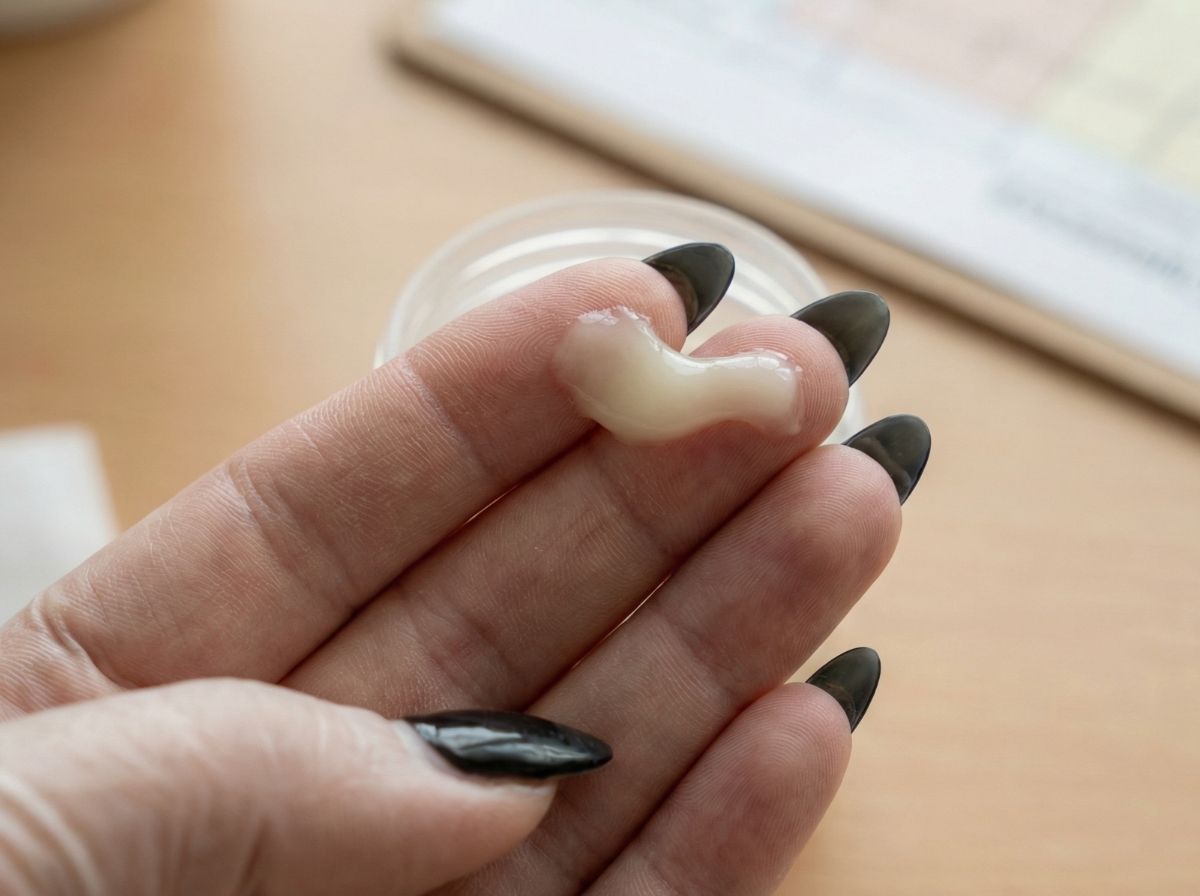
For the minority of women who do develop noticeable discharge, the characteristics come directly from the type of inflammation chlamydia causes. When C. trachomatis triggers a more robust immune response at the cervix, the infected tissue secretes a mucopurulent exudate, a mixture of mucus and white blood cells, that is clinically distinct from normal vaginal secretions.
Research identifies yellow endocervical discharge and opaque or cloudy cervical discharge as the two most significant visual indicators of chlamydial cervicitis. The signs of chlamydial cervicitis on speculum examination include mucopurulent endocervical discharge and spontaneous or easily induced endocervical bleeding. What this looks like to a woman in practical terms:
| Characteristic | Typical Appearance in Chlamydia | What Drives It Biologically |
|---|---|---|
| Color | Yellow, yellowish-white, or cloudy white | Mucopurulent secretion from the inflamed cervical epithelium; white blood cells give it color |
| Consistency | Watery to mildly thick; mucous-like | Inflammatory fluid from cervical tissue mixes with normal vaginal secretions |
| Volume | Often only slightly increased; easily missed | Discharge originates at the cervix, several inches from the vaginal opening |
| Odor | Mild to moderately unpleasant; not always present | Bacterial metabolic byproducts in the inflammatory fluid |
| Appearance on underwear | Slight yellowish staining, easy to dismiss | Low volume and slow seepage from deep in the vaginal canal |
There is an important practical caveat here. Normal vaginal discharge is clear to white, odorless or nearly so, and varies in consistency throughout the menstrual cycle. The meaningful signal is a change from a woman's personal baseline: something slightly yellower than usual, cloudier, more abundant, or with any new smell, especially if the change follows a new sexual encounter. But even this signal is absent in most infections. Waiting for a visible discharge change to decide whether to test is a reliable way to miss chlamydia entirely.
The Full Picture: Every Way Chlamydia Can Show Up in Women
Discharge is one piece of a broader symptom picture, and not even the most common piece. Chlamydia in women can present through several different channels, depending on where exactly the bacteria have established themselves and how strongly the immune system responds.
Burning or stinging during urination. When the infection involves the urethra alongside the cervix, urination becomes uncomfortable. The bacterium inflames the delicate lining of the urethral tube, and passing urine through the inflamed tissue produces that familiar burning sensation. This mimics a urinary tract infection closely enough that many women are treated for a UTI first, the chlamydia goes undetected, and the same burning returns weeks later when the antibiotic prescribed for the UTI had no effect on the bacterial STI. If a UTI culture comes back negative but burning persists, chlamydia testing is the correct next move.
Spotting or bleeding between periods. This is one of the more under-recognized signs of cervical chlamydia infection. When the inflamed cervix becomes easily irritated and bleeds with minor contact, the clinical term is cervical friability. Sex, a gynecological exam, or even physical activity can trigger light bleeding that appears as pink, brown, or red discharge between regular periods or immediately after sex. This bleeding does not come from the vaginal walls and is not related to the menstrual cycle. It is the inflamed cervix responding to physical stimulation, the way a bruise responds to pressure.
Pelvic pain or pressure. A dull ache in the lower abdomen, particularly if it is persistent or worsens during or after sex, can signal that the infection has already begun to ascend from the cervix into the uterus or fallopian tubes. This is early pelvic inflammatory disease (PID), and it is a warning sign that should never be rationalized away or waited out.
Painful sex. Deep penetration can cause discomfort or pain when the cervix and surrounding pelvic structures are inflamed. This pain is often dull and internal rather than at the vaginal opening, and it may be most noticeable during positions that involve deep contact with the cervix.
No symptoms whatsoever. Still the most common scenario, by a wide margin. In more than 80% of infections, none of the above appears. The CDC's recommendation of annual screening for sexually active women under 25 exists precisely because this group cannot rely on symptoms to tell them when testing is warranted.
Chlamydia Discharge vs. BV, Yeast, and Gonorrhea: How to Tell Them Apart
Several conditions cause changes in vaginal discharge that look and feel similar enough to create real confusion. Self-treating based on symptom guessing is one of the most common mistakes in women's sexual health, and it frequently delays the actual diagnosis by weeks or months. Here is how the conditions compare when they produce their most typical presentations:
| Condition | Discharge Color | Consistency | Odor | Itching | Key Distinguishing Feature |
|---|---|---|---|---|---|
| Chlamydia | Yellow, cloudy white, or absent | Watery to mildly thick | Mild, or none at all | Usually absent | Most often no symptoms; spotting after sex is a key flag |
| Bacterial vaginosis (BV) | Gray or off-white | Thin, watery | Strong, fishy; worse after sex | Mild or absent | Fishy odor intensifying after sex is the defining feature |
| Yeast infection (candidiasis) | White | Thick, cottage cheese texture | Little to none | Intense; often the dominant symptom | Thick white discharge plus intense external itching, no odor |
| Gonorrhea | Yellow-green, sometimes purulent | Thicker; more obviously abnormal | Unpleasant | Usually absent | Frequently co-infects with chlamydia; symptoms can be identical |
| Trichomoniasis | Gray, green, or yellow | Frothy or foamy | Strong, unpleasant | Common; external irritation | Frothy texture is a hallmark; intense vaginal irritation |
| Normal discharge | Clear to white | Varies by cycle stage | None or very mild | None | Egg-white consistency at ovulation; cyclical variation is normal |
That said, the table above describes typical presentations, and real life is messier. BV and chlamydia can coexist in the same woman at the same time. Gonorrhea and chlamydia co-infect frequently enough that treating one without testing for the other is a known clinical mistake. A yeast infection treated with an over-the-counter antifungal while an underlying chlamydia infection goes untouched is one of the most common reasons women cycle through recurring vaginal symptoms without resolution. The only reliable way to know what is actually happening is to test specifically for each condition.
Testing for Chlamydia: When, How, and What the Result Actually Means
The only reliable way to know whether chlamydia is present is a nucleic acid amplification test, or NAAT. This test detects the genetic material of Chlamydia trachomatis directly. It is highly accurate, works regardless of whether symptoms are present, and is used in both clinical settings and at-home test kits. The method matters less than the timing.
When to test: Test from 14 days after the exposure of concern. The bacteria need approximately 14 days to establish a detectable presence in the body. Testing before this window risks a false negative result, meaning the test says negative when the infection is actually present and building. A false negative at day 7 is not reassuring; it is simply too early. If the first test at 14 days comes back negative but symptoms develop afterward, or if the exposure was particularly high-risk, retesting at 3 to 4 weeks provides a more definitive answer.
What sample is used: For women, the preferred sample is a vaginal swab. Research shows that vaginal swabs detect slightly more infections than urine samples in women, though urine NAAT is also a valid option and is more convenient for at-home testing. Both detect C. trachomatis DNA directly. The result accuracy is 99%+ when the sample is collected correctly, and the 14-day window has passed.
What a negative result means: Chlamydia trachomatis was not detected in the sample at this time. If the most recent unprotected exposure was more than 14 days ago and no symptoms are present, this is a reliable negative. If symptoms persist despite a negative chlamydia result, testing for gonorrhea, BV, and trichomoniasis is warranted, as all can produce overlapping symptoms.
What a positive result means: The infection is confirmed and needs treatment. This is manageable and curable; it is not a catastrophe. Recent sexual partners need to be informed so they can get tested and treated simultaneously. The most common reason chlamydia returns after treatment is reinfection from a partner who was not treated at the same time. The CDC recommends retesting 3 months after completing antibiotic treatment, because reinfection rates at that window are significant.
Test from home using the Chlamydia At-Home STD Test Kit (99%+). For women who want to cover chlamydia alongside gonorrhea in one test, the Chlamydia and Gonorrhea At-Home STD Test Kit (98%+) handles both at the same time. All products are available at STD Test Kits.
What Normal Discharge Looks Like Versus a Chlamydia Signal
Normal vaginal discharge has a specific job: it maintains vaginal moisture, clears away dead cells and bacteria, and shifts in consistency to support fertility at ovulation. It is not a sign of infection. It varies naturally throughout the menstrual cycle in ways that are worth understanding so you can recognize when something is genuinely different.
In the days after a period, discharge is usually minimal and may appear slightly cloudy or off-white. Approaching ovulation, it becomes increasingly abundant, clear, and elastic with an egg-white consistency. After ovulation, it thickens and becomes white or creamy again before the next period. These are all normal variations driven entirely by estrogen and progesterone levels, not by infection.
The signals that are worth investigating are departures from this pattern. A discharge that is yellower than usual, cloudier than usual, slightly more abundant than usual, or carries any new smell, particularly after unprotected sex with a new partner, is worth examining more closely. Spotting between periods or after sex is always worth investigating, regardless of what the discharge itself looks like. And the absence of any of these changes means nothing about whether chlamydia is present. More than 80% of infected women see no change at all.
One scenario plays out frequently: a woman notices something slightly off for a few days, it seems to resolve on its own, and she assumes it was nothing. Chlamydia symptoms can come and go, not because the infection clears but because the immune response fluctuates. The infection remains active throughout.
What Untreated Chlamydia Does to the Female Reproductive System
The stakes of untreated chlamydia are considerably higher for women than for men, and they are highest precisely when the infection is producing no symptoms. The bacteria that are silently present in the cervix are not staying there permanently. In a significant proportion of untreated women, C. trachomatis ascends from the cervix into the uterus and from there into the fallopian tubes. This process often happens with no fever, no pain, and no warning, which is why so many women discover its consequences only when trying to conceive.
When the fallopian tubes become infected and inflamed, the immune system responds by sending white blood cells to the site. As the immune response resolves, it leaves scar tissue behind. This is the same process that leaves any wound with a scar, except here the scar forms inside the delicate, pencil-thin channel of the fallopian tube. Untreated chlamydia can cause fallopian tube infection without any symptoms, and this silent infection in the upper genital tract may cause permanent damage to the fallopian tubes, uterus, and surrounding tissues.
The numbers are sobering. According to the CDC, untreated chlamydia causes PID in approximately 10 to 15% of infected women. Research published in Clinical Infectious Diseases found that women who tested positive for chlamydia had an increased risk of PID nearly 2.4 times higher than those who tested negative, an increased risk of ectopic pregnancy nearly 1.9 times higher, and an increased risk of infertility nearly 1.9 times higher. The risk climbed further with repeat infections.
Tubal scarring caused by PID can lead to tubal factor infertility in between 8% of women after one PID occurrence and up to 40% of women after three or more occurrences. An ectopic pregnancy, in which a fertilized egg implants in the fallopian tube rather than the uterus because the tube is too scarred for the egg to pass through, is a life-threatening emergency. And ectopic pregnancy accounts for approximately 2.7% of pregnancy-related deaths in the United States. These are not remote hypothetical risks. They are documented, well-studied outcomes of leaving an infection untreated that the person may never have known was there.
The critical point: the scarring cannot be reversed once it has formed. A chlamydia infection found and treated at 14 days is a very different situation from one discovered after 8 months of silent inflammation. Both are curable in terms of the bacterial infection. Only the earlier one avoids the structural damage.
Chlamydia Discharge and Pregnancy: A Separate Set of Risks
Pregnancy does not protect against chlamydia and does not change the fact that most infections produce no symptoms. It does, however, add a layer of urgency to detection and treatment, because untreated chlamydia during pregnancy carries specific risks for both the mother and the newborn.
For the mother, untreated chlamydia during pregnancy is associated with premature rupture of membranes and preterm delivery. The inflammation the bacteria sustain in the lower genital tract can weaken the membranes surrounding the fetus and prompt early labor.
For the newborn, the risk comes at the moment of vaginal delivery. As the baby passes through the birth canal, it can be exposed to C. trachomatis present in the cervix and vaginal secretions. Neonatal chlamydial infection primarily affects the eyes and the lungs. Chlamydial conjunctivitis in a newborn, the most common form of neonatal eye infection caused by an STI in the United States, typically appears 5 to 12 days after birth as a sticky, mucopurulent eye discharge. If untreated, it can cause corneal scarring and visual impairment. Chlamydial pneumonia in newborns appears later, typically between 3 and 12 weeks of age, and presents as a persistent, staccato cough with no fever. Both conditions are entirely preventable with early detection and treatment of the mother.
This is why the CDC recommends routine chlamydia screening for all pregnant women at the first prenatal visit, and for those under 25 or at increased risk, again in the third trimester. A woman who does not know she has chlamydia cannot be treated for it, and the consequences fall on both her and her infant.
When to Suspect Chlamydia Even Without Discharge
Because discharge is absent in the majority of infections, knowing when to suspect chlamydia without relying on symptoms is more useful than knowing what the discharge looks like. Several situations should prompt testing regardless of how things feel:
Unprotected sex with a new partner in the past few weeks is the most direct indicator. New partners are the primary vector for chlamydia transmission, and the absence of symptoms in either person does not reduce the risk. Testing from 14 days after the encounter gives an accurate answer.
A partner who has been diagnosed with chlamydia is a direct signal to test. Gonorrhea and chlamydia co-infect frequently, so if gonorrhea is the diagnosis, testing for chlamydia simultaneously is always appropriate and vice versa.
Spotting after sex, even without any other symptom, is worth taking seriously. Post-coital bleeding from a healthy cervix is uncommon. When it happens, one of the first things to rule out is cervical infection, which means chlamydia testing alongside a gynecological assessment.
Recurring vaginal symptoms that keep returning after treatment for yeast or BV should prompt chlamydia testing. When the same symptoms cycle back despite appropriate treatment for the diagnosed condition, an underlying undetected STI is a real possibility.
And for women under 25 who have not been tested in the past year: the CDC recommends annual screening as a baseline, not because there are necessarily symptoms to prompt it, but because the infection prevalence in this age group is high enough that routine screening is the most reliable way to catch what symptoms will not reveal.
FAQs
- 1. What color is chlamydia discharge in women?
- When chlamydia causes noticeable discharge, it is typically yellow, yellowish-white, or cloudy white. This coloring comes from the mucopurulent secretion produced by inflamed cervical cells: a mixture of mucus and white blood cells that looks different from normal clear or pale white discharge. A faint to moderate unpleasant odor may accompany it. However, the majority of women with chlamydia see no color change in their discharge at all, which is why color alone is an unreliable indicator of whether the infection is present.
- 2. Does chlamydia always cause discharge in women?
- No. This is the most important fact about chlamydia and discharge: over 80% of infected women never notice any change. The infection primarily targets the cervix, an internal structure with limited sensory nerve endings, and the discharge it produces mixes with normal vaginal secretions before becoming visible. A woman can have an active, contagious chlamydia infection for months with completely normal-looking discharge and no other symptoms. Testing is the only way to know.
- 3. How do I tell the difference between chlamydia discharge and normal discharge?
- Normal discharge is clear to white, has little to no odor, and follows predictable patterns tied to the menstrual cycle: egg-white and slippery around ovulation, thicker and white before and after a period. The signals that suggest something is off include discharge that is yellower or cloudier than usual, any new unpleasant smell (especially after sex), slightly increased volume with no obvious hormonal explanation, or spotting between periods or after sex. Any of these changes after a new or unprotected sexual encounter warrants testing. None of these changes are guaranteed to appear with chlamydia.
- 4. Can chlamydia discharge smell bad?
- It can produce a mild to moderate unpleasant odor, though it is typically less pronounced than the strong fishy smell associated with bacterial vaginosis. The smell in chlamydial discharge comes from the bacterial metabolic byproducts in the inflammatory fluid produced by the cervix. Not all women with chlamydia notice any odor at all. If the smell is distinctly strong and fishy, BV is a more likely explanation, though both can be present simultaneously.
- 5. Is chlamydia discharge different from gonorrhea discharge?
- They can look similar enough to be indistinguishable without testing. Chlamydia discharge is usually mild in volume and yellowy-white when it appears. Gonorrhea can produce a similar picture but sometimes presents with thicker, more obviously purulent discharge. Crucially, the two infections co-infect the same person regularly, so a woman with discharge that looks like either one should be tested for both at the same time. Treating one while missing the other is a common and avoidable mistake.
- 6. Can chlamydia cause spotting or bleeding?
- Yes, and this is one of the more recognizable chlamydia signals in women who do develop symptoms. The inflamed cervix becomes fragile and bleeds easily when touched, which clinicians call cervical friability. The result is light spotting or bleeding after sex, after a gynecological exam, or sometimes between periods. The blood may appear as pink, red, or brown discharge. This type of bleeding comes from the cervix, not from the uterine lining, and is not related to the menstrual cycle. Any unexplained spotting after sex should prompt chlamydia testing.
- 7. How long does chlamydia discharge last without treatment?
- There is no fixed timeline. Chlamydia symptoms, including discharge, can come and go in individual women as the immune response fluctuates over the course of an untreated infection. A woman might notice discharge for a week, have it seemingly resolve, and then notice it again months later. This fluctuation does not mean the infection cleared. Without antibiotic treatment, the infection remains present and active. Without treatment, the infection can last for months or even years, causing cumulative damage to the upper reproductive tract even when symptoms have apparently resolved.
- 8. How soon after exposure does chlamydia discharge appear?
- When discharge or other symptoms develop, they typically appear within 1 to 3 weeks after exposure, though some women do not notice anything until later. Many never notice anything at all. The testing window is 14 days after exposure, which is both the earliest point at which a test will give a reliable result and roughly the beginning of when symptoms might develop in those who will develop them. Testing at 14 days answers the question accurately regardless of whether symptoms have appeared.
- 9. Can I test for chlamydia at home if I have no discharge?
- Yes, and this is exactly the scenario where at-home testing is most useful. Because chlamydia is most often asymptomatic, testing in the absence of discharge or any other sign is not only appropriate but important. The at-home NAAT detects Chlamydia trachomatis genetic material directly from a vaginal swab or urine sample with 99%+ accuracy, regardless of whether any symptoms are present. Test from 14 days after the relevant exposure for an accurate result.
- 10. Does chlamydia discharge change throughout the infection?
- In some women, discharge may be most noticeable during the initial weeks of infection when the cervical inflammatory response is most active. If the infection ascends to the upper reproductive tract and begins to cause PID, pelvic pain and cramping may become more prominent while cervical discharge may actually become less noticeable. In many women, none of these signs appear at any stage. This variability is another reason the symptom-based model of monitoring is an unreliable substitute for testing.
Any Change in Discharge After Unprotected Sex Deserves an Answer
Yellower than usual, cloudier than usual, a faint smell that was not there before: none of these are definitive proof of chlamydia, but all of them after unprotected sex are worth resolving with a test rather than speculation. And no change at all means nothing, because more than 80% of infected women feel and see nothing. Test from 14 days after exposure with the Chlamydia At-Home STD Test Kit, or cover chlamydia and gonorrhea together with the Chlamydia and Gonorrhea combo test. Both available at STD Test Kits, discreet packaging, results you can trust.
Our article was constructed based on current advice from the most prominent public health and medical organizations, and then molded into simple language based on the situations that people actually experience, such as treatment, reinfection by a partner, no-symptom exposure, and the uncomfortable question of whether it "came back." In the background, our pool of research included more diverse public health advice, clinical advice, and medical references, but the following are the most pertinent and useful for readers who want to verify our claims for themselves.