When One Announcement Changed Everything About HIV
In a recent MSN interview announced he was HIV positive as “one of the most horrible times of my life.” West wasn’t talking about basketball.

Quick Answer: The fear described in a recent article about Magic Johnson’s HIV announcement reflects how little was understood about HIV in the early 1990s. Today, HIV testing is faster, more accurate, and can often be done privately at home, dramatically changing how people learn their status and take control of their health.
In a recent MSN interview announced he was HIV positive as “one of the most horrible times of my life.” West wasn’t talking about basketball. He was describing the fear that rippled through locker rooms, offices, families, and entire communities in 1991, when HIV was still widely misunderstood as a death sentence rather than a manageable condition.
The article captures a moment when even highly informed, well-connected people were overwhelmed by uncertainty. Many Americans believed HIV could be spread through casual contact. Testing was limited, slow, and deeply stigmatized. Privacy was far from guaranteed. By revisiting that moment, we can better understand how far HIV science, and access to testing, has come, especially for people who now choose to test discreetly at home instead of walking into a clinic filled with anxiety.

Why Magic Johnson’s Announcement Terrified a Generation
When Magic Johnson stepped in front of cameras in November 1991, HIV was still framed almost entirely through fear. Treatments were limited. Public messaging was inconsistent. Many people associated the virus with moral judgment rather than medical reality. Jerry West’s reaction, dreading going to work, feeling emotionally paralyzed, mirrored what millions felt but rarely said out loud.
At the time, HIV testing often meant long waits, invasive questions, and the risk of being seen entering a clinic. Results could take days or weeks. A positive test carried enormous social consequences, including job discrimination and social isolation. Against that backdrop, it’s not surprising that fear overshadowed facts.
What HIV Testing Felt Like in the 1990s (And Why It Still Echoes)
In the early ’90s, getting an HIV test wasn’t just a health decision, it was an emotional reckoning. You walked into a clinic knowing your blood was about to be drawn, your name possibly logged, and your fears magnified. There were no fingerprick options, no anonymous mail-ins. Counseling was mandatory in many places, but that didn’t always feel comforting. For many, it felt like standing trial.
And back then, science hadn’t yet caught up with what we now know about window periods. You could test “negative” while already carrying the virus. That uncertainty hung heavy. A positive test felt like a death sentence, because for many, it was. And even if your test came back negative, the relief was often poisoned by doubt: Was it too soon? Did they use the right test? Will people find out I even took one?
So when we hear stories like Jerry West’s, where someone avoided testing out of pure fear, it’s not irrational. It’s historical. That fear was taught. It was baked into the public health systems, media headlines, and whispered conversations that defined the HIV epidemic’s early years.
The Shadows of That Era Still Shape Testing Today
Even now, decades later, some people flinch at the idea of an HIV test, not because they’re careless, but because their bodies still remember the panic. The headlines. The funeral fundraisers. The unspoken shame. We’re carrying the residue of the ’80s and ’90s whether we realize it or not.
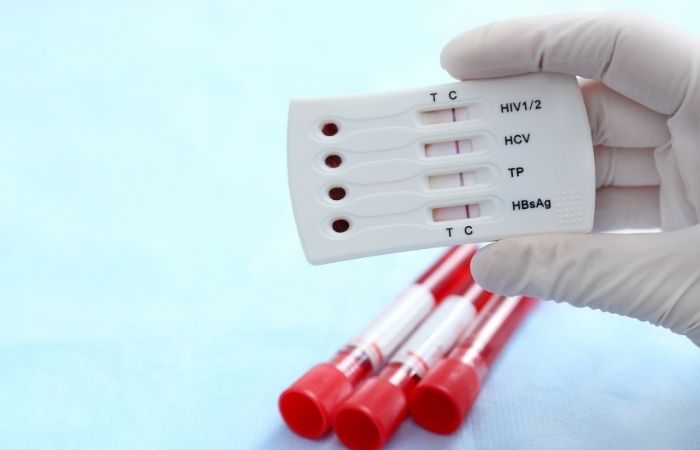
That’s why modern testing options aren’t just more convenient, they’re emotionally transformative. Today, you can test at home, on your own terms, without anyone watching. There’s no receptionist. No fluorescent waiting room. No side-eye. Just you, a discreet package, and a result that’s entirely yours.
Below is a comparison of what HIV testing looked like in the early 1990s versus what it looks like now. Understanding the difference isn’t just a science lesson, it’s a reminder of how far we’ve come, and why accessible, private testing changes lives.
| 1990s HIV Testing | Modern HIV Testing |
|---|---|
| Clinic-only, blood draw required | At-home fingerstick or oral swab options available |
| Mandatory pre/post-test counseling in many areas | Optional resources available online or by text, no forced disclosure |
| Anonymous testing limited or hard to find | Discreet delivery, no ID or clinic visit required |
| Window periods poorly understood by public | Clearer timelines for when to test after exposure |
| Results could take a week or more | Rapid test results in 15–20 minutes at home |
| Positive result carried intense stigma and fear | HIV now considered a manageable condition with treatment |
So if you’re putting off testing because something deep in you still says “this could ruin my life”, you’re not broken. You’re remembering. But that memory doesn’t have to dictate your next move. Testing today isn’t what it was. It’s faster. Kinder. Private. And if your result is positive, care is available. If your result is negative, clarity is immediate. Either way, the silence ends.
From Panic to Progress: How HIV Science Started to Catch Up
In the years following Magic Johnson’s announcement, something important began to shift. Research accelerated. Funding increased. Scientists learned more about how HIV actually spreads, and just as importantly, how it doesn’t. Casual contact, shared bathrooms, sweat, handshakes, and working side by side were proven safe, dismantling some of the fears that had driven reactions like the one Jerry West described.
This scientific progress didn't get rid of stigma right away, but it did help people trust each other. HIV slowly went from being an immediate crisis to a long-term, manageable condition as treatments got better and life expectancy went up. That change fundamentally changed the purpose of testing: it became a way to get care instead of a punishment.
When Testing Became About Control Instead of Fear
One of the most profound changes since the early 1990s is what an HIV test represents emotionally. Back then, testing was often delayed because people feared what knowing might mean. Today, testing is increasingly framed as an act of self-protection, responsibility, and empowerment, for yourself and for your partners.
This change didn’t happen by accident. It came from better treatments, clearer public health messaging, and a growing understanding that early detection saves lives. When HIV testing shifted from secrecy and dread to proactive health care, it opened the door for new ways to test that matched how people actually live.
The Rise of Privacy as a Public Health Tool
Privacy wasn’t just a convenience, it became a necessity. Many people still carried the emotional weight of earlier decades, even as science improved. Public health leaders recognized that fear of being seen, judged, or labeled was keeping people from testing, especially in workplaces and communities still shaped by old misconceptions.
Modern testing models responded by reducing barriers. Confidential records, anonymous options, and eventually at-home testing emerged as ways to meet people where they were emotionally, not just medically. These changes directly address the kind of fear Jerry West described, the fear of simply showing up, of being present in public spaces after HIV entered the conversation.
How HIV Testing Accuracy Improved Over Time
Another big difference between then and now is the reliability of the tests. The tests done in the past were, for the time, quite advanced. However, there was a long window period, meaning people did not fully understand when the result was reliable.
The tests done today are much more sensitive. There is a better understanding of when the result should be followed up. The reliability of the tests has been a big help in ensuring people do not panic. Panic can lead people to make irrational decisions.
The reliability of the tests has been a big help in ensuring people do not panic. Panic can lead people to make irrational decisions. The reliability of the tests has been a big help in ensuring people do not panic. Panic can lead people to make irrational decisions.
Why Sports Stories Still Matter in HIV Conversations
High-profile sports figures have always shaped public attitudes toward health. When Magic Johnson disclosed his diagnosis, it forced millions to confront their assumptions about who could be affected by HIV. Jerry West’s recent reflection reminds us that even insiders, coaches, executives, teammates, were grappling with the same confusion as everyone else.
These stories still matter today because they show how stigma takes root and how it can be dismantled. By understanding the fear of that era, we can better appreciate why modern testing options prioritize privacy, speed, and autonomy.
What HIV Testing Looks Like Today, And Why It Feels So Different
If the early 1990s were defined by fear and uncertainty, modern HIV testing is defined by access and clarity. People no longer have to rely solely on clinic visits that feel exposed or intimidating. Testing today is built around the reality that many people want answers quickly, privately, and on their own terms.
This shift directly addresses the emotional weight described in Jerry West’s reflection. The dread of showing up to work, of being seen, of being judged, those fears lose their grip when testing happens in a space you control. For many people, that space is now their own home.
How At-Home HIV Testing Fits Into Modern Life
At-home HIV testing didn’t emerge just because technology improved. It emerged because public health finally acknowledged something people had known all along: fear and stigma are barriers to care. When testing is discreet, accessible, and fast, people are more likely to actually do it.
Modern at-home HIV tests are designed to detect infection accurately while minimizing stress. For someone who grew up absorbing the panic of the 1990s, or who still carries those cultural memories, testing at home can feel like reclaiming control over a narrative that once felt overwhelming.
Accuracy, Window Periods, and What People Worry About Most
Perhaps the most asked question in people's minds today is about the reliability of home HIV tests. This is a valid query, particularly for those who can remember a time when the testing process was less reliable. The fact of the matter today, however, is that the tests have been designed over the course of several decades.
The issue of window periods has always been a consideration. Testing too soon can result in a negative test, which must then be retested. However, the information available today is far clearer, and the process of retesting is far less complex.
Why Privacy Changes Behavior More Than Fear Ever Did
Public health data consistently shows that when people feel safe and unobserved, they are more likely to test. This is one of the quiet revolutions in HIV prevention. Privacy isn’t just a comfort, it’s a catalyst.
For people who watched Magic Johnson’s announcement unfold in real time, privacy can be the difference between avoidance and action. At-home testing removes the social layer that once amplified fear, allowing the decision to test to be about health rather than perception.
Testing as a Routine, Not a Crisis
But perhaps the largest difference between then and now is that HIV testing is no longer associated with panic and public disclosure. It is now part of the regular sexual health landscape in many people’s lives, like other STIs.
This is important, as it changes the nature of HIV from something that will stop your life cold, like the moment that Jerry West described, to something that is approached in a calm and controlled manner.
FAQs
- 1. Why did Magic Johnson's HIV news create a shockwave among people at the time?
- Well, the reason for this shockwave was the fact that, in the early 90s, HIV was a mystery wrapped in a lot of fear. People did not really understand the disease, nor did they know how to treat it or what life was like after contracting the disease. However, when Magic Johnson announced that he was HIV positive, people realized that this was something that could happen to them as well. This was a shockwave for an entire generation.
- 2. Is it normal for people to be nervous about the subject of HIV today due to the stories of the 90s?
- Yes, it's completely normal. The fact of the matter is that people don’t get rid of their fears just because they're more knowledgeable about the disease. If you were a teenager in the 90s, you were probably told by your parents or your teachers that the disease was a death sentence. If you were an adult at the time, you probably experienced the shockwave of fear when the subject of HIV came up. This is something your body will not forget, regardless of the fact that your mind knows a lot more about the disease.
- 3. Has the disease really changed as much as people say since the early 90s?
- Yes, the disease has changed dramatically. In fact, with the new treatments for the disease, most people with HIV today are living long, full lives. However, the one thing that hasn’t changed as much as people would hope is the emotional baggage of the disease.
- 4. Why do people still procrastinate about getting an HIV test done, even today?
- Well, the reason for this procrastination is the fact that an HIV test is not just a physical test; it's also an emotional one. People may be afraid of the consequences of the test results or may simply not want to relive the shockwave of fear that was created by the disease in the 90s.
- 5. Is the home test for HIV as reliable as people say?
- If done properly and at the appropriate time, home HIV tests are extremely accurate. The problem isn’t the test, it’s the timing. And timing is why window periods still matter.
- 6. How soon after a possible exposure should someone test?
- The answer varies for everyone. Some tests can provide results in a few weeks, whereas others take a bit longer. If you take the test too soon after a possible infection and receive a negative result, yet still feel apprehensive, retaking the test later can provide a lot of reassurance.
- 7. What goes through people’s minds when they see a positive result?
- What people think when they receive a positive result for HIV isn’t necessarily about the virus. In many instances, it’s about the emotional responses people have. The fear of what this might mean for them. The shame of having contracted the virus. The many “what ifs” that run through a person’s mind. And yet, even though there are many emotions at play, there are many ways of looking at the situation. The fact of the matter is, HIV today isn’t a death sentence. HIV today can be managed. And it should be.
- 8. Why does privacy make such a big difference with HIV testing?
- Fear lives in public places. When people are worried about what other people will think of them or about being judged or labeled, it creates a huge roadblock for people. When people have the opportunity to have a private experience, it can help them feel a lot better about the situation.
- 9. If HIV is so manageable today, why do you keep bringing up the issue of stigma?
- Stigma sticks. And even though facts have changed, the stories of people living with HIV have remained the same. The fact of the matter is, people like Jerry West lived in a time when fear was the driving force for people to react in the ways that they did. And even though the facts have changed, the fear has remained the same.
- 10. What’s the biggest takeaway from all of this?
- Knowing your status is an act of self-respect rather than confession. Whether you test in a clinic or at home, the goal is always the same: clarity, care, and control without fear in charge.
Before Fear Takes Over, Here’s What Matters Now
The emotional responses that Jerry West was speaking about are from an entirely different era of HIV that was defined by doubt and silence. The reality of today is defined by knowledge, treatment, and testing. Recognizing how far we have come is what allows us to understand the importance of the options that exist today, like at-home testing.
Knowing your status is no longer about panic and public scrutiny. It’s about clarity, care, and control.
If you want to know your status without the stress of visiting a clinic, there are discreet options available at STD Test Kits.
How We Sourced This Article:This article was based on a mix of historical reporting, current public health advice, peer-reviewed research, and first-hand accounts of experiences. The reporting and context were based on about fifteen reliable sources. Below, we've highlighted some of the most important and easy-to-read sources to help the discussion be based on both history and modern medical knowledge.