Which STD Test Do I Need? A Simple Guide by Situation
Quick Answer: Which STD test you need depends on your situation, new partner, condom failure, symptoms, or routine screening. This Isn’t About Panic. It’s About Precision. Testing isn’t a confession. It’s maintenance. S.
Quick Answer: Which STD test you need depends on your situation, new partner, condom failure, symptoms, or routine screening. When you’re unsure or had multiple risk types, a full STD panel or combo test kit is usually the safest and simplest choice.
This Isn’t About Panic. It’s About Precision.
Testing isn’t a confession. It’s maintenance. According to the CDC, millions of new sexually transmitted infections occur in the U.S. every year, and many cause no symptoms at all. That means the absence of burning, discharge, sores, or rashes doesn’t automatically equal safety. It just means you can’t diagnose yourself by vibes alone.
I’ve had patients whisper, “I feel fine… but what if?” That “what if” is your cue. Not to spiral. Not to self-diagnose. Just to choose the right test based on what actually happened. Because different exposures carry different risks, and different infections require different testing methods.

The Master Selector: What Happened?
Before we talk about specific infections like Chlamydia, Gonorrhea, Syphilis, or HIV, we need to anchor this in reality. What actually happened? Because “Which STD test do I need?” always starts there.
| Your Situation | Recommended Test Type | Why |
|---|---|---|
| New partner, no symptoms | Full STD panel or combo test kit | Baseline screening catches silent infections |
| Condom broke during vaginal or anal sex | Combo panel + HIV test | Multiple infection risk types possible |
| Burning during urination | Chlamydia and Gonorrhea test | Common causes of urinary discomfort |
| Painless sore or unusual rash | Syphilis blood test | Classic early-stage presentation |
| Sore throat after oral sex | Throat-specific Gonorrhea test | Oral exposure risk |
| No symptoms, just anxious | Full panel for peace of mind | Many STDs are asymptomatic |
If you’re reading this thinking, “That’s me, I had a condom break,” or “I don’t have symptoms but I feel weird about it,” you’re not dramatic. You’re responsible. A combo STD test kit often makes more sense than guessing one infection at a time, especially when exposure type isn’t crystal clear.
Scenario One: “We Used a Condom… But It Broke.”
This is one of the most common panic searches online: STD test after condom broke. The fear spike is immediate. You replay the moment. Was it halfway through? At the end? Did you notice right away? Here’s the grounded truth: a broken condom can expose you to any infection your partner may carry.
That means you don’t want to test for just one thing. You want coverage. In this case, a full panel or combo STD test kit is usually the smartest move. That includes screening for Chlamydia, Gonorrhea, Syphilis, and HIV, and sometimes Trichomoniasis depending on anatomy and exposure.
Timing matters too. Testing too early can produce false negatives because of window periods. If exposure was within the past few days, you may need an initial test followed by a repeat at the recommended window (often 2–6 weeks depending on the infection). Testing is about accuracy, not urgency alone.
If your brain keeps looping, this is where action helps. A discreet combo STD home test kit can screen for multiple common infections at once, saving you from piecemeal guessing.
Scenario Two: “I Have Burning… But No Discharge.”
Burning during urination is one of the most Googled sexual health symptoms. But here’s where nuance comes in. Burning can be caused by a urinary tract infection, irritation, dehydration, or sexually transmitted infections like Chlamydia and Gonorrhea. You cannot diagnose this by sensation alone.
People often tell me, “There’s no discharge, so it’s probably not an STD.” That’s a myth. Many cases of Chlamydia present with mild or no discharge at all. Gonorrhea can be subtle in early stages. The absence of dramatic symptoms doesn’t eliminate risk.
In this case, targeted testing for Chlamydia and Gonorrhea is appropriate. A urine-based or swab test is typically used. If you’ve also had unprotected oral or anal sex, expanding to a broader panel may be wise. Precision beats assumptions every time.
Scenario Three: “No Symptoms. Just a New Partner.”
This is the quiet, responsible category. No drama. No rash. No burning. Just a new relationship or a casual connection and a shared “Hey, when were you last tested?” conversation. This is not paranoia. This is maturity.
Many STDs, including Chlamydia, Gonorrhea, and even early HIV, can be asymptomatic. That means a person can feel completely fine and still carry an infection. Baseline screening before going condom-free with a new partner is one of the most powerful forms of sexual respect.
Here, a full STD panel makes the most sense. It establishes clarity for both partners. It removes guesswork. And it prevents that low-level anxiety that creeps in weeks later when someone Googles, “No symptoms, should I test for STD?” The answer is yes, if there’s new exposure, testing is care.
Understanding the Difference: Single Test vs Full Panel
This is where most people freeze. Do you order one test? Or everything?
| Option | Best For | Pros | Limitations |
|---|---|---|---|
| Single STD Test | Clear symptom pointing to one infection | Cost-efficient and targeted | May miss other silent infections |
| Full STD Panel | Multiple risks or uncertainty | Comprehensive coverage | Slightly higher cost |
If you have a very specific symptom, like a painless sore suspicious for Syphilis, a targeted blood test makes sense. But if exposure was broad or you simply don’t know your partner’s status, a panel reduces regret. Most people who try to “narrow it down” based on guesswork end up testing again later anyway.
When in doubt, broader testing is usually the safer emotional and medical bet. You’re not overreacting. You’re closing loops.
Scenario Four: “We Only Had Oral Sex. Do I Still Need a Test?”
This one gets minimized constantly. “It was just oral.” As if mouths exist in a separate universe from the rest of the body. They don’t. Oral sex can transmit Gonorrhea, Chlamydia, Syphilis, and even HIV in certain contexts, though the risk levels vary.
Sore throat after oral sex is one of those symptoms people dismiss. They blame allergies. A cold. Dry air. But pharyngeal Gonorrhea in particular can present with mild or no symptoms at all. That’s why exposure site matters when choosing a test. If oral sex was involved, throat-specific testing may be appropriate, not just a urine test.
If your exposure included oral and genital contact, a broader panel makes sense. You’re not being dramatic by testing. You’re being precise about anatomy and transmission.
Scenario Five: “I Have a Rash… Is It an STD?”
Rashes are tricky. They trigger panic because they’re visible. A new bump. A flat pink patch. A cluster of blisters. The mind jumps straight to worst-case scenarios. But not every rash is sexually transmitted, and not every STD rash looks dramatic.
Syphilis can cause a painless sore in its early stage and a body rash later. Herpes often presents as painful blisters or sores, but first outbreaks can be subtle. Meanwhile, friction burns, allergic reactions, and folliculitis can mimic STD symptoms almost perfectly.
If you notice a painless sore, unexplained rash on palms or soles, or clusters of painful blisters, testing for Syphilis and Herpes becomes important. A blood test can screen for Syphilis, while specific tests help identify Herpes antibodies. Guessing from Google images rarely ends well. Testing replaces imagination with evidence.

Scenario Six: “I Cheated. I Don’t Have Symptoms. Now What?”
This one comes wrapped in shame. People don’t usually say it out loud, but they type it. Quietly. Late at night. “Do I need an STD test if I cheated?” The answer isn’t about morality. It’s about exposure.
If there was unprotected vaginal, anal, or oral sex outside your primary relationship, full-panel testing is the responsible next step. Not because you’re “dirty.” Because infections don’t care about relationship status. They follow biology, not promises.
A combo STD test kit gives you a clear baseline before deciding how to move forward. It also protects your partner. Testing isn’t an admission of guilt, it’s harm reduction.
Let’s Break It Down by Infection
Now that we’ve covered scenarios, let’s talk infection by infection. Because sometimes you’re not asking, “Which STD test do I need?” You’re asking, “Do I need an HIV test… or is this just Chlamydia?”
Chlamydia
Chlamydia is one of the most common sexually transmitted infections, and it’s often asymptomatic. Many people feel completely normal while carrying it. When symptoms do appear, they can include burning during urination or unusual discharge, but mild cases are easy to miss.
If you had unprotected vaginal or anal sex, especially with a new or multiple partners, testing for Chlamydia is recommended. A urine-based test or swab is typically used. If you’re experiencing burning after sex without obvious discharge, this should be near the top of your list.
An at-home chlamydia rapid test offers discreet screening when clinic access feels intimidating or inconvenient. Early detection prevents complications and protects future partners.
Gonorrhea
Gonorrhea frequently travels with Chlamydia. That’s why they’re commonly tested together. Symptoms may include burning, discharge, pelvic pain, or sore throat after oral exposure, but again, many cases are silent.
If you’re already testing for Chlamydia, it’s usually wise to test for Gonorrhea at the same time. Single-infection thinking can miss co-infections. Exposure site matters here too, oral and anal contact may require site-specific testing.
A gonorrhea rapid test allows you to screen quickly and privately, especially if symptoms are subtle but concerning.
Syphilis
Syphilis doesn’t always scream. Early infection may appear as a painless sore that heals on its own, tricking people into thinking everything resolved. Later stages can involve rash, fatigue, or neurological symptoms if untreated.
If you’ve noticed an unexplained sore, particularly after unprotected sex, a blood test for Syphilis is essential. It is also recommended for people with new partners, men who have sex with men, or those with HIV risk factors.
A syphilis blood test at home offers discreet screening without waiting weeks for a clinic appointment.
HIV
Let’s say it plainly: testing for HIV does not mean you think you have it. It means you respect the seriousness of exposure. HIV testing is recommended after unprotected vaginal or anal sex, shared needles, or when a partner’s status is unknown.
Modern HIV tests are highly accurate when used at the appropriate window period. Early testing may require follow-up confirmation depending on timing. The goal isn’t to terrify you. It’s to give you certainty.
If your exposure involved higher-risk contact, adding HIV screening to a broader panel is wise. Peace of mind has measurable mental health benefits. Anxiety thrives in uncertainty, testing ends that loop.
When a Combo Test Kit Makes the Most Sense
If you’re still unsure after reading this, that’s normal. Most exposures aren’t cleanly categorized. Maybe there was vaginal sex and oral. Maybe protection was used inconsistently. Maybe alcohol blurred timelines. This is where a combo STD test kit simplifies everything.
Instead of trying to outsmart biology, you cover the most common infections in one discreet order. It’s efficient. It’s comprehensive. And it prevents the regret of thinking, “I should have just tested for everything the first time.”
When uncertainty is the main symptom, broader testing is the answer.
Timing Changes Everything: How Soon Can You Test?
This is where most people accidentally sabotage their own peace of mind. They test too early, get a negative result, and assume they’re in the clear. But every infection has what’s called a window period, the time between exposure and when a test can reliably detect it.
If you’re Googling “how soon can I test for an STD,” what you’re really asking is, “When will the result be accurate?” That’s a smarter question. Because accuracy depends on biology, not anxiety.
| Infection | Earliest Detection | Best Testing Window |
|---|---|---|
| Chlamydia | About 7 days | 14 days after exposure |
| Gonorrhea | About 7 days | 14 days after exposure |
| Syphilis | 3–6 weeks | 6 weeks or later |
| HIV | 10–14 days (RNA tests) | 4–6 weeks for most screening tests |
| Trichomoniasis | 5–7 days | 2–4 weeks |
If your exposure was three days ago, testing today may not give you reliable answers. In that case, you can schedule your test for the appropriate window and set a reminder to retest if needed. Testing is a timeline decision, not just an emotional one.
What If You Tested and It’s Negative… But You Still Feel Off?
This scenario happens more than people admit. You test early. It’s negative. But something still doesn’t feel right. Maybe symptoms develop later. Maybe anxiety won’t let go. A single negative result taken too soon isn’t the final word.
If symptoms persist or evolve, retesting at the proper window period is wise. False negatives are usually about timing, not faulty tests. That’s why pairing the right test with the right time matters more than rushing for reassurance.
When uncertainty lingers, clarity is power. A discreet retest using a combo STD home test kit can close the loop and give you answers grounded in biology, not guesswork.
Cost, Privacy, and Why At-Home Testing Makes Sense
Let’s talk logistics. Clinic visits can involve waiting rooms, insurance questions, appointment delays, and sometimes awkward conversations. For many people, that barrier is enough to delay testing entirely. And delay increases risk.
At-home STD testing offers privacy, discretion, and control. You collect your sample on your schedule. Results stay confidential. Packaging is discreet. And you don’t have to explain your sex life to a receptionist unless you choose to.
If you’re comparing “STD panel vs single test” while also thinking about privacy, at-home combo kits often provide the most comprehensive and least stressful option. You’re not just buying a test. You’re buying clarity without friction.
The Emotional Side of Choosing a Test
Here’s the part people don’t say out loud: choosing the wrong test feels scary. You don’t want to miss something. You don’t want to waste money. You don’t want to look paranoid. So you hesitate.
But testing is never an overreaction when exposure exists. It’s proactive care. It protects you. It protects partners. And it removes the background anxiety that can linger for weeks.
One patient once told me, “The waiting was worse than the result.” That’s real. Most results are negative. And when something is positive, it’s treatable or manageable with modern medicine. The fear is often louder than the reality.
Still Not Sure? Here’s the Simplest Rule
If you had a clear, single symptom pointing to one infection, a targeted test makes sense. If exposure involved multiple body parts, inconsistent protection, or uncertainty about your partner’s status, a full panel is safer. When anxiety is the loudest symptom, broader coverage often brings faster relief.
You don’t need to be 100% certain about the infection to choose the right test. You just need to be honest about what happened. The right test matches exposure, not imagination.
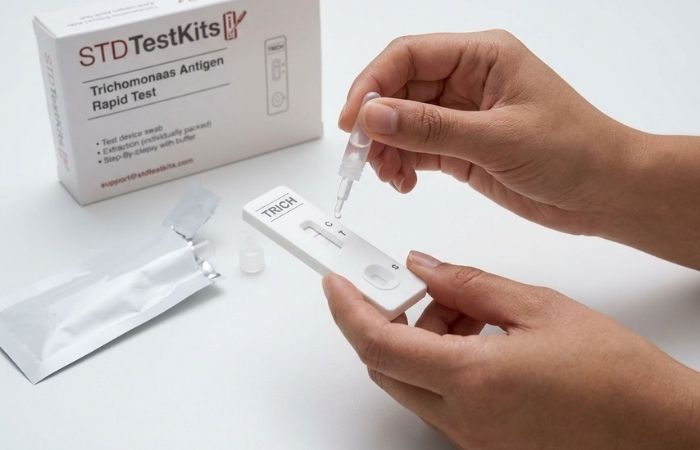
Decision Tree: If This Happened, Order This
Sometimes you don’t want paragraphs. You want clarity. You want someone to look at your situation and say, “Okay. Based on that, here’s what you order.” No drama. No lecture. Just direction.
So let’s simplify it. Imagine you’re standing in front of a digital shelf, hovering over test options. Here’s how to think through it without spiraling.
| If This Happened… | Order This | Why |
|---|---|---|
| Unprotected vaginal or anal sex | Full STD panel + HIV screening | Multiple infection risks possible |
| Condom slipped or broke | Combo STD test kit | Broad coverage prevents missed infections |
| Burning during urination | Chlamydia + Gonorrhea test | Most common cause of urinary STD symptoms |
| Painless sore or unexplained rash | Syphilis blood test | Classic early sign |
| Painful blisters or recurring sores | Herpes test | Symptom pattern suggests HSV |
| Only oral sex exposure | Throat-specific Gonorrhea test | Oral transmission possible |
| No symptoms, new partner | Full panel baseline screening | Many infections are silent |
If you’re reading across that table and thinking, “Mine doesn’t fit perfectly,” that’s normal. Real life is messy. When exposure includes more than one risk type, or when memory is blurry, a broader combo test reduces second-guessing.
The “Multiple Risk” Problem Nobody Talks About
Here’s what happens in real life. There was vaginal sex. Then oral. Maybe protection was used at first but not later. Maybe there was alcohol. Maybe you don’t fully trust the timeline. This is what I call the multiple-risk blur.
When exposure isn’t cleanly categorized, trying to isolate a single infection becomes unrealistic. This is exactly where a combo STD home test kit makes sense. It screens for the most common bacterial infections and often includes HIV coverage, depending on the panel.
You’re not “over-testing.” You’re accounting for complexity. And complexity is normal in adult sex lives.
What About Herpes?
Herpes deserves its own moment because it’s misunderstood. People often assume they should automatically test for it after any exposure. But Herpes testing is most accurate when symptoms are present, like active blisters or sores.
Blood tests can detect antibodies, but they don’t tell you where the infection is located or when you acquired it. Many adults carry oral HSV-1 from childhood. That doesn’t necessarily mean genital infection.
If you have new painful blisters, tingling before sores, or recurring lesions in the same location, targeted Herpes testing makes sense. If you have no symptoms at all, blanket herpes testing may not always provide clear or actionable answers. This is one infection where context really matters.
Routine Testing vs “Something Feels Wrong” Testing
There’s a difference between routine screening and symptom-driven testing. Routine screening is proactive. It’s what you do every 6–12 months if you’re sexually active with new or multiple partners. It’s maintenance, like a dental cleaning.
Symptom-driven testing is reactive. It’s what you do when something changes, burning, discharge, sores, rash, pelvic pain. In those cases, targeted testing may be appropriate, sometimes alongside broader screening depending on exposure history.
If you’re unsure which category you fall into, ask yourself one question: “Am I testing because something happened, or because something feels wrong?” That answer guides the choice.
Why Full Panels Often Win the Long Game
Here’s something I’ve seen repeatedly. Someone orders a single Chlamydia test because of mild burning. It’s negative. Weeks later, they test again, this time broader, and discover Syphilis or HIV risk was never ruled out.
This isn’t about fear. It’s about probability. If exposure was unprotected vaginal or anal sex with a partner of unknown status, the statistical safest move is comprehensive testing. It prevents staggered anxiety and repeat ordering.
If your question is, “Do I need an HIV test or full panel?” the honest answer is often: both. Because HIV risk doesn’t cancel out bacterial STD risk. They exist in parallel.
Discreet, Private, and On Your Timeline
Privacy matters. For some people, it’s about small-town visibility. For others, it’s about shared insurance plans or family members opening mail. At-home STD testing removes those variables.
When you order from STD Test Kits, packaging is discreet, and you control when and where you test. There’s no waiting room. No side-eye. No awkward intake form conversations unless you choose to seek follow-up care.
Testing should feel empowering, not exposing. Your results belong to you.
FAQs
- 1. I feel totally fine. Do I really need an STD test?
- I get this one all the time. “Nothing hurts. Nothing looks weird. So I’m good… right?” Not necessarily. Many infections like Chlamydia and Gonorrhea can live quietly in the body without obvious symptoms. Testing when you’ve had a new partner isn’t paranoia, it’s maintenance. Think oil change, not emergency surgery.
- 2. Okay, but what if it was just one hookup?
- One exposure is enough. STDs aren’t earned through frequency, they’re transmitted through contact. If protection failed, wasn’t used, or you’re unsure about your partner’s status, a test gives you clarity instead of weeks of low-level dread. One night doesn’t mean disaster. It just means information is helpful.
- 3. Do I need a full panel, or am I overreacting?
- Overreacting would be diagnosing yourself off Reddit threads. A full panel is often the smartest move when exposure wasn’t limited to one clear risk. Vaginal sex plus oral? Condom slipped halfway through? Don’t try to outthink biology. Broader testing saves you from second-guessing later.
- 4. I only had oral sex. Does that even count?
- It counts. Oral sex can transmit Gonorrhea, Syphilis, and sometimes other infections. The risk is lower than unprotected anal sex, but it’s not zero. If you’ve got a sore throat after exposure, or even if you don’t, site-specific testing might make sense depending on the situation.
- 5. What if I test too early and it says negative?
- This is the sneaky one. Testing within a few days of exposure can produce false reassurance because of window periods. A negative test taken too soon isn’t a lie, it’s just early. If timing was tight, plan a retest at the proper window. Accuracy is about biology, not impatience.
- 6. I’m embarrassed to order a test. Is that weird?
- Not weird. Human. Sex still carries stigma in a lot of spaces. But ordering a discreet STD test is one of the most adult, self-respecting things you can do. It says, “I care about my body and my partners.” There’s nothing reckless about responsibility.
- 7. What if it’s positive? I’m kind of scared to even know.
- That fear is normal. But here’s the reality: most STDs are treatable, and even lifelong infections like Herpes or HIV are medically manageable today. A positive result is a starting point for care, not a verdict on your character. Information gives you options. Avoidance just extends anxiety.
- 8. Should I tell my partner I’m testing?
- You don’t need permission to take care of your health. But transparency builds trust, especially if you’re in an ongoing relationship. If results are positive, partner notification becomes part of prevention, not punishment. Think of it as teamwork, not confession.
- 9. Is it normal to feel anxious while waiting?
- Completely. Waiting is the hardest part. Your brain will try to diagnose you based on phantom sensations. You’ll notice every itch. Every twinge. That doesn’t mean something is wrong. It means you’re human. Once you test, the spiral gets quieter.
- 10. If I’m still unsure after all this, what’s the safest default?
- When in doubt, go broader. A combo STD panel covers the most common infections and reduces the risk of missing something silent. It’s not dramatic. It’s practical. And peace of mind is worth more than guessing.
Before You Click “Order,” Ask Yourself These Three Things
First: What type of sex occurred, vaginal, anal, oral? Exposure site influences infection risk. Second: Was protection used consistently and correctly? Third: Are there symptoms, or is this routine screening?
If answers feel complicated or overlapping, lean toward broader coverage. Simplicity beats regret. A combo panel costs slightly more upfront but often prevents additional purchases and repeat anxiety later.
The goal isn’t to buy the most expensive test. It’s to buy the right one for your reality.
How We Sourced This Article: This guide combines CDC screening recommendations, peer-reviewed research on STD window periods, and current clinical testing standards. We reviewed over a dozen medical and public health references, including federal health agency data and infectious disease journals, to ensure accuracy. Only the most reader-relevant sources are listed below for clarity and verification.