Why Fewer STD Tests Means More Infections (And Less Accountability)
Quick Answer: Reduced STD testing means fewer diagnoses, which leads to underreporting, delayed treatment, and increased transmission, especially among asymptomatic carriers. Jules never developed symptoms.
Quick Answer: Reduced STD testing means fewer diagnoses, which leads to underreporting, delayed treatment, and increased transmission, especially among asymptomatic carriers. It also weakens public health data, making outbreaks harder to track and contain.
Testing Gaps Aren’t Just a “You” Problem
In early 2023, a college senior named Jules skipped her routine STD test. She was in a new monogamous relationship, hadn’t had any symptoms, and figured it could wait. Three months later, her partner tested positive for chlamydia. Jules never developed symptoms. But when she finally got tested, she was positive too, and likely had been transmitting it unknowingly. “I felt guilty, but also mad,” she shared. “I thought we were being responsible.”
This story isn’t rare. According to CDC surveillance data, as many as 70% of chlamydia cases and 50% of gonorrhea cases are asymptomatic, meaning people can spread the infection without ever knowing. And when people don’t get tested, those cases never enter official records.
That’s where the accountability problem begins. Public health relies on confirmed diagnoses to allocate funding, issue alerts, and adjust outreach. Fewer tests mean fewer “confirmed” infections, even if the actual transmission rates are climbing. It's not just dangerous, it's misleading.
The Domino Effect: One Missed Test Becomes Many
When people skip testing, it doesn't just hurt their own health. It spreads through sexual networks. This is how:
| Step | Consequence |
|---|---|
| Person skips routine STD test | Asymptomatic infection goes undiagnosed |
| Person continues sexual activity | Infection spreads to 1–3 partners, who may also show no symptoms |
| Partners don’t test either | Secondary transmission occurs; public health data stays blind |
| Infections accumulate in silence | Official rates stay flat or drop, despite real-world increase |
Figure 1. Chain of underreporting: how missed tests lead to silent spread and flawed data.
This is how the system fails. Not from malice, but from absence. And absence doesn’t trigger funding, policy shifts, or prevention alerts. It just hides the truth.
Fewer Tests, Fewer Numbers, But Not Fewer Infections
Let’s get blunt: declining test numbers do not equal declining STD rates. In fact, in several U.S. states, reported STD cases dropped sharply during the early years of the COVID-19 pandemic, not because transmission stopped, but because testing plummeted by 40–50% in some regions.
Public health officials were clear: the dip was artificial. Clinics were closed. Supplies were redirected to COVID response. People were scared to visit health centers or didn’t want to risk being seen there. Testing deserts, areas with no accessible, affordable testing, widened. And even when clinics reopened, staffing shortages and appointment delays discouraged many from coming back.
Now, years later, we’re still playing catch-up. “We lost the thread,” said one sexual health nurse from Phoenix. “People fell off the testing routine, and some haven’t returned. That messes with our data. It messes with contact tracing. It messes with trust.”
Who’s Getting Missed, and Why It Matters
Under-testing doesn’t affect all communities equally. Here’s what the data and experience show:
| Group | Common Barriers to Testing |
|---|---|
| Young Adults (18–26) | Low risk perception, shame, lack of symptom awareness |
| Rural Residents | Distance to clinics, privacy fears, limited services |
| LGBTQ+ Populations | Provider discrimination, past trauma, under-targeted outreach |
| Men Who Have Sex with Men (MSM) | Assumed PrEP = full coverage, limited rectal testing access |
| People of Color | Medical distrust, insurance gaps, systemic racism |
Figure 2. Populations affected most by under-testing, with unique access and stigma challenges.
When these communities aren’t getting tested at recommended intervals, the public health picture gets skewed, and resources may not go where they're most needed. That’s how disparities worsen. And that's why convenient, private access to at-home STD test kits is more important than ever.
When You Feel Fine but Still Infect Someone
One of the most dangerous myths in sexual health is this: “If I had an STD, I’d know.” But over half of all STD cases, including chlamydia, gonorrhea, and even syphilis, present no symptoms at all, especially in early stages. That means someone can carry and transmit an infection for weeks or months before ever feeling anything wrong.
Take Andre, a 29-year-old chef who assumed his annual check-up covered everything. “I thought the regular blood work included STDs. It didn’t. I had no clue until my ex called, crying, because she tested positive for gonorrhea.” Andre later learned he’d had the infection for at least six weeks, without symptoms, without warning, and without testing.
Silent infections like Andre’s make data unreliable. They also delay care, increase complications like pelvic inflammatory disease (PID), and raise the odds of long-term transmission. Without proactive testing, especially in sexually active adults under 30, STDs become invisible, not because they’re rare, but because they’re ignored.
How COVID Broke the Testing Habit
The pandemic not only tested the capacity of the hospitals, it also tested the routines of the people, including their routine testing for sexually transmitted diseases. Between the years 2020 and 2022, many of these facilities temporarily closed, diverted their workforce for COVID-19 testing, and suspended walk-in visits. Even after the easing of restrictions, the fear of facilities kept many from visiting them.
There was growth in telemedicine, but telemedicine didn’t entirely displace in-person testing. Some doctors couldn’t send home-test kits. Other doctors did not look for STDs unless patients asked them to. And then, as people migrated, lost insurance, or no longer had health services in schools, testing became forgotten.
Current attitudes are now reflected in stable service provision; however, we find ourselves in the aftermath. According to the 2024 CDC Surveillance Report for STDs, there are still irregularities in statewide data, particularly in younger and LGBTQ+ individuals. The reduction in testing is more than just a temporary issue; rather, it has redefined how cases are recorded.
Can At-Home Testing Close the Gap?
In a word: yes. But only if people know it's an option, and trust it.
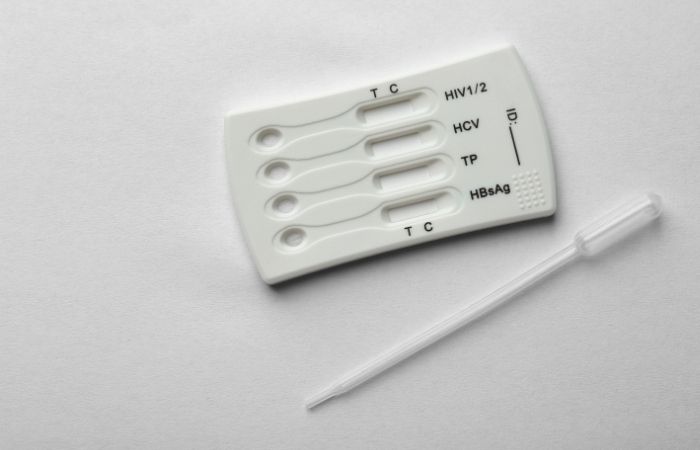
People can collect samples for at-home STD tests, like the ones offered by STD Test Kits, in private, on their own time, and without having to wait in line or be judged. Some tests give you results right away (rapid tests), while others use samples sent by mail to certified labs. The accuracy of the tests depends on the type of test and the time frame for the infection, but for many people, it's the best way to find out.
People who work in public health have started to push for these tests to be more widely available, especially in rural or underserved areas. According to a study from 2023, giving high-risk groups free at-home tests increased the number of people who took the tests by 65% compared to only offering tests at clinics. It's not a complete substitute for in-person care, but it is a strong link.
And for someone silently carrying an STD, it can mean the difference between unknowingly spreading infection, or finally getting answers.
What “Bad” Data Means for Public Health
Data drives decisions. But when the data is incomplete, when infections go unreported because tests never happen, health officials can’t respond accurately. That affects everything from budget allocations to school health policies to national STD prevention campaigns.
For example, a state with rising real-world infections but falling confirmed cases might see its funding cut, because on paper, it looks like things are improving. That means fewer outreach programs, less partner notification staffing, and no new testing centers.
Worse, bad data means no one rings the alarm bell when an outbreak begins. That’s what happened with congenital syphilis, a preventable infection passed from parent to infant. Testing drops led to missed prenatal screenings, and between 2019 and 2024, congenital syphilis cases more than doubled in several U.S. states.
This isn’t hypothetical. It’s the cost of invisible infections. And it’s a cost we’re already paying.

When One Partner Doesn’t Test
Sabrina, 26, thought her situationship was exclusive. He said he was clean. He hadn’t tested, but “he looked healthy” and said he’d only been with one other person since his last relationship. Three months later, Sabrina tested positive for trichomoniasis. He ghosted. She was left managing the treatment, the shame, and the confusion. “I didn’t even know that was an STD,” she admitted. “I thought that was like a yeast infection or something.”
This is what happens when testing becomes optional in hookup culture, or assumed unnecessary in monogamy. Without clear testing norms between partners, infections slip through. Not maliciously. Not intentionally. Just silently. And people like Sabrina are left cleaning up the aftermath of someone else’s assumptions.
When a partner skips testing, their risk becomes your risk. That’s why mutual testing conversations, and accessible options, matter so much more than people think.
Stigma Still Stops People from Testing
Even in the year 2025, there is stigma associated with testing for sexually transmitted diseases. People fear being judged, discovered, or thought of as “dirty.” Some consider testing to be akin to being “promiscuous.” In the case of males, particularly Straight males, there also lies the fear of being considered weak, sick, and/or foolhardy.
Studies have shown that emotional discomfort, shame, embarrassment, fear of the result, is a major reason people delay or avoid testing entirely. Add to that the fear of being seen at a clinic, a lack of privacy at home, or cultural taboos around sexuality, and it’s no wonder that many infections stay undetected.
This is where at-home testing can be a game changer. Private. Non-judgmental. Empowering. You don't need to explain yourself to anyone. You don't need permission. You just need the kit, the knowledge, and a few quiet minutes to protect your body and your partners.
Testing Timelines: When to Screen and When to Retest
If you’ve had unprotected sex, or even protected sex where a condom slipped, broke, or was removed, testing isn’t just “smart.” It’s necessary. But timing matters. Test too early, and you might get a false negative. Wait too long, and you might unknowingly spread something that could’ve been caught earlier.
Here’s a general guide:
| Infection | Best Time to Test After Exposure | Should You Retest? |
|---|---|---|
| Chlamydia / Gonorrhea | 7–14 days | Yes, at 3–4 weeks if symptoms persist or partner was positive |
| Syphilis | 3–6 weeks | Yes, at 3 months or if exposed again |
| HIV | 2–6 weeks (Ag/Ab combo) | Yes, again at 90 days for confirmation |
| Trichomoniasis | 5–28 days | Retest if treated but symptoms continue |
| Herpes (HSV-2) | 4–6 weeks (blood test) | Optional if no symptoms; confirm if lesions appear |
Figure 3. Optimal STD testing windows. Use this chart to plan your next screening based on exposure timing.
If you’re unsure when to test, or if your exposure falls across multiple infection windows, a multi-panel option like the Combo STD Home Test Kit may be the best place to start. It covers multiple infections and is built for privacy, clarity, and ease.
FAQs
- 1. If fewer people are testing, does that mean STDs are going away?
- Nope, quite the opposite. Fewer tests just mean we’re catching fewer infections on paper. The STDs are still out there; we’re just not counting them properly. It’s like turning off your smoke detector and saying the fire stopped.
- 2. Why would someone skip an STD test?
- So many reasons. They feel fine. They’re embarrassed. Their partner said “we’re exclusive.” Or maybe they just don’t know where to go, or how awkward it might feel. But here’s the truth: testing isn’t a confession, it’s self-respect. And it’s easier than ever to do from home.
- 3. Can I have an STD and have no clue?
- Absolutely. In fact, it’s more common than not. Infections like chlamydia and gonorrhea are often completely silent, especially in the early stages. You could be carrying and spreading something and never feel a single twinge. That’s why testing matters even when nothing seems “off.”
- 4. How often should I be getting tested?
- If you’re sexually active, aim for once a year at minimum. But if you have new partners, multiple partners, or recently ditched condoms, go for every 3 to 6 months. Think of it like oil changes, but for your sex life.
- 5. Do at-home STD tests really work?
- Yes, when used correctly and at the right time. Some give results in minutes; others require you to mail a sample to a lab. Either way, modern at-home kits can be just as accurate as clinic tests, without the awkward waiting room or paperwork.
- 6. What if my partner refuses to get tested?
- That’s a red flag, plain and simple. Testing should be mutual, respectful, and non-negotiable, like wearing a seatbelt. If they push back, you get to push pause. Your body deserves better than uncertainty and crossed fingers.
- 7. I tested negative, do I need to retest?
- It depends on when you tested. Every STD has a “window period”, a time between exposure and detectability. If you tested too soon after a hookup or scare, you might need to retest in a few weeks for full confidence. A negative today doesn’t always mean you’re totally clear tomorrow.
- 8. Will anyone find out I got tested?
- Not if you don’t want them to. At-home kits ship in plain packaging and results stay private. Even lab-reported positives go to health departments stripped of your personal identity. You’re in control of who knows what.
- 9. Do I really need to test if I’ve only been with one person?
- Here’s the tricky part: unless both of you tested at the beginning of your relationship, you’re both operating on faith, not facts. And faith doesn’t kill bacteria. If your last partner didn’t test either, there’s still a risk, even if everything feels safe.
- 10. Is it ever “too late” to test?
- Never. Whether your exposure was last night or last year, knowing is always better than guessing. STDs don’t disappear just because we ignore them. Testing now could clear up symptoms you didn’t even connect, or protect a partner down the road.
You Deserve Answers, Not Assumptions
Skipping a test might feel like a small decision in the moment. But collectively, missed tests reshape public health, and not in a good way. They hide outbreaks. Delay treatment. Hurt communities. And leave people like Sabrina and Andre wondering what went wrong when the signs weren’t even there.
You don’t have to wait for symptoms. You don’t need to justify your choices. You just need information, and access. Start with a private, reliable option like the Combo STD Home Test Kit, which checks for multiple common infections in one go. The answers are closer than you think.
How We Sourced This Article: We combined current guidance from leading medical organizations with peer-reviewed research and lived-experience reporting to make this guide practical, compassionate, and accurate. In total, around fifteen references informed the writing; below, we’ve highlighted some of the most relevant and reader-friendly sources.