You Got Treated for a UTI, But It Didn’t Go Away, Now What?
Quick Answer: If UTI symptoms persist after treatment, you may be dealing with an untreated STD like chlamydia or gonorrhea. Testing is the only way to know for sure, especially when antibiotics don’t work as expected.
Quick Answer: If UTI symptoms persist after treatment, you may be dealing with an untreated STD like chlamydia or gonorrhea. Testing is the only way to know for sure, especially when antibiotics don’t work as expected.
Why UTIs and STDs Get Confused So Often
Samira, 26, had been through this before. She thought it was another UTI, same urgency, same discomfort, same annoying timing. Her doctor prescribed nitrofurantoin without much questioning, and for a day or two, the symptoms dulled. But by day four, the pain was sharper. She started Googling “UTI not responding to antibiotics” at 2 AM.
UTIs and certain STDs, especially chlamydia and gonorrhea, can cause nearly identical urinary symptoms: burning during urination, pelvic discomfort, and the constant need to pee, even when your bladder’s basically empty. Both can present without obvious discharge. Both can creep in after sex. And both are common.
The problem? Most routine UTI evaluations don’t test for STDs unless you explicitly ask. Many clinicians don’t mention it either, assuming a UTI is more likely. But that assumption often leads to misdiagnosis, especially in younger adults, people with vaginas, and those who’ve had new partners recently. Chlamydia can live quietly in the urethra, cervix, or rectum and cause symptoms only after it’s spread further.
How Chlamydia Mimics a UTI (And Why It’s Missed)
It’s not your fault if this wasn’t on your radar. Chlamydia is called a “silent” infection for a reason: up to 70% of women and 50% of men show no obvious symptoms. But when it does flare up, the signs often point straight to a UTI, and that’s where the confusion starts.
You might notice:
- A persistent burning sensation when urinating that doesn’t go away with antibiotics
- Pelvic or lower abdominal pain without any noticeable discharge
- The feeling that your bladder’s always full, even right after peeing
- A sense of urgency or frequency that doesn't improve after treatment
- Bleeding after sex or spotting between periods (sometimes mistaken for “breakthrough” bleeding)
Here’s the kicker: common UTI antibiotics like nitrofurantoin or trimethoprim-sulfamethoxazole don’t work on chlamydia. They’re completely ineffective. So even if your original infection was chlamydia and not a UTI, those meds wouldn’t help. You’d be walking around untreated, wondering why your symptoms won’t quit, and maybe even blaming yourself for doing something wrong.
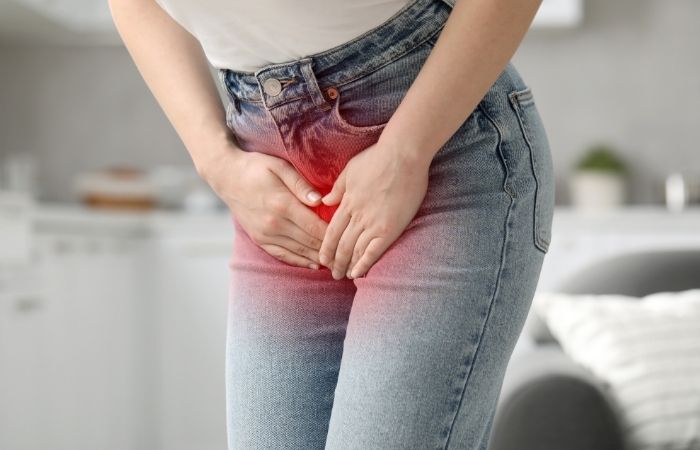
UTI vs. Chlamydia: Symptom and Test Comparison
To help make sense of the overlap, here's a side-by-side comparison of typical UTI and chlamydia features. Keep in mind: the only way to know for sure is to test. But this table can guide what to look out for when your symptoms don’t match the usual script.
| Symptom or Factor | UTI | Chlamydia |
|---|---|---|
| Burning during urination | Very common | Common |
| Increased urinary frequency | Yes | Yes |
| Pelvic pain or pressure | Sometimes | Yes (often deeper) |
| Vaginal or penile discharge | No | Sometimes (may be mild) |
| Response to UTI antibiotics | Typically resolves symptoms | No improvement |
| Test method | Urine dipstick or culture | NAAT urine test or swab |
Table 1: Key differences between UTI and chlamydia. A clear diagnosis requires appropriate testing, especially when symptoms persist or return quickly.
When UTI Meds Don’t Work: What to Do Next
Danny, 32, finished his 5-day course of UTI antibiotics, expecting the burning to disappear like last time. It didn’t. By the next week, he also noticed a dull ache in his testicles and an unusual discharge he hadn’t seen before. That’s when he realized he’d skipped a step, he never got tested for chlamydia.
If you’re still having symptoms after finishing a full course of UTI medication, it’s time to consider testing for STDs, especially chlamydia or gonorrhea. The good news? Both are easily tested and treated. The bad news? Many people spend weeks, or even months, in the limbo of misdiagnosis before getting there.
You don’t need to wait for a doctor’s appointment to get clarity. At-home STD test kits are available, discreet, and lab-accurate. STD Rapid Test Kits offers a range of options, including chlamydia-only tests and combo test kits that screen for multiple infections.
If you’ve had a recent partner change, a hookup where protection slipped, or symptoms that don’t align with typical UTIs, a rapid test is a smart next step. It gives you either the reassurance you need, or a path to treatment.
How Long After Sex Can You Test for Chlamydia?
This is where timing matters. Just like UTIs don’t show up instantly, neither do STDs. After exposure to chlamydia, there’s a window period during which the infection might not be detectable yet. Testing too soon can lead to false negatives, even when symptoms are already there.
Here’s a breakdown of what to expect:
| Time Since Exposure | Chlamydia Test Accuracy | Recommended Action |
|---|---|---|
| 0–3 days | Too early for accurate detection | Wait at least 5–7 days |
| 4–7 days | May detect some infections | Test, then retest at 2 weeks if negative |
| 7–14 days | Most accurate window | Test now for best results |
| 15+ days | Peak accuracy | Test if symptoms persist or for peace of mind |
Table 2: Optimal chlamydia testing windows after potential exposure. NAAT tests provide the most accurate results during the 7–14 day window.
If it’s been fewer than five days since the possible exposure, your best option is to wait a few more days before testing. If it’s been over a week and symptoms like burning, discharge, or pelvic pressure are still happening, don’t delay. The accuracy at that point is high, and answers beat anxiety every time.
What If the Test Comes Back Positive?
Let’s get something straight: testing positive doesn’t mean you’re dirty, reckless, or irresponsible. It means you’re human, and now you know. The good news is chlamydia is curable with a short course of antibiotics, usually a 7-day prescription of doxycycline or a single-dose azithromycin (depending on clinical guidelines and provider judgment).
Taylor, 29, cried when she saw her positive test result, even though she’d suspected it. But after texting her partner and finding out they also had symptoms, the shame lifted. They picked up antibiotics together and made a plan to get retested in a month. What felt terrifying at first turned into something strangely healing. That’s what happens when you take control.
Getting treated means you’ll start healing fast. Most symptoms improve within days of starting meds. But here’s the key: don’t have sex again until both you and any current partners have finished treatment. Reinfection is common, and it resets the clock on everything you just did.
Retesting After Treatment: Why It Matters
Even if your symptoms go away, retesting is part of the care plan. Here’s why:
1. Up to 15% of people get reinfected within three months if their partners weren’t treated too.
2. Residual symptoms can mimic reinfection, even when the bacteria is gone.
3. Testing confirms that treatment worked, especially if you had more severe symptoms or complications like pelvic inflammatory disease (PID).
Most health guidelines recommend retesting 3 weeks after completing antibiotics if you’re still symptomatic, or at the 3-month mark regardless, just to be sure. If you used a rapid test, follow up with a lab-based or mail-in test to double-check.
If you tested positive and haven’t told your partner yet, we’ve written a full guide on how to tell a partner about STD exposure without guilt or panic. You don’t have to do it alone. Scripts, tips, and discreet options are all there for you.
Why Doctors Often Miss It, Especially for Women
Nina, 22, went to the campus clinic three times in two months. Every time she described the same pain, burning, pressure, frequent urination, they ran a quick urine dipstick, ruled it a UTI, and sent her home with antibiotics. The meds didn’t help. By her third visit, she felt crazy. “I started thinking maybe it was just anxiety,” she said. “Like maybe I was imagining it.”
This isn’t rare. In fact, it’s built into the system. Studies show that young women are often overdiagnosed with UTIs and under-tested for STDs, even when their symptoms don’t fully line up. CDC guidelines recommend chlamydia screening for sexually active women under 25 every year, but many clinics rely solely on symptoms or dipstick urinalysis, which doesn’t detect STDs at all.
The problem is diagnostic shortcuts. Dipsticks check for nitrites, white blood cells, and bacteria, but they don’t differentiate the cause. And if a doctor assumes “UTI” without checking sexual history or ordering a proper NAAT test, you end up misdiagnosed and untreated. It’s not about bad doctors. It’s about a bad system that doesn’t ask the right questions, or give patients the tools to ask them either.
What If It’s Not Chlamydia Either?
Maybe you’ve already tested negative for chlamydia but your symptoms persist. It’s frustrating, and scary, and yes, there are other possibilities. Gonorrhea can also present like a UTI. So can trichomoniasis, a parasitic infection often overlooked in routine screens. Even herpes, particularly during its first outbreak, can cause urethral irritation that feels exactly like a bladder infection.
Then there are non-STD culprits: bladder pain syndrome (IC), yeast overgrowths, hormonal shifts, and even past trauma can all cause overlapping symptoms. But here’s the rule: start with ruling out the treatable infections first. They’re the most time-sensitive, and the most easily addressed with the right meds.
If you tested negative but your pain is still intense or worsening, consider using a combo STD kit to screen for other infections at once. It’s less expensive than ordering multiple single tests and gives you a broader picture of what’s going on.
And if all your results are clear? That doesn’t mean nothing is wrong. It just means the next step might be with a urologist, pelvic floor specialist, or gynecologist, not because you were wrong to test, but because you’re right to keep asking.
What It Feels Like to Not Be Believed
This part doesn’t get talked about enough. When you’ve done everything “right”, seen a doctor, taken the meds, peed in the cup, and nothing’s working, the worst part isn’t the symptoms. It’s the doubt. From others. From yourself.
Milo, 27, said it best: “It wasn’t just the burning. It was feeling like no one believed me when I said something was off. That messes with your head.”
That’s why we don’t just talk about testing. We talk about validation. You deserve to take your symptoms seriously. You deserve answers that actually solve the problem, not just patch it up temporarily. That starts with knowing what UTI symptoms can mean, and being bold enough to test for STDs even when no one else brings it up.
Privacy matters here, too. If you’re not ready to tell a provider, or you’ve been dismissed before, start with an at-home test. You control when and how to use it. The STD Rapid Test Kits site ships discreetly, with no logos, and results are yours to interpret privately. You don’t owe anyone your story unless you want to share it.
How to Care for Yourself While You Wait
Waiting is hell. Waiting for symptoms to go away. Waiting for test results. Waiting for answers. But you don’t have to suffer in silence while you wait.
While you’re in this in-between space, here’s what helps:
- Drink water, but don’t overdo it. Hydration helps flush irritants but excessive intake won’t “cure” anything.
- Avoid irritants like caffeine, alcohol, and citrus until you know the cause.
- Wear loose cotton underwear, skip the tight jeans, and avoid soaps or wipes in sensitive areas.
- Take pain relievers like ibuprofen if needed, but don’t mask symptoms to the point you can’t track them.
- Use a heating pad across your lower abdomen. It helps more than you'd expect.
And maybe most importantly: talk to someone. Not everyone will get it, but some people will. You’re not the only one going through this. There’s no shame in having an STD, in having symptoms, or in needing a second test. There’s only strength in seeking the truth.
FAQs
- 1. How do I even know if it’s a UTI or chlamydia?
- Honestly? You don’t, not without a proper test. Both can cause that awful burning feeling when you pee, and both can mess with your head. But here’s a hint: if you’ve taken antibiotics and nothing’s changing, or the symptoms come back way too soon, chlamydia should be high on your radar.
- 2. I got antibiotics for a UTI, but it still burns. Could I have been misdiagnosed?
- Absolutely, and it happens more than most doctors like to admit. If you weren’t tested for STDs, just handed meds based on symptoms, there’s a real chance the culprit is something like chlamydia or gonorrhea, not a urinary tract infection.
- 3. Can chlamydia hide in your system even after treatment?
- Chlamydia doesn’t hide exactly, but reinfection is common, especially if your partner wasn’t treated or if sex happened before finishing the antibiotics. Also, if the original test was done too soon, you might have gotten a false negative and missed it entirely. Retesting clears the air.
- 4. Does chlamydia always come with discharge or obvious symptoms?
- Nope. That’s part of what makes it so sneaky. You might have no discharge at all. Or maybe just a little irritation that feels more like a yeast infection or a bladder thing. That’s why it flies under the radar, and why annual testing matters even when nothing feels “off.”
- 5. Okay, real talk: I tested positive. Am I gross now?
- No. You are not gross. You are not broken. You’re just a person who got an infection, one that affects millions of people every year and is totally treatable. Chlamydia isn’t a moral failing; it’s a bacteria. And now you get to kick its ass.
- 6. Can guys get chlamydia and not even know?
- Yup, and they often do. A lot of men have zero symptoms or brush off mild ones as “dehydration” or “just a sensitive urethra.” But even without symptoms, they can pass it on. Testing is the only way to be sure.
- 7. Do I need to wait to test, or can I do it right away?
- Depends. If it’s been less than five days since exposure, hold off a bit, early testing can miss the infection. If it’s been a week or more and you’re having symptoms, go for it. A rapid test or mail-in lab test can give you peace of mind or a clear plan forward.
- 8. What if I don’t want to talk to a doctor or go to a clinic?
- Totally fair. That’s why at-home STD tests exist. They are private, simple to use, and don't require awkward conversations or anxiety in the waiting room. You can test in your own bathroom and on your own time and still get lab-grade results.
- 9. I already got tested once. Do I really need to do it again?
- If your symptoms are back, or your partner didn’t get treated, or you’ve had new partners since? Yes, absolutely. Retesting isn’t overkill, it’s self-respect. It’s making sure your body isn’t fighting something without your knowledge.
- 10. So… is it normal to feel scared about all this?
- Completely. This stuff is messy and personal and sometimes humiliating. But you’re not alone. Thousands of people are Googling the same questions, feeling the same panic, and trying to figure it out just like you. Scared doesn’t mean weak. It means you care. And caring is what leads to healing.
You Deserve Answers, Not Assumptions
If you’ve made it this far, it means you’re done guessing, and that matters. Whether your symptoms started after a one-night stand, a trusted partner, or seemingly out of nowhere, you deserve real answers. Not more meds that don’t work. Not more blame or shame. Just clarity.
If the burning hasn’t gone away, it’s time to test for what your doctor may have missed. A discreet chlamydia test or combo STD kit could be the difference between another week of anxiety and a plan for healing.
Don’t wait and wonder, get the clarity you deserve. This at-home combo test kit checks for the most common STDs discreetly and quickly.
How We Sourced This Article: We combined current guidance from leading medical organizations with peer-reviewed research and lived-experience reporting to make this guide practical, compassionate, and accurate.
- CDC – Chlamydia Detailed Fact Sheet
- Planned Parenthood – Chlamydia Information
- About Chlamydia (CDC)
- Urinary Tract Infection (UTI) Basics (CDC)
- What Chlamydia Feels Like and Why It’s Easy to Miss (Mayo Clinic)
- Urinary Tract Infection (UTI): Symptoms and Causes (Mayo Clinic)
- Chlamydial Infections Treatment Guidelines (CDC)