Are STD Test Kits Anonymous? Privacy, Records, and What Actually Happens to Your Results
If you've been putting off testing because you're worried about your name, your records, or who might find out, this is the article you need to read first.

If you've been putting off testing because you're worried about your name, your records, or who might find out, this is the article you need to read first.
Yes, at-home STD test kits are anonymous in the way that actually matters: no doctor's visit, no insurance claim, no entry in your medical records, and no one notified unless you choose to tell them. When you test at home, the result is yours. Not your GP's. Not your insurer's. Not your employer's. Just yours. The distinction worth understanding is the difference between anonymous and confidential, and once you know that difference, the choice about how to test becomes a lot clearer.
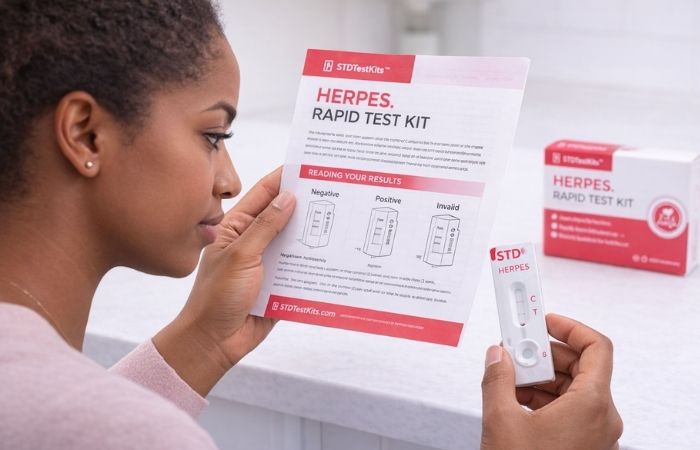
What "Anonymous" Actually Means in STD Testing
Most people use "anonymous" and "confidential" interchangeably when talking about STD testing, but they're not the same thing, and the difference has real consequences for your privacy. Understanding which one you're actually getting is the first step to knowing how protected you really are.
Anonymous testing means your name is never attached to your test or your result at any point in the process. There is no record linking your identity to the fact that you were tested at all. With at-home STD test kits, this is the default experience: you order a kit, test yourself in private, read the result, and that's it. No clinician logs your visit. No system records your name next to a positive or negative result. The test happens entirely within your own four walls.
Confidential testing is different. It means your name is attached to your result, but the provider is legally obligated not to share it without your consent. Clinic-based testing is usually confidential, not anonymous. A record exists. Your result lives somewhere in a system. The clinic promises not to disclose it unnecessarily, but the data exists and is bound by healthcare privacy regulations rather than simply not existing at all. For most people, this is perfectly adequate. But if your concern is that a record exists at all, anonymous at-home testing is the answer, not a confidential clinic appointment.
The reason this distinction matters so much is that anxiety about STD testing is rarely abstract. It's usually specific. Someone might be worried their insurance company could find out. Someone else might be terrified that a partner or family member could somehow access their medical records. Another person might just feel strongly that their sexual health is nobody's business but their own. All of those concerns point toward the same solution: an at-home test kit that never involves anyone else's systems, records, or eyes.
Do STD Test Kits Show Up on Your Medical Records?
Short answer: no. When you buy and use an at-home STD test kit, nothing is reported to your doctor, added to your medical history, or flagged anywhere in a healthcare system. The transaction is between you and the test. That's it.
This is one of the most common questions people have, and one of the most persistent sources of confusion. A lot of people assume that because STD tests are medical in nature, they must automatically feed into some centralized health record. They don't. At-home test kits are consumer products, not clinical procedures. Buying one is no different, from a records perspective, than buying a thermometer or a blood pressure monitor. The result you get is yours to do with as you choose.
Insurance is a related concern worth addressing directly. When STD testing is done through a clinic and billed through health insurance, there is a paper trail: the claim, the billing code, and the record of the service. Some people have experienced their insurer flagging testing activity, or have worried about it affecting coverage. With an at-home kit you pay for out of pocket, none of that applies. There is no insurance claim because there is no clinical service being billed. The purchase appears on your bank statement like any other online order, and even that is handled discreetly by reputable kit providers, with plain packaging and neutral billing descriptors.
The only scenario in which a result from an at-home test could enter any kind of official system is if you take that result to a doctor or clinic and hand it over as part of a consultation. The information doesn't travel on its own. You control whether it ever leaves your hands.
What Happens to Your Results After You Test?
This is where people's imaginations sometimes run ahead of reality. The idea that a positive result triggers some kind of notification cascade, to your doctor, your partner, your employer, is understandable, but it's not how at-home testing works.
With a rapid at-home STD test kit, your result is produced by a chemical reaction on a test strip that you read yourself. There is no digital upload, no result transmitted to a server, no clinician reviewing your outcome on the other end. The test is self-contained. You run it, you read the lines, and you have your answer. The result exists in one place: in front of you. Nothing goes anywhere unless you send it.
Some digital-first testing services operate differently; they may ask you to photograph your result and upload it to an app, or they may involve a telehealth consultation as part of the process. In those cases, data handling becomes more relevant, and it's worth reading the privacy policy of the specific service you're using. But a standard rapid at-home test kit, the kind you buy, use, and read yourself, doesn't involve data transmission at all. The result doesn't leave your bathroom.
That said, if you test positive and want to access treatment, you will need to involve a healthcare provider at some point. Treatment requires a prescription in most cases, and that means a doctor's visit. That visit will be recorded. But the testing itself, the moment of finding out, remains entirely private. You get to decide what to do with the information before anyone else is involved.
At-Home STD Testing: The Most Private Way to Get Answers
You're lying in bed, phone face down on your chest, running through the events of the last few weeks. You want to know. You need to know. But the idea of calling a clinic, making an appointment, sitting in a waiting room, and having a conversation with a stranger about your sex life feels like too much. An at-home test kit solves every single one of those problems, and it does it without your name, your insurance, or your doctor being involved at any point.
At-home STD test kits from STD Test Kits are designed for exactly this situation. They arrive in plain, unmarked packaging. You collect a small sample, usually a finger-prick blood sample or a swab, follow the instructions, and read your result in minutes. No waiting room. No awkward conversation. No record anywhere that you tested at all.
Knowing which test to take and when to take it are the two things that matter most for accuracy. Testing too early after exposure can produce a false negative, not because the test is faulty, but because your body hasn't yet produced enough of the markers the test is looking for. Each infection has a specific window period, and sticking to it is the difference between a result you can trust and one that might leave you with the wrong answer.
| Infection | Test From | Kit |
|---|---|---|
| Chlamydia | 14 days after exposure | Chlamydia At-Home STD Test Kit |
| Gonorrhea | 3 weeks after exposure | Gonorrhea At-Home STD Test Kit |
| Syphilis | 6 weeks after exposure | Syphilis At-Home STD Test Kit |
| HIV-1/2 | 6 weeks (first indicator); retest at 12 weeks for certainty | HIV-1/2 At-Home STD Test Kit |
| Herpes HSV-1 & HSV-2 | 6 weeks after exposure | Genital & Oral Herpes HSV-1+2 At-Home STD Test Kit |
| Hepatitis B | 6 weeks after exposure | Hepatitis B At-Home STD Test Kit |
| Hepatitis C | 8–11 weeks after exposure | Hepatitis C At-Home STD Test Kit |
If you're not sure which specific infection you may have been exposed to, or if the encounter involved multiple risk factors, a combo kit is the smarter choice. The 8-in-1 Complete At-Home STD Test Kit screens for HSV-1, HSV-2, Chlamydia, Gonorrhea, Syphilis, HIV, Hepatitis B, and Hepatitis C in a single test session, completely privately, on your own timeline. Testing is the fastest way to stop the guessing game, and doing it at home means no one ever has to know you were guessing in the first place.
Anonymous Testing vs. Confidential Clinic Testing: What's the Real Difference?
Both options have their place, and neither is inherently better than the other for every person in every situation. The right choice depends entirely on what you're worried about and what your priorities are. But the comparison is worth laying out clearly, because a lot of people end up at a clinic assuming it offers more anonymity than it actually does, and walk away uncertain about what just happened to their information.
Clinic-based testing, even when marketed as "confidential," involves a real appointment, a real record of your visit, and in many cases an insurance claim. According to the CDC, while healthcare providers are bound by privacy regulations, confidentiality is not the same as anonymity; your information exists in a system, protected by rules rather than by absence. That's an important distinction for anyone whose concern isn't just "who will be told" but "does a record exist at all."
At-home testing sidesteps the entire question. There's no appointment. No record of a visit. No insurance involvement. No clinician who knows your name. The result is produced privately and exists only in your hands.
| Factor | At-Home Test Kit (Anonymous) | Clinic Testing (Confidential) |
|---|---|---|
| Your name is attached to the test | No | Yes |
| Medical record created | No | Yes |
| Insurance claim possible | No (paid out of pocket) | Yes (if billed through insurance) |
| Doctor notified of the result | No | Typically yes |
| Appointment required | No | Yes |
| Result visible to you first | Yes, only you | Usually via portal or callback |
| Waiting room exposure | None | Yes |
| Turnaround time | Minutes | Hours to days |
| Accessible without transport | Yes | No |
There are situations where a clinic is the right call, if you already have symptoms that need examination, if you need a prescription immediately, or if you've tested positive at home and need to begin treatment. But for the initial act of finding out whether an infection is present, an at-home kit provides a level of privacy that no clinic can match, because there is simply nothing to record.
Does Anyone Get Notified If You Test Positive?
This is the question underneath most other questions about anonymous testing. People aren't just worried about records existing; they're worried about what a positive result sets in motion. Will their partner get a call? Will their doctor be automatically informed? Will some public health agency show up? The reality is far less dramatic than the fear.
With an at-home test kit, a positive result triggers exactly one thing: you know. That's it. There is no automatic notification to anyone. No system receives your result. No partner is contacted on your behalf. No public health authority is alerted. The result is yours, and the decision about what to do next is entirely in your hands.
The partner notification picture changes slightly if you test through a clinic. Some STIs are legally classified as notifiable conditions in certain jurisdictions, which means clinics may be required to report positive results to local public health authorities, not to name you publicly, but to track disease prevalence. The World Health Organization notes that disease surveillance systems are designed to protect population health, not to expose individuals. In practice, this means aggregate data is tracked, not personal exposure histories broadcast to your contacts.
Partner notification, telling a recent sexual partner that they may have been exposed, is something most healthcare providers will discuss with you if you test positive through a clinic. In some places, contact tracing services exist to notify partners anonymously on your behalf, without revealing your identity. But none of this is triggered by an at-home test. That conversation only happens if you initiate it, either directly or through a service you voluntarily choose to use. Testing at home does not put you on any list, and it does not start any clock on mandatory disclosure.
The honest truth about partner notification is that it's a genuinely hard conversation, and most people find it easier to have once they know their own status for certain. Testing first, privately, at home, gives you the information you need before any difficult decisions have to be made. You're not obligated to navigate anything before you're ready.
The Most Common Reasons People Want Anonymous Testing
Nobody wakes up worrying about medical records for no reason. The desire for anonymous STD testing almost always comes from somewhere specific, a fear, a situation, a relationship dynamic that makes the idea of a paper trail feel genuinely dangerous. These reasons are more common than most people realize, and none of them are embarrassing.
The insurance concern is real and understandable. In systems where health insurance is tied to employment or where coverage can be affected by medical history, the idea of an STD result appearing in records feels like a risk that goes beyond personal embarrassment. Some people worry about future insurance applications, others about employer-sponsored plans where HR might theoretically have access to claims data. At-home testing eliminates this entirely, no claim, no code, no record.
The relationship concern is equally common. Someone testing after an affair, or after an encounter they haven't told a partner about, is not going to walk into a shared GP's office and ask for an STD panel. The barrier isn't embarrassment in the abstract; it's the very concrete fear that the information will travel somewhere it shouldn't. At-home testing removes that barrier completely. The person in that situation can find out what they need to know, make decisions about their health and their relationship, and do all of it without anyone else being involved before they're ready.
Young people testing for the first time frequently want anonymous options because they're on a parent's insurance plan or living at home. The fear isn't about judgment from a clinician; it's about a bill or an explanation of benefits arriving in a household letterbox and triggering a conversation they're not ready for. An at-home kit, paid for separately and delivered in plain packaging, sidesteps all of that.
And some people simply feel, on principle, that their sexual health is nobody's business. That's a completely valid position. Testing is a responsible health decision, not a confession. Wanting to make that decision privately doesn't require any further justification.
How to Test Completely Privately From Start to Finish
The good news is that truly private STD testing, from ordering to result, is straightforward when you use an at-home kit. Here's exactly how the process works and where your privacy is protected at each stage.
Ordering is the first step, and it's designed to be discreet. Reputable at-home STD test kit providers ship in plain, unmarked packaging with no indication of the contents on the outside. The billing description on your bank statement is typically a neutral company name, nothing that would identify the nature of the purchase to anyone who might see your account. You can order online in a few minutes, and the kit arrives at your home without anyone else needing to be involved.
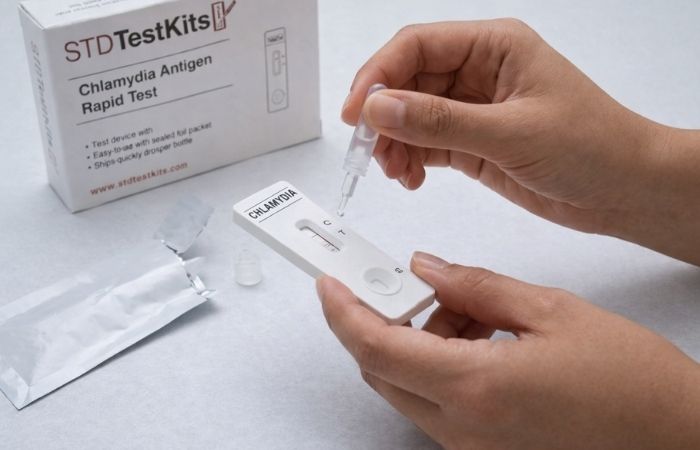
Testing itself takes place entirely in private. Most rapid test kits require a finger-prick blood sample; a small lancet is included. You follow the illustrated instructions, apply the sample to the test strip, and wait for the result window. The entire process from opening the kit to reading the result typically takes under 20 minutes. There is no sample you need to send anywhere, no upload required, and no one on the other end of a system waiting to receive your data. The result appears on the strip in front of you.
Reading the result is the moment that matters most. A clear result, one line or two, depending on the test, tells you what you need to know. If the result is negative and you tested within the correct window period for the infection, you can be confident in that result. If the result is positive, the next step is to contact a healthcare provider to confirm the result and discuss treatment options. That consultation will involve your name, but by that point, you already have the information you needed, and you're choosing to share it in order to access care.
The entire process from first suspicion to confirmed answer can happen within a single afternoon, entirely in your own home, with no record created anywhere. That's not a workaround or a grey area, it's exactly what at-home testing is designed to provide. Your results. Your privacy. Your next step, when you're ready to take it.
FAQs
- 1. Are at-home STD test kits completely anonymous?
- Yes, when you use a rapid at-home STD test kit, no record is created linking your identity to the test or the result. You purchase the kit, test yourself privately, and read the result. Nothing is reported to a doctor, an insurer, or any public health database unless you choose to share the information yourself.
- 2. Will an at-home STD test show up on my medical records?
- No. At-home STD test kits are consumer products, not clinical procedures. Using one creates no entry in your medical history and triggers no report to your GP or any healthcare provider. Your records are only affected if you take a positive result to a doctor yourself.
- 3. Can my insurance company find out I tested for an STD at home?
- Not if you pay for the kit out of pocket. There is no insurance claim involved in an at-home test, so no billing code or claim reaches your insurer. The only way insurance becomes involved is if you use a clinic-based testing service billed through your plan.
- 4. Will my partner be notified if I test positive at home?
- No. A positive result from an at-home kit doesn't trigger any automatic notification. No partner is contacted, no contact tracing is initiated, and no public health authority is alerted. What you do with the result is entirely your decision.
- 5. Is it legal to test yourself for STDs at home?
- Yes, at-home STD test kits are legal consumer products. You do not need a prescription to purchase or use them, and there is no legal requirement to report your results to anyone.
- 6. What's the difference between an anonymous and a confidential STD test?
- Anonymous means your name is never attached to the test or result at any point. Confidential means your name is attached, typically at a clinic, but the provider is legally required not to share it without your consent. At-home test kits are anonymous. Clinic-based tests are usually confidential.
- 7. Can my employer find out I took an at-home STD test?
- No. At-home testing doesn't involve your insurance, your doctor, or any employer-linked health system. Even if your health insurance is employer-sponsored, an at-home kit paid for privately generates no data that reaches your employer.
- 8. How accurate are at-home STD test kits?
- Reputable rapid test kits have accuracy rates typically above 98% when used correctly and within the appropriate testing window. Accuracy depends on two things: following the instructions precisely and testing at the right time after exposure. Testing too early is the most common cause of a misleading result.
- 9. Do I need to tell a doctor if my at-home STD test is positive?
- You are not legally required to, but it is strongly advisable. A positive result needs clinical confirmation and access to treatment, both of which require a healthcare provider. The home test tells you what you need to know; the doctor helps you act on it.
- 10. What if I'm on a parent's health insurance? Can they see if I get tested?
- If you use a clinic and the visit is billed through a shared insurance plan, an explanation of benefits could reach the policyholder. An at-home kit paid for separately avoids this entirely. No bill, no claim, no explanation of benefits, nothing reaches the account holder.
Get Tested Privately, Kits Delivered to Your Door
If anonymity matters to you, and for a lot of people, it genuinely does, at-home testing is the clearest answer available. No appointment, no waiting room, no record, no conversation you're not ready to have. Just a test, a result, and the information you need to take the next step on your own terms.
- CDC, STD Screening Recommendations
- World Health Organization, Sexually Transmitted Infections (STIs) Fact Sheet
- U.S. Department of Health & Human Services, Your Medical Records and HIPAA Rights
- NCBI, Self-Testing for HIV and Other STIs: Evidence Review
- STD Hub - Anonymous vs. Confidential STD Testing: What’s the Difference?
- NHS, Find sexually transmitted infection (STI) testing and treatment