False Positive vs False Negative HSV2 Results: What Your Test Actually Means
Quick Answer: A false positive HSV-2 test means that the test says you have herpes when you don't. This can happen when the index values are low or when the test reacts with something else.
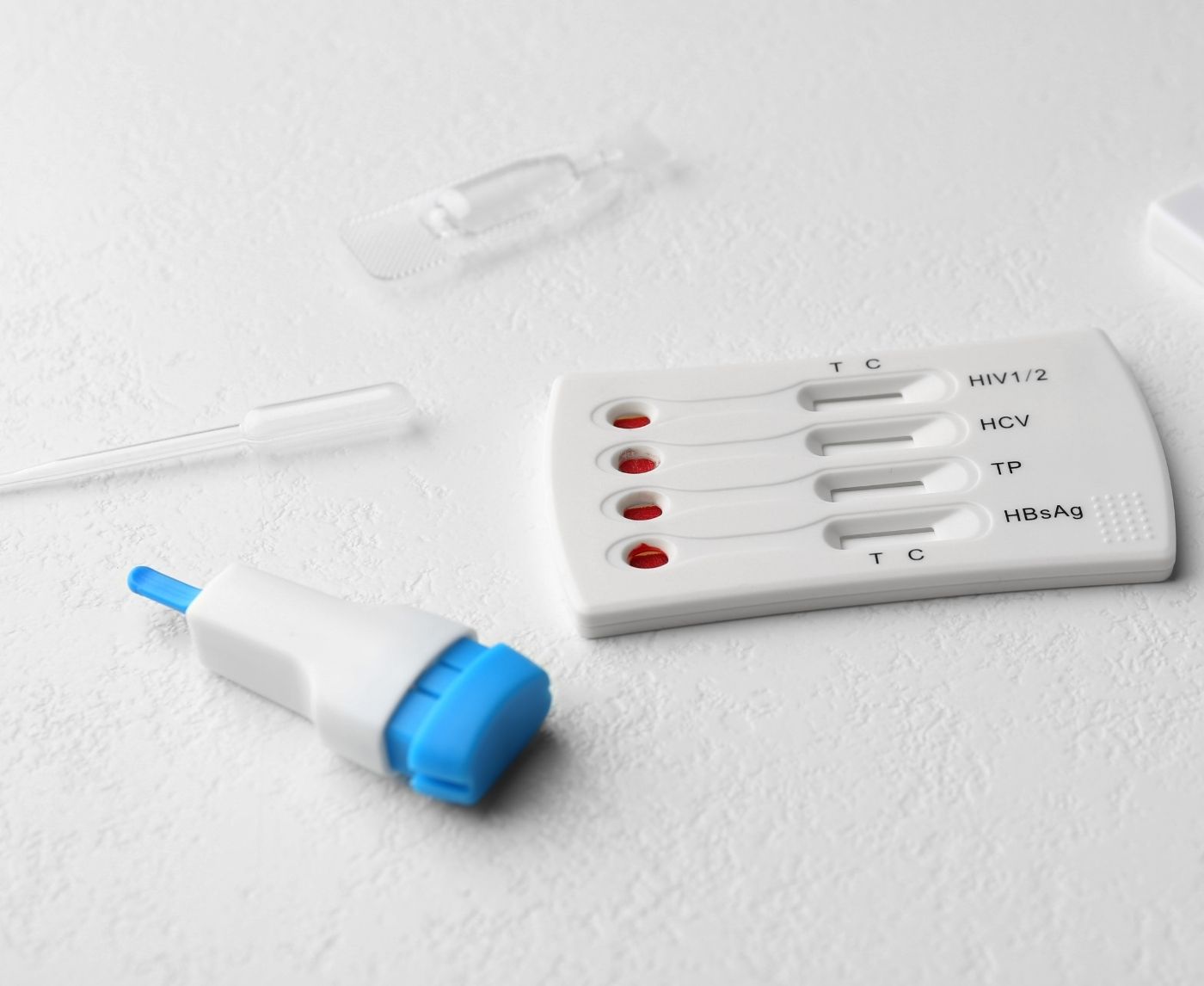
Quick Answer: A false positive HSV-2 test means that the test says you have herpes when you don't. This can happen when the index values are low or when the test reacts with something else. If a test gives a false negative, it means it missed an actual infection, which is usually because the test was done too soon. Timing and confirmatory testing are very important for getting the right results.
Why HSV-2 Test Results Can Be Wrong
Most cases of HSV-2 infection are diagnosed by a blood test that detects antibodies. In this case, it is specifically IgG antibodies that are produced by your immune system in response to its identification of the virus. In theory, this is a pretty simple process. You are infected with the virus, your immune system recognizes it and begins producing antibodies, and then you take a test that detects those antibodies. However, in practice, your immune system is not always so cooperative. In theory, it should take some amount of time for your immune system to develop those antibodies. During this period, however, it does not necessarily have anything to detect.
This is where things can get very confusing. If you take a test too soon after a potential infection, which most people are inclined to do because they are most anxious in those moments, it is possible that your body has not had enough time to develop enough IgG antibodies to meet the threshold for a positive test. So you take a test and receive a negative result.
From a purely biological perspective, it simply may not be early enough to take a test. This is what creates what is called a false negative test result. This is where the test appears to be very clear-cut but does not necessarily tell the entire story.
Why HSV-2 Tests Sometimes Show Positive When They Shouldn’t
In contrast to false negatives, false positives are caused by a very different sort of limitation. In this case, an HSV-2 test detects proteins that are associated with the virus. However, those proteins are very similar to proteins that are associated with HSV-1, which is more commonly known as oral herpes.
If you have ever contracted a cold sore, or have been exposed to one without knowing it, then your system may have already developed antibodies that bear a partial resemblance to the markers for HSV-2. This can cause the test to read these similar markers and assume they are a match, when in fact they are not.
This is what is known as cross-reactivity, and it is one of the most misunderstood aspects of herpes testing. While it may seem to the untrained eye that the test is simply giving an arbitrary result, this is far from the truth. The problem is that the immune system does not neatly categorize these antibodies, and so the tests are picking up on overlapping signals.
In some cases, especially when the results come back in the lower end of the index range, these overlapping signals can cause the results to come back positive when they should not.
Perhaps one of the most disheartening aspects of herpes testing is that to the untrained eye, it appears to be a very simple process. You get a positive or negative result, and it appears to be a very clear answer. What the untrained eye does not realize is that there is a very complex process at work. While the tests themselves are accurate in that they are doing exactly what they were designed to do, picking up on antibody signals, they are also giving a very imperfect result.
Understanding False Positive HSV-2 Results
On the other hand, a false positive is when your result shows you have HSV-2 when, in fact, you don’t. The most common reason this happens is when your IgG index result is in the low positive range, which is between 1.1 and 3.5.
This is often termed the "gray zone," and in this area, people may not actually have HSV-2, even though they have tested positive. In fact, this is one of the biggest reasons people are misdiagnosed with herpes.
You may think your whole sex life has to be questioned when you receive this kind of result, especially if you have just been tested routinely with no symptoms. But in fact, this is where testing is important, so you don’t jump to conclusions.
| Index Value | Interpretation |
|---|---|
| Negative | |
| 1.1–3.5 | Low Positive (Possible False Positive) |
| >3.5 | High Positive (More Reliable) |
Understanding False Negative HSV-2 Results
A false negative is basically the opposite scenario. You actually are infected with HSV-2, but the test says you are not. Now, at first glance, this can be very liberating news to receive, especially if you are anxiously awaiting test results after possibly being infected with the virus. However, in many cases, this is not the final verdict, especially in early stages. This occurs most frequently during what is called the “window period.” This refers to the period of time from when you are infected with the virus to when your body begins to produce enough antibodies to detect in a blood test.
When it comes to HSV-2 infection, this process can take anywhere from 2 to 4 weeks for some people to begin producing detectable levels of IgG antibodies. However, it can take others 8 to 12 weeks or more to begin producing detectable levels of IgG antibodies. Your immune system strength, health, and even stress levels can affect this process. This is why testing in early stages can be so difficult.
This is why testing too soon after a possible exposure is one of the biggest reasons false negative herpes test results occur. You may have done everything "right," tested soon after exposure, been diligent about follow-up, and still gotten a result that is not accurate. The test is not failing to find the virus because it is faulty; it is failing to find the virus because your body has not produced enough of the signal the test is meant to detect.
One example of this in real life is when someone has had a possible exposure, waits a couple of weeks, tests negative, and feels reassured enough to move on with their life. But weeks later, perhaps after exhibiting some symptoms or just wanting to be sure, they end up testing positive. It is easy to think something has changed, something new has happened, and this is why they are testing positive.
However, in reality, nothing new has happened. The virus has not suddenly appeared in their body after weeks. What has happened is the second test has picked up what the first test did not, because the immune system has had enough time to produce enough antibodies to be tested accurately.
Learning about false negative herpes test results is not about learning to distrust the testing, but to understand the timing. While a negative result is not meaningless, it is limited in what it can tell you. Once you understand where you are in the timeline, you can understand what your negative result means, rather than being reassured by it, and decide if you need to retake the test to get a true result.
The Role of Timing in Test Accuracy
Timing is everything with HSV-2 testing. Testing too soon after exposure is one of the biggest reasons for false negatives. Waiting at least 12–16 weeks gives the most reliable results.
But timing also affects false positives in a different way. Early testing can sometimes pick up weak or unclear antibody signals, contributing to those confusing low positive results.
Think of testing like taking a photo in low light. If you snap it too early, the image is blurry. Waiting a bit longer gives you a clearer picture, and that’s exactly what your immune system needs.
| Time After Exposure | Test Reliability |
|---|---|
| 1–3 weeks | Very Low (High False Negatives) |
| 4–8 weeks | Moderate Accuracy |
| 12–16 weeks | High Accuracy |
What to Do If Your HSV-2 Result Is Confusing
If you have come up with a low positive result, or a result that simply does not correlate with your own real-life experiences, then the most important thing to grasp is that your next step is not to assume the worst. Your next step is to try to grasp what that result really means. HSV-2 results are some of the few results that are not necessarily absolute, especially when they are low positive.
This is where confirmatory testing comes in. A test such as the Western blot, which is basically the gold standard, or even a second IgG test at the right time, will help you grasp whether or not that first test result was a true positive or not. A lot of people who fall into this grey zone of index values will go on to find that they were never infected at all. It simply takes a second, more precise look to be able to confirm that.
The emotional process that you are going through at this time will probably feel like limbo. You have a test result, but you still have no answers. You will probably be thinking about your past experiences, or wondering if you have been misled by your partner. However, this is not an unusual or worrying situation. In fact, this is a well-known situation. This is why confirmatory testing exists. It is because this situation is not at all rare.
This is also the space in which at-home testing can really help shift the experience in a more manageable direction. Rather than having to schedule appointments, wait in a waiting room, or delay a follow-up due to anxiety, you can control the entire experience in a more personal way. Many individuals prefer to retake the test using STD Test Kits, which can offer more discreet and reliable options in a way that can be more in line with your schedule, rather than adding more obstacles to it.
Retesting isn’t just about repeating the same action, it’s about changing the circumstances under which you retake the test. The timing of a retake can be a crucial factor in the entire experience. If you originally received a result that was low positive or ambiguous, giving it a few more weeks can help your immune system strengthen a real antibody response or eliminate a false one. The difference between a confusing result and a clear one can be as simple as timing.
The entire concept of retaking a test can be likened to going from a blurry photo to a more defined one. The first test can provide a general understanding, but the retake can provide more resolution. Rather than being stuck in a state of confusion, you’re actually working towards narrowing down the options, and it can be a surprising source of relief, even before you know the results.
How HSV-2 Results Are Often Misinterpreted
One of the biggest problems with HSV-2 testing isn’t just that false positives or false negatives exist, it’s how those results are interpreted once they come back. Many people, and even some healthcare providers, treat any “positive” result as final and unquestionable. There’s often no discussion about index values, no attention to timing, and no acknowledgment that not all positives carry the same level of certainty.
This is where a lot of unnecessary panic begins. Seeing the word “positive” on a report can feel definitive, like the conversation is over. But with HSV-2 testing, that’s often just the starting point. A low positive result, especially in the 1.1 to 3.5 range, is not the same as a confirmed infection. It’s a signal that needs context, not a conclusion that should immediately reshape how you see your health or your relationships.
Without that context, people are left filling in the gaps themselves. That can mean replaying past partners in your mind, questioning trust, or feeling like you need to disclose something that hasn’t even been confirmed. The emotional weight of a misunderstood result can be far heavier than the medical reality behind it.
Misinterpretation also contributes to stigma. When results are treated as absolute without nuance, it reinforces the idea that HSV-2 status is binary and definitive in every case. In reality, there’s a spectrum of certainty depending on how strong the antibody signal is and when the test was taken. Ignoring that spectrum leads to overdiagnosis and unnecessary stress.
| Factor | Why It Matters |
|---|---|
| Index Value | Determines whether a positive result is strong or potentially false (low positives are less reliable) |
| Timing of Test | Early testing can lead to false negatives or unclear low positive results |
| Symptoms | Presence or absence of outbreaks helps support or question a diagnosis |
| Exposure History | Recent or known exposure increases the likelihood a result is accurate |
Understanding your result means stepping back and looking at the full picture, not just reacting to a single word on a lab report. A “positive” or “negative” label only makes sense when you pair it with the details behind it, how strong the result is, when you tested, and what your actual risk factors look like.
When you approach HSV-2 testing this way, the experience shifts. Instead of feeling like you’ve been handed a life-altering answer in a single moment, you begin to see it as a process, one that sometimes requires a second step, better timing, or more context to reach the truth. And that shift alone can take a lot of the fear out of the equation.
Preventing Future Testing Confusion
The best way to avoid confusion when it comes to HSV-2 testing is to think about timing and expectations when it comes to testing. While a great deal of stress comes from the infection itself, a great deal also comes from confusion and misinformation. And in a great deal of cases, this confusion and misinformation would have been alleviated by waiting to get tested at the right time with a testing method that yields clear results.
If you have recently been exposed to herpes, the first thing that comes to mind is to get tested as soon as possible. This makes sense; waiting can be unbearable when you’re worried about herpes. But getting tested too soon is one of the largest reasons people get false reassurance. While waiting may seem unbearable, waiting to get tested can make all the difference in getting clear results. While getting a negative result may seem to show you’re in the clear, it may simply show that your immune system has yet to produce the antibodies that would show up on a test. This waiting can make all the difference in getting clear results.
If you’re getting tested out of routine screening and don’t have any symptoms, the problem shifts to interpretation. While the problem with herpes testing is clear in people with symptoms, it’s also true that herpes tests aren’t very accurate in people without symptoms. By keeping this in mind when getting results, you can avoid getting caught off guard by a low positive result. You would already know that sometimes results simply need to be confirmed.
This is where having the right mindset plays as big a role as having the right approach. Entering into testing with the right mindset that results may need to be interpreted or that a second test could be necessary will go a long way in preventing that immediate emotional spiral. It allows you to approach testing as a step-by-step process rather than a one-time event, which is much closer to what testing for HSV-2 is like in real life.
If you are unsure, consider testing options that allow for retesting, confirmation, and control. Being able to retest, confirm, and go at your own pace will make a stressful situation much more workable. Many people have turned to testing options like the HSV-2 Test Kit because they allow for privacy and control, two things that are often missing in testing.
The key to avoiding confusion is not to test; it is to test smarter. When you have the right timing, approach, and tools, you are more likely to receive a result that reflects your reality. And as importantly, you are less likely to have to go through unnecessary stress over a result that was not intended to be interpreted on its own.
Talking to Partners About Uncertain Results
Nothing makes you feel more uncomfortable than trying to discuss a confusing HSV-2 test result with your partner, especially when you are not yet totally aware of what to make of the results. You are still trying to wrap your own mind around them, going back and forth between thinking that this could be nothing or what if this is real. This makes the situation feel heavier than it has to be.
The situation makes you feel pressured to have answers, to protect your partner, or to not burden them with unnecessary worry. However, you do not have to have all answers or explanations at hand. In fact, trying to have a “perfect” answer will only make you more anxious, which will only make you wait longer to have this conversation that could bring you relief once you have gotten it over with.
What you need to do is be honest but within context. You do not have to tell your partner that you have received a test result that could be either this or that. You could tell them that you received a low positive result that may or may not be true, and you are planning to retest to be sure. This will give them a much more accurate idea of what is going on.
This type of communication also changes the tone of the conversation. You’re no longer giving bad news; you’re giving information. You’re working on it. It’s not done. This distinction is more important than most people realize. Most people realize that it’s important in relationships they’re in, but in new relationships, it’s especially important because the relationship is still in the process of being built.
Most people prefer to have information rather than no information. Without information, people tend to assume the worst. By giving information, no matter how bad it is, you’re keeping the situation grounded in reality.
Having a plan is also very important. This is especially true in situations that would otherwise be stressful. By having a plan and being able to say so to the other person, you’re showing that you’re responsible and giving the relationship a sense of direction.
FAQs
- 1. Can an HSV-2 test be wrong?
- Yes, HSV-2 blood tests can be wrong. This is especially true when the index is low or when you test too early.
- 2. What is a low positive HSV-2 test result?
- A low positive test result ranges from 1.1 to 3.5 on the IgG index. These results are usually false.
- 3. How common are false-positive HSV-2 test results?
- False-positive results are common, especially when results are low. According to some studies, most low-positive results are false.
- 4. Can you test negative for HSV-2 but still have it?
- Yes, especially if you test too early. This is because you have not had time to produce antibodies.
- 5. When should I retest for HSV-2?
- You should retest 12-16 weeks after exposure or 2-4 weeks after a low-positive test.
- 6. What is the most accurate test for HSV-2?
- The most accurate test for HSV-2 is the Western blot. However, standard IgG tests are reliable as well.
- 7. Does HSV-1 affect test results for HSV-2?
- Yes, HSV-1 antibodies sometimes interfere with test results. This usually results in false-positive results.
- 8. Should I worry if my test results are high positive?
- High-positive results are reliable. However, you may still wish to have a confirmatory test.
- 9. Can symptoms be used to confirm that you have HSV-2?
- Yes, you may be able to confirm that you have HSV-2 if you have symptoms. However, most people who have HSV-2 do not have any symptoms.
- 10. Is at-home testing reliable?
- Yes, at-home testing is reliable as long as you get your test kit from a reputable company.
Making Sense of HSV-2 Results Without the Panic
By the time you reach the end of this process, whether you started with a confusing test result, a recent exposure, or merely routine testing, you’ve probably come to one conclusion: testing for HSV-2 is not as cut and dried as most people think. While one test result, without any further information, is not always indicative of the entire picture. But that’s not because you’re not doing something wrong; it’s because those tests are not always indicative.
The difference between panic and clarity can be defined by knowledge. By understanding that low positive results are not always indicative of anything except confusion, that early negative results are not always conclusive, and that timing is an important factor in all of this gives you a sense of control. Instead of merely reacting to a word on a piece of paper, you can actually understand what that word means to you.
For many, it’s a moment when you realize you don’t have to jump to conclusions. A confusing result doesn’t require jumping to conclusions, it requires a next step. This might be a matter of waiting, retesting, or confirming a result with a more specific tool. Each of these steps, however, is a step towards a clear and accurate result.
This is also a moment when you can really take ownership of the process. This might be a matter of finding a more discreet way of testing, spacing out the tests appropriately, or even giving yourself a moment before reacting. You’re also allowed to take as much time as you need, especially if you’re looking for a discreet way of continuing the process. You can always come back to STD Test Kits when you’re ready to do so.
At its heart, it’s not really about the results, it’s about understanding your own health without fear. When you have the right mindset when it comes to HSV-2 testing, you can go from a completely overwhelming experience to one that’s more manageable. This, in itself, is the difference between moving forward in a positive way.
Our article was constructed based on current advice from the most prominent public health and medical organizations, and then molded into simple language based on the situations that people actually experience, such as treatment, reinfection by a partner, no-symptom exposure, and the uncomfortable question of whether it “came back.” In the background, our pool of research included more diverse public health advice, clinical advice, and medical references, but the following are the most pertinent and useful for readers who want to verify our claims for themselves.