Can You Pass HPV Back and Forth in a Relationship?
Quick Answer: Yes, partners can pass HPV back and forth, especially if one partner hasn't completely gotten rid of the virus or has had it reactivate. HPV is sneaky. Imagine it like a candle flame.

Quick Answer: Yes, partners can pass HPV back and forth, especially if one partner hasn't completely gotten rid of the virus or has had it reactivate. This cycle can happen even if neither partner has cheated and both have tested positive before.
This Isn’t a Blame Game, It’s a Biology Game
First things first: if you’re in a monogamous relationship and keep getting HPV results, it doesn’t automatically mean someone cheated. HPV is sneaky. It doesn’t follow the same rules as infections like chlamydia or gonorrhea, which you clear with antibiotics. HPV can lie dormant in the body for months, or even years, before reactivating or showing up on a test.
Imagine it like a candle flame. Just because it isn’t burning doesn’t mean the wick is gone. HPV can be invisible, undetectable, and yet still present in your system or your partner’s. And when your immune system dips, say, after stress, illness, or changes in hormones, that dormant virus can light up again. That’s called a reactivation, not a new infection.
But there’s also another layer: even after one partner clears the virus, the other might still carry it. That’s when back-and-forth transmission becomes possible. Think of it like passing a cold back and forth, but one that doesn’t always show symptoms and doesn’t always get kicked out of your system the same way.
Reinfection vs Reactivation: What’s the Difference?
This is where most couples get confused, and understandably so. If both people had HPV once, cleared it, and then it shows up again…what’s happening?
Let’s break it down. A reinfection means you got exposed to a new copy of the virus, possibly from the same person, because they never fully cleared it or had a different strain. A reactivation means the virus was already in your system, lying low, and now it’s detectable again. Both scenarios can feel exactly the same from the outside.
| Scenario | What’s Happening? | Likely Cause |
|---|---|---|
| Partner A clears HPV, Partner B doesn’t | Partner A is exposed again and tests positive | Reinfection |
| Partner A had HPV, now tests positive again months later | Same virus reactivated after dormancy | Reactivation |
| Both partners test negative, then one tests positive later | Possibly false negative earlier, or delayed reactivation | Latency + Reactivation |
Table 1. Common HPV recurrence scenarios and what they likely mean. Reinfection and reactivation can feel identical without DNA sequencing or expert analysis, which isn’t usually available in standard testing.
Case Snapshot: “I Didn’t Cheat, But It Came Back”
Jorge, 32, had cleared his high-risk HPV a year ago, or so he thought. His partner, Renee, had also tested negative after her last pap. They hadn’t been with anyone else in that time, so when Renee’s OB-GYN called about another positive, they were stunned, and afraid of what it might mean.
"I started questioning myself, did I miss something? Did it never actually leave?"
Jorge hadn’t done anything wrong. What happened is more common than people realize. Either his HPV reactivated, or Renee’s had been undetected and persistent. Either way, neither person cheated, and both were left with confusion and shame that didn’t belong to them.
Understanding how HPV behaves can help couples like Jorge and Renee stop spiraling, and start focusing on prevention, testing, and immunity instead of blame.

People are aslo reading: Why Nevada’s STD Surge Isn’t Just a Vegas Problem (But It Should Scare Us All)
Why You Might Keep Testing Positive (Even When You Cleared It)
One of the most emotionally taxing parts of HPV is that it doesn’t offer a clear finish line. You can go months, or years, without any positive results or symptoms, only to have it return unexpectedly. For some, this happens after stress. For others, it coincides with hormone shifts (like pregnancy or menopause). And in many cases, there’s no obvious trigger at all.
This lack of clarity leads people to believe that their partner “gave it back” to them. And maybe that’s true. But maybe it’s also your immune system waving the white flag temporarily. Most people clear HPV within 1–2 years, but some types can linger much longer, and the way your body handles it isn’t something you can fully control.
It’s also important to note that standard HPV tests don’t differentiate between “new” and “old” infections. There’s no timestamp on the virus. A positive is a positive, even if it’s been in your system quietly for years.
Why Condoms Aren’t a Guarantee Against HPV
This part feels especially unfair. You’ve been using protection. You’ve done the “right things.” So why is HPV still showing up?
The answer lies in how HPV spreads: through skin-to-skin contact. Unlike some STDs that require fluid exchange, HPV can be transmitted through contact with infected areas not covered by a condom. That includes the base of the penis, scrotum, vulva, and anus, areas condoms don’t always cover.
Even activities like mutual masturbation or grinding can potentially pass HPV if skin touches infected areas. That doesn’t mean protection doesn’t matter, it absolutely does. Condoms and dental dams can reduce your risk, but they can’t eliminate it. In long-term relationships, where barriers may be used inconsistently, HPV can slip through the cracks.
If it feels like you’re doing everything right and still getting unlucky, you’re not alone, and you’re not broken. The virus is just that common and that good at what it does.
How Immunity Works (and Why It’s Not a One-Time Thing)
One of the biggest misconceptions about HPV is that once you’ve had it, you’re immune. That might be true for certain strains, especially after vaccination, but it’s not universal. The immune response to HPV varies by individual, by strain, and even by circumstances like stress or existing health conditions.
Some people develop lasting immunity to specific types. Others may never fully clear the virus. It’s possible for your body to suppress it to undetectable levels without eradicating it entirely. In other words: it’s not about “winning” against the virus, it’s about managing it long-term.
If your partner hasn’t cleared their version of the virus, they can unknowingly reintroduce it to you. If your immune system is weakened, even briefly, that reintroduction might stick. It’s not sabotage. It’s just immunology, and most couples don’t realize how much it affects recurrence risk.
| Immunity Scenario | What It Means for Couples |
|---|---|
| One partner cleared HPV, the other didn’t | Ongoing transmission risk even in monogamy |
| Both partners cleared HPV | Reactivation possible, but reinfection unlikely unless immune systems are suppressed |
| One partner vaccinated, one not | Partial protection depending on HPV strain match |
Table 2. HPV immunity isn’t always shared equally in a couple. Your partner’s status matters even if you’ve “cleared” it before.
When HPV Feels Like a Loop You Can’t Get Out Of
Samira, 29, thought she was finally past the worst. After two abnormal paps, she got the all-clear. Her partner tested negative too. Then, six months later, HPV was back on her pap smear, and the panic returned like clockwork.
“I was exhausted. It felt like a punishment. Like something was wrong with my body, or with us.”
Samira wasn’t alone, and she wasn’t “relapsing.” The most likely scenario? Her partner had never fully cleared the strain. Despite no new sexual contacts and consistent protection, the virus found a way to reenter or reactivate. It wasn't betrayal. It was biology. But it really hurt them emotionally, and it was a lot.
That sense of helplessness can trap people in cycles of shame, doubt, and anxiety. But the solution isn’t celibacy or paranoia. It’s knowledge, proactive care, and reframing what it means to be “clear.”
How Long Can This Go On? Here’s the Timeline
If you’re dealing with recurring HPV tests and you feel like you’re stuck in a viral Groundhog Day, you’re not wrong to wonder how long this can last. For most people, the immune system clears HPV within one to two years. But “cleared” in this case means undetectable, not necessarily destroyed. That’s why recurrence is possible, especially for high-risk strains.
Here’s how that timeline typically plays out:
| Time Since First Infection | What May Be Happening | Testing Notes |
|---|---|---|
| 0–6 months | Virus is active, possible symptoms, or detectable on test | Positive HPV test common |
| 6–24 months | Immune system suppresses or clears virus | Negative tests may begin showing |
| 2–5 years | Possible reactivation or reinfection from partner | Positive results may return unexpectedly |
| 5+ years | Long-term immunity likely in some; others experience flare-ups | Periodic screening still recommended |
Table 3. HPV infection timeline. These windows vary by strain, immune system strength, and whether both partners are clearing the virus simultaneously.
Why Testing Together Matters (Even Without Symptoms)
Most people with HPV never show symptoms. That’s part of why it spreads so effectively, and why couples don’t always realize they’re in a reinfection cycle. It’s possible for one partner to carry HPV silently while the other continues to test positive, despite no new partners or visible changes.
Testing together can break that cycle. Even if your clinic doesn’t offer same-day partner testing, you can use at-home kits that check for high-risk HPV strains in genital areas or the mouth (for those engaging in oral sex). It’s not just about catching new infections, it’s about confirming whether both partners are truly clear at the same time.
STD Rapid Test Kits offers discreet options that let you test without waiting for appointments or feeling judged. Knowing your mutual status is a huge step toward ending the loop, for real.
Your Peace of Mind Starts With One Kit
If you’re still waking up at 3 a.m. wondering if your partner gave HPV back to you, or if your body betrayed you, there’s a way forward. Testing together, talking honestly, and recognizing that reinfection isn’t the same as cheating can shift the entire conversation. The virus doesn’t care about your love life. But you should.
Don’t wait and wonder. This HPV test kit offers private, accurate answers, and it might be the one thing that helps both of you finally move on from the cycle.
How Couples Can Break the Cycle, Together
Getting out of the HPV loop isn’t just about test results. It’s about alignment, making sure you and your partner are on the same page physically, emotionally, and practically. That means more than using condoms or skipping sex during flare-ups. It means both of you understanding how HPV works, how it hides, and what your roles are in stopping the viral ping-pong effect.
This isn’t always easy. It requires honest talks about past infections, vaccination status, and whether one person is still testing positive. For some couples, that’s no big deal. For others, it opens old wounds. But without that clarity, prevention becomes a guessing game, and the virus keeps winning.
Take the time to test together. If one person hasn’t been vaccinated, consider it. If you’ve both tested negative, talk about whether you want to resume unprotected sex or wait. There’s no “right” decision, just informed ones.
Does the HPV Vaccine Help If You’ve Already Had It?
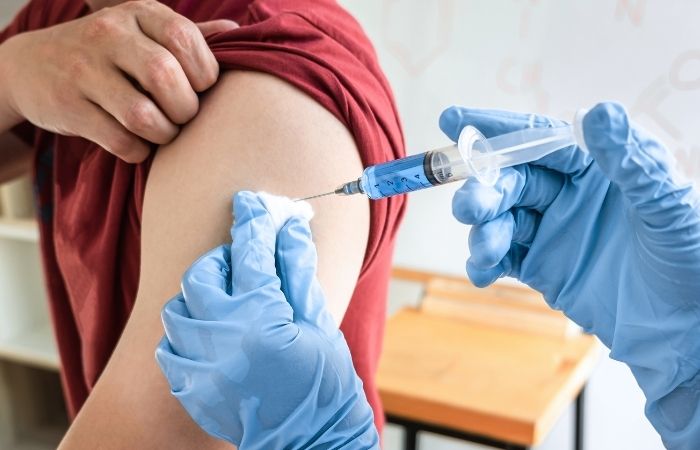
Yes, and this is where a lot of people get confused. The HPV vaccine doesn’t treat existing infections, but it can still protect you against other strains you haven’t yet encountered. Since the vaccine covers 9 of the most common high-risk and wart-causing types, you might still benefit even if you’ve tested positive before.
If only one partner is vaccinated, consider leveling the playing field. Vaccination can prevent reinfection with new types, and lower your partner’s overall viral load, reducing the chance of passing something back to you. The earlier it’s done, the better. But even in your 30s or 40s, it’s not too late to get protected.
Talk to your healthcare provider about the Gardasil 9 vaccine. It’s FDA-approved for people up to age 45, and it might be your secret weapon in ending the cycle.
People are aslo reading: Cold Sore or Herpes? Why That Blister Deserves a Second Look
Rebuilding Trust After Recurrence
Here’s the hardest part: when HPV keeps coming back, it can feel personal. Partners wonder if they’ve been lied to. Some start fights, others shut down. But almost always, the real problem is misunderstanding how this virus works, not dishonesty.
Let’s be clear: recurring HPV isn’t proof of cheating. It’s proof of how persistent and sneaky this virus is. And most people who carry HPV don’t even know it, especially men, who aren't routinely tested unless genital warts appear. That invisibility creates a perfect storm for suspicion and silence.
Instead of falling into blame, try this: treat HPV the way you’d treat any long-term condition. With patience. With information. With care plans that focus on mutual support, not accusations. That might mean testing on a schedule. It might mean choosing to use condoms again. It might mean giving each other a break when the anxiety flares up.
Because this isn’t just about viral DNA, it’s about your relationship. And both deserve compassion.
When It’s Not “Just HPV” Anymore
For most people, HPV resolves on its own. But when it doesn’t, when there are signs of cervical changes, visible warts, or persistent high-risk strains, it’s time to escalate care. That doesn’t mean panic. It means follow-ups. Colposcopies. Biopsies if needed. Vaccination boosters if possible.
Many OB-GYNs now recommend retesting every 12 months for high-risk HPV types if you’ve had a positive. And if your partner has a penis, it may be helpful to check for lesions or visible warts regularly, even though there’s no FDA-approved HPV test for men. Encourage routine STI panels for both of you, just to stay on top of the full picture.
And if you're overwhelmed? That’s normal too. Most people never learn about HPV until they test positive. But once you have that information, you can take charge of your health in a whole new way.
When to Talk, When to Test, and When to Wait
If you’ve just tested positive, or your partner has, it’s tempting to act fast. You want to know if it’s new, if it’s from them, if you can get rid of it. But take a breath. This is a virus with a slow clock and a long memory.
If you haven’t tested together yet, start there. If one of you was vaccinated and the other wasn’t, get current. If you’ve already had HPV and are testing positive again, don’t assume the worst. Talk about recent illness, stress, or other immune changes that might have triggered a reactivation. Be curious, not accusatory.
And if you're not ready to talk yet, that’s okay too. You can order an at-home combo test and get answers before the conversation happens. What matters is that you're taking steps, not just reacting out of fear.
FAQs
- 1. Can you really pass HPV back and forth?
- Yup, and it happens more often than people realize. If one of you still has the virus lingering (even without symptoms), it can quietly re-enter the other person’s system. This isn’t a ping-pong game you signed up for, but biologically? It’s possible.
- 2. But I thought we both already had HPV?
- You probably did. But here’s the twist: unless both of you cleared it at the same time (which isn't easy to confirm), you might still pass it between you, especially if one person’s immune system needs a minute to catch up.
- 3. I tested negative last year. Why is it back?
- Because HPV is petty like that. It can go dormant for months (or years) and then reappear when your body’s under stress, sick, or just having an off week. Think of it like a nosy ex, it never really deletes your number.
- 4. Does this mean someone cheated?
- Not necessarily, and that assumption wrecks a lot of relationships. HPV doesn’t follow your relationship rules. It reactivates, hides, slips past tests, and confuses the hell out of people. Trust is built on facts, not fear.
- 5. Are condoms useless against HPV then?
- Not useless, just not perfect. Condoms cover a lot, but not everything. HPV spreads through skin, not just fluids. If you’re having skin-on-skin contact anywhere near the genitals, there’s still some risk.
- 6. Should we both get vaccinated even if we’ve had it?
- Hell yes, if you're eligible. The vaccine doesn’t erase past infections, but it protects you from other types your body hasn’t seen yet. And fewer types floating around = less chance of reinfection drama.
- 7. Can my partner get tested too?
- If they have a cervix, yes. If not, it gets trickier. There isn't a test for HPV that is safe for people with penises, unless they have obvious symptoms like genital warts. That's why it's important to talk to each other and get vaccinated when testing options don't work.
- 8. Why do I keep getting abnormal pap smears if I’ve cleared HPV?
- Because sometimes your immune system gets tired, or the virus was hiding in tissues that didn’t get picked up by past tests. Clearing doesn't mean it’s totally gone; it means it’s controlled. Like weeds after a good rain, it can resurface.
- 9. What’s the point of testing again if there’s no cure?
- Because knowledge = options. If you catch HPV early, especially high-risk types, you can track changes, do follow-up care, and prevent things like cervical cancer. Testing doesn’t just find problems; it gives you power.
- 10. So are we stuck with HPV forever?
- Probably not. Most people’s bodies kick it out eventually. But it takes time, patience, and a little teamwork. You’re not cursed, and this isn’t your fault. Just stay informed, stay on top of testing, and support each other through the weirdness.
You Deserve Answers, Not Assumptions
If you’ve been caught in the back-and-forth of recurring HPV results, the hardest part isn’t the testing, it’s the uncertainty. But you’re not stuck. You can move from confusion to clarity with real information, joint testing, and practical tools that meet you where you are.
This virus thrives in silence and shame. But you don’t have to. Whether you’re newly diagnosed or dealing with your third round of “I thought we were done with this,” it’s not your fault, and it’s not the end.
Don’t wait and wonder, get the clarity you deserve. This at-home combo test kit checks for the most common STDs discreetly and quickly.
How We Sourced This Article: We combined current guidance from leading medical organizations with peer-reviewed research and lived-experience reporting to make this guide practical, compassionate, and accurate.
- Planned Parenthood – What is HPV?
- NHS – HPV overview and symptoms
- HPV (Human Papillomavirus) – What is HPV?
- Genital HPV Infection — How It Spreads
- CDC – HPV Infection Facts and Risks
- Genital Transmission of Human Papillomavirus in Recently Formed Heterosexual Couples
- HPV Infection and Re‑infection in Adult Women: Role of Sexual Behavior and Natural Immunity
- Cleveland Clinic – HPV (Human Papillomavirus): Causes, Symptoms & Transmission
- Recurrence of Genital Infections With Nine Human Papillomavirus Types
- Transmission and Clearance Dynamics of Human Papillomavirus in Sexual Partners