At-Home Chlamydia Test Reviews for 2025: Fast, Private, Reliable
Quick Answer: The best at-home chlamydia test in 2025 depends on what matters most to you, speed, privacy, cost, or lab accuracy. For many, the reasons are deeply personal. “It’s not even shame,” he said. “It’s the eyes.

Quick Answer: The best at-home chlamydia test in 2025 depends on what matters most to you, speed, privacy, cost, or lab accuracy. Most users now prefer rapid tests for instant results, but mail-in lab kits offer higher sensitivity when timed right.
Why People Are Skipping the Clinic in 2025
Clinic visits haven’t disappeared, but their dominance has. For many, the reasons are deeply personal. James, 27, described the fear of being recognized at the local clinic in his small town. “It’s not even shame,” he said. “It’s the eyes. Like, I could see my mom’s friend in the waiting room.” For others, it’s logistics, no car, no PTO, no way to get tested without upending their lives. But the biggest shift? Trust. In 2025, at-home chlamydia tests aren’t viewed as second-best. They’re just...normal.
Today's kits aren't the clunky strips of the early 2010s. They're sleek, discreet, and often backed by the same labs that process clinic samples. Some offer results in under 20 minutes. Others prioritize sensitivity by using lab PCR methods you can mail in. But not all tests are created equal. So we tested them. Compared them. And pulled back the curtain on what actually matters when you’re scared, sore, or just sick of wondering.
What Counts as a “Good” Chlamydia Test?
Here’s what we asked when evaluating each test: Is it accurate? Is it fast? Is it truly private? Can someone with zero medical background use it without screwing it up? And perhaps most importantly, what happens after the test? Because getting a result is only half the story.
There are two dominant types of at-home chlamydia testing in 2025: rapid antigen tests and mail-in NAAT (nucleic acid amplification test) kits. Rapid tests use lateral flow technology to quickly find chlamydia antigens. They're becoming more and more popular because they're easy to use and quick. A mail-in kit takes a sample from you and sends it to a lab, where it is tested using NAAT or PCR. This kind of testing is more accurate, especially for infections that don't show any signs.
You can order both online through providers like STD Rapid Test Kits. Some come individually packaged for chlamydia only; others are bundled as combo tests to check for gonorrhea, syphilis, and more.
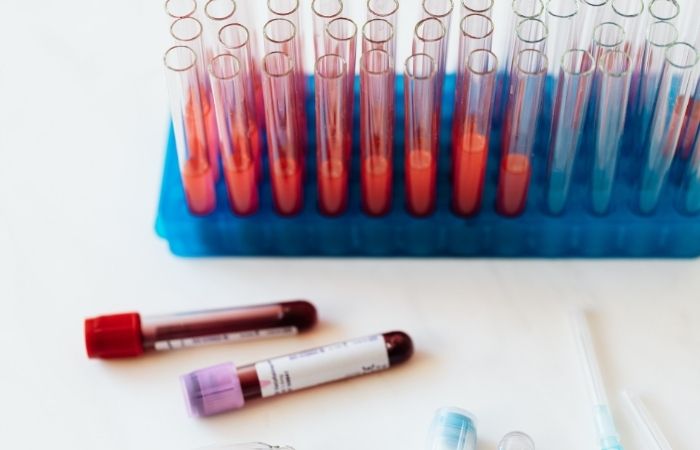
People are aslo reading: Can You Get an STD Even If You Use a Condom?
Comparing Test Types: Which One Fits Your Life?
If you woke up panicked after a one-night stand or found something suspicious in the mirror, odds are you don’t want to wait five days. That’s where rapid tests shine. They deliver answers in minutes and can be done in a bathroom stall, a dorm room, or on a break at work. But that speed comes at a tradeoff. Rapid tests are usually less sensitive, especially in the first few days after exposure. Mail-in kits are slower, but they are just as accurate as lab tests. They’re especially useful if you’re not showing symptoms or the exposure was over a week ago.
| Test Type | Speed | Accuracy (Sensitivity) | Privacy | Best For |
|---|---|---|---|---|
| Rapid At-Home Test | 15–20 minutes | Moderate (70–85%) | Very high | Recent symptoms, peace of mind |
| Mail-In Lab Kit (NAAT/PCR) | 2–5 days | High (90–99%) | High | Asymptomatic, >7 days post-exposure |
Table 1: Comparing rapid and mail-in test options based on common priorities like speed and accuracy.
One woman told us she took a rapid test in her car outside the pharmacy. “I couldn’t wait another day. I needed to know. Even if it wasn’t 100% perfect, it helped me breathe again.” That moment of reassurance matters. But if she’d tested too soon, there’s a chance she’d have seen a false negative, something she later confirmed with a lab kit when symptoms returned.
So what’s the takeaway? If it’s been less than five days since a possible exposure, you can test, but consider retesting later. If it’s been a week or more, mail-in tests are the gold standard. And if you’re just too stressed to wait, rapid tests are a valid first step.
How We Actually Tested These Tests
To write this article, we analyzed 2025’s most purchased at-home chlamydia test kits based on user reviews, product documentation, test performance studies, and hands-on usability. We looked for real-life usability, not just lab promises. Kits were evaluated on instructions, swab quality, cassette readability, timing windows, and post-test support (e.g., does the company help you understand results or connect to treatment?).
We also spoke with people who used these kits during real scares, some after unprotected hookups, others in long-term relationships after unexpected symptoms. One man said, “The worst part wasn’t the test, it was waiting. That silence after mailing it in. I just kept refreshing the portal like it was a college decision.”
Some tests offered built-in result timers and QR codes that led to visual interpretation guides. Others required a bit more guesswork, especially when dealing with faint lines. And yes, we’ll talk about that too, because faint lines freak people out daily.
Test Kit Showdown: What Users Say in 2025
What makes a test kit “the best” depends on who you ask. For Alex, 23, speed mattered most. He wanted something discreet that wouldn’t show up in his shared mailbox. For Simone, 35, it was about clarity, she wanted a test with clear results and no grey area.
Here’s how some of the top contenders ranked across key criteria:
| Test Brand | Delivery Time | Result Time | User Experience | Follow-Up Support |
|---|---|---|---|---|
| STD Rapid Test Kits – Chlamydia | 2–4 days | 15 minutes (rapid) | Very easy, clear instructions | Yes – online chat & guides |
| Everlywell (Mail-In) | 3–5 days | 2–5 days after sample arrives | Professional feel, secure portal | Telehealth link if positive |
| LetsGetChecked (Mail-In) | 1–3 days | 1–3 days after lab receipt | Good for beginners | Optional nurse consultation |
| iDNA (Combo Panel) | 5–7 days | 3–5 days after lab receipt | Moderate; app not intuitive | Email follow-up only |
Table 2: Side-by-side user-facing review of major at-home chlamydia test providers in 2025.
Rapid test kits like STD Rapid Test Kits offered a huge relief for people needing answers now. The cassettes were labeled clearly, came with a sample dropper, and included a time marker so users wouldn’t misread early lines. “It was easier than a COVID test,” one woman said, “and felt way more important.”
But others preferred the clinical polish of a mail-in. “It just felt more legit,” another user told us. “Like, if I had to tell a partner I tested positive, I wanted to be 100% sure.” For those with no symptoms or vague discomfort, mail-in lab kits were the clear winner for confidence and clarity.
The Trouble With Faint Lines (And What They Mean)
Every testing subreddit eventually asks it: “Is this faint line positive?” It’s a real concern, and in 2025, test makers still haven’t fully solved it. The problem? A line is a line, but our brains want to interpret it. One user recounted testing late at night, under bad lighting, and thinking she saw a line. “I wasn’t sure if it was real or just stress. I ended up retesting two days later just to be safe.”
Test instructions now emphasize waiting the full development time, usually 15 minutes, and reading the cassette under natural or white LED light. Faint lines can mean early infection or degraded test quality. That’s why many providers include retesting instructions or encourage confirmation via lab NAAT testing.
If you’re unsure about your result, here’s the safest approach: treat faint lines as a potential positive and confirm with a lab test. Better to act cautiously than risk spreading chlamydia to a partner unknowingly. That said, environmental errors, like too much liquid, shaking the cassette, or expired tests, can also distort results. Follow the instructions precisely and don’t reuse any components.
Still feeling unsure? You’re not alone. We heard from dozens of readers who double-tested just for peace of mind. Some even mixed methods, doing a rapid test first, then following up with a mail-in kit a week later. In most cases, the mail-in test confirmed what the rapid test hinted at.
Your Testing Timeline Matters, Here’s Why
The most common mistake in 2025? Testing too early. We get it, you wake up with symptoms or regrets and want answers now. But every test, even the best ones, has a “window period”, a delay between exposure and detectable infection. For chlamydia, this window typically ranges from 5 to 14 days. That means a test taken on day three might give you false reassurance.
It’s not about punishment or shame, it’s biology. The bacteria need time to replicate enough for tests to pick up on them. And if you’re already dealing with urethral pain, vaginal discharge, or spotting, that might shorten the wait. But for asymptomatic people, the window is crucial.
Here’s a typical scenario: Dana had unprotected sex on a Friday. She took a rapid test Sunday, negative. She felt better…until she noticed discomfort during sex on Wednesday. Another rapid test showed a faint line. A lab-confirmed NAAT test the following week was clearly positive. Dana’s takeaway? “I trusted the first result because I wanted to. But deep down, I knew I’d tested too soon.”
That story isn’t rare. It’s the rule. If you’re testing within 7 days of a possible exposure and your result is negative, but you’re still worried, retest. Especially if symptoms emerge or you have a regular partner to consider. Being proactive is protective, not paranoid.
And if you do test positive? We’ll walk through that next.
What Happens If Your Test Is Positive?
First: breathe. Testing positive for chlamydia is far more common than most people think, especially among people under 30. It doesn’t mean you're dirty, reckless, or ruined. It means your body encountered a bacteria that’s incredibly good at hiding and spreading. And now you get to treat it, stop transmission, and move on.
Most at-home test providers offer next-step guidance. Some include access to telehealth consultations where you can get a prescription for antibiotics. If not, take your result to an urgent care, primary provider, or public clinic. Treatment usually involves a short course of azithromycin or doxycycline, both highly effective when taken correctly.
But there’s another step people forget, your partner. Even if you’re no longer together, letting them know means they can get tested too. You’re not just protecting them; you’re protecting everyone they might encounter next. Several services now offer anonymous partner notification, letting you send a secure message without identifying details. It’s not always comfortable, but it’s powerful.
Real talk from someone who’s been there: “I dreaded telling him. But I did it. And he was grateful. We both got treated and agreed to be more careful going forward.” That’s what a positive test can be, a turning point, not a breakdown.
People are aslo reading: What If You Test Too Soon for Gonorrhea? The Truth About False Negatives
Retesting and Prevention: What to Know
After treatment, the CDC recommends waiting at least three weeks before retesting. Why? Because testing too soon can pick up dead bacterial fragments and yield a false positive. If you’re symptom-free and follow medication guidelines, you’re likely cured, but the retest confirms it and resets your mental slate.
Reinfection is real. Many people who test positive once get infected again within the year, often from the same partner who wasn't treated or from re-entering the dating pool without updated precautions. Condoms reduce transmission risk, but so does honest communication, regular screening, and knowing your window periods. Some people now retest every 3–6 months proactively, not out of fear, but because they’ve made testing part of their routine self-care.
One man described his routine as “resetting after every new partner.” It wasn’t awkward, it was honest. He kept a couple of rapid tests in his drawer and offered them as a normal part of hookup prep. His partners responded with relief, not judgment. That’s the future we’re writing toward, one where STD testing feels more like brushing your teeth than confessing your sins.
If you’re unsure about retesting or need a backup kit, you can order a discreet chlamydia test here. Fast, private, and trusted by thousands.
Shipping, Discretion, and What to Expect
In 2025, discretion isn’t a luxury, it’s standard. Most kits arrive in plain brown packaging with no identifying medical markings. Some come in padded envelopes, others in small boxes no larger than a phone case. Inside, instructions are folded, components are sealed, and the branding, if any, is minimal. No one will know what you ordered unless you tell them.
Shipping times vary by provider and region, but same-day dispatch is now common. Expect delivery within 2 to 5 business days in most U.S. zip codes. And yes, most services allow for delivery tracking and package interception at lockers or P.O. boxes if you need that extra layer of privacy.
One reader in a rural area told us she shipped her sample back using a mailbox two towns over, just to feel safe. The provider didn’t question it. “They get it,” she said. “They’re not judging, just helping.” That attitude matters more than we admit. Testing isn’t just medical. It’s emotional. And the companies that recognize that are the ones we trust most.
FAQs
- 1. How soon can I test after unprotected sex?
- If you’re freaking out the morning after, we get it. But hold on, most chlamydia tests need 5 to 7 days post-exposure to detect anything. Test too early and you might get a false negative. That said, if you’re having symptoms, you can test now and again later. Peace of mind is allowed twice.
- 2. Are at-home tests really accurate?
- Yes, especially mail-in kits that use lab-based PCR or NAAT testing. Rapid tests are a bit less sensitive but still solid, especially if you’re showing symptoms. Follow instructions exactly, and they’re remarkably reliable. Mess it up, though, and you’re back in the maybe zone.
- 3. Is a faint line positive?
- Almost always, yes. Even if it looks like a whisper of a line, treat it as positive. Your best move? Grab a confirmatory lab test or start treatment if it aligns with symptoms or recent exposure. Faint doesn’t mean fake, it means early, delicate, but still real.
- 4. What if my partner tested negative, do I still need to?
- Short answer: yes. Their body isn’t your body. If you’ve been with other partners, or if it’s been less than two weeks since their exposure, their result might not be accurate yet. Your health deserves its own test.
- 5. How much do these tests cost?
- Rapid chlamydia tests usually run $35–$65. Mail-in lab kits can range from $80 to $150 depending on how many STDs are included. It’s not pocket change, but it’s cheaper than the long-term cost of untreated infection or anxiety spirals.
- 6. Can you get antibiotics without seeing a doctor?
- In most cases, yes. Many mail-in test services include telehealth access if your result is positive. If you use a rapid test and it’s positive, you can take a picture and share it with a virtual provider for treatment. No judgment, no waiting rooms, no awkward pharmacy lines.
- 7. Do chlamydia symptoms always show up?
- Nope, and that’s what makes it so sneaky. Most people with chlamydia don’t feel a thing, which is why regular testing matters. But when symptoms do show up, they might include burning when you pee, spotting, or discharge. They can come on slow, or hit hard out of nowhere.
- 8. How private is the packaging and delivery?
- Fully discreet. No one will know what's inside unless you tell them. Packages usually arrive looking like skincare or electronics, no flashing STD labels, no logos, no awkward signature required. You could have roommates, nosy neighbors, or a suspicious cat and still keep it confidential.
- 9. Should I test again after treatment?
- Yes, roughly three weeks following the last antibiotic dose. That gives your body time to clear the infection completely. Testing earlier could pick up leftover bacterial fragments and give you a confusing result. Think of it as your “all clear” checkpoint.
- 10. Can I use the test while on my period?
- Good question. For most urine-based tests, yes. For vaginal swabs, results may be less clear if there’s heavy bleeding, but you can still test. If you’re unsure, wait a day or two. Chlamydia won’t vanish overnight, but clarity is worth the timing.
You Deserve Answers, Not Assumptions
Testing for chlamydia from home doesn’t mean you’re hiding, it means you’re taking your health seriously. Whether it’s a scare after a hookup, a routine check between partners, or just a gut feeling that something isn’t right, at-home testing gives you options without judgment.
These tests are faster, more accurate, and kinder than ever in 2025. You’re not waiting in line, filling out awkward forms, or trying to avoid eye contact in a clinic. You’re taking care of yourself, on your terms. That’s powerful.
If you need a place to start, this at-home combo test kit checks for multiple infections quickly and discreetly. Whether it’s a bump, a question mark, or just curiosity, you deserve clarity.
How We Sourced This Article: We combined current guidance from leading medical organizations with peer-reviewed research and lived-experience reporting to make this guide practical, compassionate, and accurate.
- CDC – Chlamydia Treatment Guidelines
- CDC – Getting Tested for STIs
- WHO – Chlamydia (Fact Sheet)
- Mayo Clinic – Chlamydia Diagnosis & Treatment
- Pontes MF et al. – Mail‑in Self‑Collection for STI Testing: Landscape Review
- Graseck AS et al. – Home‑based Screening with Self‑Collected Specimens for Chlamydia
- Aaron KJ et al. – Vaginal Swab vs Urine for Detection of Chlamydia trachomatis
- Chongsuwat T et al. – At‑Home Self‑Collection Preferences for Gonorrhea & Chlamydia Testing