Can You Get an STD from a Blood Transfusion?
Yes, certain STDs can be transmitted through blood, but only a short list, and modern transfusion systems are specifically built to catch them before donated blood ever reaches a patient.

Yes, certain STDs can be transmitted through blood, but only a short list, and modern transfusion systems are specifically built to catch them before donated blood ever reaches a patient. The question is not whether it is theoretically possible. It is whether it is a realistic concern today, and that depends entirely on which infection you are asking about and where the transfusion happened. A 2026 review published in The American Journal of Medicine confirms that transfusion-transmitted infections are now rare in the United States, with blood safety still improving through nucleic acid testing, updated donor questionnaires, and active regulatory oversight.
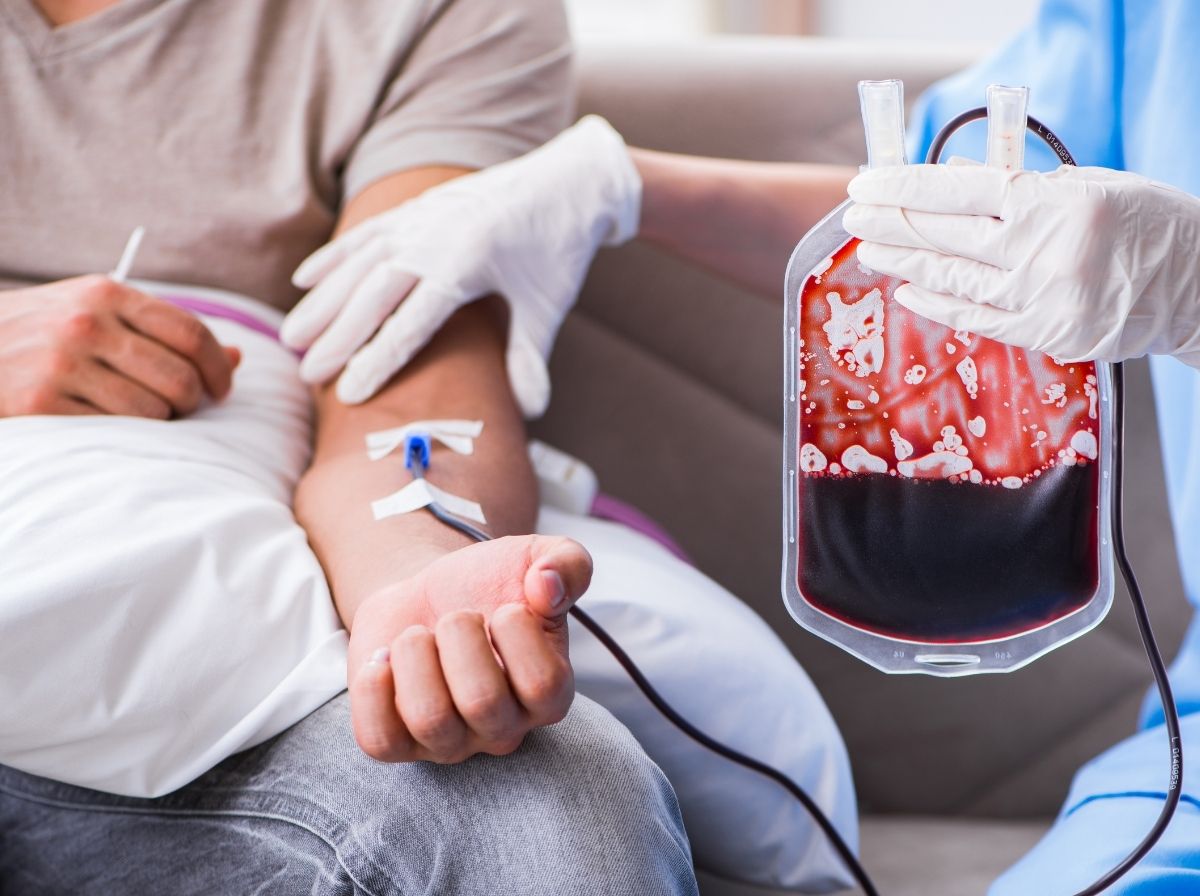
Which STDs Can Actually Be Transmitted Through Blood?
For an infection to travel through donated blood, it has to circulate in the bloodstream in a form that survives collection, storage, and transfusion into another person. That requirement immediately rules out most of the STDs people worry about after sex.
HIV, hepatitis B, and hepatitis C are the ones that actually matter here because they are true bloodborne infections; they infect blood or blood-associated cells directly. That is exactly why blood donation systems are designed to screen for them before any unit is released. The World Health Organization states that all donated blood should be screened for HIV, hepatitis B, hepatitis C, and syphilis, these are the four classic transfusion-transmissible infections that blood safety programs are built around globally.
Syphilis is a different case. It is caused by a bacterium rather than a virus, and while it has historically been considered a transfusion-transmissible infection, modern storage practices and donor screening have made that route extremely unusual. A peer-reviewed review in CDC's Emerging Infectious Diseases journal notes that the risk of transfusion-acquired syphilis depends heavily on storage conditions, one reason it no longer behaves like the headline threat that HIV and hepatitis once were.
Chlamydia and gonorrhea mainly infect mucosal surfaces, the urethra, cervix, throat, or rectum. They are not treated as transfusion risks in modern blood screening because they are not sustained bloodborne infections. Herpes gets overestimated in this conversation too. HSV-1 and HSV-2 cause intense anxiety because they are common and visible, but they are not considered a meaningful modern transfusion threat, they spread through skin-to-skin contact, not through donated blood in medical settings. If you have recently been worried about herpes exposure from a different context, the Genital Herpes HSV-2 At-Home STD Test Kit and Oral Herpes HSV-1 At-Home STD Test Kit are a different matter, but not relevant to transfusion risk specifically.
| Infection | Why it matters, or does not, in transfusions |
|---|---|
| HIV | A true bloodborne virus. Donated blood is specifically screened and tested for it using nucleic acid testing. |
| Hepatitis B | A bloodborne virus with clear historical transfusion relevance, now heavily targeted by donor screening and lab testing. |
| Hepatitis C | A major bloodborne virus historically linked to transfusion risk before modern nucleic acid screening expanded. |
| Syphilis | Historically monitored in blood safety programs, but modern storage and screening make transfusion transmission extremely uncommon. |
| Chlamydia | Primarily a mucosal infection, not a meaningful modern transfusion risk. |
| Gonorrhea | Also mainly a mucosal infection, not treated as a routine blood transfusion threat. |
| Herpes HSV-1 and HSV-2 | Spreads through skin-to-skin contact, not donated blood. Not considered a meaningful routine transfusion-transmitted infection. |
Most people asking this question are actually asking three questions at once: can blood carry infection, are all STDs equal in that risk, and does "possible" mean "likely." The answer is no, no, and absolutely not.
So when this article talks about "STD risk from transfusion," it is mainly talking about HIV, hepatitis B, hepatitis C, and to a very limited historical extent, syphilis. That narrower frame is what keeps the conversation medically accurate instead of internet-chaotic.
Why Were Blood Transfusions So Risky in the Past, and What Changed?
This is the part that explains why the fear still exists. Blood transfusions used to be significantly more dangerous, especially before modern donor screening and nucleic acid testing became standard. In earlier decades, someone could receive blood from a donor who was infected but had not yet been identified through the testing methods available at the time. That gap between infection and detectability, the window period, was a much bigger problem than it is today.
HIV changed the public conversation permanently. During the early years of the epidemic, blood safety systems were not yet equipped with the screening depth that exists now, and transfusion-associated HIV became one of the most feared medical transmission routes. Today, current estimates from American Red Cross transfusion medicine researchers place the residual risk of acquiring HIV through a screened blood donation at approximately 1 in 2.3 million donations. Nucleic acid testing specifically is what drove that number down, it shortened the HIV detection window from 16 days to fewer than 9 days after infection.
Hepatitis C followed a similar pattern. Before reliable screening was introduced, transfusions were a recognized route of infection, in the 1960s the risk of acquiring HCV through a transfusion was approximately 33%. Universal antibody screening in 1992 and the introduction of nucleic acid testing in 1999 nearly eliminated that. That is one reason older patients who received blood before the mid-1990s are sometimes told to mention that history to a clinician. The NHS still highlights that people who had a transfusion before 1996 may have been exposed to infected blood, while making clear that today's donated blood is screened using very rigorous safety standards.
The important shift was not magic. It was layers: better donor questionnaires, tighter exclusion rules, better lab screening, better viral detection, stronger regulation. That is why old stories and modern risk cannot be treated as the same thing. Reading about contaminated blood in the 1980s is reading a real and devastating history, not an accurate picture of what a blood transfusion in a modern, regulated system looks like in 2026.
| Then | Now |
|---|---|
| Long detection gaps, window periods of weeks to months | NAT testing has cut the HIV detection window to under 9 days after infection |
| Less comprehensive donor screening systems | Multiple stacked safety layers before any donated unit is released |
| HIV and hepatitis transmitted through transfusions at measurable rates | HIV residual risk: approximately 1 in 2.3 million screened donations |
| HCV risk from transfusion was ~33% in the 1960s | Near-eliminated after 1992 antibody screening and 1999 NAT introduction |
How Does Blood Screening for STDs Actually Work Today?
Modern blood safety is built around redundancy, exactly what you want when the stakes are this high. Donated blood is not cleared because one person glanced at a form and thought everything looked fine. It moves through layers: donor history screening, eligibility rules, lab testing, component handling, and release controls. No single checkpoint is perfect on its own, but several stacked together make transfusion-transmitted infection extraordinarily uncommon.
At the lab level, the most important targets are the four infections that truly matter in blood: HIV, hepatitis B, hepatitis C, and syphilis. The World Health Organization states that all donated blood should be screened for these four infections before use. In the United States, the FDA maintains a list of licensed donor screening assays, including tests that detect HIV, HBV, and HCV markers through both serology and nucleic acid testing. Blood safety is not guesswork. It is direct biological evidence.
Nucleic acid testing, NAT, is the upgrade that changed everything. Instead of waiting only for the body to produce detectable antibodies, NAT looks for the genetic material of the virus itself. For HIV, this shortened the detectable window from 16 days to under 9 days after infection. Biology still has a window period; a brand-new infection may not yet be detectable even with sensitive testing, but that window is dramatically narrower than it was even 20 years ago. This is why old transfusion horror stories do not map onto the present.
Donor screening also removes risk before the blood even reaches a testing machine. People are deferred for specific exposure histories, recent infections, and other factors that could increase transfusion risk. The system catches danger twice: once by keeping higher-risk donations out, and again by testing the donations it accepts. That double filter is a large part of why modern risk is so low. The 2026 review in The American Journal of Medicine confirmed this, noting that blood supply safety in the US rests on updated donor questionnaires, NAT screening, and ongoing retrospective hemovigilance that actively monitors for emerging threats.
One important caveat: blood safety is not identical everywhere. A transfusion in a tightly regulated system with mandatory screening, modern assays, and strong quality control is not the same as a transfusion in a setting where resources or screening coverage are weaker. The WHO notes that some countries still cannot screen all donated blood for one or more major transfusion-transmissible infections. So the honest answer to "can you still get an STD from a blood transfusion" depends partly on where that transfusion happened.
How Long After a Blood Transfusion Should You Wait Before Getting Tested?
For most people receiving a transfusion in a modern, regulated system, routine STD testing is not automatically necessary; the blood supply has already been screened at multiple levels before it reaches you. But if the transfusion occurred somewhere where screening standards may vary, or if there is any genuine uncertainty about the protocols used, testing is the fastest way to replace anxiety with a clear answer.
The single most important thing to understand about testing after any blood exposure is timing. Test too early, and you might get a false negative, not because nothing is there, but because the infection has not yet reached levels a test can detect. That gap is the window period, and it exists for every infection. Modern tests are highly sensitive, but they still depend on the biology running its course first.
The infections that matter most in a transfusion context, HIV, hepatitis B, hepatitis C, and syphilis, all have specific timing requirements. HIV should be tested at 6 weeks for a first indicator result, with a retest at 12 weeks for certainty. That two-step approach accounts for how the virus becomes detectable first through antigen and nucleic acid testing, then more definitively through full immune response. If you are specifically concerned about HIV after any blood exposure, not just a transfusion, the HIV-1/2 At-Home STD Test Kit is worth bookmarking for the right window. Hepatitis B should be tested from 6 weeks after exposure. Hepatitis C from 8–11 weeks, because viral replication takes longer to reach detectable levels in blood. Syphilis should be tested from 6 weeks, because antibodies take time to accumulate to detectable concentrations.
Chlamydia and gonorrhea are not practical transfusion threats as explained above, but if the exposure context is broader than just the transfusion, those windows matter too. Chlamydia can be tested 14 days after exposure. Gonorrhea from 3 weeks. Herpes HSV-1 and HSV-2 blood-based antibody tests are reliable from 6 weeks after exposure, and if you are unsure about herpes from any source, there is a good breakdown of why herpes testing method matters as much as timing.
| Infection | When to test for a reliable result |
|---|---|
| Chlamydia | 14 days after exposure, NAAT detects bacterial genetic material |
| Gonorrhea | 3 weeks after exposure, NAAT for accurate detection |
| Syphilis | 6 weeks after exposure, blood-based antibody detection |
| Herpes HSV-1 & HSV-2 | 6 weeks after exposure, blood antibody testing |
| HIV | 6 weeks for first indicator; retest at 12 weeks for certainty |
| Hepatitis B | 6 weeks after exposure, blood testing for viral markers |
| Hepatitis C | 8–11 weeks after exposure, blood testing for viral RNA or antibodies |
A negative result taken within the correct window means no detectable infection was found at that point. If the test was taken before the full window closed, that result may not be definitive, retesting is sometimes recommended. A positive result means the infection is present and should be followed up with confirmatory testing and clinical evaluation. At that point, the question shifts from "Did exposure happen?" to "What is the next step?" Testing is not just reassurance, it is actionable information either way.
One thing worth knowing: if you are reading this after a negative result that you are still not sure about, because the timing felt off or the anxiety has not settled, there is a useful breakdown of how to read an at-home STD test result and when to trust it. A result is only as reliable as the window it was taken in.
Is Getting an STD from a Modern Blood Transfusion Still Realistically Possible?
Yes, but "possible" is doing a lot of heavy lifting in that sentence. It is possible the same way a modern airplane can have a mechanical failure, real in engineering, but the system is designed so aggressively against it that it sits firmly in the extraordinary category. For a transfusion to transmit a bloodborne STD today in a well-regulated system, multiple protections would need to fail simultaneously. The donor would need to be infected. The infection would need to escape history-based screening. Lab testing would need to miss it. And the blood would then need to be transfused during a narrow detectability gap that modern NAT has already compressed to under 9 days for HIV.
HIV, hepatitis B, and hepatitis C remain the meaningful concerns because they are bloodborne and historically relevant to transfusion medicine. Syphilis still appears in screening standards, appropriately, but does not function like a major contemporary transfusion fear in the same way the hepatitis viruses and HIV do. Chlamydia and gonorrhea are not practical transfusion threats because they are primarily mucosal infections. And herpes does not sit in the same category as HIV or hepatitis when people talk about routine transfusion risk.
It is also worth keeping straight that a transfusion risk question is not the same as a general hospital-acquired infection question. People sometimes blend blood transfusions, reused needles, surgical contamination, and broad medical safety fears into a single anxiety cloud. They are not the same mechanism. Screened donor blood in a modern regulated system is one of the most intensively tested biological products used in medicine. If you have had a recent transfusion in a country with strong screening infrastructure and are reading this at 1 AM trying to connect dots, the dots are almost certainly not there. If you had a transfusion somewhere with uncertain screening, or want certainty for peace of mind, the 6-in-1 At-Home STD Test Kit covers HIV, hepatitis B, hepatitis C, syphilis, chlamydia, and HSV-2 in one go, the full set of infections worth considering in a blood exposure context.
What would genuinely make someone think harder about testing? Usually not the fact of the transfusion alone. The bigger considerations are: where the transfusion happened, how modern the screening system was, whether there has been any official notification, and whether the exposure occurred historically, before current safeguards were in place. That is where this stops being abstract and becomes practical.
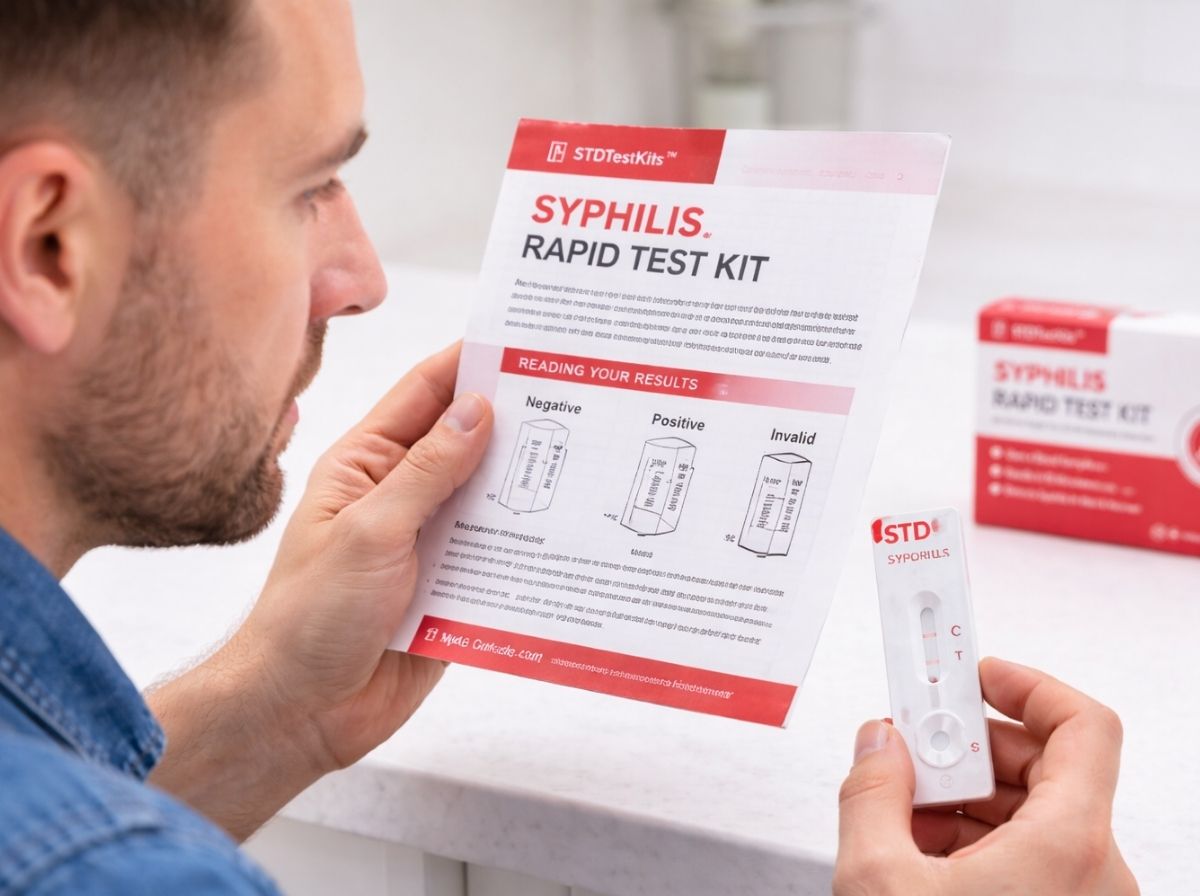
Why Modern Blood Transfusions Are Considered Among the Safest Medical Procedures
Modern blood transfusions are built on stacked safeguards, donor screening, strict eligibility rules, advanced nucleic acid lab testing, controlled storage, and regulatory oversight. Each layer reduces risk further, and together they make transfusion-transmitted STDs exceptionally rare in well-regulated systems. The 2026 review in The American Journal of Medicine put it plainly: transfusion-transmitted infections are now rare in the United States, and the blood supply's safety continues to improve, not plateau.
The key idea is not that risk has been eliminated completely, but that it has been pushed to the outermost margins of possibility. The average person receiving a transfusion today is far more likely to benefit from the procedure than to encounter any transfusion-related infection. This is especially true in countries where blood services are required to screen every donation using modern testing methods. What tends to linger is not the current risk, but the memory of past failures, and that memory, understandable as it is, belongs to a different era of medicine.
The bottom line: STDs can be transmitted through blood under the right biological conditions, but modern screening makes that scenario extraordinarily uncommon. If you want absolute clarity, testing at the correct window removes the guesswork entirely. For most people, though, the system has already done the heavy lifting before the transfusion ever happens. If general STD awareness is on your radar, whether because of this or anything else, understanding whether symptoms like fever and swollen glands are flu or STD is a useful read alongside this one.
FAQs
- 1. Can you actually get HIV from a blood transfusion today?
- Technically, yes, but in real life, it is extraordinarily rare. Modern blood screening is specifically designed to catch HIV before donated blood is ever used. NAT testing has cut the detection window down to under 9 days after infection. This is no longer a realistic everyday risk in countries with strong blood safety systems, where the residual risk sits at roughly 1 in 2.3 million donations.
- 2. What STDs are even relevant to blood transfusions?
- The ones that actually matter are HIV, hepatitis B, and hepatitis C, because they are true bloodborne infections that live and replicate in the bloodstream. Most other STDs people worry about after sex, like chlamydia, gonorrhea, or herpes, do not behave the same way in a transfusion context and are not what blood safety programs are built around.
- 3. Wait, so herpes is not a concern with blood transfusions?
- Not in the way people imagine. Herpes spreads through skin-to-skin contact, not through donated blood in routine medical settings. It gets dragged into this conversation mostly because it is common and anxiety-triggering, not because it is a real transfusion risk. Blood transfusion and skin-contact transmission are completely different biological mechanisms.
- 4. Are blood transfusions 100% risk-free?
- Nothing in medicine is truly 100%. But this is one of those situations where the risk has been pushed so low, approximately 1 in 2.3 million donations for HIV, that it sits firmly in the "almost unheard of" category. You face greater daily risks crossing the street. The system is genuinely that good in well-regulated countries.
- 5. Why do people still worry about this so much?
- Because the history was real. Before modern screening, infections like HIV and hepatitis C were transmitted through blood transfusions at meaningful rates. That fear stuck even though the systems today are completely different. Understanding the timeline is what separates a legitimate historical concern from a current medical risk.
- 6. If I had a transfusion recently, should I be worried?
- In a country with strong screening systems, the answer is usually no, the blood has already been tested before it reaches you. Testing afterward is more about peace of mind than expecting a problem. That said, if you want certainty, testing at the right time window gives you a clear answer based on biology rather than assumption.
- 7. What if the transfusion happened in another country?
- That is where context matters most. Not every healthcare system has the same level of screening. If there is genuine uncertainty about how the blood was tested, getting checked at the right time window is a smart, low-effort next step. You are not catastrophizing; you are being thorough.
- 8. What does "window period" mean in real life?
- It is the time between infection and the point where a test can reliably detect it. Test too soon, and you might get a negative result, not because there is nothing there, but because the infection has not yet produced enough detectable markers. That is not a test failure; it is just biology running on its own timeline. Testing at the right window is the only way to get a result you can trust.
- 9. What would a positive result actually mean after a transfusion?
- It means the infection is present. At that point, it is not about guessing where it came from anymore; it is about confirming the result and getting the right medical care. A positive is actionable information, not a dead end. Follow-up confirmatory testing and clinical evaluation are the next steps.
- 10. What is the simplest way to stop overthinking all of this?
- Get tested at the correct time window and get a clear answer. That is it. No more late-night Googling, no more trying to connect dots that may not even be there. Testing converts uncertainty into information, and information is always easier to manage than anxiety.
Get Clarity With At-Home STD Testing
If you want complete clarity after a possible exposure, testing is the fastest way to move from uncertainty to certainty. The biology does not care how anxious you are, it only responds to the right test taken at the right time. And getting that answer at home means no waiting room, no appointment delay, no awkward conversation at a front desk.
For the broadest coverage, the 8-in-1 Complete At-Home STD Test Kit checks for HIV, hepatitis B, hepatitis C, herpes HSV-1 and HSV-2, chlamydia, gonorrhea, and syphilis in one step, everything that could realistically be relevant after a blood exposure, and then some. If you want a more focused panel specifically covering the bloodborne infections most relevant to transfusion risk, the 6-in-1 At-Home STD Test Kit covers HIV, hepatitis B, hepatitis C, syphilis, chlamydia, and HSV-2. For a single high-priority test, the HIV-1/2 At-Home STD Test Kit gives you a fast, discreet result. Explore all options at the STD Test Kits homepage. Your results, your privacy, your peace of mind.
Testing is not a confession. It is a health decision. And the sooner you have a result, the sooner you can stop second-guessing and move forward.
Our article was constructed based on current advice from the most prominent public health and medical organizations, and then molded into simple language based on the situations that people actually experience, such as treatment, reinfection by a partner, no-symptom exposure, and the uncomfortable question of whether it "came back." In the background, our pool of research included more diverse public health advice, clinical advice, and medical references, but the following are the most pertinent and useful for readers who want to verify our claims for themselves.
- World Health Organization, Blood safety and availability
- FDA, Donor screening assays for infectious agents
- CDC, HIV transmission through transfusion (MMWR)
- NHS, Infected blood support and safety information
- CDC Emerging Infectious Diseases, Transfusion-associated infections review
- University of Washington Hepatitis C Online, Epidemiology of HCV in the US