Can a Cold or Vaccine Delay Your HIV Test Results? The Truth About Window Periods
Quick Answer: HIV test accuracy depends on the window period, not your symptoms. Aim for 18–45 days depending on the test type. He took a rapid test the next day. It was negative, but that didn’t calm him down.
Quick Answer: HIV test accuracy depends on the window period, not your symptoms. Illness or vaccines don’t usually delay HIV detection, but testing too early after exposure (regardless of flu or shots) can lead to false negatives. Aim for 18–45 days depending on the test type.
When Your Symptoms Lie: Why Feeling Sick Doesn’t Mean You’re Too Late (or Too Early)
Marcus, 27, woke up drenched in sweat six days after a weekend hookup that he hadn’t exactly planned. His throat was on fire, his lymph nodes felt like marbles, and his phone search history now read like a clinical checklist: “night sweats HIV,” “flu vs acute HIV,” “symptoms after exposure.” He took a rapid test the next day. It was negative, but that didn’t calm him down.
What Marcus didn’t know, and what many people miss, is that feeling sick after exposure doesn’t mean it’s time to test. And it doesn’t mean you’ve missed your chance either. HIV’s early stage, called acute HIV infection, can show up with symptoms 2 to 4 weeks after exposure. But here’s the twist: those symptoms don’t line up with when your body makes the markers that tests look for.
Some tests detect the virus itself (like an HIV RNA test), while others detect your immune system’s response. So if your body hasn’t had enough time to react, no matter how sick you feel, the test might miss it.
What if the cough or fever is just a cold, flu, or vaccine side effect and not HIV? That’s where things get tricky. But let’s break it down.
Table 1: Common Test Types and What They Detect
| Test Type | What It Detects | Usual Window Period | Best Time to Test |
|---|---|---|---|
| HIV RNA (NAT) | Virus itself (RNA) | 10–14 days | 14+ days after exposure |
| 4th Gen Ag/Ab Combo | p24 antigen + HIV antibodies | 18–45 days | 28+ days after exposure |
| 3rd Gen Antibody Test | HIV antibodies only | 23–90 days | 45+ days for full accuracy |
| At-Home Rapid Test (fingerstick or oral) | HIV antibodies only | 30–90 days | 90 days for highest accuracy |
Table 1. HIV test types vary by what they detect, and when. Some can pick up HIV earlier than others, but all depend on biological timing, not your symptoms.
Why Vaccines or Illness Don’t “Trick” HIV Tests, But Timing Still Matters
The good news? There’s no evidence that vaccines, including for COVID-19, flu, or monkeypox, cause false positives or interfere with HIV detection on standard tests. That myth likely grew from misunderstanding how antibody responses work.
Vaccines stimulate your immune system to make antibodies, yes. But HIV tests are incredibly specific. The antibodies they look for are HIV-specific, not generic. They won’t react to flu antibodies or COVID spike proteins. The same goes for colds or general illnesses. Being sick won’t confuse the test itself.
That said, your immune system’s response timing still matters. If you’re immunocompromised, recovering from a serious illness, or on medications that blunt immune reactions, it could take longer for your body to generate the antibodies the test needs to detect. This is especially true with 3rd-gen or at-home antibody-only tests.
Think of it like this: the test isn’t being tricked, it’s just looking for a signal your body hasn’t had time to send yet. Illness doesn’t hide HIV; it can just delay your body’s reaction enough that testing early might miss it.
And if you’re taking PrEP (pre-exposure prophylaxis) or PEP (post-exposure prophylaxis), that adds another twist. These meds can suppress the virus before antibodies fully develop, so choosing the right test and time becomes even more critical.
Table 2: Can Illness or Vaccines Impact HIV Test Accuracy?
| Scenario | Effect on Test Accuracy | Recommended Test Strategy |
|---|---|---|
| Flu-like illness after exposure | No interference with test | Test after 18–30 days with 4th gen; retest at 6 weeks if negative |
| COVID-19 vaccine within 2 weeks | No impact on test result | Follow normal testing timeline; consider 4th gen |
| Monkeypox or HPV vaccine | No antibody cross-reaction | No delay needed unless actively symptomatic |
| Ongoing cold, fever, or immune suppression | Possible delayed antibody response | Use RNA or 4th gen test if testing early; retest after 45 days |
Table 2. Illness and vaccines usually don’t distort HIV test results, but testing too soon can still yield false negatives, especially with antibody-only tests.
Why Some People Test Negative, Then Positive: The Hidden Trap of Testing Too Soon
Lina, 32, was shaking when she opened the at-home test kit. It had been two weeks since she’d had unprotected sex with an old flame. The next morning, she got hit with chills and fatigue so intense she thought it was the flu. Her doctor said it could be a virus, maybe even COVID, but her mind went straight to HIV.
She ordered a rapid test, took it on day 16 post-exposure, and got a negative. But she couldn’t shake the fear. A friend finally convinced her to retest at six weeks. That second test came back positive.
Lina did everything she thought was right, she tested early, she followed instructions, but she misunderstood the window period. And she’s not alone. Early testing feels like action. But for HIV, a test that’s too early isn’t a safeguard, it’s a coin toss. The virus could still be undetectable, especially on an antibody-only test like the ones used in most rapid kits.
This is why public health guidance usually recommends a retest, even after a negative result, especially if your first test was within 30 days of possible exposure. It’s not paranoia. It’s science. HIV tests can’t see what your body hasn’t shown them yet.
Retesting Strategy: When and Why to Test Again
If you’ve already tested once, and especially if you had symptoms, illness, or a recent vaccine, it’s smart to build in a follow-up plan. Here’s how to think about it in practical terms.
If you took a 4th generation Ag/Ab combo test (the kind used in most labs and some clinics), its accuracy starts to rise at 18 days post-exposure and is strongest between 28 to 45 days. If you tested within that first range and got a negative, it’s wise to test again around week six for confirmation.
If you used an at-home rapid antibody test, like an oral swab or fingerstick cassette, it’s based on your body’s immune response. That means it’s more likely to miss early infections. The CDC recommends testing again at 90 days after exposure if your initial test was done before then, especially if you had any symptoms or were recently sick.
If you’re high-risk, immunocompromised, or unsure what kind of test you used, retesting at 45–90 days is a cautious and accurate plan. You’re not being paranoid. You’re being thorough.
Case Study: “I Was on PEP and Got the Flu, Now What?”
Dev, 24, started PEP (post-exposure prophylaxis) within 24 hours of a condom breaking. He did everything by the book. Three weeks into the medication, he got slammed with fever, chills, and a sore throat. He panicked, thinking the meds had failed. He tested with a rapid kit and got a negative, but didn’t trust it.
What Dev didn’t realize is that PEP itself can change how HIV develops. If it works (and it often does), the virus never establishes itself enough to trigger a strong antibody response. That means antibody-based tests may stay negative, even in someone who briefly had exposure.
The gold standard for PEP follow-up is a lab-based 4th gen test 4–6 weeks after completing the 28-day PEP course. A second test at 12 weeks can add extra confidence. That timeline gives the body space to develop markers without interference from the medication. In Dev’s case, the flu didn’t cause the panic, it just arrived at a confusing moment. The test result was real. The timing was just hard to interpret without context.
Bottom line? Whether it’s PEP, flu, or both, timing matters more than the symptoms do. Let the calendar, not just your body, guide your next step.
How to Choose the Right HIV Test (Especially If You’re Sick)
If you’re feeling under the weather, recently got vaccinated, or just came back from a wild weekend and want answers, you’re not alone. Choosing the right HIV test feels like decoding a lab manual. But we’ll keep it real.
If it’s been fewer than 14 days, the only test likely to detect HIV this early is a NAT (nucleic acid test), which looks directly for the virus. It’s rarely available at-home but may be offered in clinics or hospitals. It’s also pricey. Most folks won’t start here unless symptoms are severe or linked to high-risk exposure.
If it’s been 18 to 45 days, you’re in the sweet spot for a 4th generation lab test. These tests look for both early antigens (p24) and antibodies, giving a more comprehensive picture. Illness or vaccines don’t disrupt this test. It’s widely available, and many clinics offer it for free or low cost.
If it’s been more than 45 days, most HIV tests, including at-home rapid ones, are generally reliable. If you want fast answers without going to a clinic, an at-home kit is a valid option. Just know that if your test is negative and you’re still worried, or if you had flu-like symptoms early on, a retest at 90 days may still be worth doing.
And if your symptoms continue, worsen, or include rash, swollen nodes, or extreme fatigue, don’t wait. Reach out to a provider. Testing is care. It’s not a confession. It’s a step toward peace of mind.
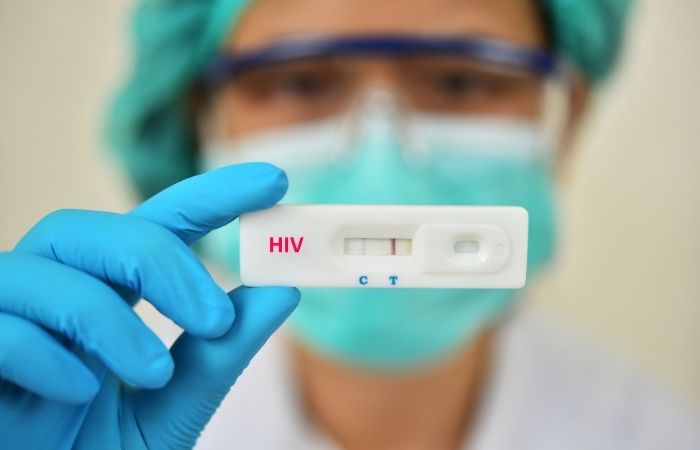
Feeling Anxious? Take Back Control
You don’t have to wait in shame or spiral in search tabs. There are rapid tests that can be delivered discreetly, read from home, and backed by medical science, not random Reddit threads.
If you need clarity, power, or peace of mind, you can explore this combo test kit that checks for the most common STDs including HIV. It’s fast, discreet, and easy to use, even if you’re still recovering from that head cold.
Testing doesn’t mean something’s wrong. It means you’re doing something right.
What If the Test Is Positive?
Let’s be real, this is the part most people dread. The part your mind jumps to even before you open the test box. But here’s the thing: a positive result isn’t the end of your story. It’s a turning point, yes, but one that leads to care, not isolation.
Andre, 38, tested positive after retesting at 42 days post-exposure. He’d had flu symptoms a few weeks earlier and wrote it off. When his result came back reactive, he sat in his car for twenty minutes, breathing like he’d forgotten how. But then he messaged a friend, looked up a local HIV clinic, and called. By the end of the day, he had an appointment booked and a case manager helping him understand treatment options.
Most people who test positive for HIV today live long, healthy lives with one daily pill. That’s the new reality. The earlier it’s caught, the better, for your health and for protecting future partners. You don’t have to tell everyone. You don’t have to process it alone. But you do have options. Starting with confirmatory testing and care linkage.
If your at-home test is positive, it’s critical to follow up with a lab-based test. This confirms the result and begins your treatment timeline. If you tested while sick or post-vaccine, that doesn’t invalidate the result, but confirming it gives clarity. And from there, you take the next step.
Think of it like crossing a bridge: scary to step on, solid once you do. Treatment, support, and answers are on the other side.
Privacy, Shipping, and Discreet Support You Can Count On
If what’s holding you back is fear of being seen, of the package, the pharmacy, the clinic, know this: at-home STD testing is built for privacy. Most test kits arrive in plain packaging, without branding. Your neighbors, family, roommates? They won’t know a thing. Results come to you directly. You decide who to tell, when, and how.
Shipping often takes 2–4 business days, with options for overnight delivery in some areas. If you’re traveling, you can coordinate to have kits delivered to hotels or P.O. boxes. If you’re remote or rural, mail-in kits offer lab-grade results without stepping foot in a clinic. That means no waiting rooms. No awkward check-ins. Just you, a test, and answers.
If you’re ordering a test while sick, you can even plan around your energy. Take the test when you’re rested. Read the results at your pace. And know there’s always someone out there who’s been exactly where you are, panicked, tired, unsure, and came out the other side with peace of mind.
Need a starting point? You can visit STD Rapid Test Kits for confidential, fast-shipping options tailored for people just like you, real, scared, and ready for clarity.
FAQs
- 1. I tested for HIV while sick, can I trust the result?
- Probably, yes, but it depends when you tested. Being sick doesn’t usually mess with the test itself, but if you took it too soon after a risky encounter, it might miss the infection. If your test was within two weeks of exposure, your body might not have built up enough HIV markers yet. That’s biology, not test error. So if you were coughing and scared on day 10, and your test was negative, retesting around day 30 or 45 is a smart move.
- 2. Do vaccines mess up HIV test results?
- Nope. Vaccines like COVID, flu, or monkeypox don’t trigger HIV false positives. The test looks for very specific markers, either parts of the virus or your body’s immune response to HIV. Vaccines train your immune system, but they don’t mimic HIV. So if you just got your booster and want to test? Go for it. Timing matters more than your vax card.
- 3. Can flu symptoms mean I have HIV?
- They can overlap, sure, but one doesn’t equal the other. Early HIV (called acute HIV) can come with fever, chills, sore throat, and fatigue, but so does literally every bug going around in winter. Timing is key. If symptoms show up 2–4 weeks after a risky hookup, it’s worth testing. If it’s just flu season and you’re not at risk, your immune system’s probably just doing its usual thing.
- 4. What if my test is negative, but I still feel weird?
- That “weird” feeling can be anxiety, a cold, dehydration, or yes, something else. But if you tested before the 28-day mark, your result might not be final. HIV needs time to show up on most tests. If you're still feeling off, test again at 6 weeks or go with a lab-based test to be sure. Peace of mind is worth the extra step.
- 5. I used a rapid at-home test. Is it reliable?
- If it’s been more than 90 days since your possible exposure, and the test was used correctly, it’s pretty solid. But if you tested earlier, say, at 3 or 4 weeks, those at-home kits might not catch it yet. They're antibody-only, which means they need your body to have responded already. If you want faster accuracy, a 4th-gen lab test is a better bet.
- 6. I was on PEP and got sick, could I still have HIV?
- That’s a tough one, and the answer is: maybe. PEP is super effective if started early, but it can delay or reduce the body’s antibody response. So if you’re on PEP and you get sick, don’t panic, but do follow the recommended testing schedule: one test 4–6 weeks after finishing PEP, and maybe again at 12 weeks for extra confidence. A 4th-gen test is your best friend here.
- 7. Can being immunocompromised delay a positive result?
- Yes, unfortunately. If your immune system is weakened by meds or a condition, it might take longer to produce HIV antibodies. That’s why lab-based tests that also detect the p24 antigen (like 4th-gen tests) are so important. If you're not sure what kind of test you had, or your health is complex, talk to a provider, or retest later just to be safe.
- 8. Do I need to wait after getting vaccinated to test?
- Not really. There's no hard rule. If you feel fine and it’s been long enough since exposure (18+ days for lab tests, 30+ for at-home), go ahead. If your immune system is still reacting, like you’ve got a high fever or feel totally wiped out, it might be worth waiting a few days just so you’re not second-guessing your results.
- 9. Is it worth retesting even if my first result was negative?
- Totally depends on timing. If you tested early, within a few weeks of exposure, it’s wise to retest around the 6-week mark. That’s when 4th-gen tests hit peak accuracy. If you’re still worried, test again at 3 months. You’re not overreacting, you’re being thorough. And your future self will thank you.
- 10. Do at-home tests still work if I’m feeling under the weather?
- They do, but they don’t care about your cold. What matters is whether your body has had time to make antibodies. Being sick won’t confuse the test, but testing too early might. If it’s been 6 weeks or more since your exposure and you're feeling gross but negative, you're likely in the clear. If it was sooner than that, consider retesting later.
You Deserve Certainty, Not Guesswork
Being sick, getting vaccinated, or feeling off doesn’t mean you’ve messed up your HIV test. But testing too early can. The window period exists for a reason, and it’s not a punishment. It’s biology. It’s timing. And it’s fixable with one thing: patience.
If you’re unsure, scared, or overwhelmed, here’s the plan: wait for the right moment. Test with the right tool. Retest if needed. And breathe. No one gets it perfect. But you can still get answers.
Don’t wait and wonder, get the clarity you deserve. This at-home combo test kit checks for the most common STDs discreetly and quickly.
How We Sourced This Article: We combined current guidance from leading medical organizations with peer-reviewed research and lived-experience reporting to make this guide practical, compassionate, and accurate.
- World Health Organization: HIV/AIDS Fact Sheet
- Getting Tested for HIV – CDC
- HIV Testing – NIH HIVinfo
- HIV Testing Overview – HIV.gov
- HIV Testing | HIV Partners – CDC
- HIV Self-Testing: Benefits and Limitations – MDPI
- HIV Testing – Clinical Guidelines (StatPearls)
- What is the Window Period for HIV Testing – Aidsmap