Can You Get an STD from Kissing Genitals Only?
Quick Answer: Yes, you can get an STD from kissing genitals only. Oral sex can transmit herpes, gonorrhea, syphilis, HPV, chlamydia, and more, even if there’s no penetration and no visible symptoms.

Quick Answer: Yes, you can get an STD from kissing genitals only. Oral sex can transmit herpes, gonorrhea, syphilis, HPV, chlamydia, and more, even if there’s no penetration and no visible symptoms.
Why This Article Exists: Shame, Misinformation, and “Sex That Doesn’t Count”
This guide is for anyone who’s ever Googled “STD from oral?” with shaking hands at 2AM. It’s for the girl who thought giving head was safer than having sex, the guy who only “ate her out” and now has white spots in his throat, the queer person navigating hookup culture without a sexual script that includes protection for oral.
It’s for everyone who’s ever been told, “You can’t get anything from that,” only to find themselves terrified and confused a few days later. Because when you don't have answers, the silence gets filled with shame, and shame leads people to delay testing, ignore symptoms, or not speak up with partners.
We're not here to scare you. We're here to tell you what you actually need to know: what can pass through oral-genital contact, what symptoms might (or might not) show up, how to test, and how to protect yourself and your partners, without giving up pleasure or confidence.

Yes, STDs Can Spread Through Oral Sex, Here's How
Let’s be blunt: any time there’s skin-to-skin contact or fluid exchange near the genitals, there’s a risk. Oral sex, whether it’s a blowjob, cunnilingus, rimming, or just deep mouth-to-genital contact, can absolutely transmit STDs. Some pathogens thrive in the mouth, throat, and mucous membranes. Others transfer because saliva isn’t a perfect barrier.
Here’s a simplified breakdown of the most commonly spread STDs via oral-genital contact:
| STD | Can Be Transmitted from Giving Oral? | Can Be Transmitted from Receiving Oral? | Symptoms in Mouth/Throat? |
|---|---|---|---|
| Herpes (HSV-1 & HSV-2) | Yes | Yes | Yes – sores, tingling, or nothing |
| Gonorrhea | Yes | Yes | Yes – sore throat, discharge, or silent |
| Chlamydia | Possible | Yes | Rarely – usually asymptomatic |
| Syphilis | Yes | Yes | Yes – painless sore, often missed |
| HPV | Yes | Yes | Sometimes – warts, rarely throat cancer |
| HIV | Low Risk | Very Low Risk | No – but possible via cuts/bleeding |
| Trichomoniasis | Uncommon | Possible | Rare |
Figure 1. Summary of STD transmission risks via oral-genital contact. Even if there’s “no sex,” oral counts as exposure.
Remember: you can get an oral infection from giving oral (like gonorrhea in the throat), or a genital infection from receiving it (if your partner has oral herpes, for example).
“I Was a Virgin. I Still Got Herpes.”
Ellie, 19, had never had vaginal or anal sex when she first noticed a painful sore near her labia. She went to the campus clinic in tears, sure it had to be a mistake. “I kept saying, ‘I’m a virgin. It can’t be an STD,’” she remembers. But a swab came back positive for genital herpes, most likely from oral sex.
“He had a cold sore two weeks before. I didn’t think it mattered. I wish someone had told me that counted.”
Herpes simplex virus type 1 (HSV-1), which usually causes cold sores, is now a leading cause of genital herpes. The shift happened because oral sex became so normalized, and so unprotected. No one wants to put a condom on for a quick blowjob or use a dental dam when caught up in the moment. But the virus doesn’t care if it was “just oral.”
Ellie’s story is heartbreakingly common, and not just among young women. Cis men, nonbinary folks, and queer people of all genders report similar experiences. Oral doesn’t feel like it “counts,” but your immune system disagrees.
If you’re reading this and wondering, “Could that be me?”, know that you’re not alone. And you have options for testing, confirmation, and support.
When Nothing Feels Off, But Something Might Be
Here’s one of the most brutal truths about oral-related STDs: they’re often invisible. No burning. No rash. No weird taste or pain. You feel fine, and you could still be infected. That’s not to scare you. It’s to help you get real with your own body and risk.
Most people with oral gonorrhea have zero symptoms. Same goes for oral chlamydia, it hides in the throat and never makes a sound. HPV? You won’t see it unless it causes visible warts or long-term issues. Herpes can hang out silently for years before a first outbreak. Even syphilis might only show up as a painless sore that looks like a shaving cut, then disappear while it moves deeper into the body.
This is why testing matters. Not because you should be paranoid, but because symptoms can’t be your guide. Even if your partner looked clean. Even if they said they were.
How Long Should You Wait Before Testing?
This is where things get tricky. Different STDs have different window periods, the time between exposure and when a test can actually detect the infection. If you test too early, you could get a false negative and think you’re in the clear when you’re not. Below is a quick visual to help:
| STD | Oral Transmission Possible? | Earliest Test Date | Best Test Window |
|---|---|---|---|
| Herpes (HSV-1/2) | Yes | 7 days (if symptomatic) | 12+ weeks (blood antibody test) |
| Gonorrhea | Yes | 5 days | 7–14 days |
| Chlamydia | Yes | 5–7 days | 14 days |
| Syphilis | Yes | 3 weeks | 6+ weeks |
| HPV | Yes | Not routinely tested unless symptoms | 6+ months (for certain cancers) |
| HIV | Low Risk | 10–14 days (NAAT test) | 28+ days (4th gen Ag/Ab) |
Figure 2. Window period guide for oral-related STD testing. "Earliest" means detection is possible, but not guaranteed. “Best” gives you the most accurate read.
So if it’s only been a few days since the oral hookup that’s haunting you, the urge to test is totally normal, but the accuracy may not be there yet. You might need to test again later to be sure. That’s not overkill. It’s just how infection timelines work.
When to Retest, Even If the First Test Says You're Clear
Ty, 28, took an at-home test five days after a one-night stand involving mutual oral. It came back negative. Two weeks later, he had a swollen lymph node under his jaw. “I thought it was strep,” he said, “but then I tested again and it was gonorrhea. In my throat. I was so mad, at myself and the first test.”
“No one told me I needed to retest. I thought I was being responsible.”
This is where we tell you what no one else does: testing early is smart, but it’s only part of the picture. For many oral STDs, a retest at the two-week or even one-month mark gives you a fuller picture. If you had symptoms, start testing sooner, but don’t rely on a single test to rule everything out.
That’s especially true if your first test was negative but something doesn’t feel right. A sore that doesn’t heal, a persistent tickle in your throat, or just that gnawing “something’s off” feeling, those are all reasons to recheck
Testing for Oral STDs: What You Need to Know
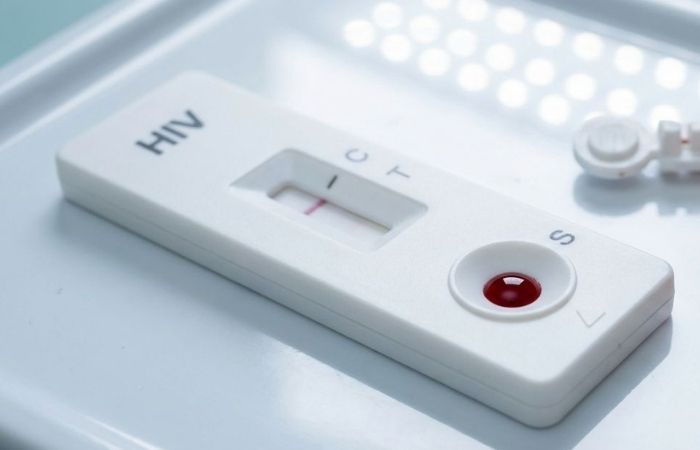
Here’s where things get a little frustrating. Most rapid at-home kits are designed for genital or urine samples, not for the throat. That means oral gonorrhea or chlamydia might not show up unless you get swabbed at a clinic or do a mail-in test with a throat-specific option.
But not all hope is lost. If you’re worried about oral transmission, here’s what you can do right now:
- Test for herpes, syphilis, and HIV using at-home finger-prick blood kits, these don’t depend on location of infection.
- Use combo kits that cover both bacterial and viral STDs, while some won’t show throat infections, they’ll still catch systemic ones.
- For oral-specific STDs, consider visiting a clinic for a throat swab or using a verified mail-in service that includes pharyngeal testing.
In all cases, the most important thing isn’t whether you choose clinic or at-home, it's that you test at all.
Safe Oral Sex Isn’t an Oxymoron
Let’s be clear: we’re not anti-oral sex. We’re pro-informed oral sex. You can absolutely enjoy giving and receiving without turning every hookup into a game of STD roulette. It just means adding some safety layers, without killing the mood.
Here’s how people actually do that, in real life:
For blowjobs: External-use condoms (especially flavored) are underused, but more people are turning to them when hooking up with new partners. Some cut them into strips to use as makeshift barriers for rimming too.
For cunnilingus: Dental dams exist for a reason. They're thin, flavored, and let you focus on pleasure while still creating a barrier. You can also DIY one from a condom or latex glove in seconds.
For rimming (analingus): The risk here includes not just STDs like Hepatitis A, but also bacteria and parasites. Use a barrier (dam or condom), and mouthwash after, not before, alcohol-based rinses can cause microtears and increase risk if used pre-contact.
For herpes/cold sores: Don’t give oral sex with a cold sore. Period. Even if it’s “almost gone.” HSV-1 can transmit even when healing, and you don’t need a sore to shed virus. If you get recurring outbreaks, consider talking to your provider about suppressive meds like valacyclovir.
Safe doesn’t mean sterile. It means smart. It means normalizing the same care for oral hookups that we give to “real” sex.
“I Got a Cold Sore, And Thought It Was Nothing”
Marc, 31, had a cold sore flare up three days after a night with a new partner. “We just made out, and I gave him oral,” he says. “I’d had cold sores since I was a kid, so I thought it was just stress. But two weeks later, he messaged me in full panic, he had a sore on his shaft, and it turned out to be herpes.”
“I didn’t even know HSV-1 could go down there. I felt like I betrayed him.”
This is how it happens. HSV-1, once known as “just cold sores”, is now the leading cause of genital herpes in the U.S. According to the CDC, over 47% of Americans have HSV-1, often from childhood, and don’t know it. The virus can shed without symptoms, especially around the lips and mouth.
Marc wasn’t careless. He was uninformed, and that’s what puts people at risk. But once he knew, he took action. He started using suppression therapy, disclosing to partners, and even kept flavored condoms in his nightstand “just in case.” He says now, “I still have oral sex. I’m just not in the dark anymore.”
There’s no shame in not knowing, but there’s power in finding out.
What If You're the One at Risk, What Should You Tell Them?
Maybe it’s you reading this with a sore in your throat. Maybe your partner told you they “just” had oral. Maybe you saw a suspicious bump days after you were on the receiving end of head. What now?
It’s okay to feel panic. But panic doesn’t have to dictate your next move.
Start by getting tested, at the right time. If your partner may be at risk, tell them early, even if you’re not sure yet. You don’t have to deliver a diagnosis, just a heads-up. Try something like:
“Hey, I noticed something weird after our hookup and I’m getting tested. Just wanted you to know in case you want to, too.”
Or, if you’ve already tested positive:
“My test came back positive for [insert STD], and there’s a chance I could have had it when we were together. I’m letting you know so you can take care of yourself too.”
FAQs
- 1. Wait, so I can really get an STD just from kissing someone's junk?
- Yep. If their mouth has herpes, gonorrhea, syphilis, or even HPV, it can absolutely pass to your genitals during oral. Doesn’t matter if they look “clean” or say they’re good. Some infections don’t leave calling cards, you just get them.
- 2. But what if they didn’t come in my mouth? Is it still risky?
- Unfortunately, yeah. Ejaculation isn’t required for transmission. Pre-cum, skin contact, and saliva can all carry certain STDs. Herpes and HPV in particular don’t care whether anyone finished, just that you got close.
- 3. I’ve had a sore throat for a week, could that be an oral STD?
- Maybe. Oral gonorrhea and chlamydia often hide out in the throat and can feel like a regular sore throat, or feel like nothing at all. If you’ve given oral recently and something feels off (or even if it doesn’t), it’s worth testing.
- 4. How do I even test for something in my throat?
- Not all tests check the throat, which is wild but true. You’d need a throat swab, either from a clinic or a mail-in test that includes that option. Most at-home tests screen blood or urine, which is great for herpes, syphilis, and HIV, but won’t catch a silent oral gonorrhea infection unless it’s designed to.
- 5. I’ve had cold sores forever. Could I give someone genital herpes?
- Yes, and it happens a lot. HSV-1 (cold sore herpes) is now the top cause of genital herpes. Giving oral sex with an active cold sore, or even when you’re not flaring but still shedding virus, can pass it on. You didn’t mean to. But now you know, and that changes the game.
- 6. Okay, but what if I only gave oral once, am I seriously supposed to worry?
- Look, one-time exposure isn’t a guarantee that you got something. But it’s also not a free pass. Plenty of people catch STDs from a single encounter. It doesn’t make you dirty or stupid. It makes you... human. If you’re worried, test. Peace of mind is better than spiraling.
- 7. Can someone give me an STD through oral even if they had no symptoms?
- Unfortunately, yes. That’s how a huge chunk of transmissions happen. They feel fine, they think they’re fine, and they’re shedding virus or bacteria anyway. You can’t see HPV. Gonorrhea doesn’t always make them sore. Herpes might not show up for years. This isn’t about lies, it’s about biology.
- 8. Do flavored condoms or dental dams actually work for oral sex?
- They work a lot better than nothing. Are they sexy? That depends on who you ask (and what flavor). But they’re legit barriers. Think of them like cute raincoats for your mouth. They won’t block everything (skin-to-skin STDs like herpes can still squeak through), but they cut down risk big time.
- 9. If my test was negative five days after oral, am I in the clear?
- Not quite. You might be, but you also might’ve tested too early. Some infections don’t show up on tests until 7, 14, or even 21+ days post-exposure. Early testing is great, but plan to retest at the right window. We have a whole table earlier in this article to help you time it right.
- 10. Is it still considered oral sex if there was no licking, just rubbing or kissing down there?
- Depends who you ask, but from an STD risk standpoint, yes. If mouths touched genitals or anus, it counts. Even just outer contact can transmit things like herpes. So yeah, that “it didn’t really count” hookup might still deserve a test.
You Deserve Answers, Not Assumptions
Too many people carry the idea that oral sex doesn’t “count.” That kissing genitals is risk-free. That unless there’s penetration, there’s nothing to worry about. But infections don’t ask about your definitions of sex. They just move from one warm, moist place to another.
You’re not reckless for asking these questions. You’re responsible. Smart. Caring. Whether you’re experiencing symptoms or just lying awake in fear, testing is the next right step, not punishment, not proof of guilt, just care.
Don’t wait and wonder, get the clarity you deserve. This at-home combo test kit checks for the most common STDs discreetly and quickly.
How We Sourced This Article: We combined current guidance from leading medical organizations with peer-reviewed research and lived-experience reporting to make this guide practical, compassionate, and accurate. In total, around fifteen references informed the writing; below, we’ve highlighted six of the most relevant and reader-friendly sources. Every external link in this article was checked to ensure it leads to a reputable destination and opens in a new tab, so you can verify claims without losing your place.
About the Author
Dr. F. David, MD is a board-certified infectious disease specialist who works to stop, diagnose, and treat STIs. He combines clinical accuracy with a straightforward, sex-positive approach and is dedicated to making his work available to more people in both cities and rural areas.
Reviewed by: K. Mercado, RN, MPH | Last medically reviewed: February 2026
This article is for informational purposes and does not replace medical advice.