Can You Have Sex After a Chlamydia Diagnosis? What's Safe and When
That's not a guideline you can negotiate around. The good news is that chlamydia is one of the most treatable STIs out there.

If you've just tested positive for chlamydia, here's what you need to know right now: you cannot have sex, with or without a condom, until both you and your partner have completed treatment and a full seven days have passed. That's not a guideline you can negotiate around. The bacteria remain transmissible while treatment is underway, and having sex too soon is the single most common reason people end up reinfected within weeks of clearing their first infection. The good news is that chlamydia is one of the most treatable STIs out there. Get through the waiting period correctly, and you're back to a normal sex life, without the same infection following you back in.

Why You Can't Just Jump Back Into Bed the Moment You Get Diagnosed
There's a common misconception that once you start antibiotics, you're no longer contagious. That's not how bacterial infections work, and chlamydia is no exception. Chlamydia trachomatis, the bacterium behind the infection, lives inside the cells lining your genitals, rectum, and throat. Antibiotics don't work like an instant switch. They need time to reach the infected tissue, penetrate the cells, and clear the bacteria at a concentration high enough to eliminate the infection entirely. During the first several days of treatment, the bacteria are still present, still active, and still fully capable of being passed to a partner.
Think of it this way: starting antibiotics is the beginning of the cure, not the end of the infection. You might feel better quickly; chlamydia is often asymptomatic anyway, but feeling fine is not the same as being cleared. The bacteria don't vanish on day one. The treatment process takes the full course to work, and the biology doesn't care how inconvenient the timing is.
There's also the question of what type of treatment you've been given, because this changes the exact timeline. Some people are prescribed a single-dose treatment, taken all at once. Others are given a seven-day course, taken twice daily. Both are effective, but the waiting period works differently for each, and mixing them up is where a lot of people make mistakes that lead to reinfection.
The 7-Day Rule, What It Actually Means (and Why It's Non-Negotiable)
The seven-day rule exists because that's how long it takes for antibiotic treatment to reliably clear chlamydia from your system. According to the CDC, if you've been given a single-dose treatment, you must wait seven full days after taking it before having sex. If you've been given a seven-day course of antibiotics, you must wait until you've finished every single dose, and then an additional seven days before having sex. The clock doesn't start when you feel better. It starts when treatment is complete.
This is not a conservative estimate built in for safety margins. Seven days is the functional threshold at which the antibiotic has had enough time to eliminate the bacteria at the concentrations needed to prevent transmission. Before that window closes, you can absolutely still pass chlamydia to a partner, even if you're mid-treatment and even if you have no symptoms whatsoever. The absence of symptoms has never been a reliable indicator of whether you're still infectious, that's true at diagnosis and it's true during treatment.
| Treatment Type | What It Looks Like | When You Can Have Sex Again |
|---|---|---|
| Single-dose treatment | One dose taken all at once at the clinic or pharmacy | 7 days after you take the dose, and only after your partner has also completed their treatment |
| 7-day course | Antibiotics taken twice daily for 7 days | After finishing all doses, then wait an additional 7 days, and only after your partner has also completed their treatment |
| Either type, partner untreated | You've completed treatment; partner has not | Not yet. Both people must have completed treatment before the 7-day countdown begins |
One thing that catches people off guard: the seven-day wait doesn't start running until both you and your partner have finished treatment. If your partner starts their antibiotics three days after you, the clock starts from when they finish, not from when you did. This detail is important, and it's one most people miss because it means the timeline is partially out of your control. The safest approach is to make sure partner treatment is sorted as early as possible.
What About Condoms? Can You Use One and Still Have Sex During Treatment?
This is one of the most searched questions about chlamydia treatment, and the answer is no. Using a condom during the treatment window does not make sex safe enough to be worth the risk. That's not a moral position; it's a biological one. Condoms are highly effective at reducing chlamydia transmission under normal circumstances, but "during active treatment" is not a normal circumstance. The infection can still pass through microscopic exposure during activities where condoms don't provide full coverage, anal sex, oral sex, skin-to-skin contact in areas the condom doesn't cover. You're not eliminating the risk with a condom. You're reducing it slightly while still exposing your partner to an active infection.
There's also the reinfection angle to consider. Even if your partner already has chlamydia, which is likely given how transmission works, having sex during treatment creates a cycle of re-exposure that can interfere with clearance. Treatment takes time to work, and repeated bacterial exposure during that window complicates the process. This is why clinical guidelines are unambiguous on the point: no sex, period, for the full seven days. Not "sex with a condom." Not "just once." No sex.
The internet has a lot of creative interpretations of this rule. Someone always asks whether oral sex counts, or whether certain positions are lower risk, or whether a dental dam changes the calculus. The short answer to all of these is the same: chlamydia can infect the throat and rectum, not just the genitals, and any sexual contact during the treatment window carries risk. The seven-day window is short. It's worth waiting.
Your Partner Is the Missing Piece, Here's Why This Matters More Than Anything
Here's the part of the chlamydia conversation that doesn't get nearly enough attention: the most common reason people get reinfected isn't bad luck or treatment failure. It's a partner who hasn't been treated. According to CDC treatment guidelines, the majority of post-treatment chlamydia infections are caused by reinfection from a sex partner who either didn't receive treatment or wasn't treated in time, not by the antibiotic failing to work. You can do everything right on your end and still end up reinfected two weeks later if your partner isn't treated before you resume sex.
The reinfection numbers are striking. Research shows that as many as 1 in 5 people who are treated for chlamydia will acquire the infection again within the first few months after treatment. That's not a rare edge case, that's a predictable outcome when partner treatment doesn't happen or happens too late. For women, repeat infections carry compounded risk: each reinfection increases the likelihood of pelvic inflammatory disease (PID), which can cause scarring in the fallopian tubes and long-term damage to fertility. Getting reinfected once isn't just an inconvenience. It raises the stakes for everything that follows.
All sexual partners from the past 60 days need to be informed and treated. This is true whether they have symptoms or not, chlamydia is asymptomatic in the majority of people who carry it, so waiting for a partner to "feel something" before getting tested is not a reliable strategy. If your partner is reluctant to see a doctor, many clinics offer expedited partner therapy (EPT), where treatment can be provided to partners without requiring them to come in for an appointment. It's worth asking your provider about this option if you're worried about follow-through.
| Action | You | Your Partner(s) |
|---|---|---|
| Get tested | Already done, that's how you found out | Needs to be tested as soon as possible, even without symptoms |
| Start treatment | As soon as prescribed, do not delay | As soon as possible, the sooner they start, the sooner the 7-day clock can run |
| Complete treatment | Full course, every dose, no skipping | Same, full course required before the joint 7-day wait begins |
| Wait 7 days | After completing treatment | Both people must be through treatment before this window opens |
| Retest at 3 months | CDC recommends regardless of partner treatment status | Also recommended, especially if new partners are involved |
Testing After Treatment, When to Retest and Why It Matters
Finishing treatment doesn't automatically mean you're confirmed clear. It means you've completed the protocol most likely to eliminate the infection, but there are two distinct testing moments that matter after a chlamydia diagnosis, and they serve different purposes. Understanding the difference between them is the key to actually knowing your status rather than just assuming it.
The first is a test of cure, sometimes called a clearance test. This is done approximately 4 weeks after treatment to confirm the infection is gone. It's not universally recommended for everyone, most straightforward cases don't require it, but it's worth discussing with your provider if you're concerned about treatment effectiveness, if your symptoms persisted longer than expected, or if there's any reason to suspect the antibiotic course wasn't completed properly. If you want a definitive confirmation that you're clear before resuming a full sexual relationship, testing at 4 weeks gives you that answer.
| Infection | Earliest Accurate Test Window | Why the Window Exists |
|---|---|---|
| Chlamydia | 14 days after exposure | The bacteria need time to reach detectable levels in the body |
| Gonorrhea | 3 weeks after exposure | Often diagnosed alongside chlamydia; same exposure window applies |
| Syphilis | 6 weeks after exposure | Antibody response takes longer to reach detectable levels |
| HIV | 6 weeks (first indicator); retest at 12 weeks for certainty | Antigen/antibody tests detect most infections at 6 weeks; full confirmation at 12 |
| Herpes HSV-1 & HSV-2 | 6 weeks after exposure | IgG antibody response requires several weeks to become detectable |
| Hepatitis B | 6 weeks after exposure | Surface antigen levels take time to rise after initial infection |
| Hepatitis C | 8–11 weeks after exposure | Longest window — antibody response is slower for hepatitis C than other STIs |
The second testing moment is the 3-month retest, which the CDC recommends for everyone treated for chlamydia, regardless of whether your partner received treatment. This isn't about doubting the treatment. It's about catching reinfection early, before it has a chance to cause damage. Chlamydia can sit silently for weeks or months before any symptom appears, and by the time there's a sign something is wrong, the infection has already had time to spread. The 3-month retest catches that scenario early. If you don't make it back at 3 months, retest at your next medical appointment within the following 12 months.
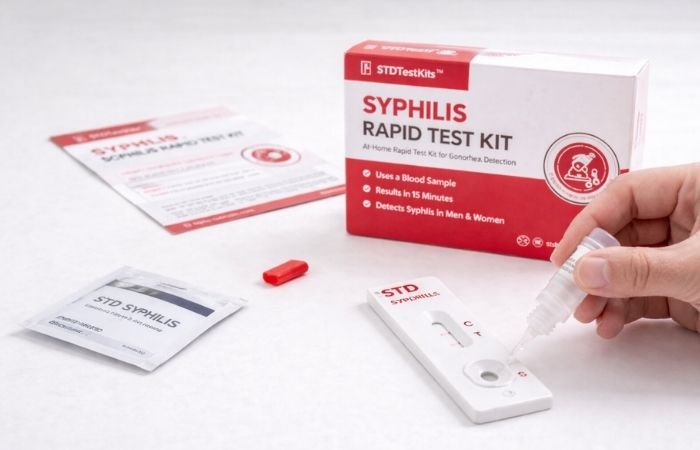
At-home rapid testing makes this follow-up significantly easier to act on. There's no appointment, no clinic waiting room, and results come back quickly. The Chlamydia At-Home STD Test Kit from STD Test Kits delivers results with over 99% accuracy and can be used privately at home, which means there's genuinely no reason to skip the 3-month retest. A follow-up test is one of the most practical things you can do to protect your long-term reproductive health, and doing it from home removes the last remaining friction from the process. For initial testing before the 14-day window passes, the test should be taken at least 14 days after potential exposure to ensure accuracy.
What Happens If You Have Sex Too Soon, The Real Risks
People sometimes weigh the seven-day wait as a theoretical risk, something that might matter but probably won't. That framing underestimates what's actually at stake. Having sex before both partners have completed treatment and the seven-day window has closed doesn't just risk an inconvenient positive test result. For women, especially, the downstream consequences of repeated chlamydia infections are serious and sometimes permanent.
Untreated or repeatedly reinfected chlamydia is one of the leading causes of pelvic inflammatory disease (PID) in the United States. PID develops when the infection spreads from the cervix upward into the uterus, fallopian tubes, and surrounding pelvic tissue. The inflammation causes scarring, and that scarring doesn't reverse. Depending on severity, it can cause chronic pelvic pain, painful intercourse, and blocked fallopian tubes, which directly affect the ability to conceive naturally. Ectopic pregnancy, where a fertilized egg implants in a fallopian tube instead of the uterus, is another potential consequence, and it's a medical emergency. These outcomes aren't rare worst-case scenarios. They're documented, well-studied consequences of untreated and repeatedly reinfected chlamydia in women of reproductive age.
For men, untreated chlamydia can cause epididymitis, inflammation of the tube that carries sperm from the testicles, which, left unaddressed, can affect fertility. It can also spread to cause reactive arthritis in some people, a systemic inflammatory response that affects the joints, eyes, and urinary tract. And regardless of sex or gender, chlamydia infection raises the biological risk of acquiring HIV if exposed, because the inflammation it causes creates easier entry points for the virus. None of this is meant to cause alarm about a single positive test. It's a case for taking the recovery protocol seriously, because the short-term inconvenience of seven days is genuinely small compared to the long-term consequences of treating the wait period casually.
Getting Back to Normal, What "Cleared" Actually Looks Like
You've completed treatment. Seven days have passed. Your partner has also finished treatment and waited out their window. You're clear to resume sex, and this is where a lot of people feel the need for one more layer of reassurance before they actually feel comfortable. That's a completely normal response to a diagnosis that probably caught you off guard, and it's worth addressing directly: being cleared from chlamydia is a real, definitive state. The infection doesn't linger indefinitely. It doesn't hide from antibiotics. Treated correctly, with the right timeline and partner treatment in place, chlamydia is gone.
What "normal" looks like going forward does involve a few practical adjustments that are worth building into your routine. Consistent condom use remains one of the most effective tools for reducing reinfection risk with new or casual partners, and it protects against the full spectrum of STIs, not just chlamydia. Regular testing, roughly every 3 to 6 months if you're sexually active with multiple partners, means any future infection gets caught early before it has time to cause complications. And the 3-month retest after treatment is genuinely worth following through on, not because you expect to find anything, but because catching a reinfection at 3 months rather than 9 months makes a real difference in outcomes.
One more thing worth saying plainly: a chlamydia diagnosis is not a referendum on your sexual choices or your character. Chlamydia is the most commonly reported bacterial STI in the United States, in 2024, it still accounted for the majority of the more than 2.2 million combined bacterial STI cases reported to the CDC. It spreads efficiently, it's often asymptomatic, and getting it does not mean you were careless. What it means is that you now know, you've been treated, and you have the information you need to move forward without carrying the same infection back into your sex life. That's the whole point of testing.
FAQs
- 1. Can I have sex if I use a condom during my chlamydia treatment?
- No. Condoms reduce transmission risk significantly under normal circumstances, but during active antibiotic treatment, the bacteria are still present and can still pass to a partner. Chlamydia can also infect the throat and rectum through contact that condoms don't fully cover. The seven-day wait applies regardless of condom use.
- 2. How long after a single-dose chlamydia treatment can I have sex?
- You need to wait 7 full days after taking a single-dose treatment before having any sexual contact. That clock only starts once both you and your partner have completed their own treatment. If your partner finishes later than you, the 7-day wait begins from when they finish.
- 3. What happens if I have sex too soon after chlamydia treatment?
- You risk reinfecting yourself or passing the infection to your partner before treatment has had time to clear the bacteria. This is the most common reason people end up with a second chlamydia infection. For women, repeated infections significantly raise the risk of pelvic inflammatory disease and related fertility complications.
- 4. Does my partner need to be treated even if they have no symptoms?
- Yes. Chlamydia is asymptomatic in the majority of people who carry it, meaning no symptoms does not mean no infection. All sexual partners from the past 60 days need to be tested and treated before you resume sex, regardless of whether they feel anything. Skipping this step is the primary driver of reinfection.
- 5. Can chlamydia come back after treatment?
- Treatment doesn't create immunity. You can absolutely get chlamydia again after being successfully treated, the most common cause is having sex with a partner who wasn't treated or was treated but reinfected from another source. This is why the 3-month retest after treatment is recommended for everyone, regardless of how confident you feel about partner treatment.
- 6. When should I retest after chlamydia treatment?
- The CDC recommends retesting 3 months after treatment, even if you believe your partner was treated. If you can't return at 3 months, retest at your next medical appointment within the 12 months following your initial treatment. A test of cure at 4 weeks is also an option if you want to confirm the infection has cleared before the 3-month mark.
- 7. Can I still get chlamydia in the throat or rectum even after genital treatment?
- Chlamydia can infect multiple sites simultaneously, genitals, throat, and rectum, and treatment targets the infection wherever antibiotics can reach. If you had receptive oral or anal sex with an infected partner, it's worth discussing site-specific testing with your provider to ensure all potential infection sites have been addressed.
- 8. Is it safe to have sex if my partner and I both have chlamydia and are both being treated?
- No, not until both of you have completed your full treatment course and an additional 7 days have passed. Even when both partners are being treated simultaneously, having sex during the treatment window risks re-exposure before the antibiotics have finished working. Both people need to be fully through treatment before resuming sexual activity.
- 9. How do I know the chlamydia treatment actually worked?
- Most people don't experience treatment failure when they complete the full antibiotic course correctly. However, if symptoms persist after the 7-day window, or if you want a definitive confirmation before resuming sexual activity, a test of cure at 4 weeks post-treatment provides that answer. At-home testing makes this easy to do without scheduling a clinic appointment.
- 10. Is it safe to have sex again after the 3-month retest comes back negative?
- A negative result at 3 months means you don't have a detectable chlamydia infection at that point. That's a genuine green light for normal sexual activity. Going forward, consistent condom use and regular STI screening, roughly every 3 to 6 months if you're active with multiple partners, is the best way to stay ahead of any future exposures.
Taking the Next Step: Test, Confirm, and Move Forward
A chlamydia diagnosis is manageable. The treatment window is short, the antibiotic success rate is high, and the path back to a normal sex life is straightforward, as long as the protocol is followed correctly, both partners are treated, and the follow-up testing actually happens. That last part is where a lot of people fall short, not because they don't intend to follow through, but because booking a clinic appointment three months down the line is easy to deprioritize. At-home testing removes that friction entirely.
The Chlamydia At-Home STD Test Kit delivers over 99% accuracy and results you can read at home, privately, without a waiting room. If you want broader coverage, because a chlamydia diagnosis is sometimes accompanied by other infections, the Chlamydia & Gonorrhea At-Home STD Test Kit tests for both in a single kit, and the 7-in-1 Complete At-Home STD Test Kit covers chlamydia, gonorrhea, syphilis, HIV, hepatitis B, hepatitis C, and HSV-2, giving you a complete picture of your sexual health status in one round of testing.
The 3-month retest is not optional busywork. It's the checkpoint that catches reinfection before it causes lasting damage. Make it easy on yourself: order a kit now, schedule a reminder for three months out, and arrive at that date with a test already at home. Visit STD Test Kits to find the right kit for your situation.
Our article was constructed based on current advice from the most prominent public health and medical organizations, and then molded into simple language based on the situations that people actually experience, such as treatment, reinfection by a partner, no-symptom exposure, and the uncomfortable question of whether it "came back." In the background, our pool of research included more diverse public health advice, clinical advice, and medical references, but the following are the most pertinent and useful for readers who want to verify our claims for themselves.
- CDC, About Chlamydia: Treatment and Prevention
- CDC, Sexually Transmitted Infections Treatment Guidelines: Chlamydial Infections
- CDC, Sexually Transmitted Infections Surveillance 2024 (Provisional)
- PMC, The Role of Reinfection and Partner Notification in the Efficacy of Chlamydia Screening Programs
- Chlamydia Coalition, Why Do I Need to Retest After Treatment?
- MedlinePlus, Chlamydia Infections