Cleaning Your Sex Toys: Why It’s an STD Prevention Step
Quick Answer: Cleaning your sex toys properly after every use helps prevent the spread of STDs like chlamydia, gonorrhea, herpes, and HPV, especially when toys are shared or used without condoms.
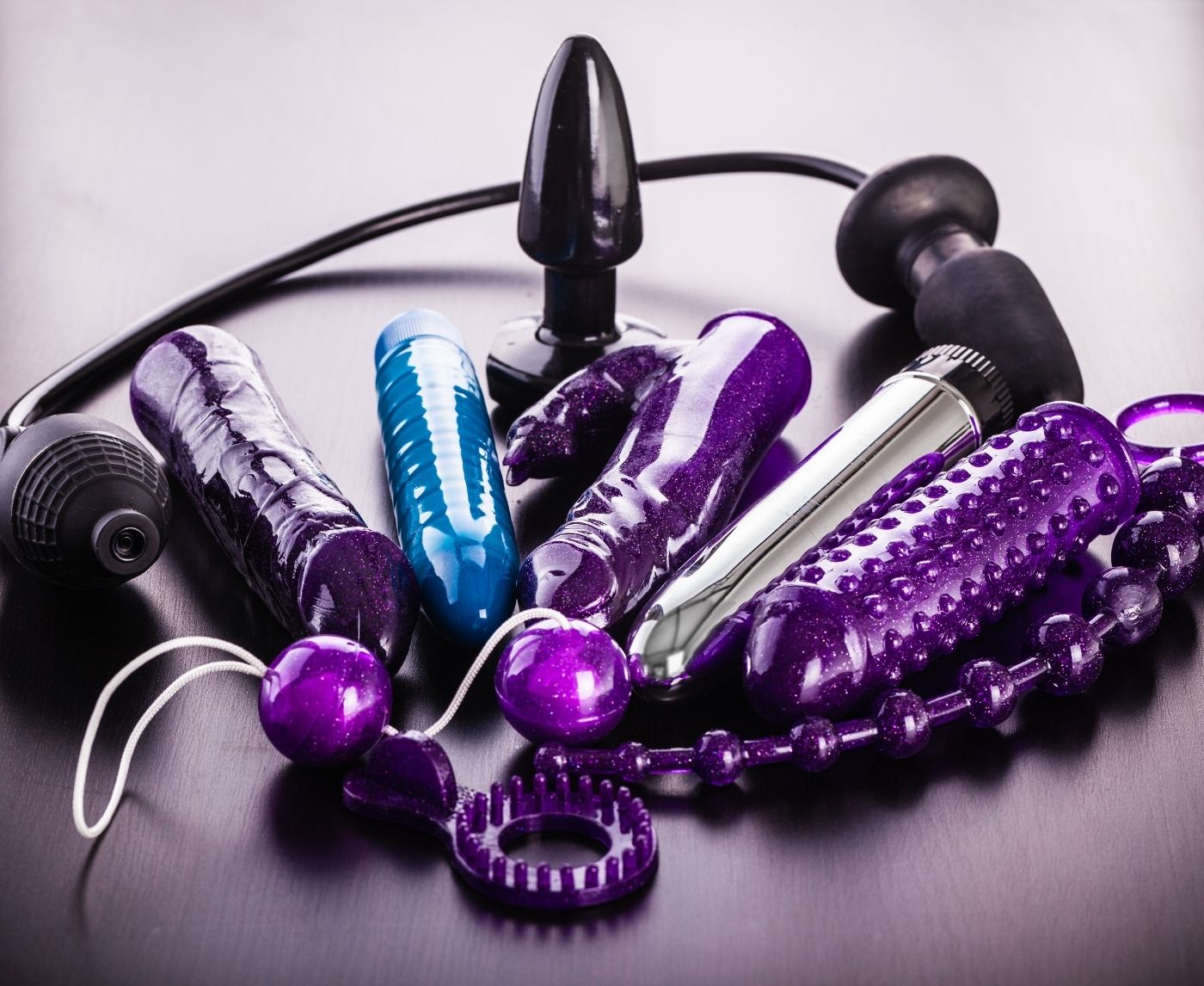
Quick Answer: Cleaning your sex toys properly after every use helps prevent the spread of STDs like chlamydia, gonorrhea, herpes, and HPV, especially when toys are shared or used without condoms.
Why This Guide Matters: It’s Not Just About You
If you’re reading this, chances are you’ve either felt unsure about your cleaning habits or you’re Googling something like, “can you get an STD from a vibrator?” Maybe you’ve recently shared a toy with someone new, or maybe it’s been sitting unwashed in your drawer for a while. Regardless, you’re not alone, and this guide is for you.
Sex toys are one of the most under-discussed parts of sexual health. People worry about condoms, birth control, and partner history, but toy hygiene often gets skipped. That’s risky, especially for queer and polyamorous users, those with recurring infections, and anyone using insertive toys between partners or orifices. Even people in monogamous relationships aren’t immune: a single untreated infection can linger and resurface in a closed loop.
Think of this as both a guide and a reality check. We’ll walk through what happens when toys aren’t cleaned right, how long STDs can survive on surfaces, what cleaning methods actually work, and how to make your routines safer without killing the mood. And if you’re already worried something happened, we’ll show you how to test discreetly, from home, without judgment.
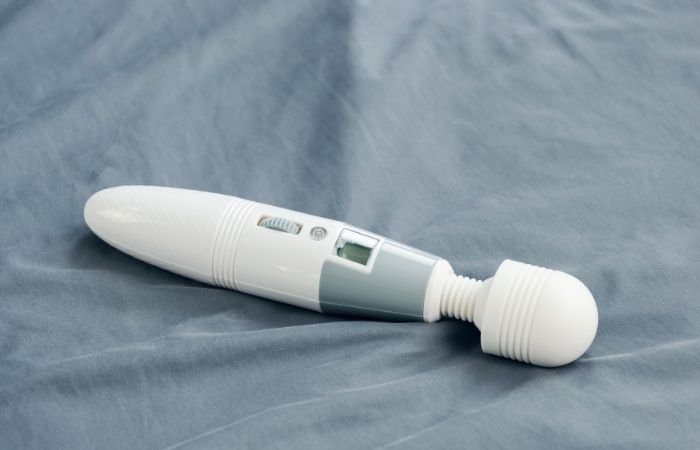
People are also looking for: Do Lubricants Affect STD Test Accuracy or Risk?
What STDs Can You Actually Get from a Sex Toy?
It’s not just hypothetical. According to CDC guidance, several sexually transmitted infections can live on external surfaces long enough to transmit infection. Sex toys, especially if porous, shared, or improperly cleaned, can act as a temporary reservoir for bacteria or viruses.
Here’s what can realistically spread through toy use:
| STD | Risk via Toy | Survival Time on Surfaces |
|---|---|---|
| Chlamydia | High if toy used between partners/orifices | Several hours (moist conditions) |
| Gonorrhea | Moderate to high via mucosal transfer | Up to 5 hours on hard surfaces |
| Herpes (HSV-1, HSV-2) | High; skin-to-surface contact risk | Few hours, varies by surface type |
| HPV | Moderate; can linger on objects | Several hours to days (studies vary) |
| Trichomoniasis | High; known to spread via wet surfaces | Up to 24 hours in moist environments |
Figure 1. Transmission potential and survival window for common STDs on sex toys or surfaces.
STDs like syphilis may also be transmitted if they come into contact with toys, especially if they are in areas where friction is high. HIV and Hepatitis B viruses are not as likely to survive outside the human body, but they could possibly be transmitted if there is visible blood or fluid.
It’s Not Just About Sharing: Internal Use Matters
You don’t have to pass a toy between partners to increase your risk. If you use a toy vaginally and then anally, or vice versa, without washing it first, you’re potentially spreading bacteria, yeast, or viruses between sensitive ecosystems. It’s called cross-contamination, and it’s a common cause of UTIs, BV, and even STI flare-ups in people with compromised immune systems.
“I kept getting BV and yeast infections and couldn’t figure out why,” shared Renee, 27. “It turned out I was using the same toy back and forth without a condom or wash in between.”
Materials matter too. Porous toys (like jelly rubber, certain silicones, and cheaper plastics) can trap fluids inside tiny crevices, making them harder to sanitize completely. Unless you’re using condoms on your toys, which we’ll cover soon, those little pores become homes for bacteria.
This is especially crucial for people with vulvas, those on antibiotics or immunosuppressants, or anyone prone to recurrent infections. Even small changes in vaginal flora can tip the balance and allow STDs, or lookalike symptoms, to take hold.
What Counts as “Clean Enough” for STD Prevention?
“I rinse mine with hot water.” “I use a wipe.” “Soap and water should be fine, right?”
These are common answers, and they’re not always wrong. But not all toys can be cleaned the same way, and many “good enough” habits fall short when it comes to preventing STD transmission.
To be truly effective, toy cleaning needs to account for material, type of use, and whether or not it was shared. Here’s a breakdown of safe practices:
| Toy Material | Best Cleaning Method | Special Notes |
|---|---|---|
| 100% Silicone, Glass, Stainless Steel | Boil for 3–5 minutes OR use antibacterial soap and hot water | Non-porous, safest for multiple users |
| ABS Plastic (hard plastic) | Soap and warm water or toy-safe disinfectant | Don't boil; check for cracks that trap bacteria |
| Jelly Rubber, TPR, PVC | Warm water + antibacterial soap only | Porous, use condoms for STD prevention |
| Electronic or battery-powered | Damp cloth with mild soap; avoid submerging | Watch for crevices around buttons and seams |
Figure 2. Cleaning methods by material type. Always check manufacturer instructions before boiling or submerging toys.
When in doubt? Use condoms on insertive toys, especially if sharing between partners or switching orifices. It’s a low-cost barrier that adds peace of mind, and can be swapped between uses.
How Long Can STDs Live on Sex Toys?
The length of time an STD can live on a surface, like a toy, depends on the type of pathogen, the material of the toy, and the environment (heat, humidity, and exposure to air).
HIV and Hepatitis B usually die quickly when they are outside the body. However, chlamydia, trichomoniasis, and herpes can stay infectious for hours on the right surface. HPV, which usually doesn't cause any symptoms, has been found on shared medical tools and can stay on things longer than most people think.
Peer-reviewed studies show that pathogens like trichomonas vaginalis can live in wet places for up to 24 hours. Another study in the Journal of Infectious Diseases found that medical tools still had HPV DNA on them even after being cleaned with disinfectants that weren't made to kill the virus.
This means your favorite toy could carry microscopic risks even if it looks clean. Fluids seep into seams. Lubricants can create sticky layers that trap bacteria. And in the absence of proper disinfection, what’s left behind can transfer into the next body it touches.
Translation: just because you can’t see it doesn’t mean it’s gone.
What Most People Get Wrong About Toy Sharing
Let’s talk about the elephant in the bedroom: people don’t always clean their toys between partners. Not because they’re careless, often because they don’t realize it matters. Many assume STDs only pass through penetrative sex, or that as long as there's no ejaculation involved, the risk is low. Others rely on wipes, soap, or even just a rinse under the tap.
Here’s what gets overlooked:
- “I used a wipe, it’s fine.” Most baby wipes or makeup removers are not antimicrobial and won’t kill bacteria or viruses. Even toy-safe wipes vary wildly in efficacy.
- “We’re fluid-bonded, so it’s safe.” Even in fluid-bonded relationships, a lingering infection from a past partner (or one that’s asymptomatic) can live on and be passed through shared items.
- “I only used it vaginally, not anally.” Direction matters. Going from anus to vagina without cleaning can introduce fecal bacteria into the vaginal canal, leading to UTIs, BV, or worse.
- “I’m clean, they’re clean.” No one is “clean” forever. Even recent negative STD tests have window periods. And some infections (like HPV or herpes) can be transmitted skin-to-skin without symptoms at all.
“I trusted my partner,” said Devon, 35. “We’d tested together, but we were using the same toy without cleaning it in between. She ended up with gonorrhea in her throat, and I didn’t even have symptoms.”
Trust is important, yes. But so is the basic science of bacterial transfer. Toy cleaning is not about fear, it’s about protecting all parties involved, especially when we consider non-monogamous or exploratory relationships, where toy sharing is a possibility, possibly more than we think.
So What’s the Right Cleaning Routine?
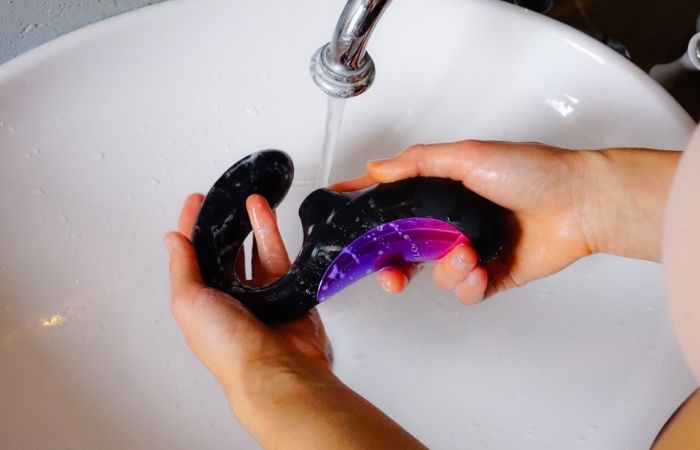
Before using: Wash quickly with warm water and a mild, unscented antibacterial soap. Make sure there isn't any dust or lint on toys that are used inside. Make sure to rinse well. Wash right away with soap and hot water after use. If the material allows, boil non-electronic toys for 3 to 5 minutes. Before putting it away, let it dry completely in the air.
- Between partners or holes: Put a condom on the toy and change it if you switch people or go from anus to vagina.
- Wash well or switch toys completely if you don't use a condom.
- For electronic toys, use a warm, wet cloth and some mild soap. Don't soak. Look for places where fluids can hide, like grooves, buttons, and seams.
- Storage: Don't put toys in a pile; instead, put them in separate bags or cases. This stops bacteria from spreading and stops silicone toys from reacting with other things.
Are you feeling overwhelmed? To make it easy, think of your toy as a part of your body. Would you want your partner to touch you with dirty hands or fingers that had just been inside someone else? The same rules apply.
How to Talk About It Without Killing the Mood
Sex toy hygiene doesn’t have to be awkward. It’s not about “accusing” someone of being dirty, it’s about mutual care. A great way to bring it up? Link it to pleasure.
- “Hey, this toy feels amazing, let me wash it real quick so we can really enjoy it.”
- “Let’s grab a fresh condom for the toy, I want this to feel good and safe for both of us.”
- “Mind if I clean this off first? I just want to make sure we’re being careful.”
Most people appreciate the heads-up. And for those who don’t? That might be a red flag, not about hygiene, but about communication.
When you normalize toy cleaning as part of foreplay or aftercare, it stops feeling like a chore and starts feeling like part of trust-building. The bonus? You’re less likely to deal with infections, weird discharge, or last-minute testing panic down the line.
When Cleaning Isn’t Enough: Consider Testing Too
You might be wondering, "Should I get tested?" if you recently played with a toy with someone new or forgot to clean it well.
The answer is that it depends on your symptoms and how much risk you are.
Sharing toys without protection can be just as dangerous as having sex without protection, especially if fluids were exchanged, if partners didn't know their STD status, or if the toy was used between body parts.
If you have any of these symptoms, it's a good idea to get tested for the most common STDs, which are chlamydia, gonorrhea, trichomoniasis, herpes, and HPV. You don't need a full panel every time, but it's helpful to know your baseline.
If you’re worried, trust your gut. You don’t need a doctor’s visit to get answers. With discreet options like the 6‑in‑1 At‑Home STD Test Kit, you can check from home in minutes and take control of your next steps.
Should You Retest After a Toy-Related Exposure?
Let’s say you shared a toy, didn’t clean it properly, or found out after the fact that a partner had an STD. You test negative a few days later, are you in the clear?
Not necessarily. All STDs have what is known as a window period. This is the time between when you are exposed and when you can test and be sure of having an STD. If you test too early, you can receive false negatives, even if you have been exposed.
For example:
- Chlamydia & Gonorrhea: Detectable in 7–14 days, but accuracy peaks after 2 weeks
- Trichomoniasis: Detectable in 5–7 days, especially if symptoms are present
- Herpes: May take 2–12 weeks for antibodies to appear, especially if asymptomatic
- HPV: Often asymptomatic and not routinely screened unless abnormal Pap or high-risk behavior
If you're symptomatic, test right away, but plan a follow-up test 2 to 4 weeks later for confirmation. If you're asymptomatic but worried, waiting for the ideal window helps ensure a more accurate result.
One reader shared their story: “I tested negative for chlamydia five days after a weekend hookup with shared toys. But by day 17, I had a burning sensation and discharge. I retested and it came back positive.” That gap is exactly why retesting matters.
Whether it’s peace of mind or a partner notification, clarity is power. You can retest discreetly using our home test kits, no appointments, no awkward waiting rooms.
Myth vs. Fact: Toy Hygiene Edition
Let’s bust a few myths that keep floating around Reddit threads, group chats, and bedroom banter. These are the half-truths that lead people to skip cleaning steps, or take ones that don’t actually help.
Myth: “If it’s my toy, I can’t get an STD from it.”
Fact: You can reintroduce infections to yourself, especially when switching between orifices or after a previous exposure that wasn't cleared.
Myth: “Boiling ruins toys.”
Fact: Boiling is safe for most 100% silicone, stainless steel, or glass toys. Always check the manufacturer guidelines first, but for non-electronic, non-porous toys, it's one of the most effective disinfecting methods.
Myth: “Soap is enough for everything.”
Fact: Soap helps, but doesn’t always kill all pathogens, especially viruses like HPV. Some toys need boiling or alcohol-based cleaners designed for sex toy materials.
Myth: “Using a condom on a toy is overkill.”
Fact: Condoms add a barrier that protects both users and toys. They’re especially important with porous toys or when sharing between partners.
Myth: “Cleaning toys kills the mood.”
Fact: Nothing ruins the mood like a yeast infection or unexpected symptoms. Cleaning can be sexy if you make it part of foreplay or aftercare.
“I Didn’t Think Toys Could Give Me Gonorrhea”
Lucas, 31, had been casually seeing two partners and frequently used toys during partnered play. “I was careful about condoms, but I didn’t think about toys needing the same rules,” he admitted. After weeks of a mild sore throat and burning urination, he tested positive for gonorrhea, in both his throat and urethra. Neither partner reported symptoms.
“I realized we were all passing around the same toy between us. No cleaning. No condoms. No questions.”
Lucas now uses condoms on toys and washes them immediately after every use. “It was humbling. I thought I was being safe. But this was a blind spot.”
His story isn’t rare. Many people, especially those who practice non-penetrative or queer sex, assume their risk is low. But toys can act like any other vector for transmission. Cleaning isn’t just about hygiene. It’s about accountability, safety, and long-term sexual health.
FAQs
- 1. Can you actually get an STD from a sex toy?
- Yes, you definitely can. Think of it like this: if the toy touches one person’s fluids or skin, and then touches another person without being cleaned? That’s a hand-delivered invitation for chlamydia, gonorrhea, herpes, even HPV. Shared use without washing is one of the easiest ways toys spread infection, especially when it’s between orifices or partners.
- 2. I only used my toy on myself. Do I really need to clean it every time?
- Yes, and here's why: your body isn't always the same from day to day. Using a toy vaginally and then anally (or vice versa) without cleaning in between? That’s a fast track to a UTI, yeast infection, or worse. Even solo, the bacteria shuffle is real. Clean it like it’s your toothbrush: even if no one else used it, it still needs a rinse.
- 3. What if my vibrator isn’t waterproof, how am I supposed to clean it?
- No worries. You don’t need to drown it in boiling water. Just use a soft cloth with warm water and unscented soap, carefully cleaning around the tip and base. If it has buttons or grooves, a cotton swab can help. Think “gentle sponge bath,” not “power washer.”
- 4. Do I need to use a condom on a toy even if I'm in a monogamous relationship?
- If you’re fluid-bonded and everyone’s been tested, you might decide it’s not necessary. But condoms can still help with cleanup, especially for porous toys (like jelly rubber) that are hard to sanitize completely. Also helpful if you’re switching from anus to vagina, no shame, just swap the condom and keep the fun going.
- 5. How long can STDs actually live on a toy?
- It depends. Herpes and trichomoniasis can survive for a few hours on damp surfaces, especially if the toy isn’t cleaned right away. HPV? That virus is a stubborn little thing, it can hang around even after a basic cleaning if the toy is porous. This is why material matters, and why “wipe and go” doesn’t always cut it.
- 6. Can I just use baby wipes to clean my toy?
- We love a multitasking product, but no. Most baby wipes aren’t antimicrobial and leave behind residue. If you're in a pinch, use a toy-specific cleaner or give it a proper wash with mild soap and hot water. Your genitals deserve better than leftovers from a diaper bag.
- 7. Is it gross to store all my toys in the same drawer together?
- Not gross, but not ideal, either. Some toys (especially silicone) can chemically react with each other over time, and bacteria can transfer between them if they’re not stored clean. Best move? Dry everything fully and give each toy its own bag, pouch, or clean sock. Yes, a sock totally works.
- 8. My partner thinks cleaning toys is overkill. How do I bring it up?
- Try framing it around pleasure and care, not shame. Like: “I love using this with you, so I want to keep it clean for both of us.” Or, “Let’s wash it real quick so we can really enjoy it.” If they still brush it off? That’s a conversation about respect, not just hygiene.
- 9. I didn’t clean my toy after the last use. Is it ruined now?
- Not ruined, but don’t just dive in again. Give it a solid clean before using it again, and if it’s porous or visibly grimy, consider tossing it or using a condom over it next time. This isn’t about punishment, it’s about giving yourself the clean slate you deserve.
- 10. How often should I be testing if I share toys with partners?
- If you’re sharing toys regularly, especially outside of a monogamous setup, get tested every 3 to 6 months, or sooner if symptoms pop up. Testing isn’t a confession. It’s care. You can do it quietly from home with something like the 6‑in‑1 At‑Home STD Test Kit. Discreet, fast, no clinic judgment.
You Deserve Pleasure Without Panic
Your sex life should never come with hidden risks, especially not from something that’s supposed to bring joy, release, or connection. Sex toys are part of real, healthy pleasure. So is keeping them clean.
Whether you’re exploring solo or with partners, your safety starts with small steps. Washing a toy, using a condom, checking your STD status, all of these are acts of care. You don’t need fear or shame to stay safe. You just need better habits, honest knowledge, and the tools to act on them.
How We Sourced This Article: We combined current guidance from leading medical organizations with peer-reviewed research and lived-experience reporting to make this guide practical, compassionate, and accurate. In total, around fifteen references informed the writing; below, we’ve highlighted some of the most relevant and reader-friendly sources.
- How to Prevent STIs – CDC
- Bacterial Vaginosis Causes & Prevention (including cleaning sex toys) – Mayo Clinic
- Bacterial Vaginosis: Causes, Symptoms & Prevention (sex toy hygiene) – Cleveland Clinic
- Safer Sex Toolbox – American Sexual Health Association (includes toy-sharing guidance)
- Medical Counseling on Sexual Enrichment Aids & Hygiene – NIH PMC